Longtime Richmond musician, media producer reflects on the attention his AI video is getting
When the City of Richmond posted a public-service video two weeks ago that was generated with artificial intelligence technology (AI), the comment section filled up quickly with negative feedback.
But while the public was sharing its thoughts, the video’s creator, a Richmonder with a long history in music, media and art, was working through his own opinions on the new and controversial technology.
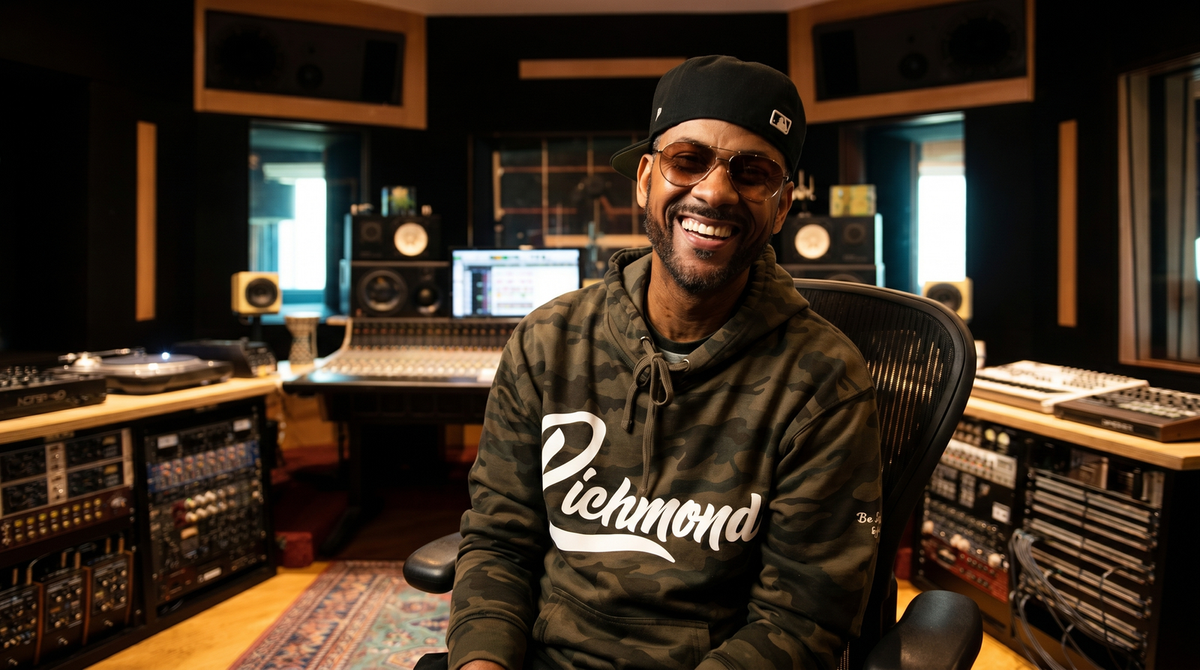
Adolphus Maples III came onto the Richmond scene as a rapper, DJ and producer named Danja Mowf – a member of the famed SupaFriendz group. He later transitioned into media production, with Richmond Magazine noting his work on the TV series “24” and video game “The Sims.”
So if you think he’s got a lot of thoughts about AI and its impact, you’d be right.
“To be honest, I’m still wrestling with it too,” he said in a Wednesday phone conversation.
His firm, Maples Media Group, was approached by Richmond’s Department of Public Utilities to produce a public service announcement. He said he was told it would need to be a quick turnaround, with the video finished in less than a week.
He said DPU did not request a video made with AI, but even outside of the cost (the city said it paid $2,250), he wouldn’t have been able to make a full production work in that timeframe.
“It was the only way it was going to happen,” he said. “I mean, you can’t even pull in a big-budget agency in film and turn something around in a couple days like that.”
(In an email Thursday, the city said it has two videos remaining on its contract with Maples, but “at this time, any future videos will use traditional footage.”)
As a producer, Maples said he’s often working with new technologies, which is how he has built his AI skillset. He said his thoughts about the technology overall went beyond the video he made for the city.
“I don’t want this to be about DPU, but there is a deeper thing here that we’ve all got to deal with,” he said. “Which is trying to navigate what’s good and bad about the technology.”
Maples compared it to the early days of rap and hip-hop, when producers sampled other works and drew scorn from outside observers.
“You could sample anything, but then those artists weren’t being paid,” he said. “Then you had the same people who were on the outside saying, ‘Rap isn’t music.’ This is the same thing. Somebody is saying, ‘You’re just writing a prompt.’ AI is way more than writing a prompt. It’s complicated. It takes a lot of time to get a certain result.”
He named two AI video generation tools that he’s worked with, Kling and Higgsfield, and said it takes hours to refine a video to look just right.
That doesn’t mean that he fully embraces the technology, though. He understands the potential societal concerns, whether it be the proliferation of data centers or potential job losses in creative fields.
“For me it’s cool to be honest with everybody else: We’re just navigating it as it comes,” he said. “I think the dust will settle, but I know that just like in history, people are going to lose jobs, and there will be a lot of jobs created.
“If we don’t continue to evolve and pay attention to how we can use this technology, then we also have to be held responsible. People who are mad about it, they have a point, but I do think that they’re misdirected.”
Maples referenced the music analogy.
“It’s the same reasons that hip-hop was born, or was able to flourish,” he said. “I’ve seen both of them – it’s very similar. So you mean as a kid that doesn’t know how to play music, I can sample a record and put a beat behind it and now I have a song? It’s a renaissance.
“We’re in a different renaissance right now, and it means that normal people, somebody can sit on their laptop – and this is beyond DPU – you can sit on your laptop and you have the power to do anything.”
He said he’s hopeful that like sampling records in music, eventually a structure is built out that allows creators to be paid when their work is used to create something new.
And he doesn’t believe musicians will be out of jobs, but rather that people will embrace the humanity of live performance.
“People are going to need to see people do things,” he said. “They’re gonna want to see the performance. They’re going to want to see imperfections. They want to see it come out of your mouth.”
Contact Michael Phillips at mphillips@richmonder.org.