Don't call it a playground: Belle Isle's new 'Nature Exploration Area' is the future of park play
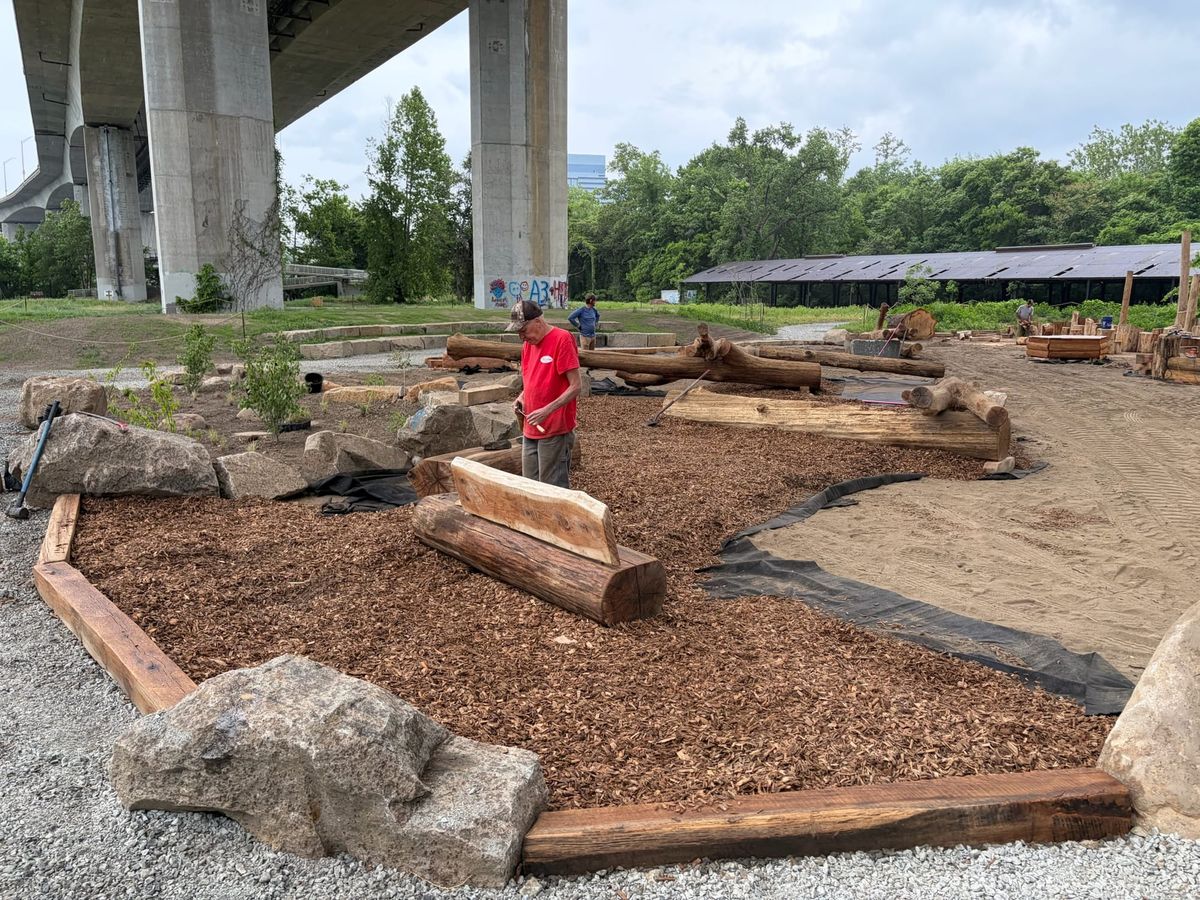
A new “Nature Exploration Area” taking shape on Belle Isle will offer Richmonders an early glimpse of how the city’s most-visited park could evolve—while staying rooted in the natural character that defines it. Just don’t call this new space a playground.
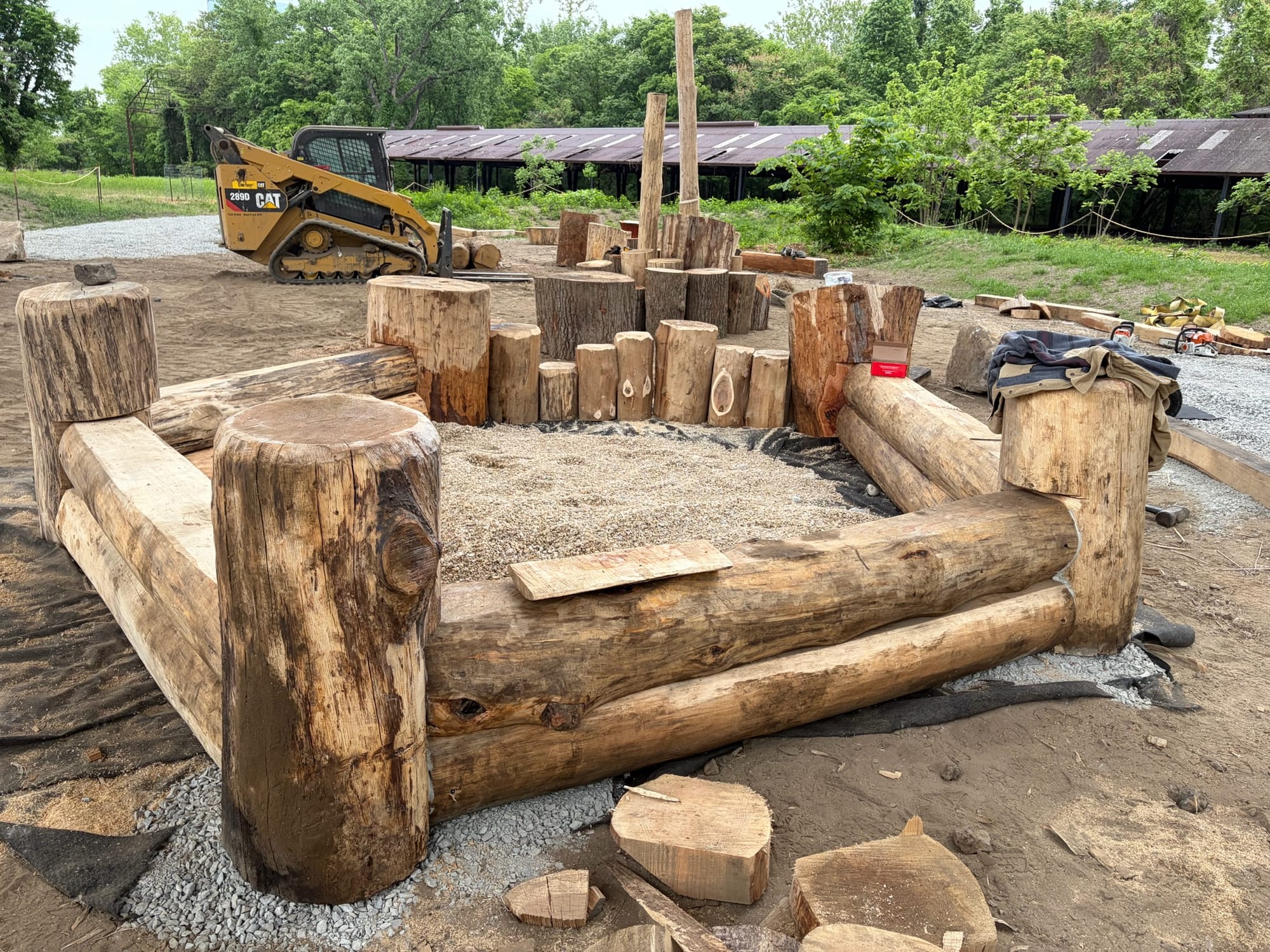
“Playground comes with other notions about what the space should offer,” said Tyler Sylvestro, a partner at Marvel, the Richmond firm that designed the space. “This is something more to emphasize the context of where it is — the rapids, the logjams, all of the wonderful things that wash up on shore from the James. That’s the feeling that we’re going for with the design of this space.”
The project, located underneath the 100-foot-tall Lee Bridge, will reshape the meadow that visitors first encounter when arriving on the island from the suspension bridge across the James River. Long treated as a pass-through area, it will be reimagined as a welcoming, hands-on entry point into the James River Park System and a place for Richmond’s youngest parkgoers to explore and play.
The public is invited to a ribbon cutting this Thursday at 11:30 a.m.
“I love thinking about Belle Isle as the gateway to the whole park system — as the learning ground, the place to learn what it is to explore in nature,” said Penelope Gorman, Executive Director of the Friends of the James River Park nonprofit.
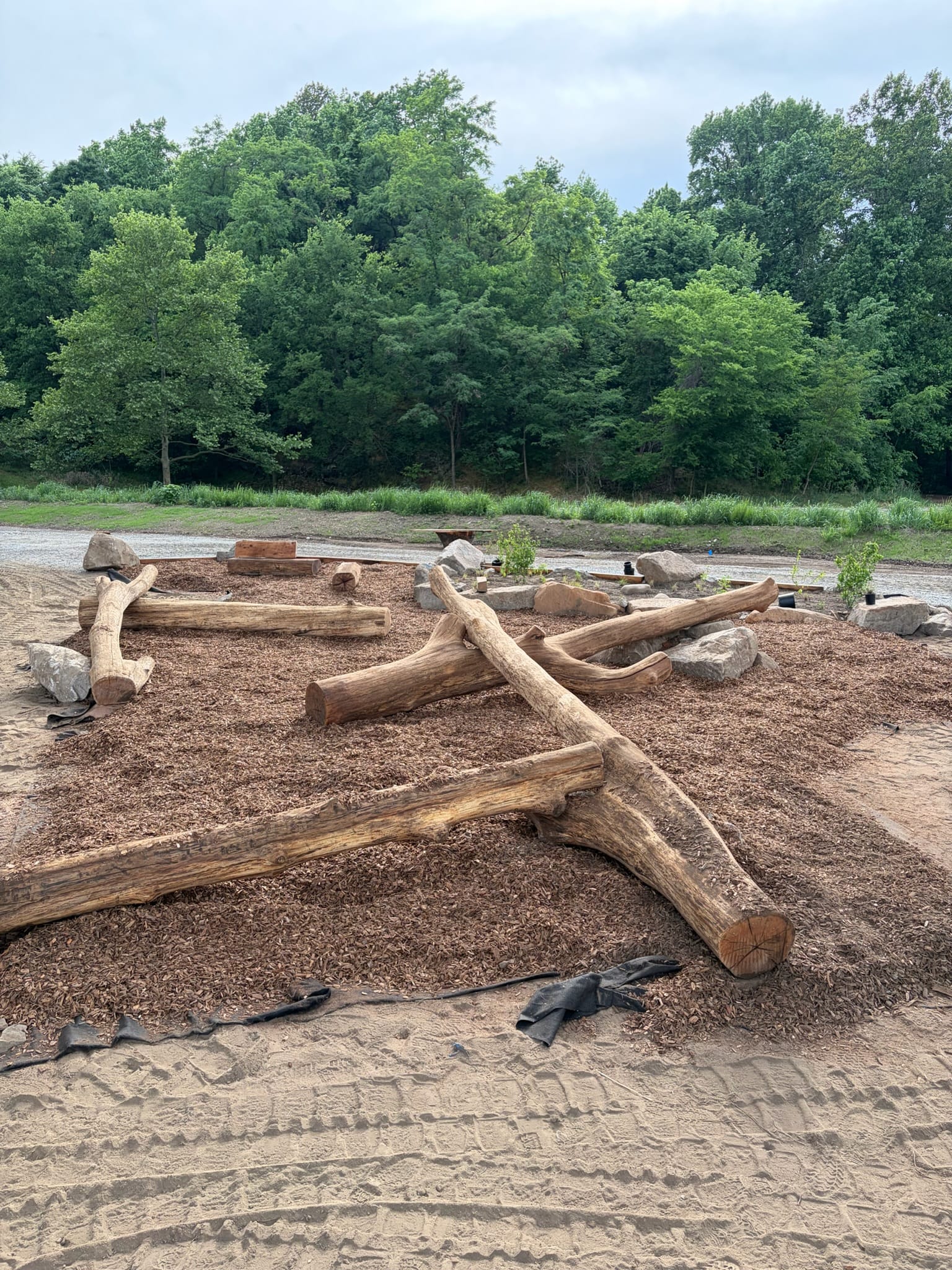
The Nature Exploration Area (NEA) is also the first tangible outcome of a broader Belle Isle vision plan developed by Marvel in consultation with a broad swath of stakeholders. That plan proposes a series of interconnected destinations across the island—reimagining places like the quarry pond, the rolling mill ruins, the nail shed, and the hydroelectric plant—while improving access and restoring natural systems.
 Andy Thompson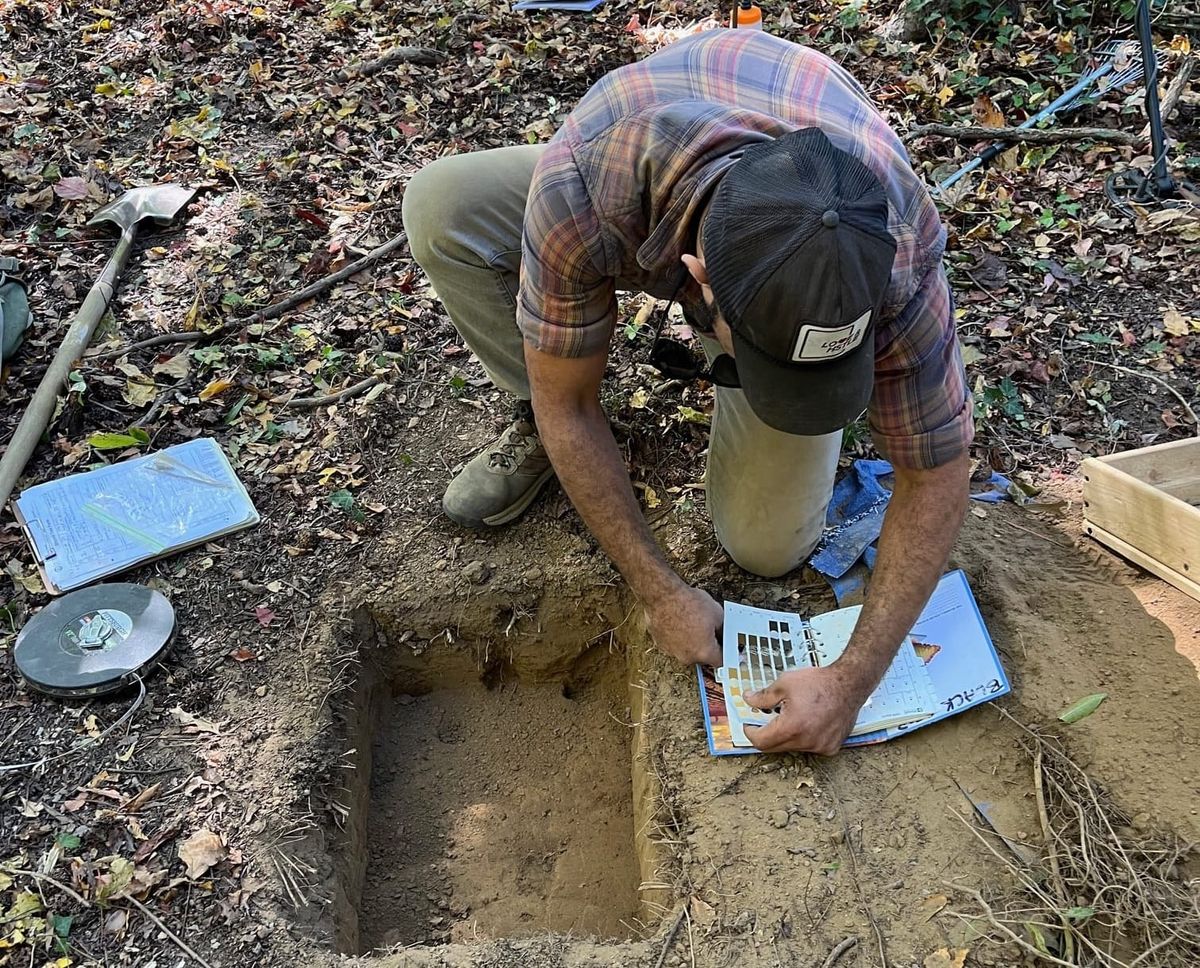
Rather than adding traditional playground equipment, the NEA will encourage unstructured interaction with the environment for those 5-years-old and under.
We wanted to “expand who is being welcomed into JRPS as a whole,” Gorman said. “That’s a user group we didn’t feel like was being as intentionally welcomed as they should be.”
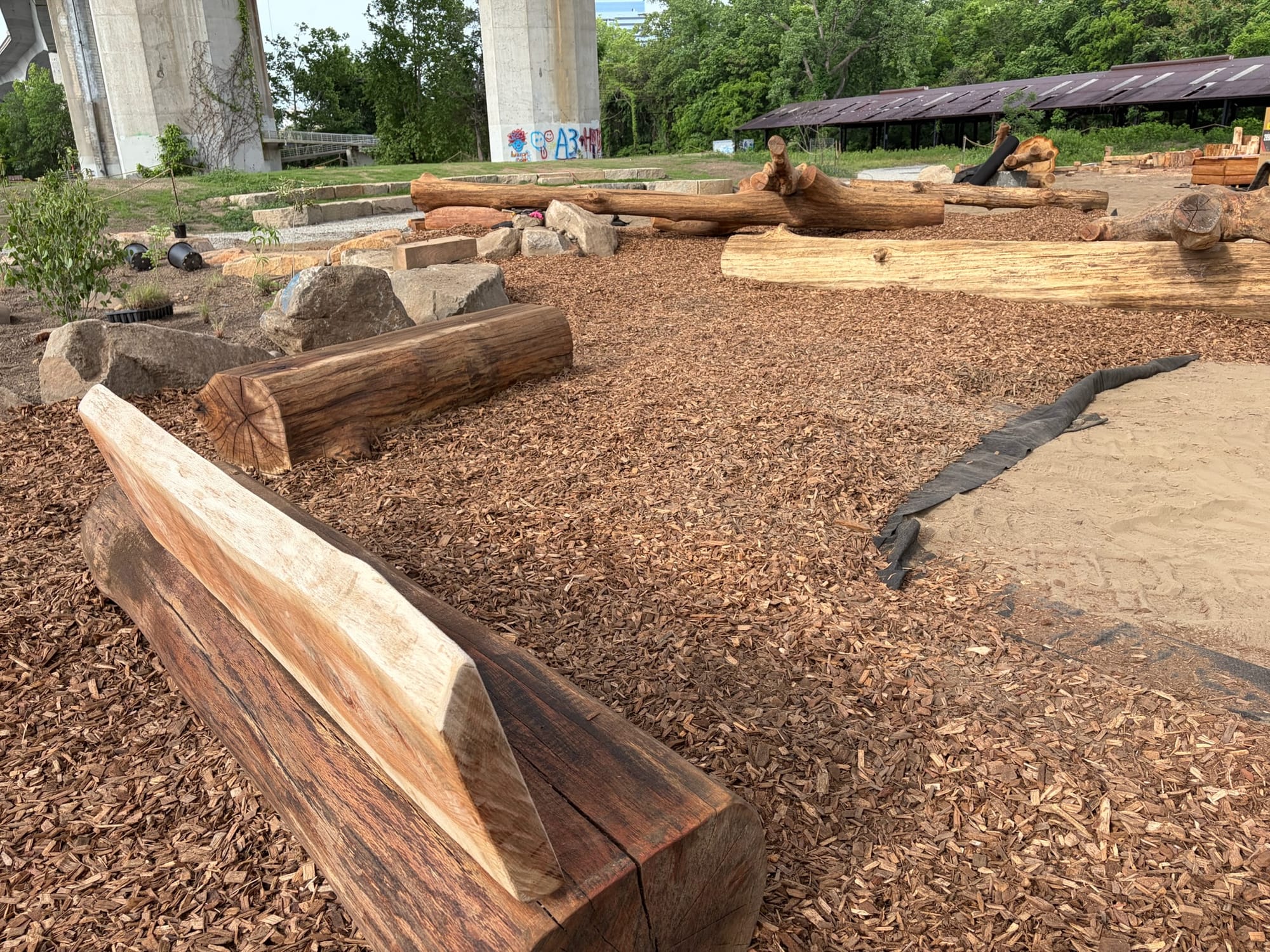
With the vision plan as a kind of wish list, Gorman and the Friends decided to start with the NEA. They raised $150,000 — $100,000 from the Robins Foundation; the rest from CSX, Second Presbyterian Church, the City of Richmond, and their own funds — and tapped Truetimber Arborists for the build.
“We wanted a local fabricator and really wanted to do this with sustainability in mind,” Gorman said. “There are folks that do big nature landscapes, but everything is sourced out of Wisconsin or wherever.” We thought, “let’s make sure this is a local project that’s fully created locally and feeds the local economy.”
Truetimber Arborists founder Scott Turner said Gorman came to him with the project concept about a year and half ago. He and his team began work earlier this spring.
“We did a lot of the material preparation at Truetimber,” Turner said. But even at his company’s 24-acre south Richmond headquarters, where a sawmill processed trees for the project, there wasn’t room to hold all of the elements they were creating.
“The larger elements — you know there’s 20-foot long (tree trunks) — they were taken straight to the holding area under the Manchester Bridge until we were ready to move them onto Belle Isle,” Turner said. “We’ve been staging stuff around, and now it’s all funneling its way onto the island.”
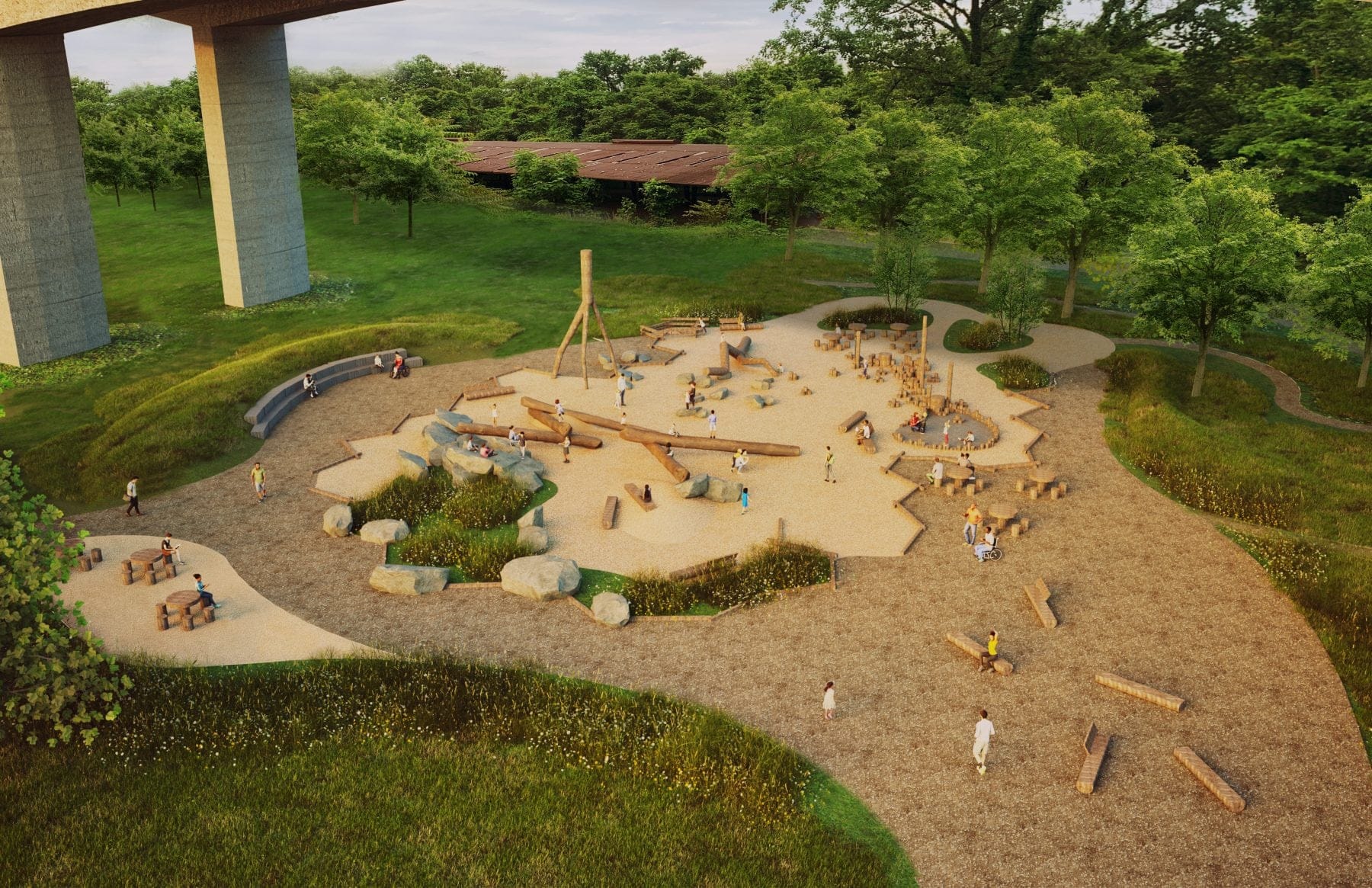
Sylvestro and his team at Marvel began working on the Belle Isle Vision Plan in 2022. The project, he said, represents an opportunity to rethink how Richmonders engage with the river at one of its most heavily visited access points. Belle Isle received more than 300,000 visits last year.
“We’re not trying to over-design it,” he said. “We’re trying to create a place where people can explore and interact with nature in a way that feels intuitive.”
The Robins Foundation is a Richmonder donor but was not allowed to influence or review this story. (Read our policies here.) This article has been updated with corrected image credits.