Most Richmonders got accurate tax rebate checks, but review finds $115K in possible overpayments
When Richmond sent out one-time property tax rebate payments earlier this year, most homeowners eventually got accurate checks, according to a recent review by the office of City Auditor Riad Ali.
However, a variety of data errors appears to have caused more than $115,000 in potential overpayments and around $80,900 in potential underpayments, according to the review. The exact size of the payment issues is unknown without “further research,” the auditor’s report said.
The financial impact of the errors appears to be relatively small, but the problems caused the city to pay out slightly more than the total amount budgeted for the rebate program. The payments exceeded the $16 million authorized by $25,686, according to the auditor’s office.
The overspending issue could potentially be resolved by the city trying to recover the $115,000 in estimated overpayments. After considering their options, officials have decided it’s not worth the time and effort to do a comprehensive financial review or to try to get the money back.
More than 20% of the discrepancies involved payments off by less than $5. City officials were told by one collections agency there could be a “negative public perception” if the city spent tens of thousands of dollars to try to get taxpayers to return such small-dollar amounts.
Because the city issued the payments in two rounds of checks, confusion over who had cashed a check in the first round led a half-dozen property owners to miss out in getting a rebate payment in the second round, the review found.
To boost confidence for taxpayers, the city is offering to review individual rebate payments for anyone wondering if their check was accurate.
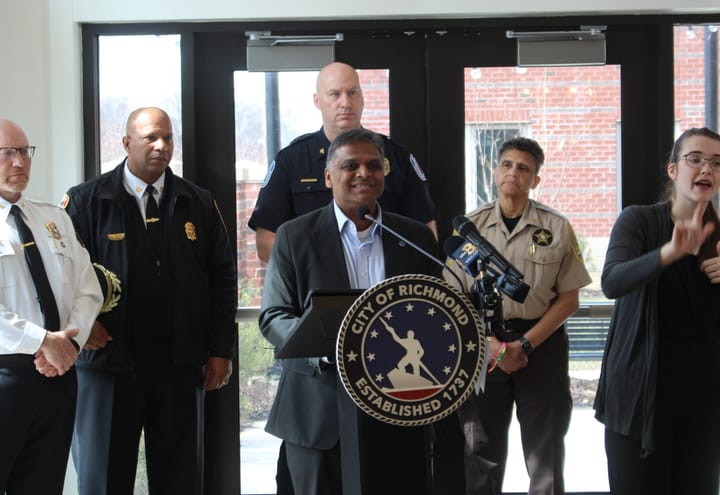
“Audits are one important way we find issues and fix them, and that's exactly what's happening here," Mayor Danny Avula said in a statement last week. "We're being transparent about what we found, we're making sure every taxpayer who would like their rebate reviewed may request it, and we're putting safeguards in place so future programs are even stronger."
The rebates were approved in late 2024 as an alternative to permanently lowering the city’s property tax rate in response to rapidly increasing home values that cause higher tax bills. The payments — funded with surplus money left over from the fiscal 2024 budget — were supposed to be the equivalent of taking four cents off the city’s tax rate of $1.20 per $100 of assessed value. That works out to around $150 for a typical Richmond homeowner.
Calculating the rebate amounts and making sure they went to the right property owner turned out to be more difficult than officials anticipated.
The rebates were meant to go to eligible taxpayers based on homeownership data in the 2024 tax year, but numerous problems arose because the city’s Finance Department used 2025 ownership data and calculated the rebates based on 2025 bills.
“These choices caused problems with both recipients and check amounts,” the auditor’s office said in its report.
That led to checks being sent to someone who recently bought a house instead of the person who paid the 2024 taxes and skewed the rebate calculations.
Many of the overpayments occurred because 877 city-issued checks were potentially cashed in the first round by someone other than the eligible 2024 taxpayer. In the second round of checks meant to correct the earlier mistakes, the city then had to pay the correct person.
The review found several other problems throughout the process, largely caused by changes from 2024 to 2025 involving ownership and taxable status, as well as the creation of new parcels taxed in one year but not the other.
Another data error caused the city to issue thousands of checks with a single payee’s name: “Hartshorn Community Council.”
According to input from the city attorney’s office, the City Council may need to approve a budget amendment to resolve the issue of the city spending more money on the rebates than what the Council budgeted.
The auditor also recommended that the city develop a stronger process for creating, executing and following up on new programs launched through a Council-approved ordinance.
“This audit reinforces why strong coordination between the administration and City Council before launching new programs is not only good practice, it must be OUR practice," Chief Administrative Officer Odie Donald II said in a news release.
The Avula administration recently announced the city expects to have a $22 million surplus for fiscal year 2025, though Donald has stressed that number could change as the latest budget is closed out.
Avula’s team has not proposed using that money for a similar tax rebate initiative. Instead, in accordance with city code, most of it will go into the city’s financial reserves.
Contact Reporter Graham Moomaw at gmoomaw@richmonder.org