Lawmakers question how Rosie’s was approved to add more gambling machines in Richmond
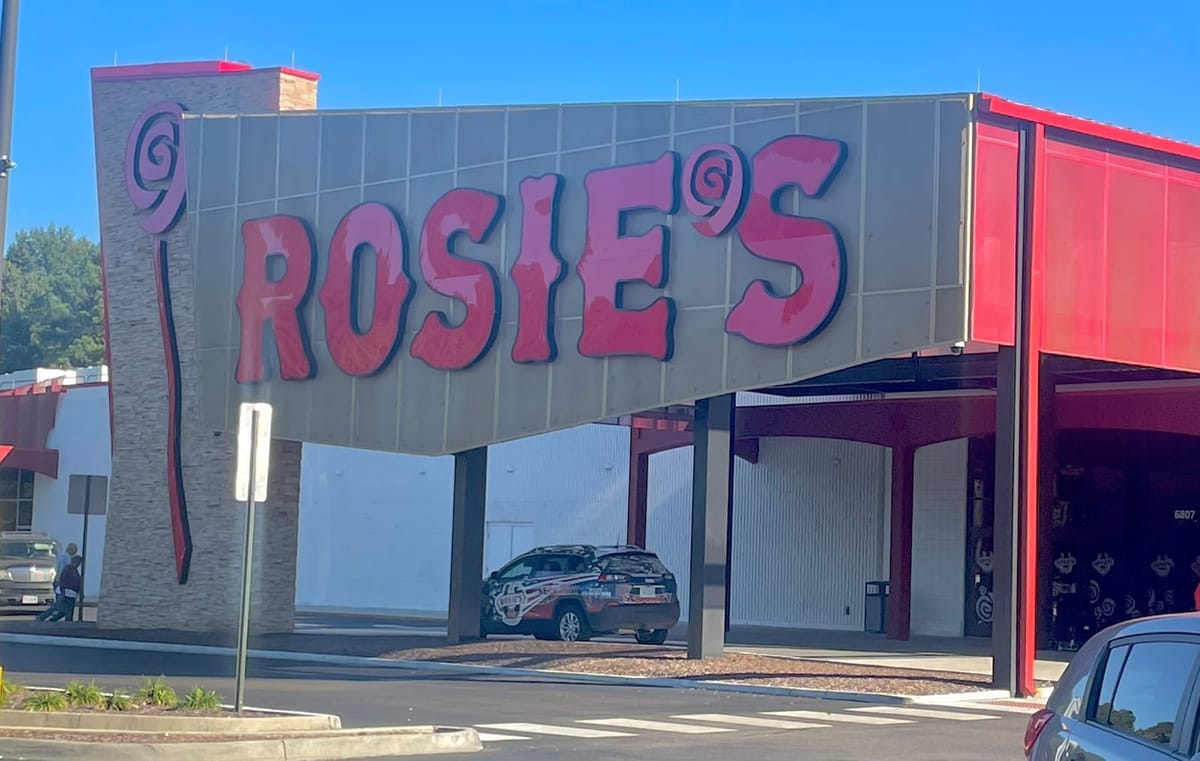
After Richmond voters rejected an actual casino, the city’s casino-esque Rosie’s location got bigger.
The Richmond Rosie’s was originally limited to 700 slots-like gambling machines under a state-imposed cap. Today, the location has nearly 1,200 machines, an expansion state regulators allowed with virtually no public process.
Though the Richmond Rosie’s is technically a “satellite” facility to the Colonial Downs horse racing track in New Kent County, the Richmond location now has more than twice as many gambling machines as the track itself.
In light of that growth, two state lawmakers recently raised concerns over what they see as a procedurally and legally questionable approval process for the Richmond expansion.
According to state documents, the Virginia Racing Commission approved the 500 additional historical horse racing machines — which strongly resemble traditional slots but are powered by a digital archive of past horse races — without putting the topic on a meeting agenda for a public discussion and vote.
Instead, the records from early 2024 show, a former Commission staffer authorized the Richmond expansion via email a little more than 24 hours after the Colonial Downs Group and its parent company, Churchill Downs, asked for it.
In a letter to the Racing Commission late last year, State Sen. Lashrecse Aird, D-Petersburg, and Del. Paul Krizek, D-Fairfax, asked the Commission to hold off on re-approving the Richmond facility's license until their questions could be resolved.
“This expansion appears to have occurred without transparent public Commission action, clear statutory authorization or reconciliation with existing regulatory limits,” Krizek and Aird wrote in their Dec. 4 letter.
The General Assembly members said there’s a “substantial question” about whether the 500 extra machines in Richmond are even legal due to a state rule meant to prohibit the addition of more HHR machines within 35 miles of a city the state has cleared to pursue a casino. Petersburg, which is about 22 miles south of Richmond, is the latest city to win that right, and its casino is currently under construction.
 Kaitlin Davis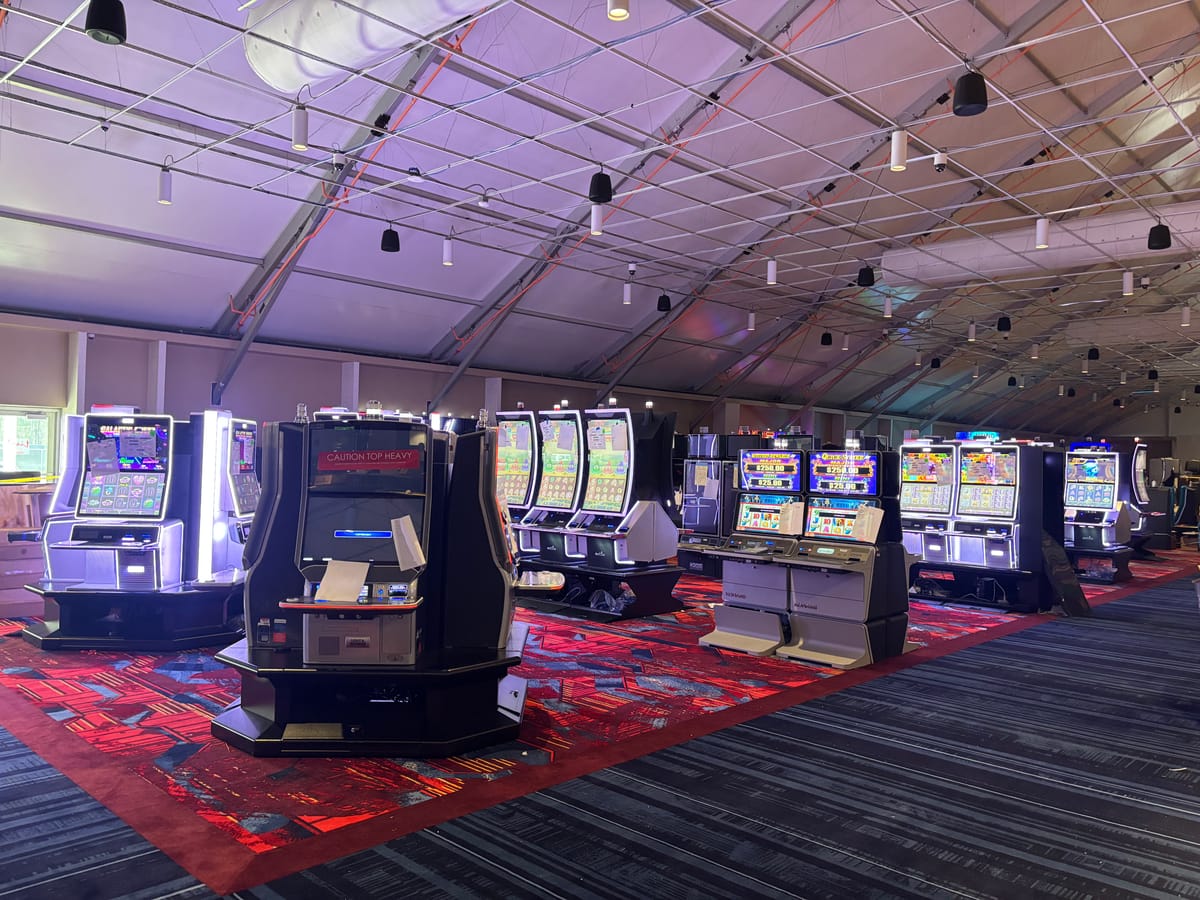
Krizek and Aird said their intent was not to prejudge the issue, but to ensure “decisions of significant public consequence are made transparently and in full compliance with the law.”
Without responding to the lawmakers’ questions, the Racing Commission renewed the Richmond license at a Dec. 15 meeting.
The Richmonder obtained the Racing Commission documents through a Freedom of Information Act request that sought the letter from the General Assembly members, any response to it and any records documenting the approval for the Richmond Rosie’s expansion.
The Commission refused to comment on the records it released, declining to answer follow-up questions about how the Richmond expansion was approved and whether the Commission ever asked the city to weigh in.
In a statement, Churchill Downs stressed that all of its locations seek approval for every machine deployment “in accordance with state law and regulations.”
“In this case, Rosie’s Richmond sought and received multiple approvals for its upgraded gaming floor,” the company said, stressing that the Richmond facility donates $100,000 to charitable groups each year and “generates millions of dollars in tax revenue to support Richmond city schools, public safety and other priorities.”
 Michael Phillips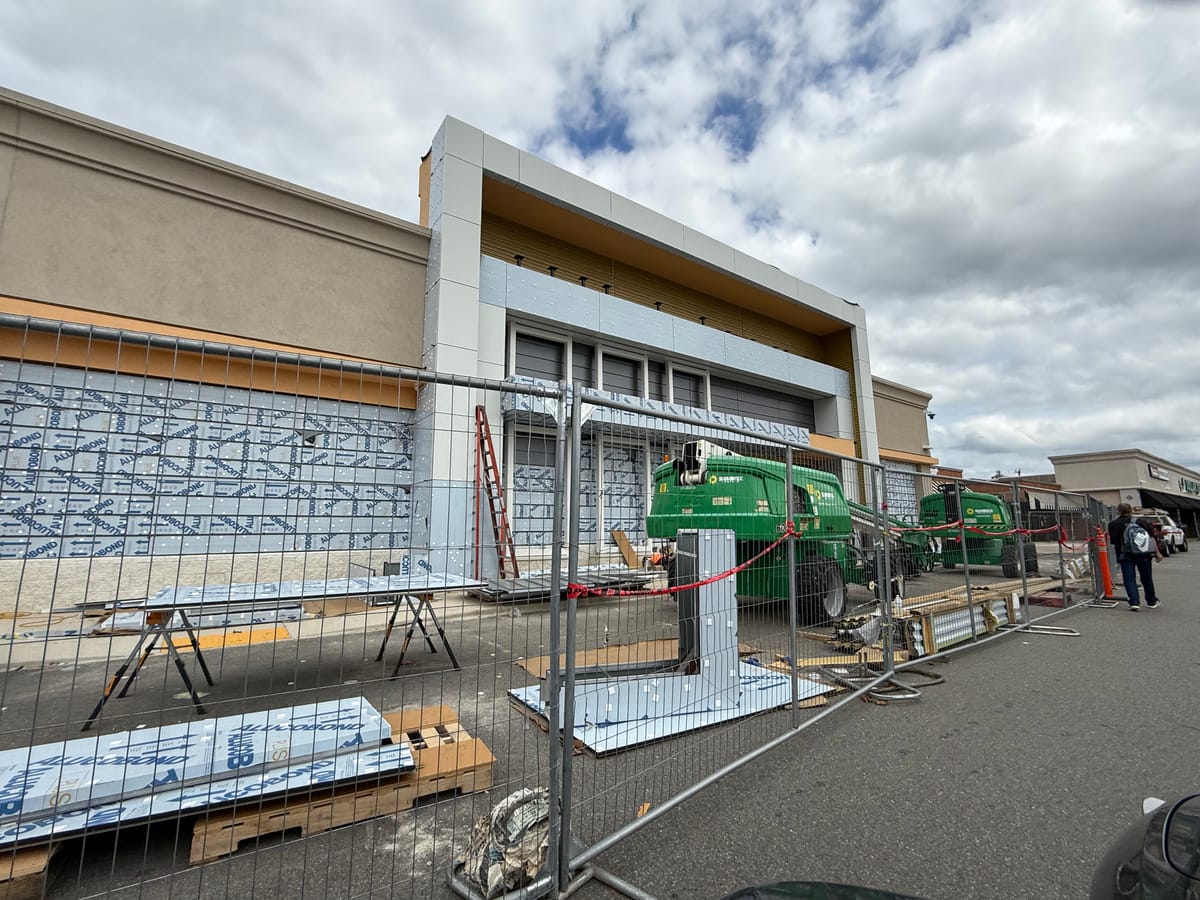
For supporters of legalized gambling, a bigger Rosie’s in Richmond is arguably a positive, potentially bringing more jobs and tax revenue. To opponents, the added profitability of a bigger gambling facility comes at the expense of people losing more money that could've been spent elsewhere.
As Virginia has embraced legalized gambling, several advocacy groups and lawmakers have raised concern the state has struggled to keep the emerging industry in check with a clear system of rules and enforcement. The Richmond Rosie’s issue shows how some of Virginia’s gambling limits can be opaque and unclear even to the legislators who write the laws.
The Racing Commission has an unusual dual role in state government, existing to promote and protect traditional horse racing while also regulating the gambling machines that generate money for the industry.
In a statement, Krizek said the Richmond Rosie’s expansion seems at odds with the “spirit of the law” the General Assembly passed to legalize HHR machines in 2018.
“It was a way to support the equine industry through live racing, not to create casino-scale hubs,” said Krizek, who chairs a House of Delegates committee that deals with gambling policy. “We put the caps on precisely to prevent unchecked expansion.”
Krizek said the Richmond Rosie’s issue further validates the need for Virginia to create a comprehensive gambling commission doing oversight instead of having numerous state entities like the Racing Commission responsible for their own narrow areas. Under the type of Virginia Gaming Commission Krizek said he envisions, laws could be interpreted more consistently and important issues would be decided in public.
“Major policy shifts require transparent Commission action, not internal email approvals,” Krizek said.
Gov. Abigail Spanberger’s administration has voiced support for an overhaul of Virginia’s gambling regulation system to a more comprehensive approach that could change oversight of HHR machines in the future.
Though the Racing Commission would not answer questions, Commission Executive Secretary Waqas Ahmed sent a written statement emphasizing the Spanberger administration’s position.
That stance was recently laid out by Secretary of Agriculture & Forestry Katie Frazier, whose state government portfolio includes the Racing Commission.
Vote against casino cleared way for bigger Rosie’s
Virginia legalized HHR machines in 2018 to help reopen Colonial Downs, which had been shuttered by a former operator in 2014. At the time, former Gov. Ralph Northam urged the Racing Commission to enact “reasonable limitations” on the new industry to keep its growth in check.
The initial regulations included a statewide cap on the number of HHR machines, as well as caps on the number of machines allowed at each facility tied to the size of the local area’s population. The Richmond City Council had to pass a resolution expressing its support for the maximum number of machines allowed by law, which at the time was 700.
Because that predated the General Assembly’s 2020 decision to legalize casinos, the horse racing industry sought concessions a few years later to protect itself from competing casinos.
In the 2020 casino bill, state lawmakers gave the racing industry permission to add more HHR machines, while specifying the additional machines couldn’t be within 35 miles of one of five cities eligible to host a casino. The state designated Richmond as a casino host, which took the city out of the running for the extra machines the bill allowed.
After Richmond residents voted twice to block a casino, state lawmakers acted in 2024 to remove Richmond from the list of localities eligible for a casino.
Ironically, Richmond residents’ rejection of a casino seemed to clear the way for Rosie’s to put more gambling machines in Richmond.
When Churchill Downs sent state regulators its request for more Richmond machines in early 2024, a company legal officer specifically cited the city’s removal from the casino list. He told the Racing Commission that, in the company’s view, regulators had no choice but to authorize the machines because the 2020 casino bill included “a clear directive to the Commission (and not merely the discretion) to authorize the additional machines contemplated.”
“After July 1, the restriction against locating terminals authorized under the 2020 Casino Legislation within 35 miles of Richmond will not apply,” wrote Chad Riney, VP of legal at Churchill Downs.
Krizek and Aird seem to take a different view. Their letter noted that as soon as Richmond stopped being a casino host city, Petersburg became one.
“From our review, there is a substantial question as to whether terminals authorized under the 2020 act may lawfully be deployed at the Richmond facility at all, given the proximity to eligible host cities, both before and after the statutory transfer of host city status from Richmond to Petersburg effective July 1, 2024,” the lawmakers wrote to the Racing Commission.
The Commission would not comment on why it authorized the extra HHR machines in Richmond given Petersburg’s status as a nearby casino city.
In response to The Richmonder’s FOIA request, the Racing Commission refused to release 17 pages of state correspondence about the Rosie’s expansion. The Commission cited transparency exemptions covering attorney-client privilege and working papers of the governor’s office.
Whatever legal advice the Racing Commission received, former Commission executive secretary Dave Lermond gave Churchill Downs a speedy reply in 2024.
After receiving a formal request for the Richmond Rosie’s expansion at 11:18 a.m. on April 15 of that year, Lermond gave his approval at 2:23 p.m. on April 16.
Though Richmonders didn’t appear to get an opportunity to weigh in on whether they wanted a bigger Rosie’s, they have had chances to comment on some parts of the expansion.
The Rosie’s owners needed a revised land-use permit from the city in order to expand the parking lot onto an adjacent parcel. After multiple public hearings on the parking lot expansion, the City Council voted to approve it this month.
Contact Reporter Graham Moomaw at gmoomaw@richmonder.org