Judge restricts picketing at Lewis Ginter, but stops short of banning it
Striking workers will be allowed to continue picketing outside the Lewis Ginter Botanical Garden, but new restrictions will be placed on their activity.
The garden had asked for a temporary injunction against what it called “unlawful conduct” by the picketers, while the International Association of Machinists and Aerospace Workers argued that workers were asserting their First Amendment rights to free speech.
In the end, both sides received an admonition from Judge Rondelle D. Herman, who said many of the issues at hand could have been resolved with better communication.
“I don’t think there was a good-faith effort to have a conversation,” she told the parties as she issued her ruling. “I understand emotions are high, but we need to use common sense.”
The workers, who have been on strike since Sept. 2, have been distributing literature and picketing on the sidewalk outside the garden each day.
Lewis Ginter officials alleged that picketers had disrupted ingress and egress from the facility and were responsible for a car accident that took place outside the gates on Sept. 7.
The car’s driver testified that he stopped in the middle of Lakeside Avenue because there was a picketer in the crosswalk in front of the garden’s entrance, at which point his car was hit by a truck.
In response, a worker for the IAM union testified that he had seen the crash and there were no people in the crosswalk at the time. (The crash remains under investigation by police.)
Ginter also alleged that the picketers were setting up on garden property, including a grassy field and flower beds out front, instead of staying on the public right-of-way.
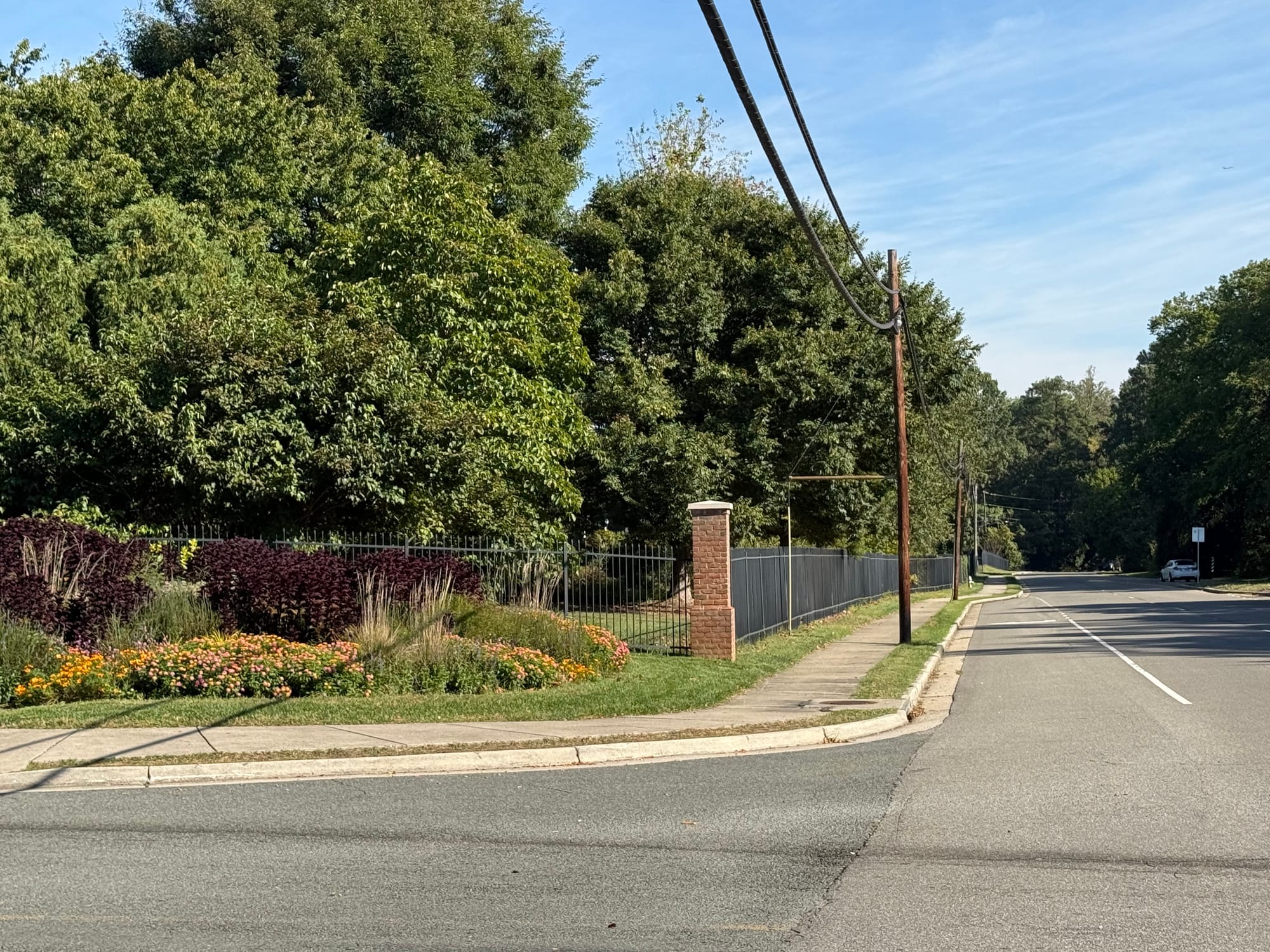
Charles Mann, who identified himself as the head negotiator for IAM, testified that he did not know where the boundaries of Ginter’s property began and where public property ended.
Herman cited that testimony as one of the many frustrating moments as she gave her ruling.
“Demarcation should have been done,” the judge said. “But common sense says you should have asked.”
Noting that there is limited sidewalk space available to protest, Herman imposed the following restrictions:
- No more than 20 picketers at a time, with no more than 10 on each side of the entrance.
- Lewis Ginter is to clearly mark where its property line begins, and that line is to be respected.
- Usage of banners and large tents must be done farther down the street, so they are not in the way of drivers attempting to see as they make turns into and out of the facility.
- Picketers may not stop cars or attempt to stop cars to distribute literature. Herman acknowledged that if a car stops voluntarily, that would be out of the control of the picketers, but they cannot make any motions that would encourage it.
- The crosswalk between the two picketing areas is only to be used as a crosswalk, not a space for marching or demonstrating.
Herman asked for both sides to return in two weeks and warned that she would impose a full injunction if her terms are not met.
As of Friday morning, there did not appear to be any resolution to the strike in sight, as the two sides remain considerably far apart on wages.
 Michael Phillips
The union has said employees are currently paid an average wage of $17.52 per hour. In a Thursday press release, the group noted that MIT's Living Wage Calculator defines a living wage in Richmond as $23.36 per hour for a single person with no children.
Both sides said after the hearing there has not been any exchange of proposals in recent days.
The economic harm to the garden was introduced by Lewis Ginter in its arguments. They alleged that IAM workers kept a counter of how many cars turned away from the garden because of their picketing activity.
Mann acknowledged a counter was being used but did not directly confirm what workers were counting.
Attorney Jacob Karabell, representing IAM, said the presence of economic harm is not itself enough to issue an injunction stopping the picketing.
“Economic harm is the purpose of a strike,” he said.
Contact Michael Phillips at mphillips@richmonder.org.