General Assembly budget plans include $50M for Richmond sewer project
The city of Richmond would get another $50 million for its costly combined sewer overflow project under a pair of budget proposals recently introduced in the Virginia General Assembly.
The funding was included in both versions of the budget released Sunday by the state Senate and the House of Delegates, a strong sign the funding has a good chance to go to Gov. Abigail Spanberger for inclusion in the final state budget.
Richmond also requested state money to invest in strengthening its water system following the 2025 water crisis, but the outlook for that request is less clear. The state Senate included a provision designating at least $20 million for the city’s water system. However, the funding was not included in the House proposal, making it less certain the water infrastructure money will make it into the final budget.
“Halfway through the legislative session, this is important progress,” Mayor Danny Avula said in a statement this week. “There is more work ahead, and we will not rest in our efforts to meet the needs of our capital city.”
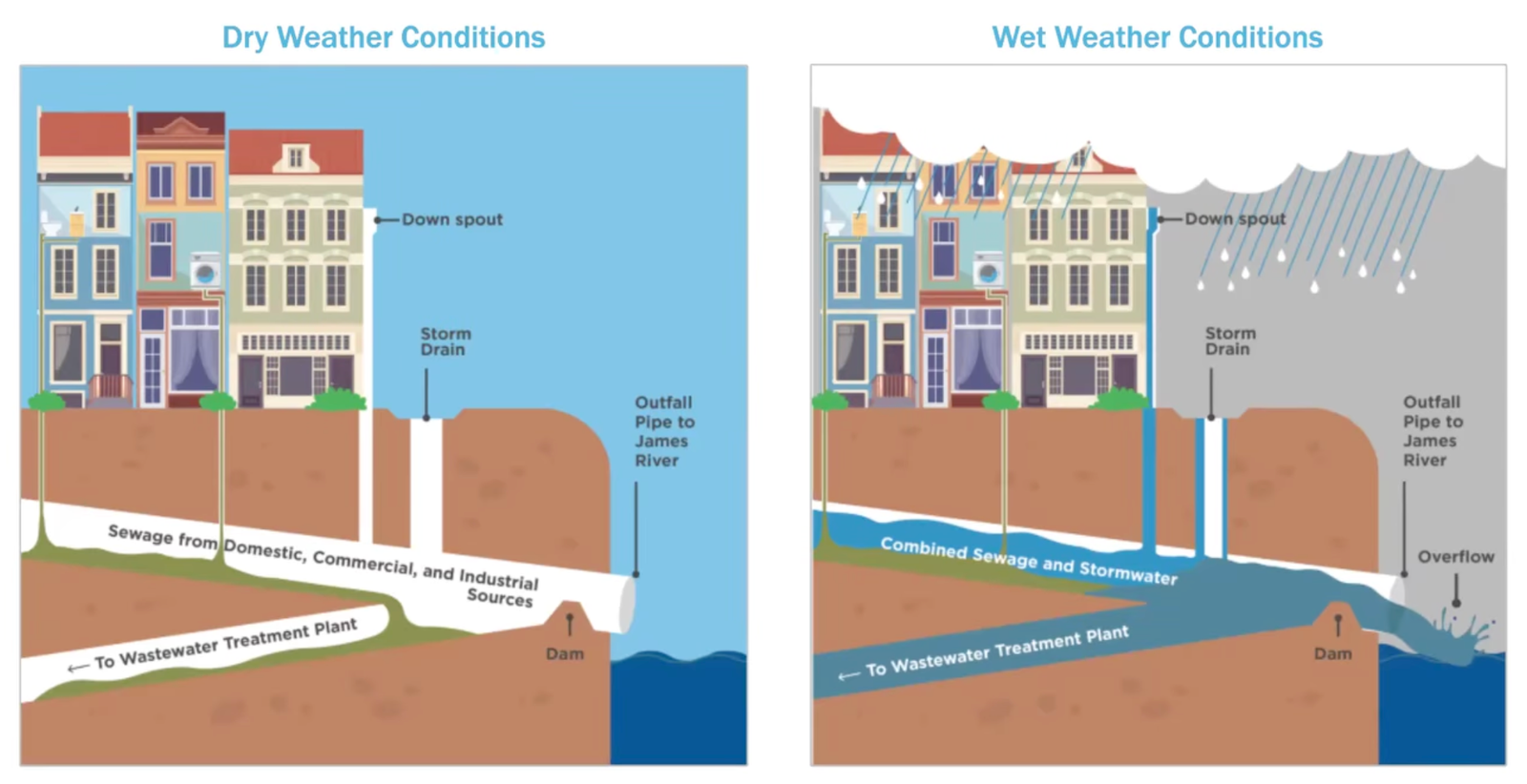
The combined sewer overflow project is expected to cost upwards of $600 million before it’s complete. A 2020 state law requires the city to upgrade the 150-year-old system — in which stormwater and wastewater flow through the same pipes — to prevent sewage from spilling into the James River during heavy rain.
The city has already received at least $100 million from the state for the project, according to a status update filed late last year. The city had requested $100 million in the next two state budget years.
Avula had requested $80 million over two years for the city’s water system, but the city appears unlikely to get the full amount due to state budget constraints.
Conditions attached to the funding included in the Senate budget also indicate state lawmakers may have been reluctant to give city officials full control over the money.
The Senate budget sets aside $50 million for the Virginia Department of Health to provide water infrastructure grants to localities, specifying “no less than” $20 million should go to repairs and improvements at Richmond’s water treatment plant.
The city would have to reach an agreement with VDH on how to spend the money. The House budget also calls for the creation of a Richmond Regional Water Workgroup that would consist of officials from state government, the city and the neighboring counties of Henrico, Chesterfield and Hanover.
That work group would be given at least some oversight over how the state money would be used at the water plant and would make recommendations to “ensure its reliability as a supplier of drinking water.” It would also review the city’s contract to provide water to neighboring counties.
Avula previously pushed for the creation of a regional work group on water, with mixed success after the City Council seemed to balk at the idea during a joint meeting with Henrico officials.
The state-created work group would deliver a report to both state and local officials by Nov. 1 each year.
The General Assembly will resolve differences between the House and Senate budgets by its adjournment date of March 14.
The combined budget will then go to the governor for her review, with the legislature returning in April to consider any changes Spanberger proposes.
Contact Reporter Graham Moomaw at gmoomaw@richmonder.org