For some Richmonders, code refresh is a promise for a better future
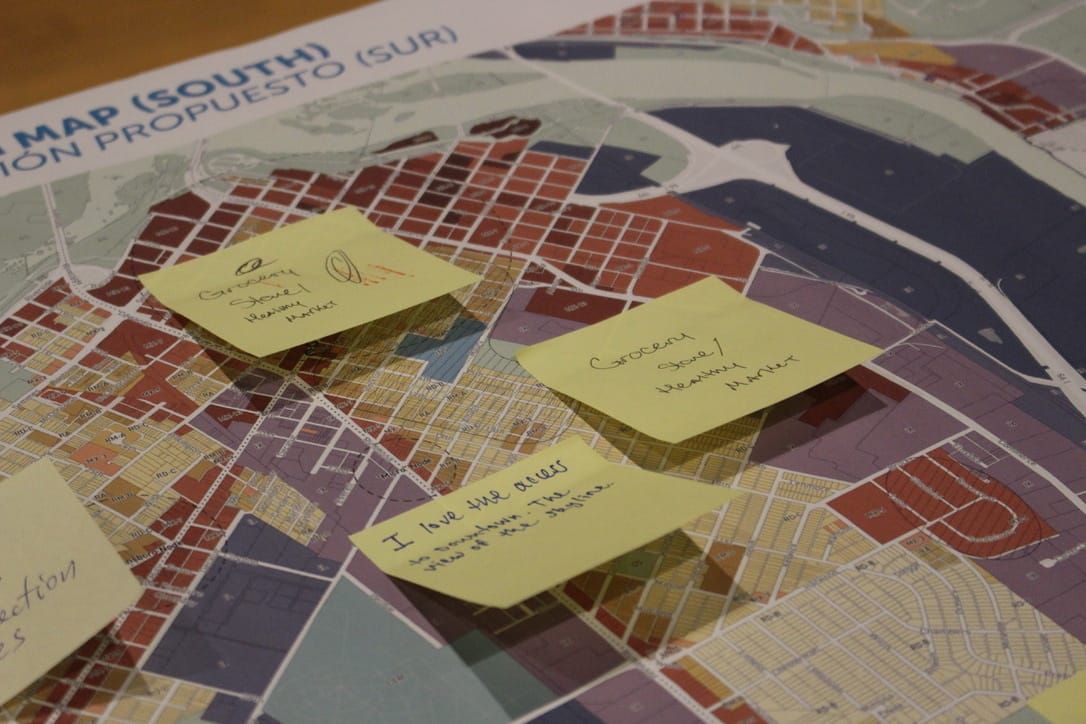
Late last year, a member of Richmond’s Zoning Advisory Council challenged planners on a proposal to allow duplexes in all residential neighborhoods, even those with the largest, most spread-out properties.
“I’ve talked to a lot of people that live in those neighborhoods, and have also heard from a lot of neighborhood associations,” said Charles Menges. “I never heard anybody that agreed this is a good idea.”
As Richmond continues to overhaul its 1970s-era zoning code, officials have encountered sharp resistance to plans to allow greater density throughout the city, particularly from neighborhood associations and a group organized by former City Councilor Marty Jewell.
But while those criticisms have been loud, not all Richmonders agree that the rezoning effort known as the code refresh is a bad thing. For them, the potential concerns are outweighed by the opportunities that they believe it would unlock: More affordable homes. More shops and services within walking distance. Neighborhoods with a wider range of housing types and residents.
“With anything, there’s pros and there’s cons. I’m really focusing more on the pros because I’m in an area that lacks everything,” said Sean Crippen, a Blackwell resident who also serves on the board of nonprofit Virginia Community Voice. “What code refresh can do is bring in those opportunities.”
Richmond’s current zoning “does hold us back from some of the opportunities that we have available to us,” said Robbie Franklin, an Oakwood resident who works for nonprofit affordable housing developer Southside Community Development and Housing Corporation. “Richmond is landlocked. Everyone loves to talk about that. … But the city continues to grow.”
As with neighborhood associations, views among residents who are broadly in support of the zoning overhaul vary. Some embrace its pro-density provisions wholeheartedly. Others are more cautious: They say concerns about eroding neighborhood character or giving developers too much power have merit but believe worries are overblown or safeguards can be put in place.
“It’s a tough issue,” said Rev. Rodney Hunter, who has been pastor of Wesley Memorial United Methodist Church off Mechanicsville Turnpike for over 40 years. But, he continued, “whatever we can do to try to at least make housing more affordable, then I want to at least discuss it.”
Some trends among supporters are evident. They tend to be younger, falling more in the millennial and Gen Z age ranges of their 20s through 40s, although not uniformly so. (Hunter, for example, is in his 70s.)
Perhaps more importantly, they see some kind of change as necessary.
While opponents have been vocal about the potential harm their neighborhoods could suffer if the code refresh passes, numerous supporters voice the view that the status quo those groups are fighting to preserve isn’t working for them. They can’t find housing that’s affordable or provides access to crucial amenities like grocery stores — a resource particularly lacking in Southside. And many are unhappy with the degree to which numerous neighborhoods require constant reliance on driving.
“The city has received a wildly disproportionate amount of negative feedback from older, wealthy property owners who benefit from arbitrary supply restrictions,” Fan resident Jackson Miller told the city’s Zoning Advisory Council earlier this month. “My peers aren’t even reaching out anymore, because they’re just jaded and radicalized by being stuffed into single family homes in their parents’ basements because they can’t afford housing, and they just see the city not taking the steps that would be needed to increase the amount of housing.”
Jason James, a former Bellevue resident who moved to Rosedale after a separation priced him out, said he understands that for many longtime residents encountering code refresh, “they don’t see as much what they will gain, but they see themselves as losing something — the character of the neighborhood or parking spaces.”
“If you don’t plan to live in an ADU or duplex, then you don’t see the benefit to you,” he said, referring to accessory dwelling units, the “granny flats” that the City Council allowed on most residential lots in 2023. “I’d like to see more of a generous perspective, or one that isn’t so vehemently against change.”
Those who might benefit the most from the refresh? Renters, say many supporters. But while the group comprises 58% of Richmonders, it has also been underrepresented in public discussion of the issue.
Whether that is due to renters having less time or resources than homeowners, who tend as a group to be more affluent, or whether it’s because they may be more reluctant to offer specific feedback about a neighborhood where they may not live in five years is unclear. But Mayor Danny Avula has said the group is “a voice that we need to hear from.”
Homeowners “a lot of times hold a lot of power in these processes,” said Amy Wentz, a Southside resident and co-founder of the nonprofit Southside ReLeaf. “There are a lot of Richmonders that are renters, and they want to have a say as well.”
 Sarah Vogelsong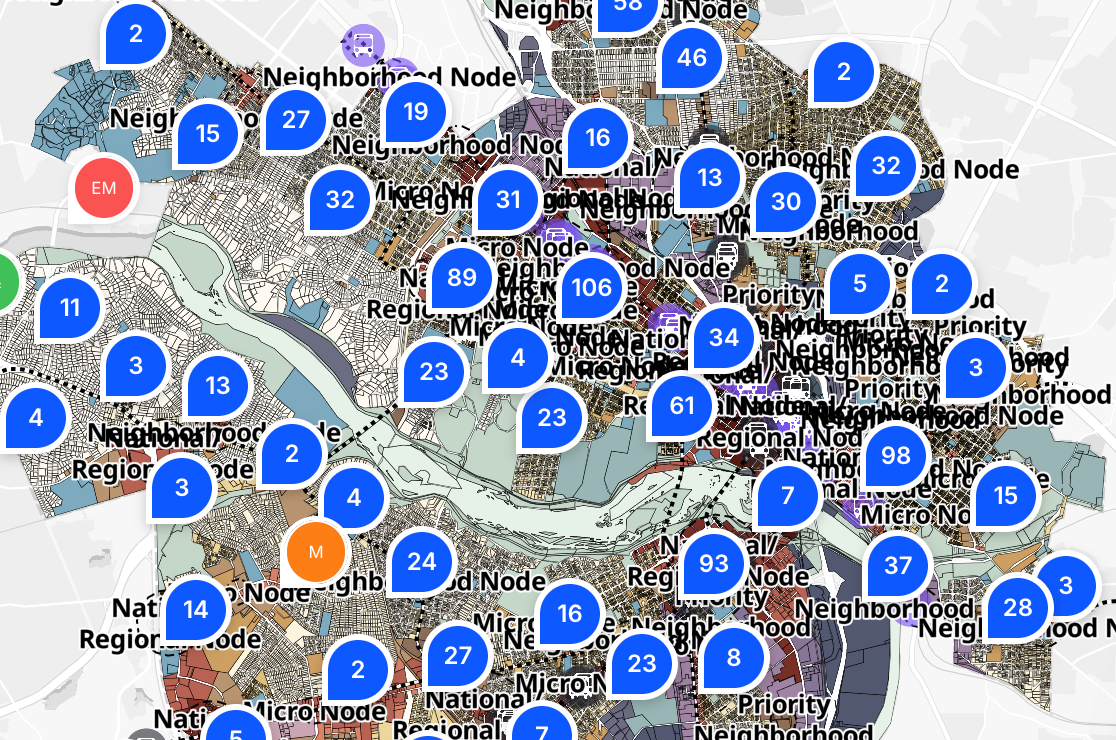
In a comment on the second draft of the refresh, a person who identified himself as a 5th District renter expressed concern that “the people who have the most time to learn and discuss these sorts of politics, and especially those who have the time to attend public meetings and make it seem like they represent the majority of the public, are not the average Richmond citizen."
“If the city and ZAC prioritize wealthy property owners, at the expense of lower and middle-income earners, and renters, they are failing in their mission to advocate and serve the people of Richmond,” he wrote.
Affordability
By far the biggest issue that supporters raise when they talk about code refresh is housing affordability.
Richmond, like many other parts of the U.S., has seen both rents and home prices soar since the pandemic, particularly as residents of higher-earning cities like Washington, D.C. have flocked south. In 2019, the median sales price for a single family home in the city was $263,500; in 2025, it was $425,000 — an increase well above inflation.
Wages have not kept pace with the rise. Census data put Richmond’s median household income at just over $64,500 in 2025, with about 18% of the population considered to be living in poverty.
Rising housing prices have put particular strain on not only people living paycheck to paycheck, but also younger people unable to buy a home, traditionally seen as the most reliable path to financial stability. Data bear out that pressure: According to the National Association of Realtors, the average age of a first-time homebuyer in 2025 was 40. In 1981, just five years after Richmond conducted its last comprehensive zoning overhaul, the average age was 29.
“We couldn’t even afford our own house in today’s market,” said Cezar Carvalhaes, a Woodland Heights resident who bought his house in 2016 for $230,000.
“Watching my friends four years later, five years later … you’re just seeing them lose it,” he said. “They’re like, ‘Oh my God, all these houses are unaffordable.’
Sarah Vogelsong
“We didn’t do anything that is right, and my friends who are trying to buy a house and couldn’t didn’t do anything wrong,” he continued. “It’s not a fair market.”
Hunter, the pastor of Wesley Memorial UMC, said that in his experience, “this is the worst it’s been.”
“Fifteen years ago, you had people who needed, ‘Oh, I need a little of this for rent,’ or ‘Can you help with utilities?’” he said. “But now we’re talking mainly about homelessness. And when they come to you, sometimes the amounts are so high it’s already so late.”
Supporters of the code refresh nearly all believe that encouraging greater density will allow the creation of more affordable housing, both by increasing the supply of units on the market and by increasing the number of options like duplexes and triplexes that are available to renters and buyers.
“We in Richmond do not have tons of opportunities at our disposal to create new affordable housing supply, and so any tool that we have increases our ability to make new housing,” said Franklin, the Oakwood resident who works in affordable housing development. “Generally speaking, density does not equal affordability, but density creates a much better opportunity for affordability in a couple ways.”
Franklin said he understands the concern that code refresh is giving a blank check to developers, who he said “are already essentially running wild, especially on the luxury development side of things.” But the rezoning, in his view, could help level the playing field for affordable developers, who are largely building affordable units using subsidies.
“Our current housing system is working within old zoning practices, and so it is more expensive,” he said. “Right now, for-profits have the advantage because they have more funds to essentially jumpstart their projects. We forget that it was only 10, 15 years ago where the housing ecosystem in Richmond was led by nonprofits.”
Sarah Vogelsong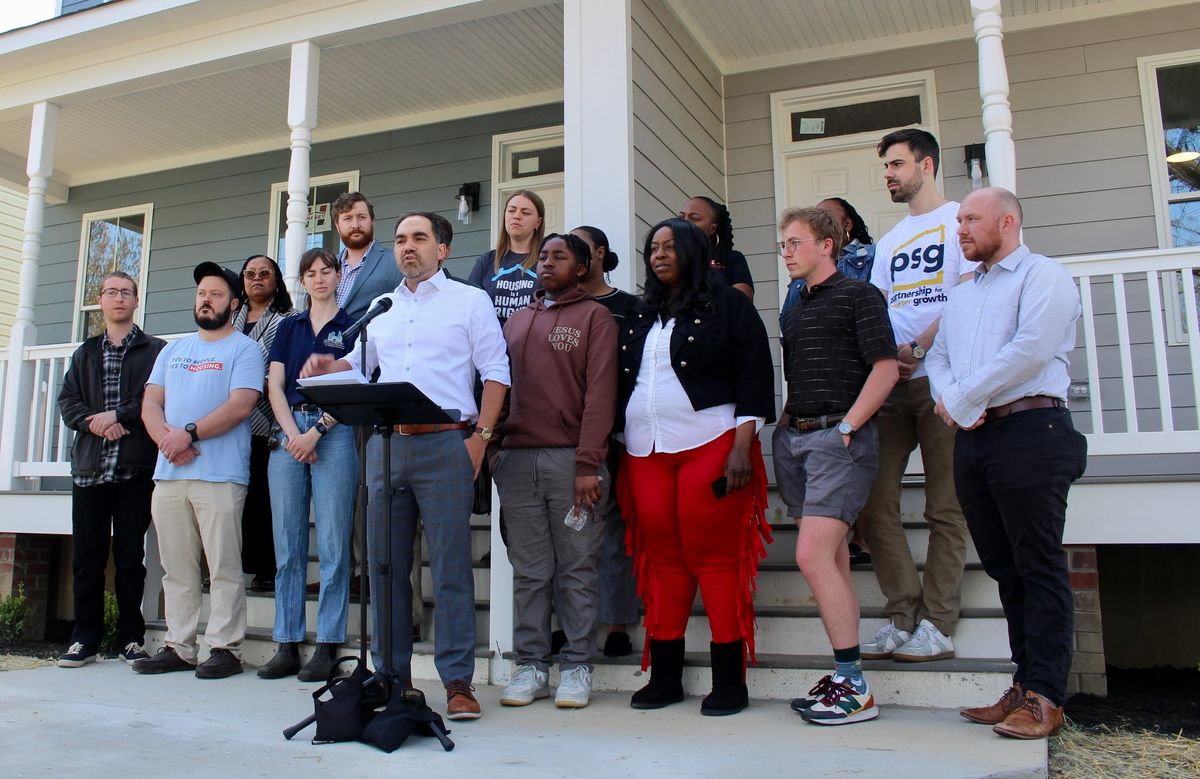
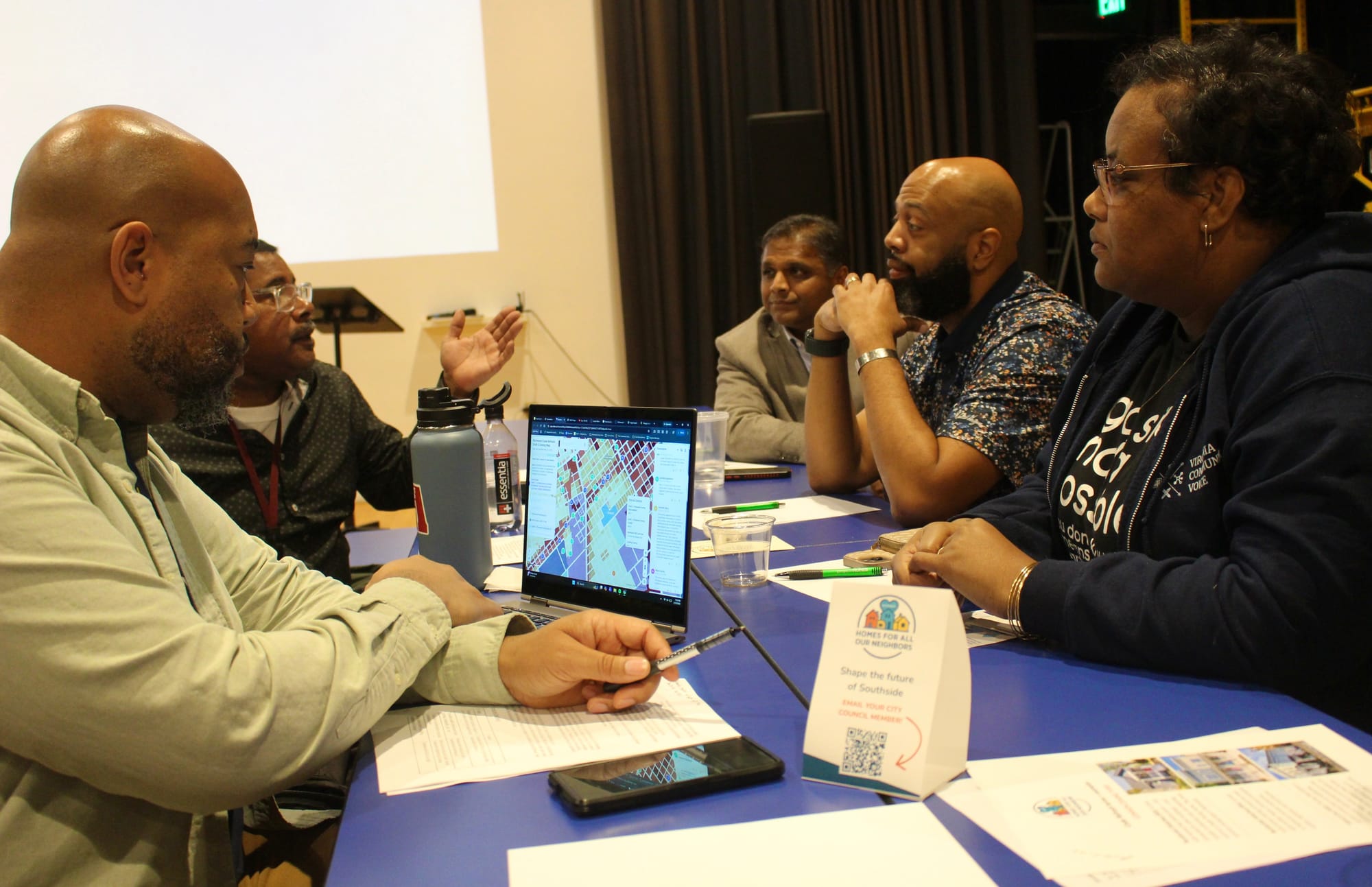
Those nonprofit developers, which also include the Better Housing Coalition, Maggie Walker Community Land Trust, Richmond Metropolitan Habitat for Humanity, project:HOMES and Commonwealth Catholic Charities, have helped form the core of the most visible group advocating for the refresh: Homes for All Our Neighbors, a coalition spearheaded by fair housing organization Housing Opportunities Made Equal. Since its launch last winter, the coalition has grown to 23 organizations.
Their pitch has been consistent: Allowing smaller homes on smaller lots and more units under a single roof can help drive down costs that are otherwise fairly inflexible.
The coalition has maintained that many of the policies they are pushing for have broad public support. Polling conducted by Embold Research for HOME this March found that of 621 Richmond residents surveyed, about 70% supported allowing more housing types — defined as “duplexes, small apartment buildings, and condos” — in neighborhoods, while 67% supported allowing duplexes in “residential neighborhoods that currently only allow detached single-family homes.”
While the developers say their view is grounded in their own experience in Richmond, research across the U.S. about the impact of upzoning on affordability has been mixed. During public comment periods and interviews, opponents and supporters routinely both marshal studies in their defense. The Avula administration has tended to argue that increasing supply will help curb further increases in costs while also emphasizing zoning alone will not fix the affordability crisis.
This spring, a study commissioned by the city found that proposed zoning changes would likely result in only a modest addition of new homes to single family detached neighborhoods in Richmond due to lot layouts and the costs of property acquisition and development.
While consultancy RKG did not model how the code refresh might impact parts of the city that are either more dense now or would be under the proposal, planners expect other areas — particularly transit corridors and neighborhood “nodes” — would see far more growth.
Lizzie Garrett, a Church Hill resident who grew up in the West End and moved back during the COVID-19 pandemic after stints in Austin and San Francisco, said she finds the idea of allowing pockets of denser housing and commercial space around “transit nodes” in neighborhoods appealing. But she’s also attracted to the opportunities that allowing more units on a single residential lot could offer in terms of communally oriented living.
In single family neighborhoods, “it’s very easy to feel isolated,” she said. In California, Garrett said she lived in a community where multiple families resided on the same property, all pitching in on day-to-day and child care tasks. While life in her single family home in Richmond with her two children is good, she said, she and her husband have wondered whether the code refresh might offer avenues to explore other ways of living.
“We had this dream,” she said. “Could that be a reality with this change?”
Sarah Vogelsong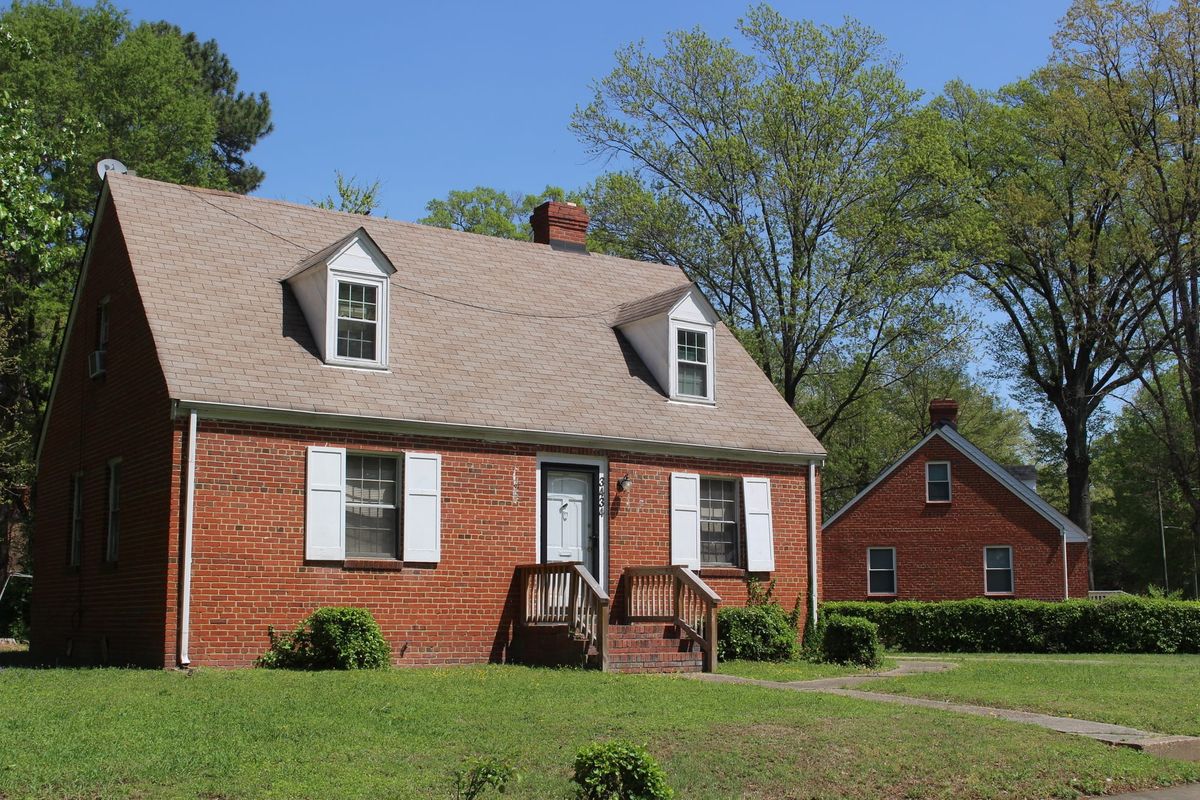
Investment and displacement
Whatever neighborhood they choose, newcomers will have to go somewhere. After several decades of decline, Richmond’s population has been on the rise, adding about 40,000 people since the year 2000.
“I do think there is a lot of new energy that has come to the city in recent years that is probably a younger crowd that maybe has lived in other cities and are more open to something different versus anchoring on what they’ve known their whole lives,” said Garrett.
In the Southside, some residents like Crippen are banking on a growing population to finally bring investment to an area that many Richmonders have long seen as overlooked and underresourced. Code refresh, in his view, can help bring in that growth by encouraging more mixed use development and allowing more small commercial uses in neighborhoods.
“You see places like Carytown that has five grocery stores, but we can’t get one,” he said. “We have to travel 15 to about 30 minutes out to go get any groceries, to go get any of your pharmacy goods, to go get entertained — anything.”
For Josh Scott, who works with Crippen through Virginia Community Voice and is in the process of moving from Charlottesville to Richmond with his family, “the zoning invites the investment.”
“If the zoning is there, then we can move money toward where we’re trying to funnel development or funnel the types of development we want to see, and we can create the policies to help either govern those investments or to incentivize other things,” he said.
Sarah Vogelsong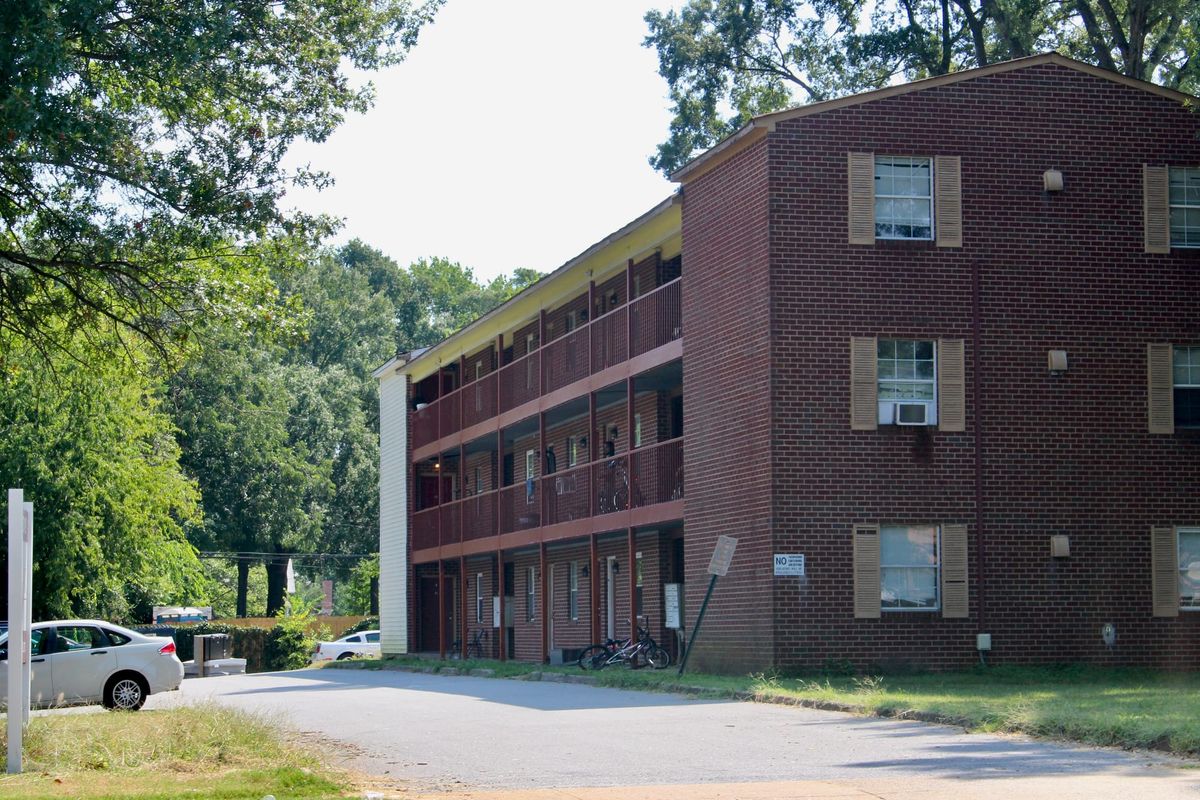
Others see density ushering in long-sought transportation improvements like bike lanes and more bus routes. Relying on single family homes only furthers Americans’ reliance on cars, they say — to the detriment of pedestrian safety and the environment. (Transportation emissions were the largest single source of greenhouse gas emissions in the U.S. in 2022.)
The goal isn’t to take away cars, said James. But “the more we can make it easy for people to do other things, the better.”
However, as new people and things move in, sometimes others move out. Both city officials and members of the public for and against the code refresh have worried that in lower-income neighborhoods, new development and amenities will drive up prices and force out longstanding residents unable to cope with them.
Still, rezoning supporters like Annika Schunn, a North Highland Park resident who works for HOME, argue that debates often incorrectly position displacement as a potential future outcome of the code refresh rather than as a problem that predates it. Instead, they believe that if designed well, zoning could help reduce the pressures that drive displacement by allowing more flexible housing options.
“Our restrictive zoning isn’t keeping low-income people in the city. It’s doing the opposite. It’s forcing people out,” she said. “It’s been happening. And it’s going to get worse if we don’t change our zoning and build to absorb the new residents that are coming to the city.”
Sheri Shannon, a co-founder of Southside ReLeaf with Wentz who said she now lives in North Chesterfield because she could not afford to stay in the city, contended that other policies and programs will be necessary if Richmond is to truly grapple with displacement. The City Council appears to agree with that view: This winter, it requested an inventory of all anti-displacement efforts underway as part of a broader attempt to assess what is working and what is not.
“Our zoning code is a piece of a larger picture,” said Shannon. And the code refresh “is not going to be the panacea for all of the existing inequities and ills that we have. It really is an all-of-the-above approach.”
Sarah Vogelsong
‘We’re here because of racism’
Zoning may not be a silver bullet for inequity. But to many supporters, any conversation about it has to grapple with the city’s long history of segregation.
“I think of neighborhoods as the people who live there,” said Thomas Okuda Fitzpatrick, executive director of HOME. “I think about who lives there and who has access to live there.”
Even today, many neighborhoods in Richmond can be identified as majority-white or majority-Black, with patterns of segregation persisting in practice even as the legal frameworks that supported them have fallen away. To some, the zoning rules put in place in the 1970s reinforced that separation of residents, with white Richmonders flocking to the least dense and wealthiest neighborhoods while Black Richmonders remained in or moved to the densest areas.
“We’re here because of racism,” said Shannon. “We’re here because politicians decided they didn’t want to live with Black people. They wanted to dilute the Black vote and to disenfranchise folks, and so they came up with very creative ways for single family zoning and these racial covenants.”
It is because of that outlook that some code refresh supporters have been unhappy about any movement away from the proposal to allow duplexes on all residential lots. That provision, they say, is a critical tool to make neighborhoods more equitable by allowing smaller and cheaper units in even the most expensive parts of the city. Other mechanisms, like a special zoning designation Charlottesville adopted to try to protect diverse neighborhoods seen as vulnerable to displacement, are available but haven’t been incorporated into Richmond’s plans.
Affluent white communities “have been able to control and prevent change in their neighborhoods,” said Schunn. Allowing density in those parts of the city, she argued, is “the best way that we can add more housing without risking further gentrification or displacement in areas that have already seen a lot of growth.”
Richmonder Staff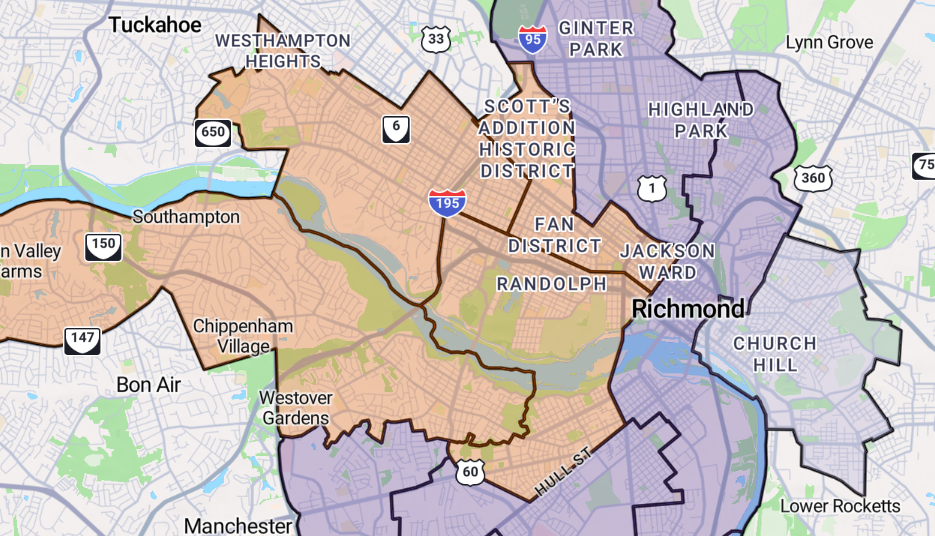
Still, whether that will happen if the rezoning passes is uncertain. The RKG study commissioned by Richmond found little likely change in the least dense residential areas proposed under the refresh — those designated as RD-A.
“RD-A produces virtually nothing regardless of scenario,” the consultants concluded.
Defining — and changing — neighborhoods
Despite RKG’s findings that change in single family neighborhoods will likely be gradual or, in some cases, almost nonexistent, anxieties have remained about how development encouraged by the code refresh could erode the character of the neighborhoods that exist today.
Those neighborhoods, with their beautiful architecture and tree-lined streets, are some of Richmond’s biggest attractions, those residents say, the unique enclaves that give the city its charm. Why risk altering them?
Most supporters of the rezoning interviewed by The Richmonder don’t dismiss those concerns.
“You want to feel like your neighborhood and your community has a certain quality to it and a certain beauty to it,” said Hunter. “Old buildings are cool — who’s going to deny that?” said Carvalhaes. And James, the Rosedale resident, acknowledged a place like Bellevue “does have a certain feel about it” and “there are ways in which too much of a new type of housing could kind of disrupt that.”
But many are also skeptical of the idea that the code refresh will usher in widespread demolitions, wholly remaking the fabric of neighborhoods overnight or even in a few years. And they question not only what “neighborhood character” means but who gets to define it.
Character “can be kind of a way of excluding people,” said James. “If you say this neighborhood has a certain character and you don’t want it to change, that has been used as an excuse to exclude people in the past.”
Sarah Vogelsong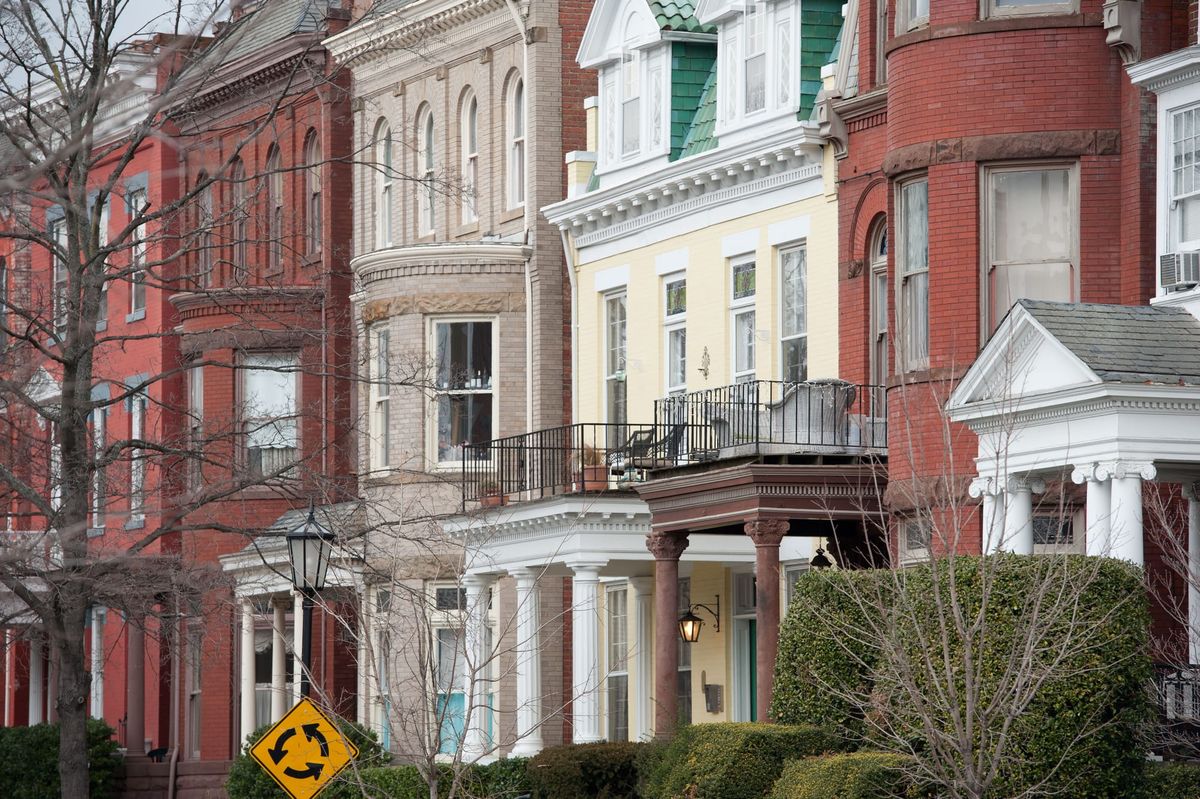
Tara FitzPatrick, a Sherwood Park resident who is not related to Fitzpatrick of HOME, said she sees the neighborhood character argument as “coded language” that is “deeper and more insidious than people are really willing to admit.” As an example she pointed to the Canopy at Ginter Park, a 301-unit development off Brook Road that was approved just before she bought her home and that neighbors said would destroy the area’s character.
“I don’t know what the character of the neighborhood was that the neighbors were referring to,” she said. But now that the project is built, “it seems to have brought a lot more diverse people into our neighborhood who I see walking around.”
She also objected to the often-repeated recommendation from opponents that people who want more density in the city should simply move to the neighborhoods that are already dense.
“They say things like, ‘If you want to live in the Fan or the Museum District or Church Hill … you can,” she said. “But we can’t. The inventory doesn’t exist.” When it does, others said, it is well out of reach financially for most younger people and families.
Christian Schick, a North Church Hill resident who leads the Richmond chapter of the national Strong Towns network, pointed out that in many cases, the current zoning ordinance doesn’t even allow the level of density and mix of residential and commercial uses that exists in some of the city’s most historic neighborhoods.
These “nonconformities,” as planners call them, mean that if a home burned down today, the zoning would not allow it to be rebuilt in the same form. Planning Director Kevin Vonck has said that in numerous older neighborhoods that developed prior to the 1970s code, more than half or even three-quarters of all properties are nonconforming.
“If the current zoning ordinance does not reflect what’s on the ground and we love what’s on the ground, then we as a city should not be so attached to something that’s against what’s on the ground,” said Schick.
As Richmond moves towards the third draft of the refresh, many supporters find themselves balanced between optimism that change is coming and anxiety that the wave of criticism officials have faced will derail the effort.
“Richmonders deserve to understand what the tradeoffs are, but if this goes to City Council and it fails and falls to pieces, what are we looking at as a city?” asked Schick.
Shannon posed a similar question: “If we do not pass this, if we do not address this, what’s the alternative?”
Contact Reporter Sarah Vogelsong at svogelsong@richmonder.org