Facing capacity issues, Richmond-area Meals on Wheels program scales back delivery days
When the food distribution nonprofit Feed More has run low on Meals on Wheels volunteers, it has had to turn to DoorDash.
The for-profit food delivery service worked as a backup option for getting meals delivered to elderly people who struggle to provide for themselves. But it didn’t fully achieve the goal of having the driver also check on the overall well-being of the person receiving the delivery.
Facing a broader societal decline in volunteerism and a growing population of seniors dealing with food insecurity, Feed More has changed its meal delivery model from five days a week to two. Recipients still get the same number of meals. They now get more food with each delivery, and those meals have to be spread out until the next drop-off comes.
“So they were getting one meal a day. Now, if they were getting five meals a week, they’re getting two on Tuesday and three on Friday,” said Lisa Webb, Feed More’s senior manager of senior nutrition programs and referral services.
For Thanksgiving, those deliveries to almost 700 recipients will include a traditional turkey meal in addition to the regular menu.
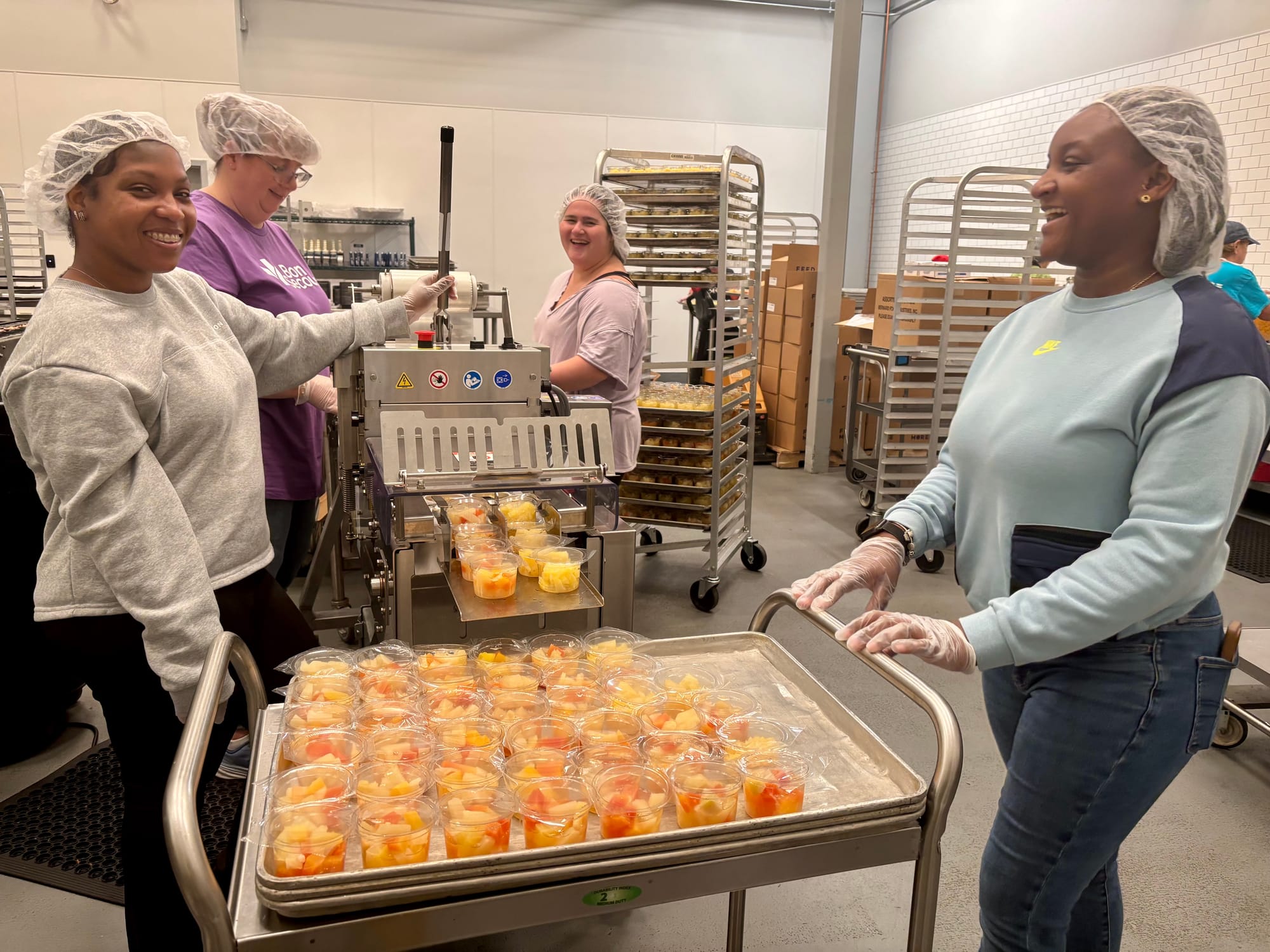
Like many nonprofits, Feed More saw volunteer availability decline during the COVID-19 pandemic and has had to work to rebuild.
In an August announcement sent to volunteers about the new delivery schedule, Feed More said long delivery routes were straining a system that had “reached capacity and paused accepting new clients.”
Before reducing the need for drivers by cutting back delivery days, the organization had about 1,000 delivery volunteers. Since the change, some volunteers have shifted to supporting other Feed More initiatives, such as backpack and snack packages for children.
The new delivery model, which has been rolled out in phases across central Virginia, is meant to make the program more sustainable.
“Food insecurity among seniors is growing, not only for homebound seniors but for seniors writ large,” said David Waidelich, the organization’s chief collaboration and programs officer. “With the challenges we’re seeing coming down the pike in the future, we’ve got to be more flexible, more adaptable, more nimble to be able to address that.”
After piloting the two-day delivery model in the Tri-Cities area last summer, Feed More has expanded it to the entire Meals on Wheels delivery territory for central Virginia, which includes five cities and ten counties. The new model was implemented last month.
The change has taken some getting used to, but Feed More says the reception has been largely positive.
“We had some concerns from caregivers who were nervous about their family member being seen and checked on five days a week versus two days a week,” Webb said. “But we started a friendly calling program. So on days when we're not delivering, if people wanted wellness checks, we would offer that.”
There have also been benefits with the new model, according to Feed More.
With recipients having a less-frequent delivery schedule to work around, Feed More has seen a drop in last-minute cancellations from recipients who won’t be home to receive food. Those cancellations are often related to medical appointments, so fewer delivery times can make schedules easier to manage and free up time for other things.
“The clients gave us really positive feedback, specifically saying they no longer had to make choices between food and medical care,” said Webb. “Which is really striking for us and really encouraged us to start looking at this as a system.”
In the early stages of the two-day model, Feed More saw last-minute cancellations fall by 50%, resulting in less food going to waste.
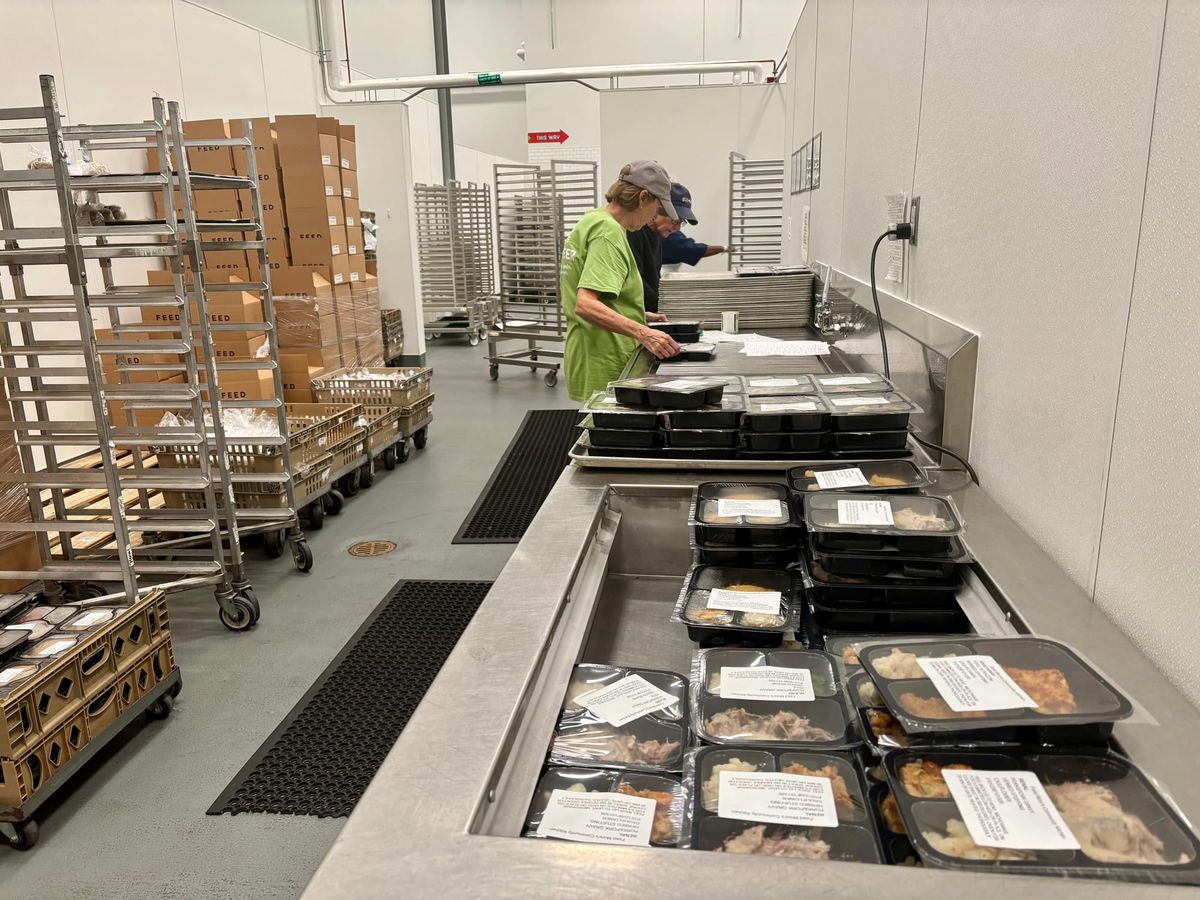
The meals are prepared at Feed More’s facility in Henrico County. When The Richmonder visited the site last month, workers were chopping beets, packing fruit cups and preparing an industrial-sized batch of chicken pot pie.
Delivery drivers load up their vehicles at the Henrico facility, then head out across the Richmond region to hit their routes.
Brooke Rogers, who coordinates Feed More volunteers, said some longtime Meals on Wheels volunteers have had mixed feelings about the change.
“Obviously a lot of the volunteers are feeling, of course, sad about missing seeing their favorite clients on a daily basis,” Rogers said. “But a lot of them understand the purpose of what we're doing. So it's that comprehension that I think has been super important… everyone knowing that we're aligned in the same goal of being able to feed more people.”
Meals on Wheels is meant to supplement recipients’ nutritional needs and wasn’t designed to be anyone’s sole source of food.
In addition to the Meals on Wheels program, Feed More also runs a food bank program that helps stock food pantries and soup kitchens throughout the community. The organization also runs a food help line and partners with local health care facilities to assist people wrestling with illnesses that may be linked to a lack of access to nutritious meals.
Though Feed More gets strong volunteer and fundraising support from the Richmond region, Waidelich said, there’s a broad variety of factors behind the challenges the organization is trying to navigate.
Artificial intelligence and automation are making big food companies more efficient, resulting in less leftover food available to donate to charity. The combined economic impact of tariffs, inflation, rising utility costs and policy changes impacting benefit programs is driving up demand for Feed More’s services because there’s more people, not just seniors, who are struggling financially.
“It’s just creating this perfect storm where more people are relying on the charitable network,” he said.
Feed More is adapting “smartly,” he said, and support from local donors and partners remains strong. But, he added, the organization can always use more “food, funds and volunteers.”
“There's no question,” Waidelich said. “Resourcing and volunteer hours are what we need.”
Contact Reporter Graham Moomaw at gmoomaw@richmonder.org