DPW had to retrieve 3,400 illegally dumped tires last year. It hopes cameras could help.
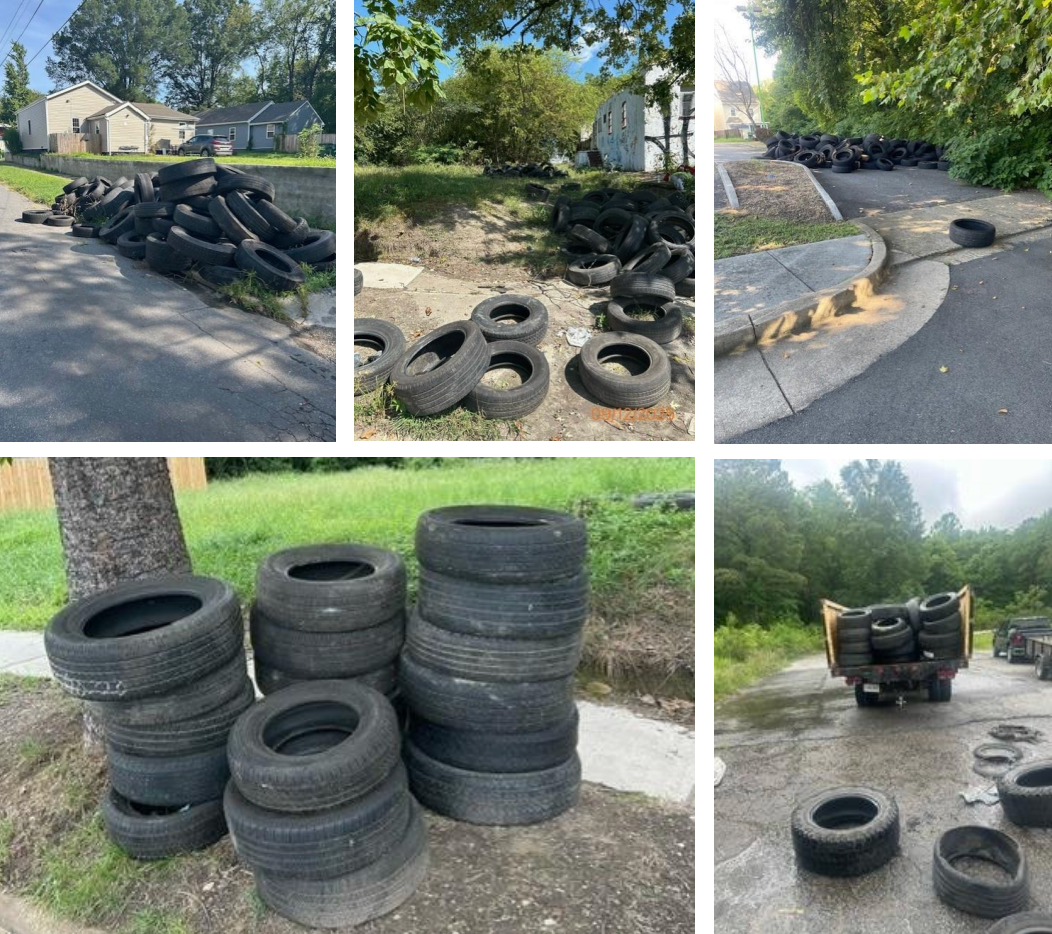
As Richmond continues to pour time and money into cleaning up illegally dumped trash and tires, the Department of Public Works is hoping that putting cameras at the most active dumpsites could help deter bad actors.
“I don’t want to pick up tires from the same location three or four times. None of us do,” DPW Operations Manager John Walsh told a City Council committee Tuesday. “That’s why we’re trying to get ahead of some of these things.”
Over the last year, DPW has received 423 complaints about illegal dumping in the city and has picked up over 3,400 illegally dumped tires, many of which were thrown out at the same sites.
Councilor Reva Trammell (8th District) said she was “sick and tired” of calls about illegal dumping.
Those retrieval operations come at a price. In addition to hourly labor costs, auto repair businesses or tire shops typically charge a $4 disposal fee per tire.
One job cleaning up 224 tires cost about $2,110 alone, said Walsh, between the tire disposal fees, equipment used and roughly 36 hours of worker time.
Altogether, collection of illegally disposed tires cost the city about $35,000 last year.
“While that doesn’t seem like a huge number when you’re talking about a budget the size of Richmond’s, understand that that number is in addition to our normal everyday processes,” said Walsh. “That’s a number that you don’t necessarily budget for. We absorb it because we have to.”
Time spent picking up illegally dumped trash and tires also takes away from the routine work that DPW is charged with doing, like normal trash routes and bulk pickups.
Over the past year, the city has been able to successfully prosecute two cases of illegal tire dumping, with the courts ordering the perpetrators to reimburse Richmond for the cost of the cleanup. But in many cases it is difficult for the city to determine who was responsible for an illegal trash pile.
Still, Walsh said that most of the people the city has caught illegally dumping trash or tires have not been Richmond residents but have come into the city from the surrounding counties.
“Really, it’s an alley problem,” he said. “Where you have alleys, you have opportunity for these sorts of things to happen.”
To cut down on dumping, DPW is planning to mount inexpensive trail-style cameras on properties owned by the city that see the most frequent problems.
Walsh said the department had consulted with the city attorney’s office about the issue and concluded that like any other resident, the city can put cameras on its own property as long as they are trained primarily on the site or on alleys surrounding them.
“We have to be careful as to how we put these up, but there’s not really a legal challenge to it unless you misuse it,” he said.
Data storage and security are another consideration. In response to a question from Councilor Sarah Abubaker (4th District), Walsh acknowledged that “in the event you can’t show that the data storage is good, then you could have some chain of custody issues with the evidence.”
However, he continued, “the courts have been pretty consistent that those systems are good for evidence production.”
Contact Reporter Sarah Vogelsong at svogelsong@richmonder.org