Data: Richmond is in for a tough budget cycle, but it’s for a good cause
The Richmonder presents a data-driven dive into the city's finances each year at its "The (Real) State of the City" event.
At this year's event, held on Thursday morning, the focus was on the tough budget decisions that lie ahead.
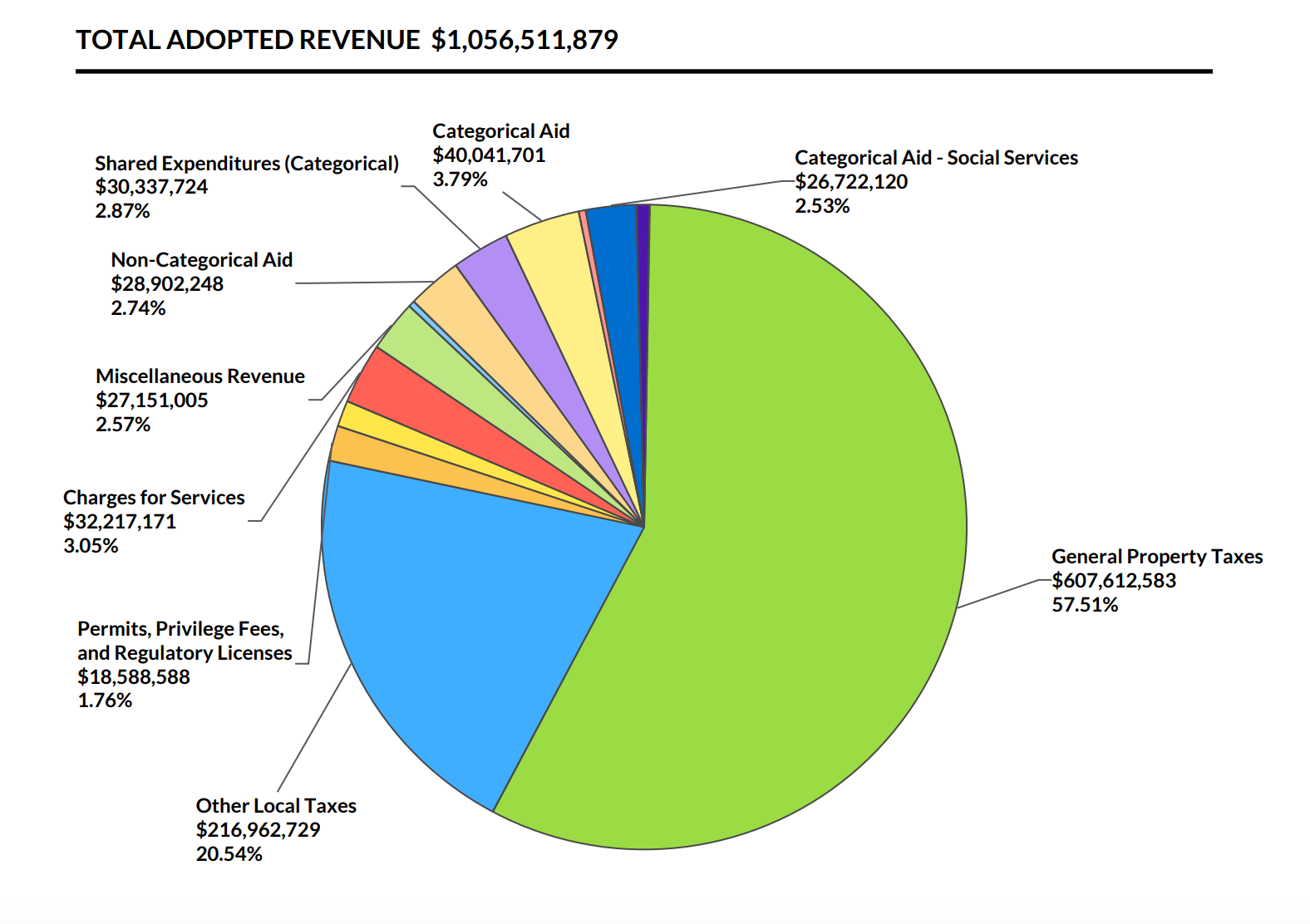
The majority of the revenue in Richmond's annual budget comes from property taxes.
Home prices have been skyrocketing in recent years, and with that has come a cash windfall for the city in the form of increased assessments and tax bills.
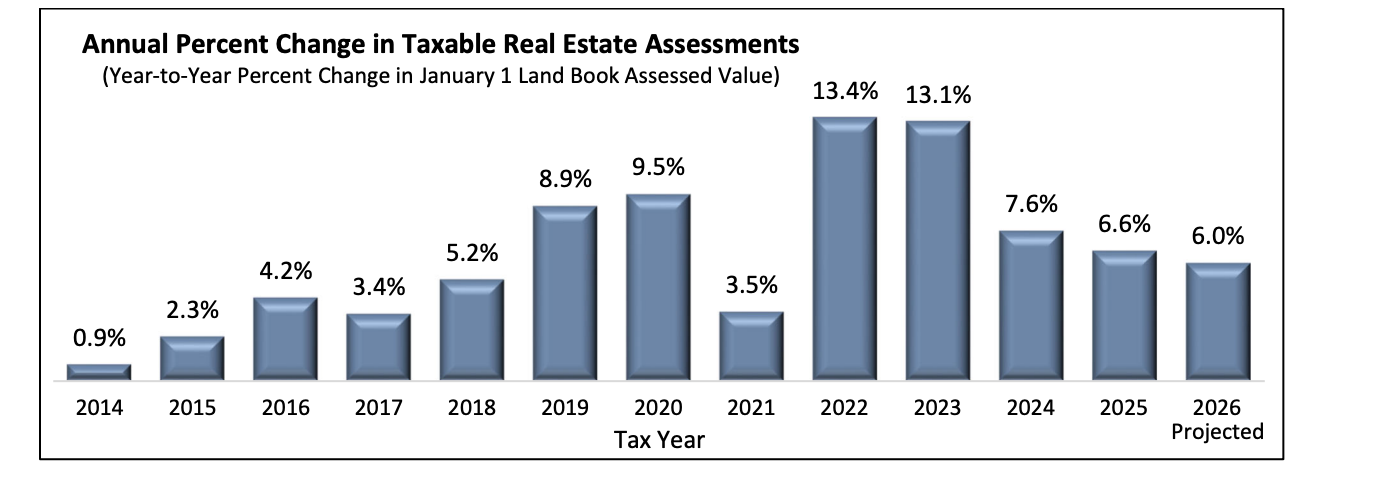
However, the gravy train will come to an abrupt halt this year.
In past budget cycles, the mayor and City Council have assembled the budget in the spring, but assessments are made in the fall. That has created a scenario where the city is making an educated guess at how much revenue it will have during the budget cycle.
Starting next year those cycles will be synced up, with assessments going out in the spring so they can be accounted for in the creation of the budget.
 Graham Moomaw
However, that means there will be a pause in assessments during the upcoming year, which will keep revenues from increasing at the same pace they have the past five years.
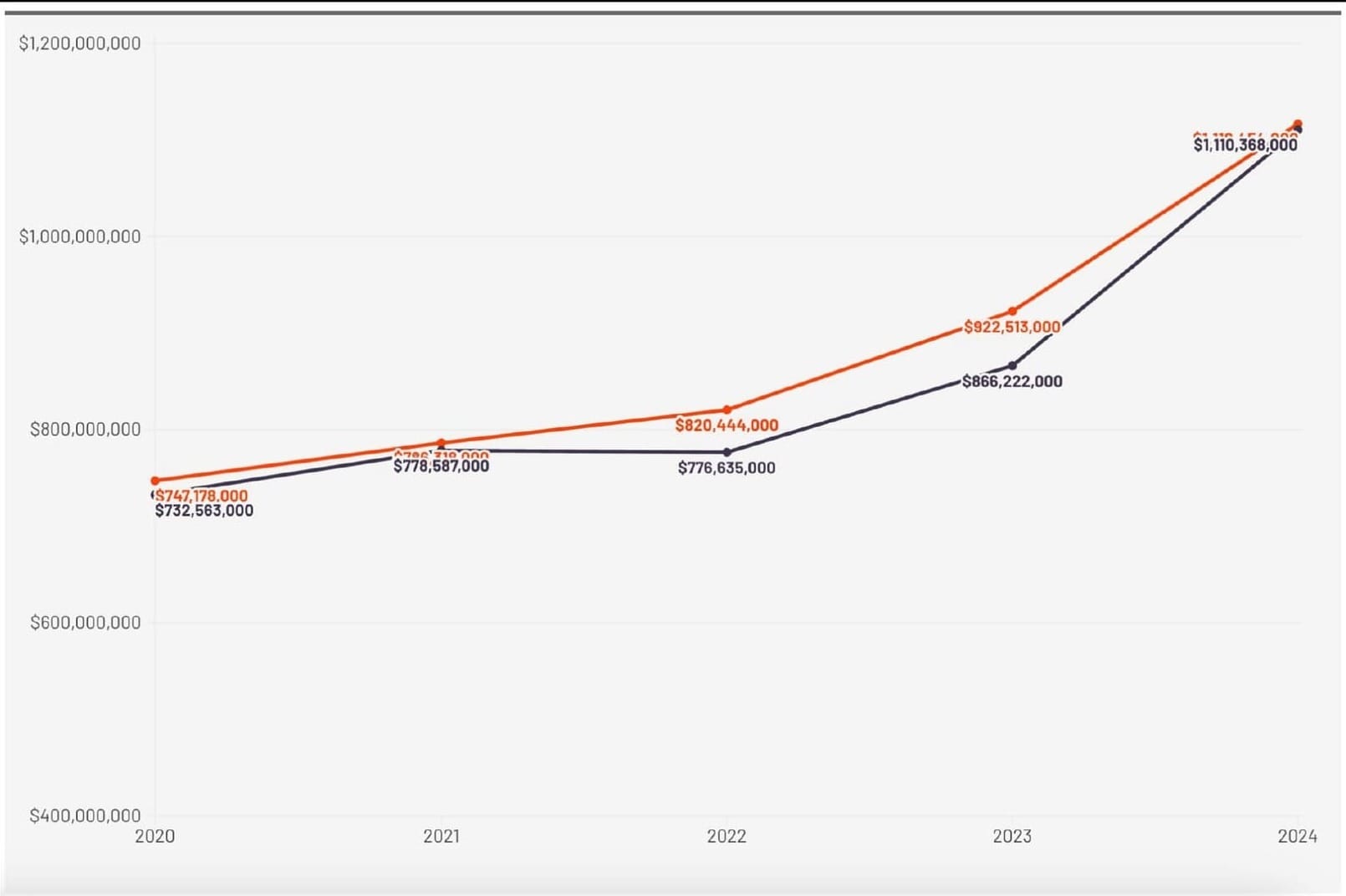
Richmond's annual revenues (orange) have increased by almost 50% in the last five years, but expenses (blue) have largely kept pace.
Those increases have been good for public employees. Most RPS teachers have received raises of 6%, 3% and 3% in the last three budget cycles, and City Hall employees received about 3% across-the-board this year as well.
However, in a year where new revenue will dip substantially, this will provide the first real test of collective bargaining, a right that was only recently granted to city workers.
The city will also have to work to rein in spending, which has proven tough to do in previous budget cycles.
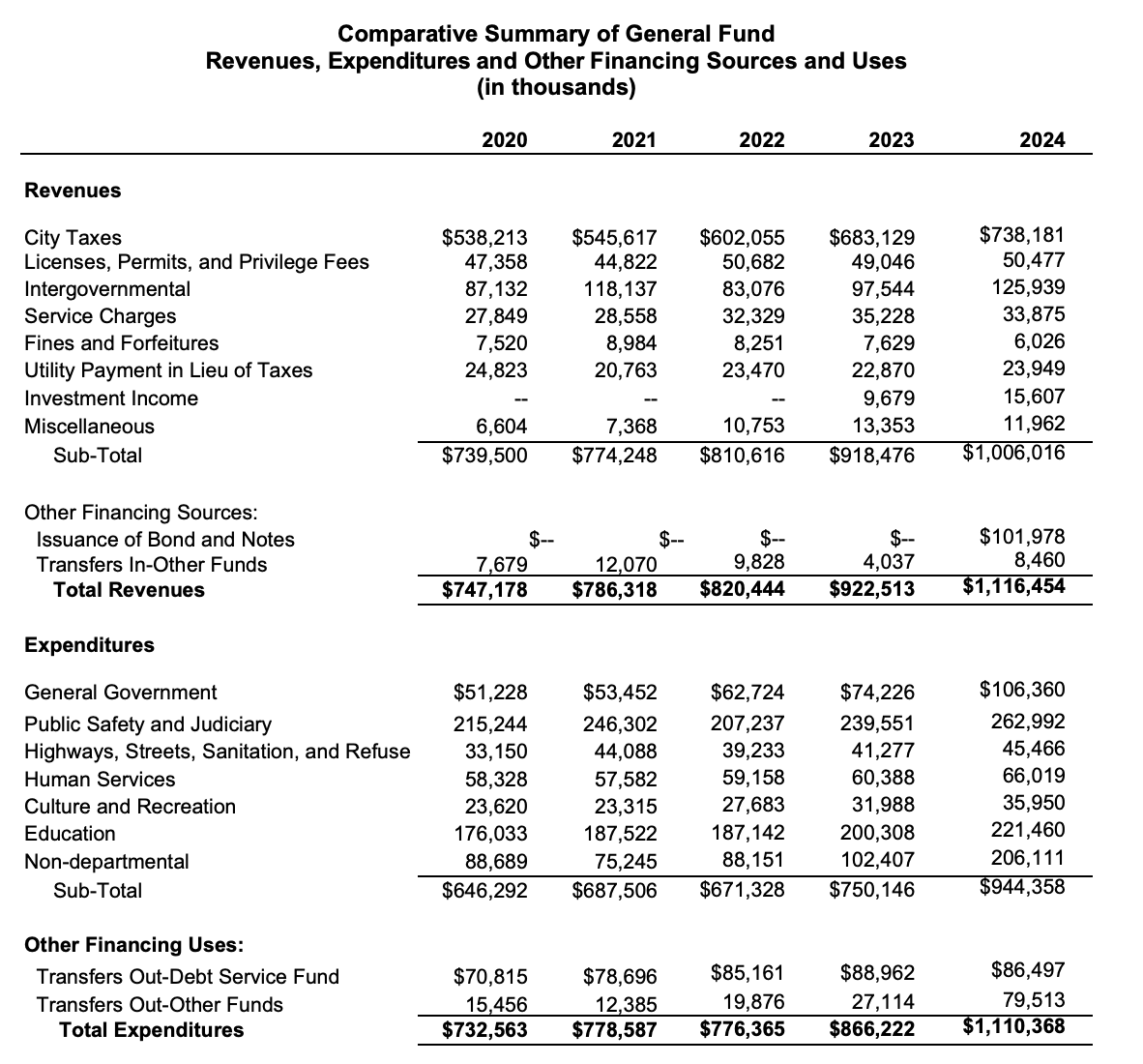
As Richmond's budget has risen, spending on public safety and education has risen by about $50 million in each department over that time.
Those expenses – teachers and police — are broadly popular, but the budget has increased in other ways as well.
"Non-departmental" spending has increased by about $118 million dollars, or more than the safety and education budget increases combined.
While some of those programs have been transformative, there is still significant work to be done in providing basic city services in a user-friendly way.
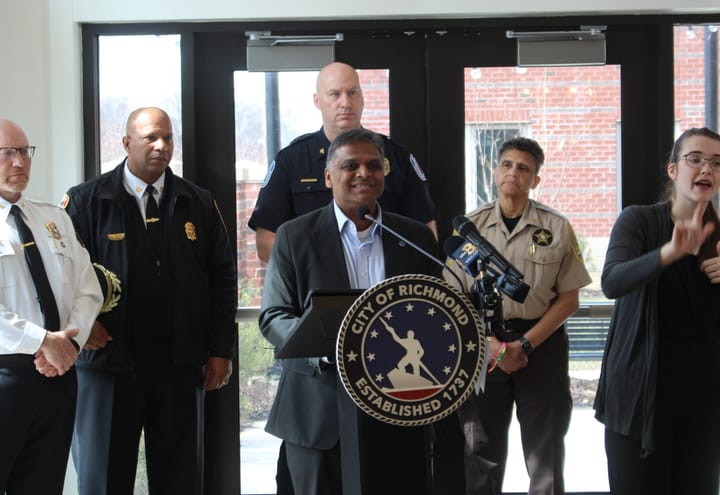
Those are the pushes and pulls that Mayor Danny Avula will wrestle with as he proposes his new budget to City Council this spring – finding a way to keep employees and department heads happy in a year where there won't be as much income growth, and new priorities for spending that the new administration is bringing to the table.
Contact Michael Phillips at mphillips@richmonder.org.