‘Compromise’ Mayo Bridge proposal calls for mountable barriers between bikes and cars
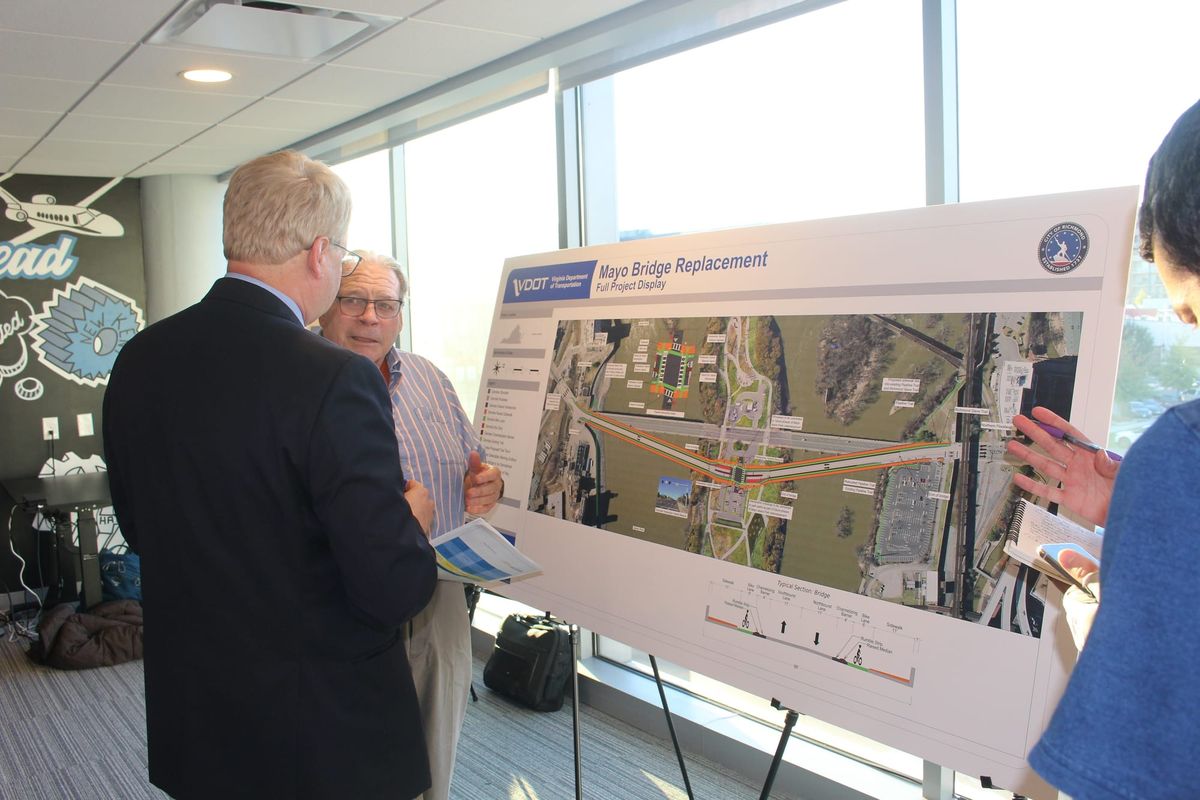
A “compromise” proposal for Richmond’s new Mayo Bridge aims to thread the needle between bicyclists’ concerns about safety and city emergency responders’ plea to be able to drive in planned bike lanes if necessary.
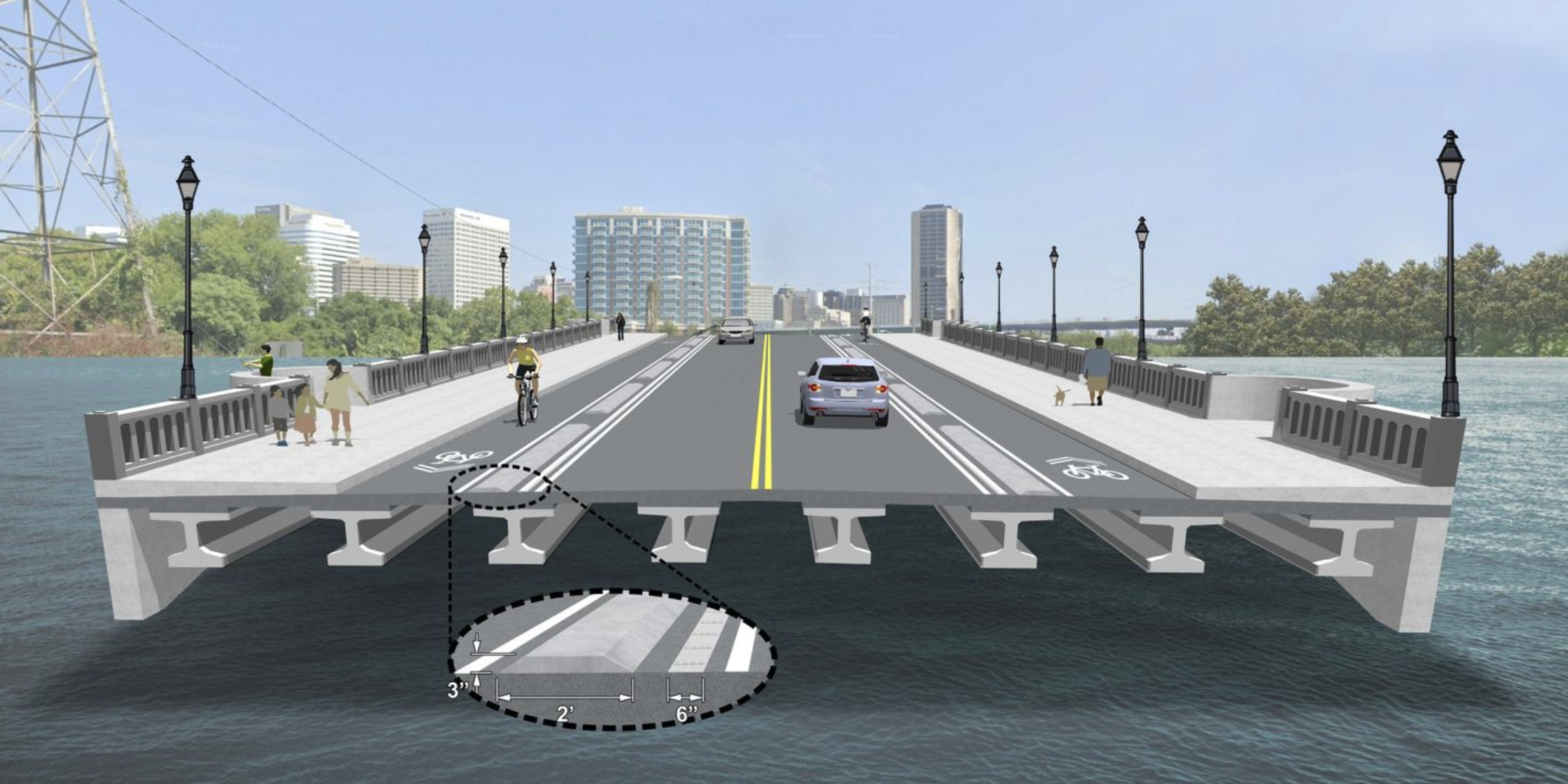
The latest plans, which the city and Virginia Department of Transportation put before the public last week, call for a 3-inch “mountable barrier” and rumble strip between bike and vehicle lanes. The idea, said engineers, is the structures would deter ordinary motorists from crossing the boundaries while also allowing fire trucks and ambulances to cross them in case of emergency.
Mayor Danny Avula said he believes the design “represents a pretty good compromise of all the different factors we have to consider.”
In order to get the $190 million bridge built, “we have to be able to submit a design to VDOT,” he said.
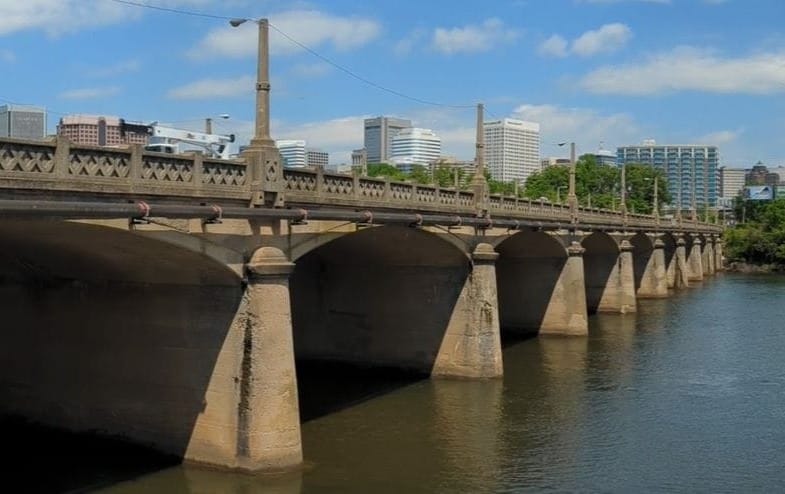
Virtually everyone agrees that Richmond needs to replace its 113-year-old Mayo Bridge, which the state classifies as “structurally deficient.” This January, the city and VDOT unveiled a plan that would rework the current four-lane design into two car lanes, two bike lanes and two wide sidewalks in an effort to encourage other modes of transportation — particularly as work continues apace to transform Mayo Island into a public park halfway across the bridge.
But how much and what kind of protection those bike lanes should have from the adjacent vehicle traffic remained a point of contention for both Richmond’s Urban Design Committee and Planning Commission.
 Sarah Vogelsong
“You’ve got to find a compromise for separation for bike safety,” Planning Commission Chair Rodney Poole told engineers and planners at the time.
The most recent solution aims to do just that with the mountable barrier and rumble strip while also introducing a number of design changes.
“It’s quite a few small things,” said Dale Totten, an engineer for VDOT’s Richmond District. “It really represents an amalgamation of all the feedback we’ve gotten.”
Among them: The sidewalks on both sides of the bridge are now a uniform 11 feet wide, rather than a 14-foot western sidewalk and 8-foot eastern sidewalk. And the rails now have an open design that will allow a view of the river.
The changes got a range of opinions at an open house held by VDOT in Manchester last week just a few blocks from the Mayo Bridge’s southern terminus.
Thomas Ripley said that when complete, Mayo “will be safer than all the other bridges” in Richmond for cyclists. He praised the wide bike lanes, addition of the mountable barrier and “visually interesting” design but questioned whether the lighting that’s planned will be sufficient to ensure the sidewalks and bike lanes remain adequately illuminated at night .
“I’m glad they kept the character of the old bridge in the current design,” he said.
Bike Walk RVA at Sports Backers has also endorsed the mountable barrier and rumble strip solution, calling it “a huge step in the right direction” and urging bikers to support it to allow the project to move forward.
“The barrier will severely limit drivers from entering the bike lane, and by extension will be much farther from pedestrians. A win!” the group wrote in a statement. “The barrier is ‘mountable’ by fire trucks and first responders to aid in response time. The reality is that this bridge’s importance to fire, police, and ambulance response factors heavily into the decisions around the bridge. That we found a compromise for a protected bike lane that can be supported by multiple agencies in the City speaks volumes to the years of work we put into this effort. Let’s not torpedo that now.”
Shannon Crooks and Carl Joseph, however, were less satisfied with the idea.
“You’re not going to get more cyclists if they feel like people can just merge over,” said Crooks, who urged the city to instead consider building fully protected double-wide bike lanes that could convert into fire lanes for emergency vehicles. (In those cases, bicyclists could join pedestrians on the sidewalks.)
That, she argued, would also make it easier for the city to ensure that bike lanes remain plowed and swept.
Shelly Barrick-Parsons also said she “would love to see a higher barrier between the cars and the bike and pedestrian area” and urged planners to ensure any final design makes the Mayo Island park feel like a destination and not just a halfway stopover.
“The more we can do to make the bridge part of the experience, and a pleasant experience, to access the park is important,” she said.
VDOT is accepting comments on the bridge design until Nov. 1.
Contact Reporter Sarah Vogelsong at svogelsong@richmonder.org