Catching up: Flock cameras are generating controversy, but Chesterfield’s contract runs through 2029
Automatic License Plate Readers, commonly known by the brand name Flock, have been in the spotlight recently in Central Virginia, as some residents and lawmakers have pushed back against their increased presence. What are they, why are they here and what’s next?
The cameras
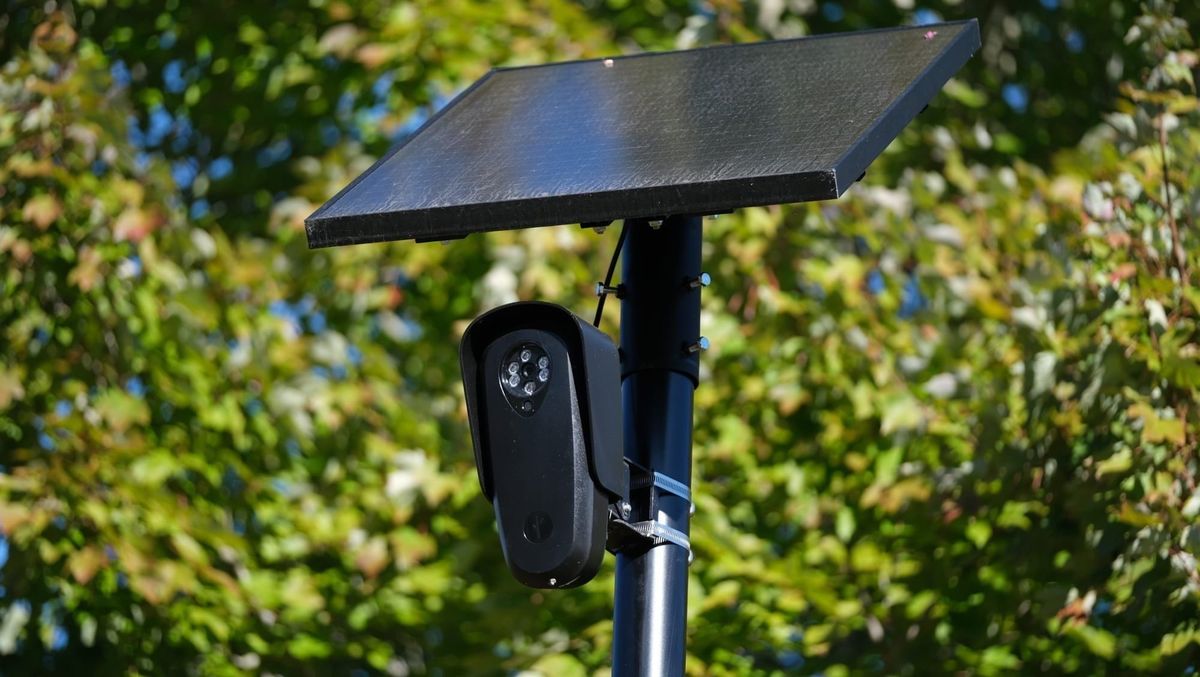
Flock Safety provides fixed cameras that automatically read the license plates of passing cars. The company — which contracts with businesses and local governments — has been under scrutiny throughout 2026 following privacy concerns and questions over the security of its data. In addition to Chesterfield, several other localities in the area use the cameras, including Henrico and Richmond.
Last week, Goochland County became the first Richmond-area locality to end its use of Flock’s Automatic License Plate Reader cameras. A look around the region shows a wide range of contracts for the services.
 Michael Phillips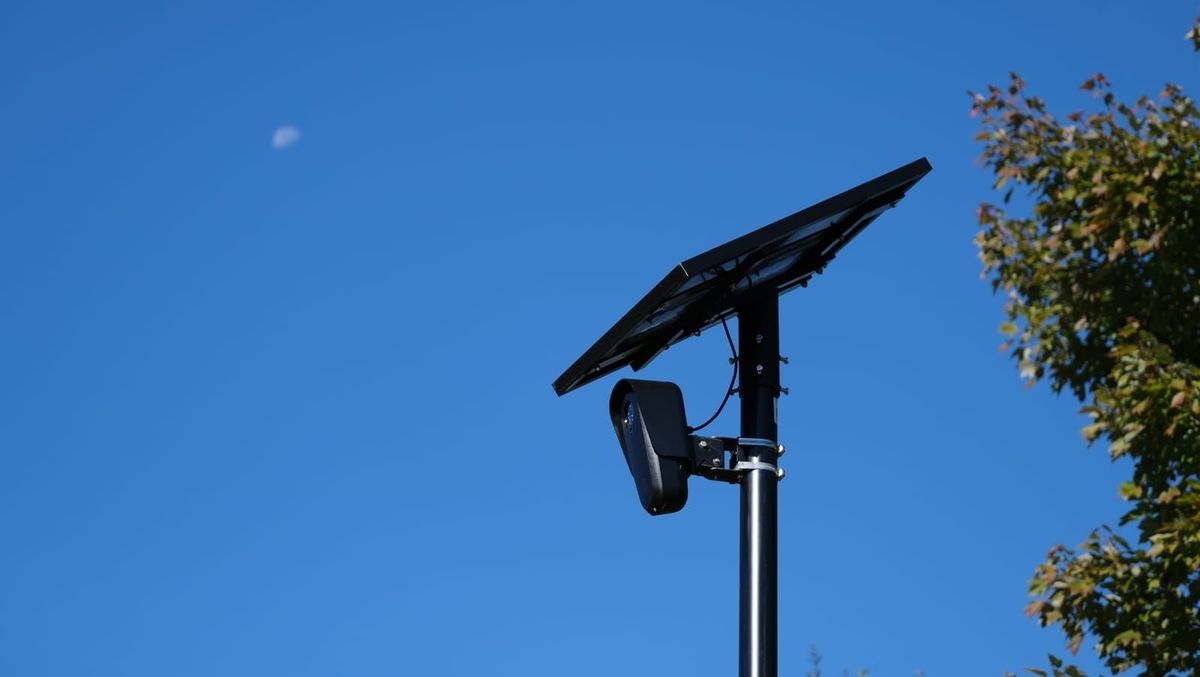
In Chesterfield
As of its 2023 contract with Flock Safety, Chesterfield County is currently home to 88 of these license-plate-reader cameras, and its contract will be up for renewal in June 2029 — six years after it was originally implemented. Those cameras watch over Chesterfield’s nearly 390,000 residents, roughly 4,430 people per one Flock camera.
According to the contract, which The Richmonder obtained through the Freedom of Information Act, Chesterfield is paying Flock Safety $2,500 to $3,000 per device, adding up to $225,000 per year.
This contract outlines that Chesterfield is responsible for anyone accessing county-related data. The county says that anyone working on Flock cameras must undergo a criminal background check. Camera-collected data is stored for 21 days and isn’t accessible through FOIA, per Virginia law.
According to the county’s website, these Flock-made cameras work in tandem with those attached to police vehicles, which Motorola Vigilant Solutions manufactures. Both compare their data to the FBI’s National Crime Information Center database. The county also says the cameras can’t track passers-by, recognize faces, record audio, issue traffic citations or be used without justification.
In 2023, the powers of Richmond and Chesterfield’s Flock systems combined to locate a man linked with a series of armed robberies in the city. A judge had upheld the localities’ use of the cameras in 2024 after the man had argued they invaded his privacy. Chesterfield’s website includes a list of eight similar stories of the cameras’ successes, all dated as having occurred in 2026.
 Graham Moomaw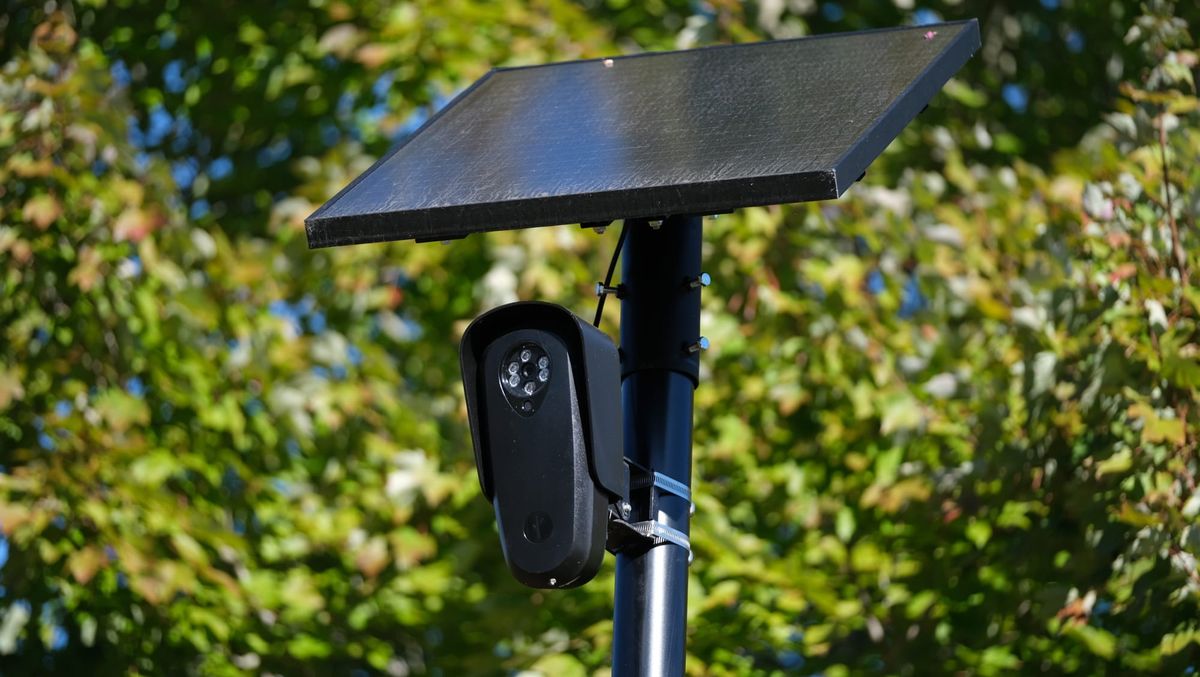
This year, Chesterfield’s license plate readers have led to roughly 300 arrests — half felony and half misdemeanor — and led to the recovery of 57 stolen vehicles between Jan. 1 and Aug. 3.
“It makes for a quicker, more efficient, safer, more effective response,” Lt. Col. Brad Badgerow said in 2025 during the Chesterfield County Police Department’s update to the county’s Board of Supervisors at that time.
Richmond and Henrico
Richmond says it has 99 Flock cameras. The city’s 233,655 residents live within 60 square miles, which means around 3,900 people per square mile and 2,360 per Flock camera.
The Richmonder previously reported the city paid at least $1,003,674.81 for Flock-related transactions between October 2024 and November 2025 to Insight Public Sector, Inc., the police department’s procurement vendor. This didn’t just cover cameras, but also gunshot detectors. The city still uses these, which makes it unique from Henrico and Chesterfield’s contracts.
Multiple contracts between the city and Insight indicate Richmond paid $25,000 to keep its stationary cameras for 2026, and $5,000 for its mobile cameras.
Henrico hosts 122 Flock cameras, 116 of which are stationary while the rest are mobile. That county’s nearly 340,000 residents live within 233.7 square miles — nearly 1,450 people per square mile and 3,024 people per Flock camera.
While Chesterfield’s contract spans a six-year term, Henrico’s needs to be renewed annually. Both pay the same rates per camera, and the latter recently extended its contract into 2027. For this term, a county spokesperson confirmed Henrico paid $323,574.50 (compared to Chesterfield's $225,000).
In its original 2022 contract with Flock Safety, Henrico’s annual payments added up to $125,000 for its 50 original cameras, and, according to the contract, increases are based on Henrico’s needs and budget.
Chesterfield is the least dense of these three localities. It spans 423.5 square miles, which divides out to about 920 people per square mile.
Another nearby city, Emporia, has fully leaned into Flock’s surveillance armada and become a “Flock Safe City.” On the other end of the spectrum is Goochland, which ditched its Flock cameras on Thursday. The county nodded to residents’ privacy concerns as the decision’s primary motivator.
Why do people care?
A citizen-led group, DeFlock Chesterfield, believes Flock cameras threaten civil liberties, according to the organization’s website.
“We share respect and admiration for every public servant of Chesterfield County,” its website reads. “While we may trust the police department and support reasonable efforts to ensure public safety, we have grave concerns about the broad and lasting implications of a privately-operated surveillance system that tracks nearly all citizens’ movements throughout our county.”
Its petition, “End Mass Surveillance in Chesterfield County,” has received 551 of its desired 700 signatures, and its Instagram account has 353 followers.
State Sen. Glen Sturtevant, a Republican who represents most of Midlothian and southern Chesterfield, took to social media Monday to call for a complete ban, saying he’d introduce legislation to kick the cameras out of Virginia for good, similarly citing safety concerns.
“They don’t just catch criminals, they track everybody,” Sturtevant said in his announcement video. “Catch criminals, stop tracking everybody else.”
Contact Eleanor Shaw at eshaw@richmonder.org. She is a Report for America corps member.