Bryan Park dams to be removed as part of broader stream restoration
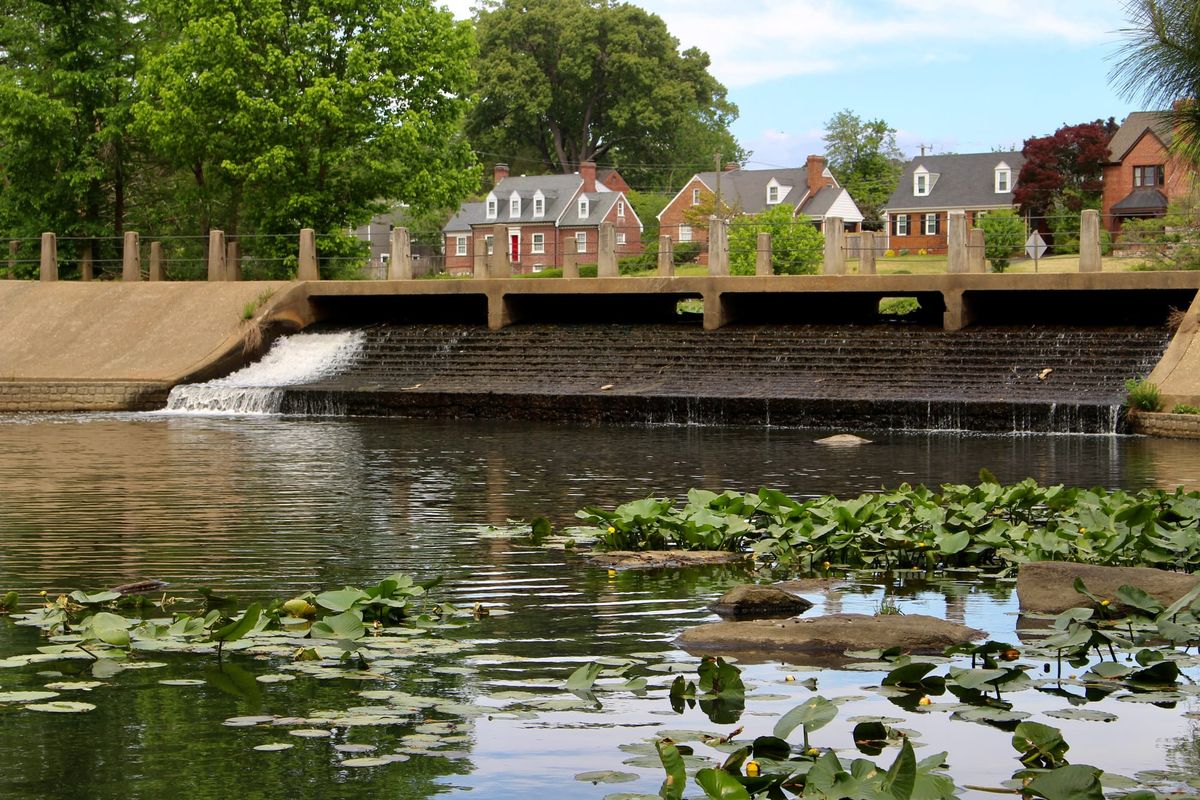
Two dams that have held back the waters of Upham Brook in Bryan Park for more than a century are headed for demolition.
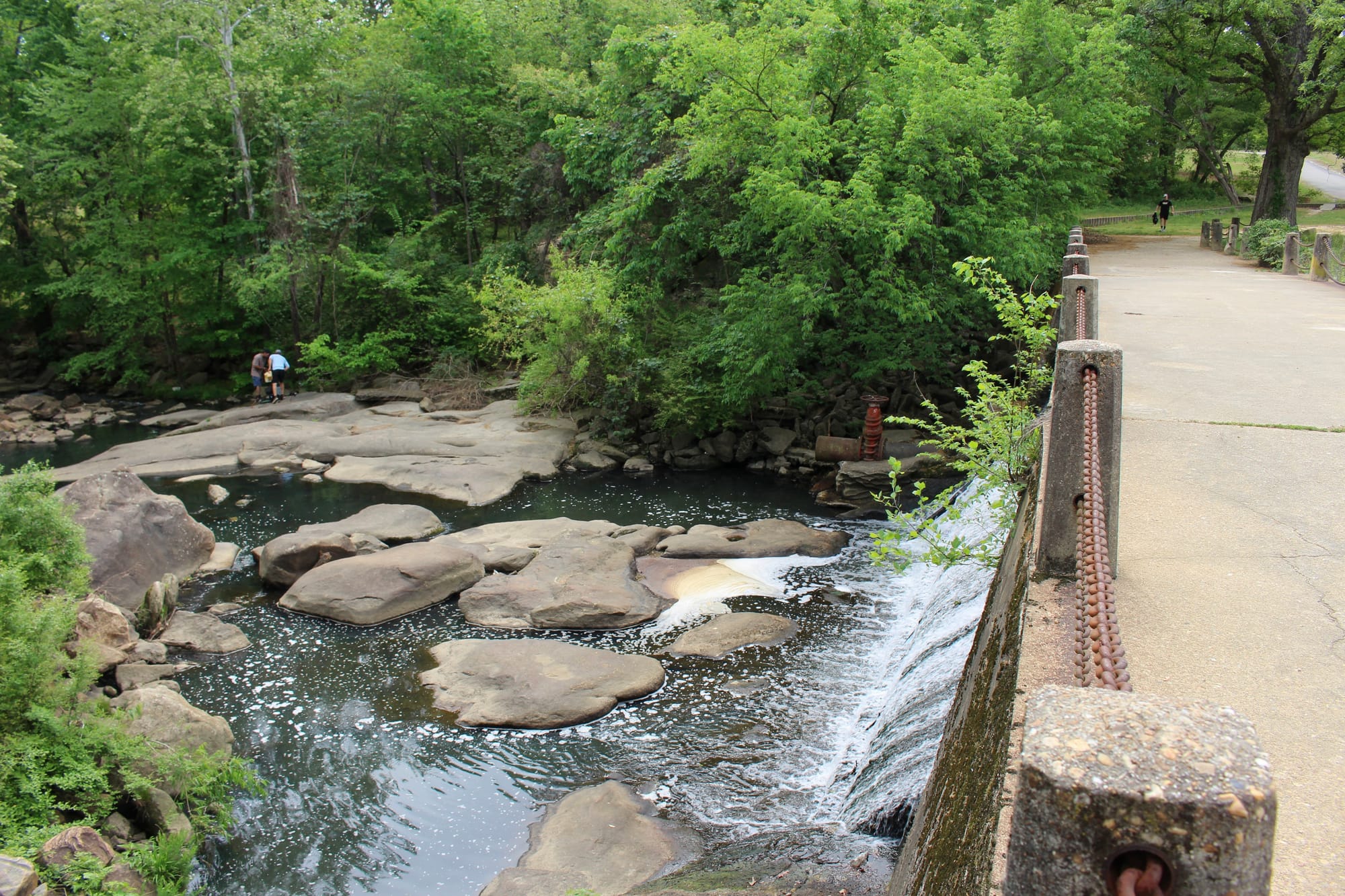
Officials say the Upper and Lower Young’s Pond dams are deteriorating and lead to frequent flooding. In 2022, the Virginia Department of Conservation and Recreation notified the city that the Lower Dam no longer meets dam safety rules; the city has worried that the Upper Dam, while not regulated by the state because of its smaller size, could also be at risk of failure in the future.
As a result, Richmond has decided to remove both structures while simultaneously restoring Upham Brook to a more natural course.
“Upham Brook will no longer be a pond,” said Ann Houseman, an engineer with consultancy Hazen and Sawyer, which is working on the project. “It will be a stream.”
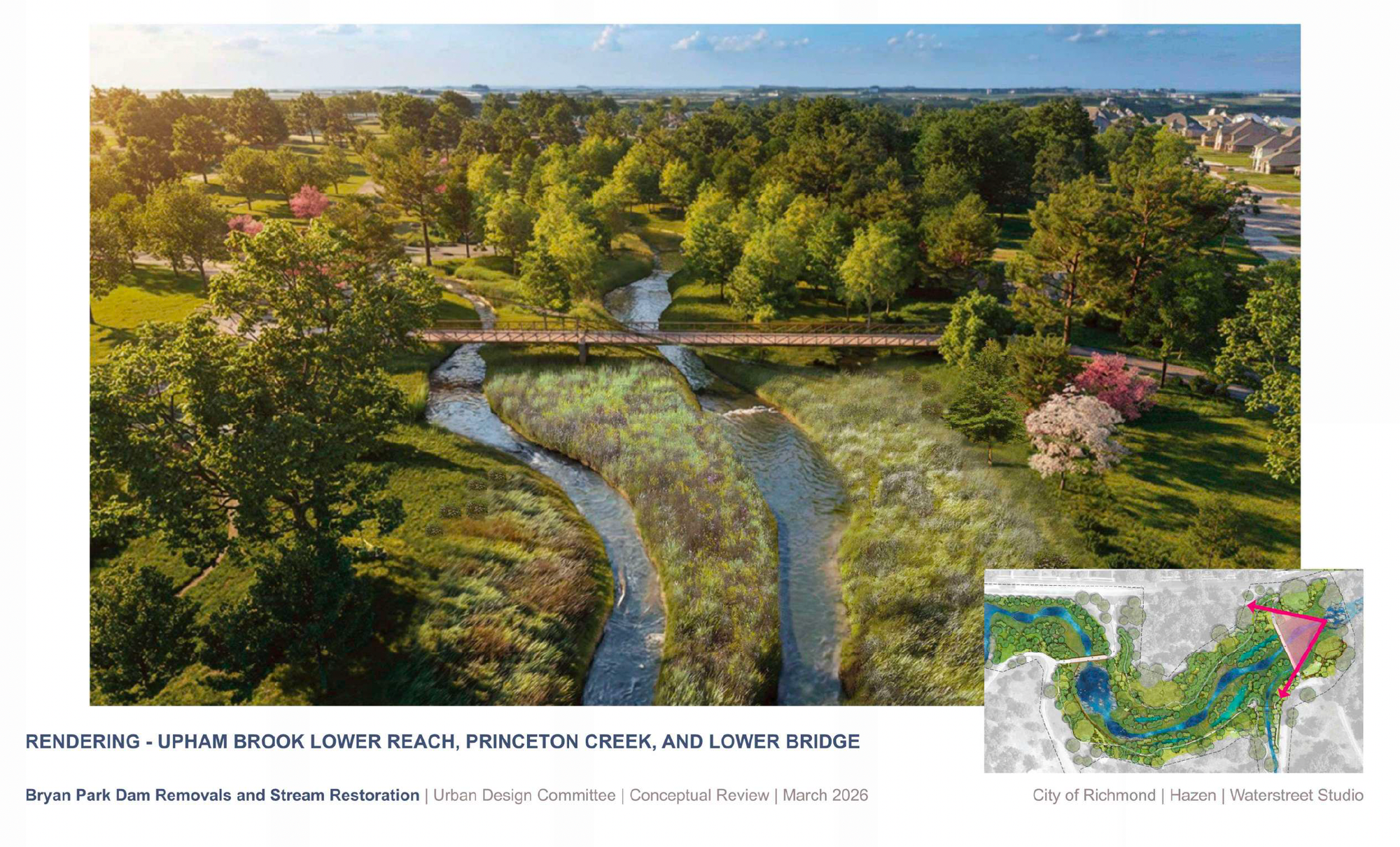
According to conceptual plans presented to Richmond’s Urban Design Committee on Thursday, the dams will be replaced by pedestrian bridges. A pool will remain just below the new Upper Bridge, which will also be part of the larger Fall Line Trail under development, while the Lower Bridge will be relocated about 100 feet upstream of the current Lower Dam to preserve what Houseman called “a particularly large and beautiful oak tree.”
The $20 million project will also involve the planting of 450 native trees, the removal of invasive plants and the installation of signs, new trails and new disc golf baskets. Ninety-one existing trees will be cut down, of which 20 “have been identified as either invasive, unhealthy or already dead,” said Houseman.
“There are impacts,” she said. “We acknowledge that, but we’re trying to minimize those as much as possible.”
The $20 million project will be partly paid for by a $5.7 million grant from Virginia’s Community Flood Preparedness Fund. Money to cover the remainder has already been included in the city’s capital improvements budget, said Richmond Parks and Recreation Deputy Director Nissa Richardson.
Parks and Rec staff, as well as engineers and architects with Hazen and Sawyer and Waterstreet Studio, say the stream restoration will have a multitude of environmental benefits.
Fish, which currently can’t swim farther than the Lower Dam, will now be able to traverse about 5 miles of waterway. And Houseman said that water quality will improve by “taking what’s currently a stagnant body of water and returning it to a more natural stream state.”
“That moving water is going to increase dissolved oxygen and decrease water temperatures, which improves the environment for aquatic life,” she said.
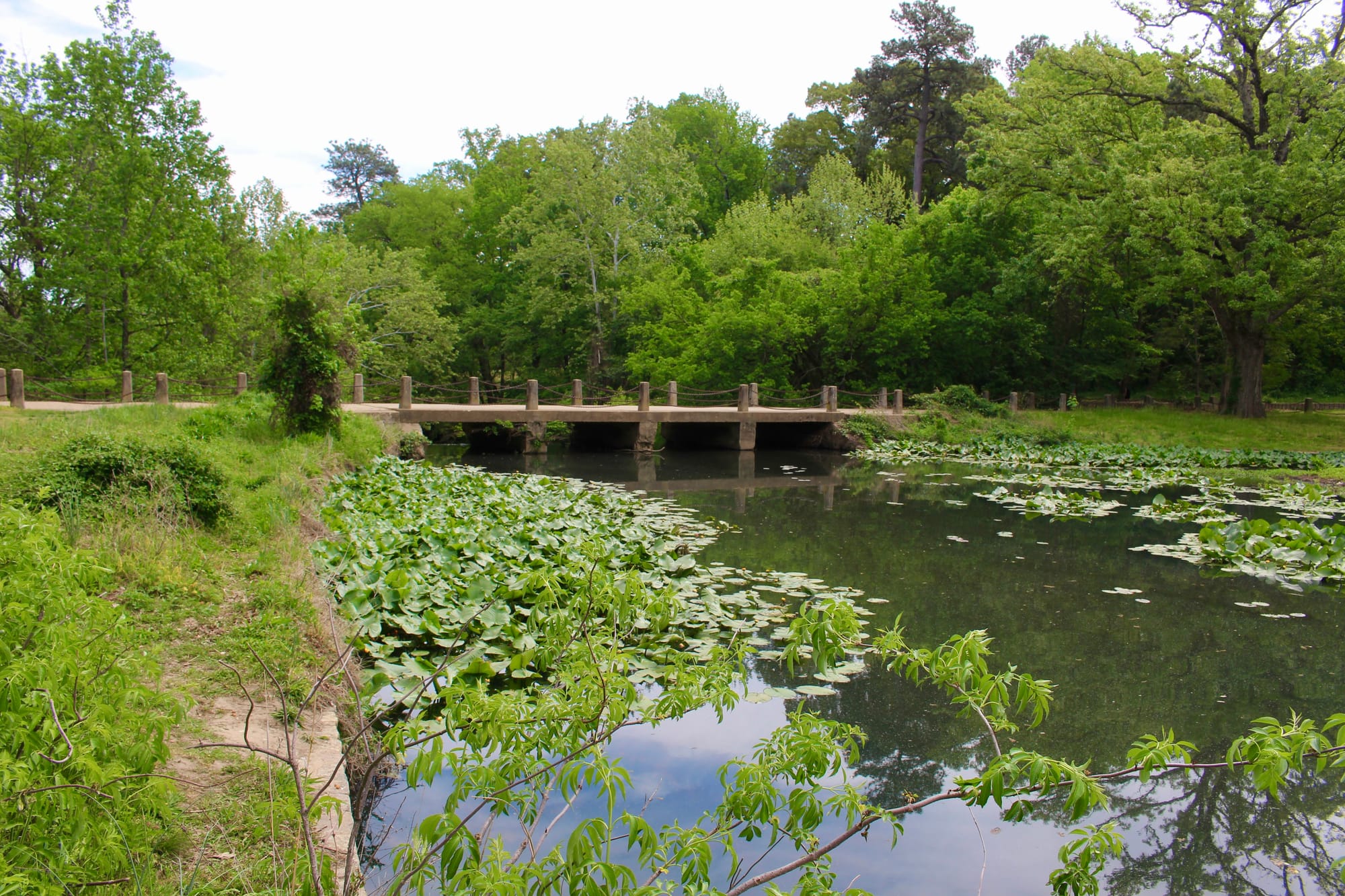
While the dams are not up to date with regulations, planners said they are still historic: The structures date back to the beginning of the 20th century and predate the donation of the land to the city by the widow of Richmond Times-Dispatch owner Joseph Bryan, for whom the park is named.
In recognition of their long life, landscape architects are proposing to repurpose the concrete posts that today line the pedestrian walkways across the dams as pavers that will line the entrances to the new bridges. Cobblestones used in pathways around the water would be relocated to create “gathering spaces” amid groves of trees.
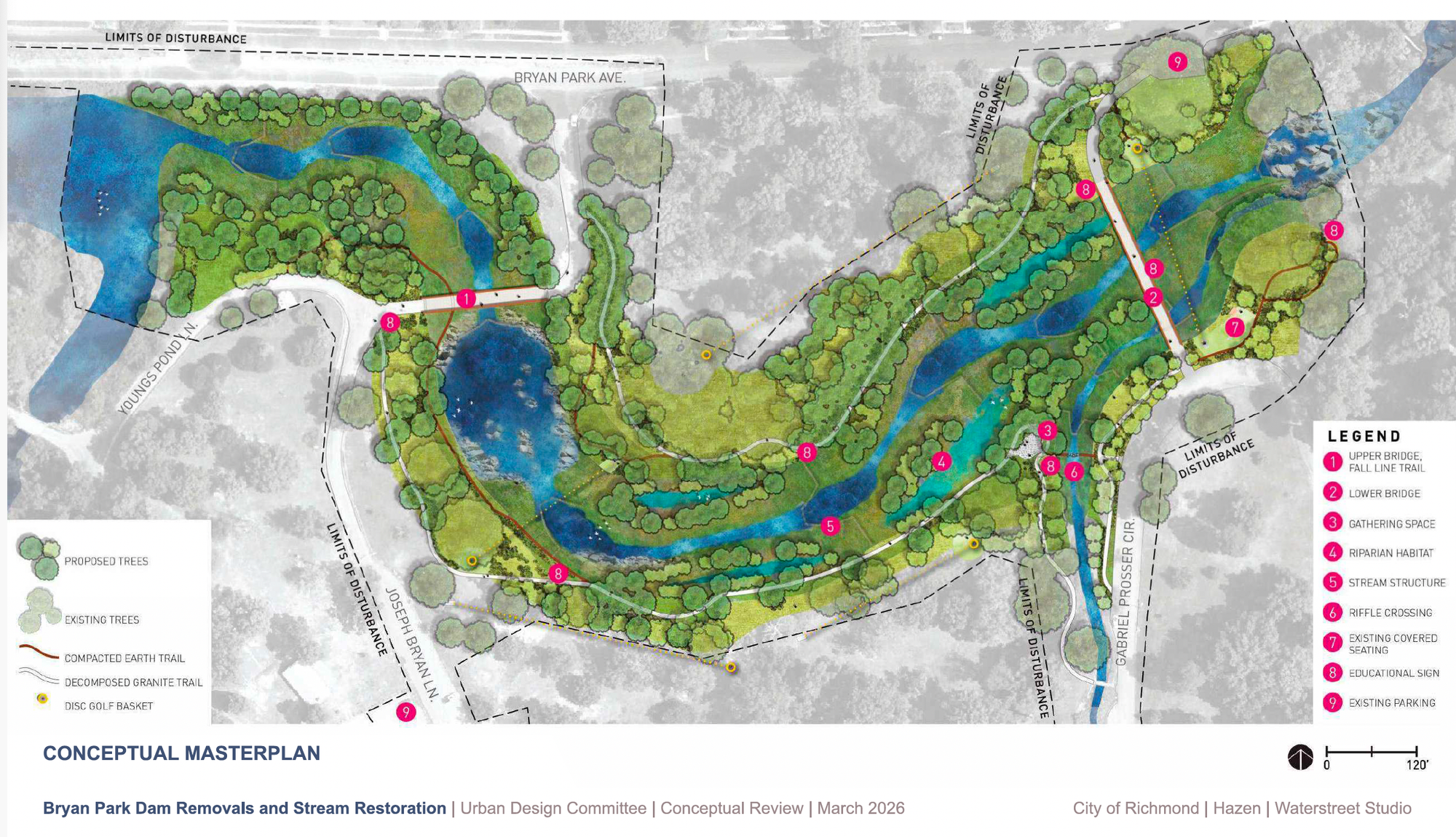
Public input, which began as early as 2024, is still ongoing. A final set of plans will be reviewed by the Urban Design Committee this summer, before the project goes to the Planning Commission for its consideration. The current schedule calls for construction to begin in early 2028, with a completion date of late 2029 followed by a five-year monitoring period.
Despite several questions, UDC members were overwhelmingly positive in their reception of the plans Thursday.
“It’s a beautiful project,” said Amelia Wehunt. “I think it’s going to be a magical little world to get to go visit.”
Contact Reporter Sarah Vogelsong at svogelsong@richmonder.org