Branch Museum celebrates two creators who turn trash into art treasures
For Thornton Dial, art is about survival.
Born and raised into a sharecropping family in rural Alabama at the beginning of the Great Depression, Dial experienced both Jim Crow segregation and the civil rights movement. Influenced by Martin Luther King Jr., Dial used “found art” to confront issues of racial oppression.
On Thursday, he'll share the spotlight with Sanford Kogan in the Branch Museum of Design's newest exhibit, “Becoming.”
The exhibit brings together two artists who transform discarded materials into something entirely new.
As Ezie Junkala, co-curator of the exhibit, notes of the pairing of the two artists, “Both of their work embodies a sense of whimsy and survival.”
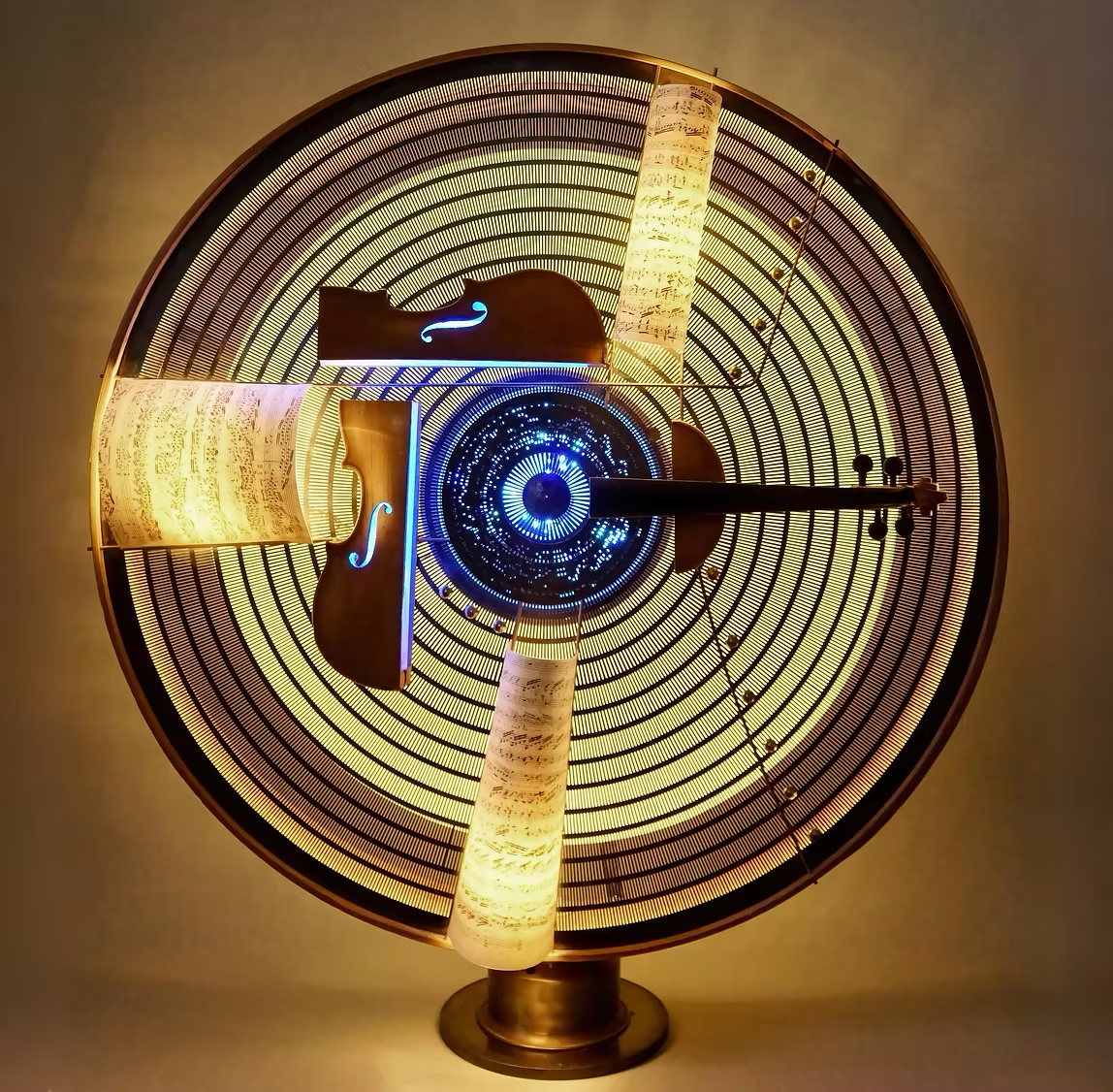
Kogan coined the term “FroiDesign” for his work, partially a play on the French word for “cold.” “It’s a term I came up with about 15 years ago,” he said. “The conceptual idea is that the materials I find are dead. They’re cold, not alive, and when I incorporate them into a sculpture, I’m giving them life.”
Kogan’s most notable use of “life-giving material” is light, and he fashions himself as a sculptor of light.
“I use light like an artist might use paint by incorporating light into a sculpture — how I place it, and how it’s reflected or refracted,” he said.
This is one of the notable differences between his and Dial’s work. Moreover, this particular form of artistic expression could not have been done 30 or 40 years ago when LEDs were not as popular (Dial was prominent in the 1980s and died 10 years ago).
Kogan added, “LEDs are very small, so you can place them within the context of materials. Like a painter with a brush, I incorporate LEDs, and I’m very careful about where I place them, how I place them.”
Kogan has a respect for Dial's work.
“The input to his sensibility about the world came from rural Alabama….and how he created these absolute masterpieces,” Kogan said. “Many can be compared to the abstract expressionists, even though abstract expressionism was a completely different school, and he was doing this on his own as a self-taught artist.”
Kogan emphasized that Dial’s curating took a different approach in the found art movement and tied into his life, what Kogan called “industrial scenarios,” finding pieces that were going to the trash anyway.
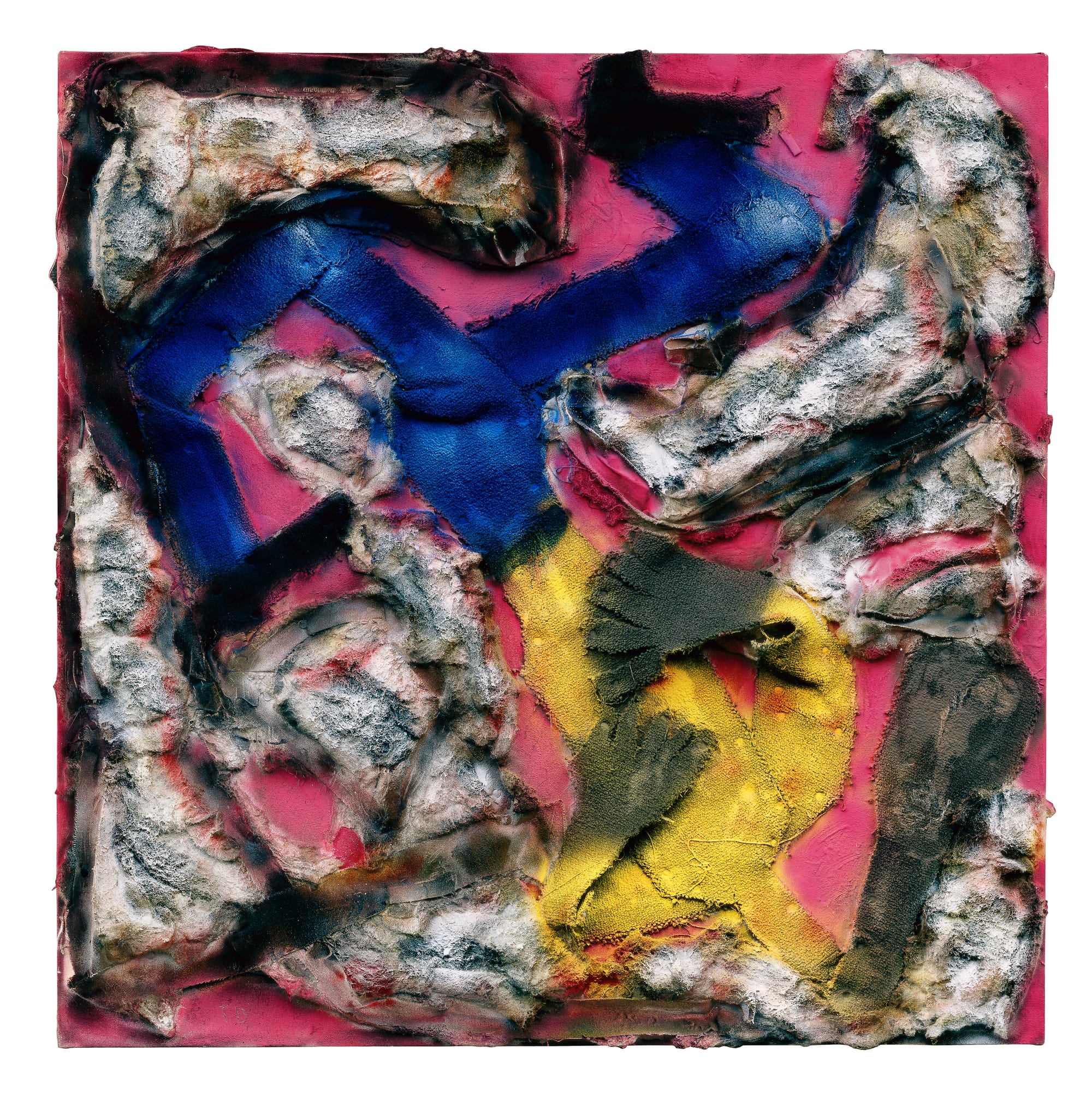
Dial would deliberately seek out specific discarded materials, such as the pieces that comprise his work “Contaminated Drifting Blues” that is part of the exhibit. The title of the piece is a reference to the catastrophic flood that happened in Dial’s hometown.
“He went out of his way to seek out materials, actual debris from the flood,” Kogan said.
The resulting piece is a large-scale multimedia assemblage and painting using heavy layers of found debris, along with oils and enamels that protrude from the surface.
“Part of his art process was trying to find the humanity in the inhumane,” Katie Foster, the museum's acting executive director, added.

As Kogan notes of both his art and Dial’s work, “There’s a real sense of lightness and whimsy, to take something that’s discarded and transform it into something new.
“We start with the reclaimed. We both found materials. That is a common point in terms of how we started, but if you look at where we go with it, it’s really different.”
Kogan is much more concerned than Dial with the structural form of objects, stripping them of their original utility and then reimagining them, often curating materials from flea markets and estate sales, emphasizing that he might buy an object and have it for five years or more before realizing two or more pieces from his gathered objects that suddenly come together.
For example, one of his aesthetic frameworks that became fashioned into an art piece is a lobster trap. “I didn’t really have a clear vision of what the idea was, and it evolved over time,” he said.
Junkala, the co-curator, notes that both of these artists are in the business of transformation. “They transform these objects into something entirely new. At The Branch Museum, we really try to ask people to shift their perspectives, to look at something in a new way. Both of these artists do that beautifully.”
After Thursday's opening night, the exhibit will run through Dec. 16.