Avula rolls out plan to relaunch city government’s payment register

Fixing City Hall’s defunct system for publishing its own financial transactions hasn’t been a top priority for Mayor Danny Avula’s administration, the mayor said Friday.
But after a push from a City Councilor Kenya Gibson (3rd District) and media coverage focused on the city’s non-compliance with its own transparency law, Avula now says he’s working on it.
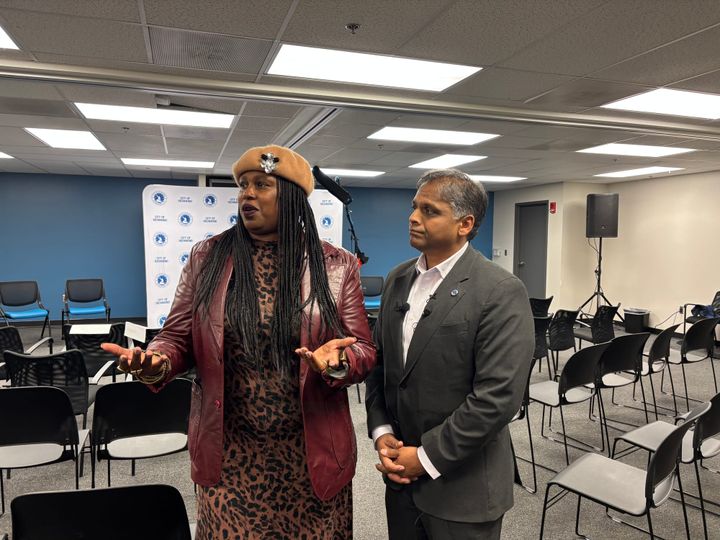
“I will be perfectly honest to say this fell into the category of important, but not urgent,” Avula told reporters at a media briefing Friday morning.
After making government transparency a key theme of his 2024 mayoral campaign, Avula is rolling out a plan to tighten and relaunch the city’s online payment register.
The city has been required to publish the payment log since 2015 to show the public how tax dollars are spent. However, officials stopped publication in 2019 after deciding the process was creating too much review and redaction work for city staffers trying to keep sensitive information out of the database. Out of fear something had already been missed, officials also took down the data they had published before they stopped updating the register.
To try to craft a version of the payment register that doesn’t overwhelm city staff, the mayor’s proposed ordinance scales down the scope of what the city would proactively publish. It also gives the city’s lawyers more discretion to exclude financial info the city deems confidential or sensitive under various privacy laws.
The broad nature of the 2015 payment register plan approved by the City Council, Avula said, created an unmanageable amount of work for city staff, which had to go through the financial data line by line to ensure no sensitive or protected information was released.
“The city never committed the resources to figure out OK how many people is it going to take to do this work,” Avula said.
Though the city has explored ways to outsource or streamline the review and redaction process, Avula is proposing a fix that would cut down the amount of information the city would have to proactively disclose online. By extension, the less comprehensive register would require less staff time to maintain.
The mayor and his team explained they intend to modify the register so that it would primarily serve as a log of payments to vendors doing business with the city and payments to employees being reimbursed for city-related expenses. Their proposed register would no longer include payments to individuals such as refunds on tax or utility bills or forms of financial assistance paid out by the Richmond Department of Social Services.
RDSS Director Shunda Giles said that, under the law, there are criminal penalties for anyone who releases protected social services information.
“A thing I learned in law school is never to go to jail for or with your client,” Giles said. “Narrowing it a bit will make it a little easier to be able to disseminate that information.”
Scaling down the data to focus on vendor payments, Avula said, would also bring the city more in line with what other localities and the Richmond School Board already publish.
“Our team did a lot of work to look at best practices from other communities, but really at the end of the day is protecting the privacy of folks that is dictated by state and federal law,” Avula said.
Under the previous payment register format, any protected information would have been redacted. The basic financial details showing a payment occurred would have been viewable to the public, but the name of the person receiving a payment would sometimes have to be redacted. Avula’s plan would lighten the staff workload by allowing those sensitive payments to be excluded from the register altogether.
Avula’s draft proposal goes further than simply excluding payments to individual people rather than companies. Under the mayor’s plan, the city would not proactively disclose when it has paid out money to settle a lawsuit or a legal claim, regardless of whether the money is going to a person or a business.
Virginia law allows legal settlements involving public funds to be treated as confidential. However, courts have ruled that accounting records related to those deals — which document money changing hands without disclosing the full terms of the settlement — are inherently public.
When asked why that information should not be available to Richmond residents, Avula’s team acknowledged legal payments are subject to the Virginia Freedom of Information Act and probably would be released in response to a FOIA request. The mayor and his aides did not give a clear answer for why public information should be excluded from the register along with the more confidential types of transactions. Avula and his spokesperson said they would discuss the matter further with the city attorney’s office.
Avula’s plan seems to grant the city’s lawyers more discretion to choose what can be withheld entirely from the payment register instead of being disclosed with redactions.
The proposal says officials can exclude any information deemed confidential or exempt under FOIA, Virginia’s Government Data Collection and Dissemination Practices Act or any other state or federal privacy law.
Many exemptions in Virginia’s FOIA law are discretionary. That means officials are not legally prohibited from releasing exempt information but can choose to do so. Determining whether a FOIA exemption does or doesn’t apply to a particular record is often open to interpretation, and FOIA disputes often arise when government lawyers interpret exemptions as broadly as possible.
Avula’s proposal gives city officials the power to interpret those laws to decide what information should go into the payment register and what should be kept out.
“The Director of Finance, in consultation with the City Attorney, shall determine the appropriate application of exemptions and may withhold, redact, or aggregate information as necessary to ensure compliance with this section and applicable law,” the draft proposal says.
The city’s existing payment register rules require publication of payment dates and invoice descriptions that detail the goods or services being purchased. Under Avula’s plan, both those categories would no longer be posted. That means the revamped register would include less information about routine payments to vendors than what the city published from 2015 to 2019.
Asked if he feels his proposal is more or less transparent than the previous payment register, Avula said his plan would be better than the status quo where the city doesn’t publish a register at all. Requiring a sweepingly large database the city can’t actually implement, he said, doesn’t do the public any good.
“We want good, transparent, open information that helps people understand how their tax dollars are being spent,” Avula said. “If we can't do it, that's not accomplishing that mission.”
Avula’s proposal was formally submitted to the Council on Monday. The mayor’s team said it is open to revisions as Council takes up the matter.
Gibson says she’ll keep pushing
Gibson, a first-term Council member who has asked the Avula administration to give her the most recent yearly payment register data, has already expressed skepticism about the mayor’s plan. As written, she said in a statement, it asks the Council to “weaken the payment registry ordinance” and share less information with the public.
“Richmonders already don’t trust city government,” she said. “If we expect them to accept that transparency is ‘too difficult’ we need to show clear proof.”
After Gibson asked for the city’s fiscal year 2025 payment register, Avula released a less-detailed version of the dataset that omitted invoice descriptions and the names of entities being paid. The administration said it was giving her what could be released quickly as it works on a long-term fix.
Gibson said she’s planning to introduce her own proposal that would allow the Council to look into the matter on its own to better understand whether the redaction challenges are as dire as the administration says.
“Our office is preparing a resolution to determine whether redaction requirements are a legitimate barrier to complying with current law,” Gibson said. “My hope is that a Council majority will support this investigation so we can earn the trust of the residents we’re elected to serve.”
The administration has said it would also have to review and redact recent payment register data before sharing it with the city’s governing body. Avula advisor Sarah Carpenter said the administration asked City Attorney Laura Drewry about sharing information with the Council and was told “the same rules apply to Council as would apply to the general publication.”
The City Charter gives the Council some oversight authority, including powers to launch “investigations relating to the municipal affairs of the city as it may deem necessary.” That includes the power to order city officials to produce “books and papers” relevant to an investigation.
It’s unclear if other Council members will join Gibson in her attempt to investigate the issue.
“The vast majority of Council is fine to give us time to work on this,” the mayor said.
City walks back FOIA charge sent to The Richmonder
At last week’s press briefing, Avula voiced regret over how the city handled a FOIA response from The Richmonder seeking 12 months of payment register data. Though the city is legally required to publish that information, officials initially said The Richmonder would have to pay at least $5.7K in FOIA fees for the staff work necessary to proceed with the request.
The mayor said he wished the city could have engaged in more conversation about the request before sending the cost estimate, saying he didn’t intend to charge for information that should be public anyway.
“I would like to have that one back,” Avula said.
After the press briefing, the city said it would rescind the FOIA charge.
The Richmonder asked if the cost estimate and redaction work could be reduced by excluding social services data, which appears to contain much of the most sensitive personal information the city is worried about accidentally disclosing.
The city’s FOIA officer said that would only reduce the volume of information by 17%, not enough to significantly alter the timeline for the city to review and produce the data. Officials had previously indicated it would take until October to do the redactions necessary to release 12 months of data.
With city officials set to discuss the matter and potentially change the policy going forward, The Richmonder modified the FOIA request to only seek data the city published from 2015 to 2019. Because the city already posted that data online before taking it down two years ago, it was presumably already reviewed and scrubbed for sensitive information.
The modified FOIA request is still pending.
Contact Reporter Graham Moomaw at gmoomaw@richmonder.org