Avula presents $1.1B budget proposal In ‘constrained’ year for City Hall
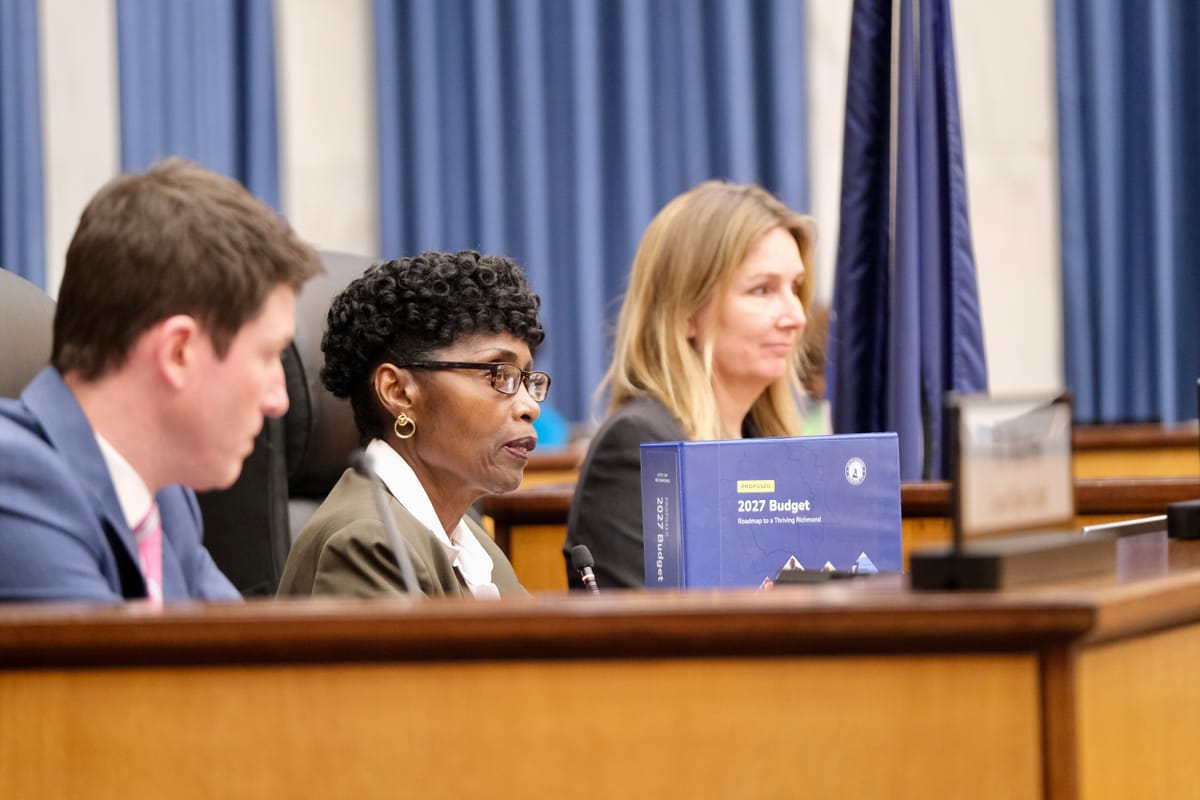
Richmond residents won’t see their tax rates go up under the new budget Mayor Danny Avula proposed Wednesday, but the plan includes increases in utility rates that would drive up the average bill by almost $14 per month.
The roughly $1.1 billion general fund budget Avula proposed to the City Council includes few sweeping new initiatives or major changes to city operations for fiscal year 2027, which begins July 1. However, the Avula administration said its spending plan avoids layoffs and allows Richmond to continue investing in priorities like affordable housing, schools, public safety and economic development.
The city’s revenue growth is temporarily limited this year due to a one-year break in reassessing the taxable value of city real estate, which generates the biggest chunk of local tax revenue.
“This budget was developed in a more constrained environment than usual, with both the pause in real estate assessments and the uncertainty that we face around federal funding streams,” Avula said.
The mayor stressed that the budget includes $22.1 million in new spending to fulfill collective bargaining agreements with the city’s unionized workforce. The budget includes raises for all city employees, but without the same type of across-the-board approach the Avula administration pushed for in its first year.
For this cycle, Avula is proposing 6.73% average raises for sworn police and fire personnel. For union workers in other collective bargaining units, the mayor is suggesting a 3.25% increase, which will also apply to non-union employees doing work similar to unionized counterparts.
For non-union employees in the upper management ranks, there will be no immediate raise. Instead, that group will receive a 3% raise that would be delayed until January 2027.
That essentially means City Hall’s highest earners will receive a smaller percentage increase than workers at the lower end of the pay scale.
Several Council members suggested a similar approach to pay last year, arguing the city should rein in salary growth at the top as it looks for ways to rein in spending. That suggestion sparked one of the most contentious debates of last year’s budget cycle, with the Avula administration indicating it was flatly opposed to handling raises differently for union and non-union members.
“Last year, I supported cost of living adjustments for all employees, and that philosophy has not changed,” Avula said Wednesday in a budget speech to the Council. “We are competing for talent in the region. We are competing for talent against the state and the private sector. And we must be competitive to deliver the results that our residents deserve. But given the more constrained fiscal environment we're facing this year, my approach allows us to honor our commitments while maintaining the financial stability that Richmond residents expect.”
Officials could not immediately say how much the delayed pay raise for City Hall’s upper management would save. Avula did not hold a news conference or speak to reporters after his presentation to the Council.
In another attempt to save money, Avula said he asked each department to identify 2% spending reductions from their current funding levels. Not every department saw its funding cut by 2%, but Avula said the savings added up to about $4 million.
That’s a relatively small fraction of the $1,099,079,826 general fund Avula proposed. That operating budget is around 4% larger than the city’s current one, reflecting total revenue growth of about $42.5 million.
The total budget proposal — which includes the general fund and all non-general money limited to specific uses like utilities, parking and debt service — amounts to roughly $3.4 billion.
Nearly a quarter of the general fund budget would go to Richmond Public Schools. The $257 million in city funding for the schools includes an additional $8.2 million, which is in line with what RPS Superintendent Jason Kamras said he was expecting but short of $12 million in new funding the Richmond School Board had asked for in its own budget request.
The mayor’s team is also boosting the allocation of capital funding for the schools to $9.3 million, a substantial increase from the usual $2.5 million. However, the plan essentially front-loads the money, meaning the extra capital funding RPS could get for its buildings and facilities would be offset by reductions in future years.
“We have an annual obligation to invest in the future generations of our city,” Avula said. “And the stronger our school system is, the more kids and their families will be compelled to invest here and stay here.”
The allocation to the schools has cast uncertainty over the future of the Richmond Virtual Academy, an online education program that started during the COVID-19 pandemic and now operates at a cost of around $3.2 million per year. In his initial budget proposal, Kamras suggested eliminating the virtual academy as a cost-saving measure, but the Richmond School Board seems to want to preserve it.
At least one Council member said they too want to save the online academy.
“We have many students with special needs,” Councilor Kenya Gibson (3rd District) said at Wednesday’s meeting as she stressed her desire to see the academy continue.
Avula previously outlined plans for $23 million in spending related to affordable housing, including a proposed $11.7 million for Richmond’s Affordable Housing Trust Fund.
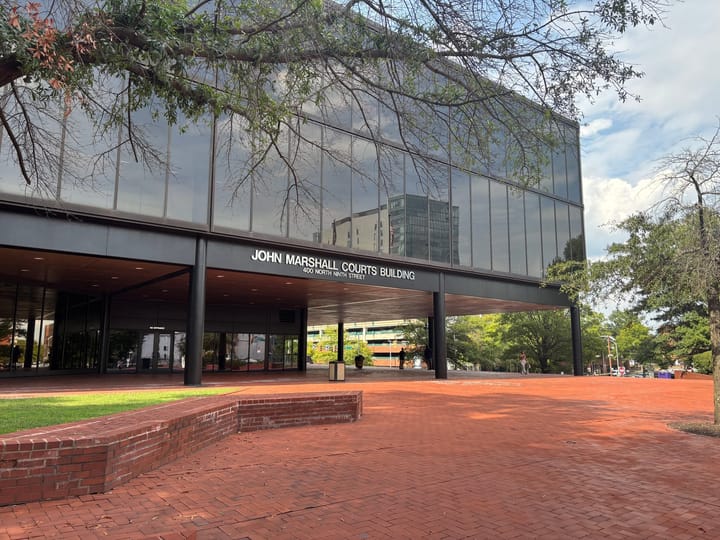
The budget proposes $15.6 million for renovations and upgrades to the John Marshall Courthouse, an aging downtown building local judges want to replace. The Avula administration said the money will address “immediate safety issues, maintenance needs and functionality concerns” as the city works on a long-term plan.
The mayor’s plan also includes $4.1 million for technology upgrades at City Hall and $500,000 for an “external compensation study” that will assess the city’s pay structure and ability to recruit.
After the Council and labor organizers advocated for higher minimum wages for contract janitors who clean public buildings, the mayor’s budget includes funding to raise pay to $18 an hour for that group of workers. That would be slightly below the $20 minimum the city has adopted for its own workforce.
On the economic front, the budget includes $4.9 million for economic development performance grants, $250,000 for commercial building facade improvements and $125,000 to support the establishment of a special business district designation for Carytown.
Some increases in city utility rates are expected, but water bills won’t be majorly impacted even as the city seeks new money to shore up its water treatment plant after its catastrophic failure in early 2025.
Under the rates proposed by Avula, the average monthly water bill would rise by about $1.22. Other utility rates would see steeper increases, with gas costs expected to rise $3.97 on a typical bill, stormwater costs rising by $3.04 and wastewater charges rising by $5.61. Altogether, the average monthly utility bill would rise by $13.84
The formal introduction of the mayor’s budget marks the beginning of a newly extended Council review process that should conclude in May. The Council will hold several work sessions and public hearings over the next few weeks.
City officials have overhauled the budget process with the goal of giving the Council more time and information needed to make meaningful changes, while also clarifying how Council members propose and vote on amendments.
As part of the new process, Avula’s budget presentation occurred a little earlier this year than in years past.
On Wednesday, several Council members said they were optimistic about the new process and eager to dig into the specifics of Avula’s proposal.
“It is my favorite PDF,” said Gibson, who routinely pushes the administration to provide more documents and information to the legislative body. “No lie, I tell people that today is like Christmas Day.”
Councilor Nicole Jones (9th District) said she wasn’t as excited as some, but still felt good about the process.
“What I feel today is a real sense of hope,” Jones said. “It feels very people-led.”
Councilor Andrew Breton (1st District), who noted he’s particularly interested in how the city is funding pedestrian safety efforts, said this year’s process should give residents more clarity on how their tax dollars are being spent.
“Richmonders are going to see collaboration and transparency more than ever before,” Breton said.
Contact Reporter Graham Moomaw at gmoomaw@richmonder.org