As NASCAR joins the Virginia Museum of History and Culture, we took a look through the museum's closet
NASCAR is coming to Richmond Raceway for this Saturday night’s Cup Series event, likely to generate a crowd of well over 40,000 for its 7 p.m. start. But an event early this June marked the track’s longevity in major-league stock car racing, and its impact on the sport and the state.
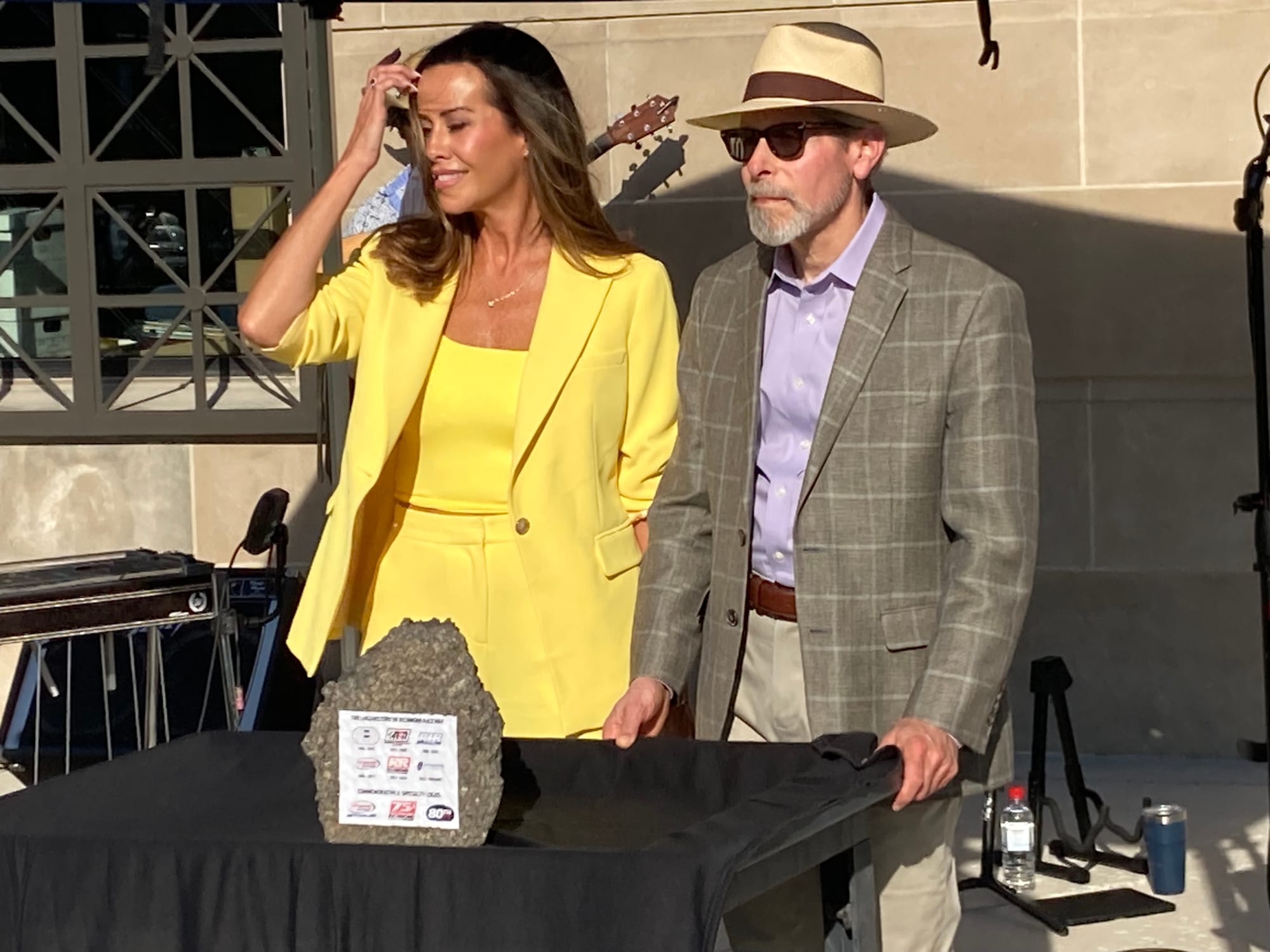
Richmond Raceway President Lori Waran was resplendent in yellow bright enough for a NASCAR Cup Series race car. Adam Scher, Vice President for Collections at the Virginia Museum of History and Culture, wore a wide-brimmed hat and sunglasses against the glaring sun.
And in front of them, on a table cushioned with thick black fabric, sat a chunk of asphalt about the size of, and probably about as heavy as, a bowling ball.
The gray chunk was Richmond Raceway’s gift to the museum, which was saluting the track’s 80-year history. It was added to the vast collection – more than nine million artifacts representing the Commonwealth’s history and culture.
A misshapen gray chunk of asphalt? Really? That was the gift from a sport as flashy, high-tech, and colorful as stock car racing?
Before you answer, ride along for a few laps of context regarding the remarkable track over which Waran presides, and the remarkable collection over which Scher presides.
First the track.
Inside the museum on that June day stood a set of panels recounting the Richmond Raceway’s eight decades with words and vintage photographs. Outside, not far from the table and its asphalt, were several deep-polished race cars that drew interest from fans old and new.
Undeniably, the asphalt was a visual blah compared to glowing race cars nearby and the carefully designed history panels inside.
The chunk, Waran explained, had been part of the racing surface at the old half-mile oval, dug up and discarded after the track’s NASCAR Cup Series race in February 1988, replaced in time for that series’ return in September that year. The new surface was the three-quarter-mile D-shape that is the modern-day Richmond Raceway.
Digging up the first piece of the old track was NASCAR legend Richard Petty, at the controls of a backhoe. Only minutes before, he had climbed from the Pontiac he had driven to a third-place finish in the last race on the half-mile, the Pontiac Excitement 400.
As Waran put it last week: the humble asphalt dislodged by the great driver is “a lasting symbol of the track’s enduring impact on Virginia.” She described the track as “a place where history has been made one lap at a time.”
The Petty name is integral to that history.
In 1953, Lee Petty, Richard’s father, won Richmond Raceway’s first event in what has evolved into the Cup Series. For historical context, that was seven years after the track began holding races for the open-wheel “Big Cars” of that era, and six years before the first running of the Daytona 500.
In 1961, Richard notched the first of his 13 Richmond wins – the record for victories at the venue. He won three times there when it was a dirt track. In 1968 he won the initial event after the half-mile was paved. His 13 Richmond wins include a streak of seven straight, 1970-73.
In 1986, Richard’s son Kyle Petty scored his first-ever Cup Series win with a finish that is one of NASCAR’s best remembered. Kyle was running fifth with two laps to go, but the front four – Darrell Waltrip, Dale Earnhardt, Dave Marcis and Joe Ruttman – all crashed. Kyle cruised by the wreckage to win as the checkered and caution flags waved in concert.
Richmond remains the only NASCAR venue at which three generations of the same family have visited the Cup Series victory lane.
So, that asphalt chunk – part of the track surface torn up in a milestone project started by Richard Petty’s backhoe – now has a home in a Virginia institution that houses memorabilia from this nation’s centuries of history.
The VMHC, an august institution, is just five years shy of the 200th anniversary of its own founding.
You might assume that, before the addition of the chunk of asphalt, the museum’s collection had been the likes of coats of arms from the estates of founding fathers, of staid documents honoring corporate and institutional VIPs. If that’s what you assumed, you assumed wrong.
The Richmonder asked the museum what sorts of unusual things we might find in the collection, and the museum staff cheerfully sent us a long list.
History and culture, we learned, is sometimes signified by the whimsical and bizarre.
Here are five oddball items – the ones we liked best from the list – that are in safekeeping at the Virginia Museum of History and Culture.
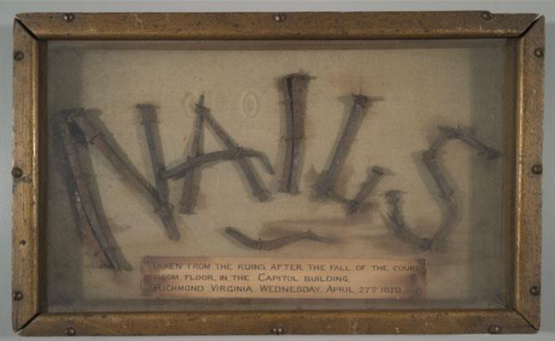
- Bent and twisted nails, 18 of them, arranged to form the word “NAILS.” They were gathered from the wreckage after the second-floor courtroom at the Virginia State Capitol collapsed, killing 62, in 1870. The floor was packed with a crowd to hear a Virginia Supreme Court decision deciding how Richmond’s mayor was to be chosen. The display was acquired in 1942 as a gift of Richard Cunningham Wright.
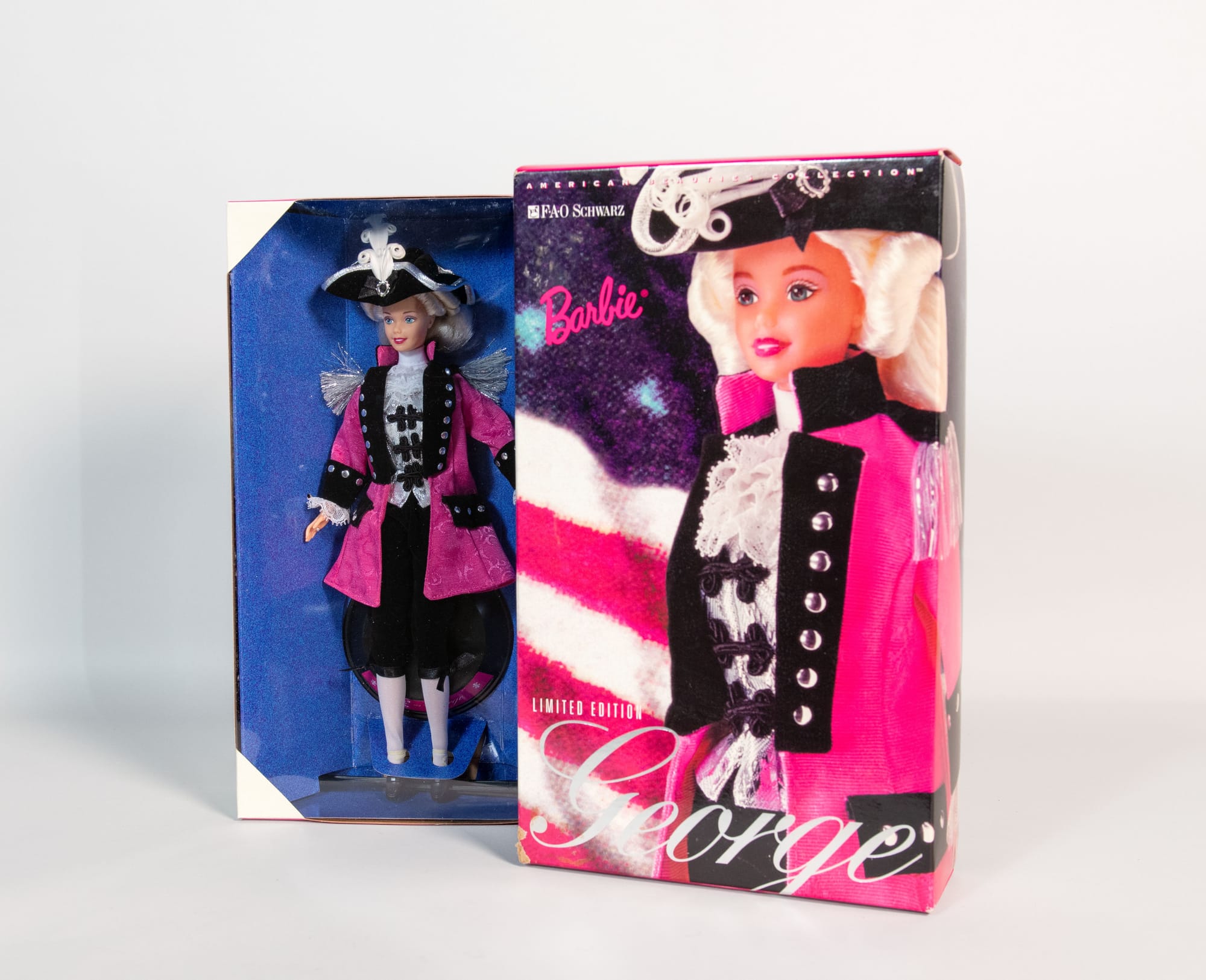
- A George Washington Barbie doll, one of six such dolls made by Mattel depicting Virginia figures. The other five figures are: Gabby Douglas (Olympic gymnast), Ella Fitzgerald (entertainer), Katherine Johnson (NASA mathematician), and cheerleaders representing UVA and Virginia Tech. The museum purchased the dolls in 2026 for an upcoming exhibit.
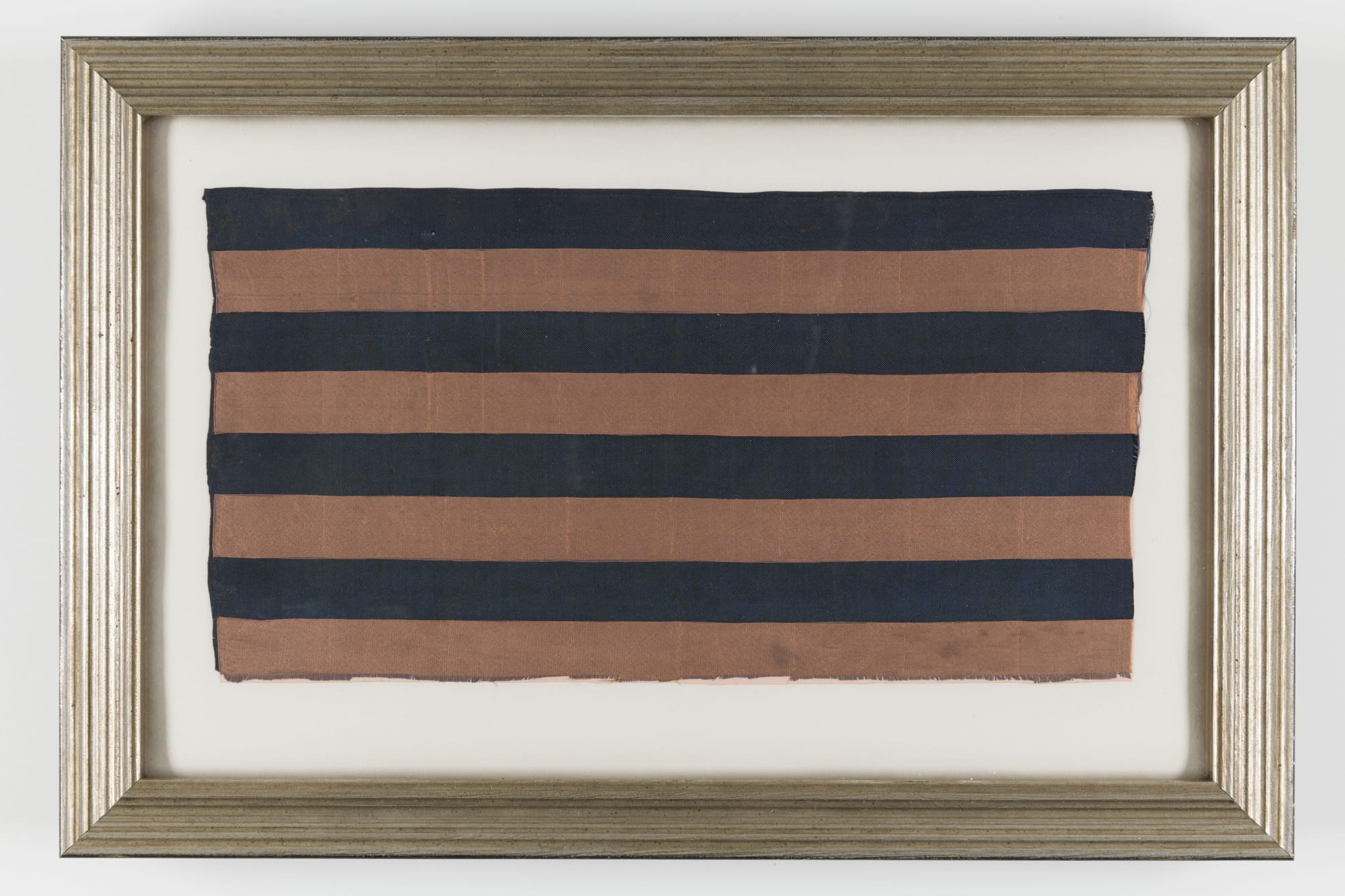
- Half of a silk scarf that inspired adoption in the late 1880s of the identifying orange and blue colors of the University of Virginia. UVA football player Allen Potts purchased the scarf in England, and gave half of it to friend John Stewart Bryan. The colors replaced the red and gray of the school’s athletic uniforms, said to become hard to see during a game on a muddy football field. (The museum also has sneakers and a uniform from UVA basketball superstar Ralph Sampson’s NBA rookie season.) The scarf was given to the museum in 1976 by D. Tennant Bryan.
- A plaster cast of Daniel Boone’s head, one of several casts of his skull made in 1845 when he and his wife, Rebecca Boone, were disinterred in Missouri to be reburied in Kentucky. The Kentucky Historical Society also has a cast in its collection. Such casts were frequently made at the time, part of a since-discredited pseudoscience, phrenology, that purported to determine much from the shape, bumps, and depressions of skulls. The plaster cast was given to the museum in 1893 by George W. Ranck.
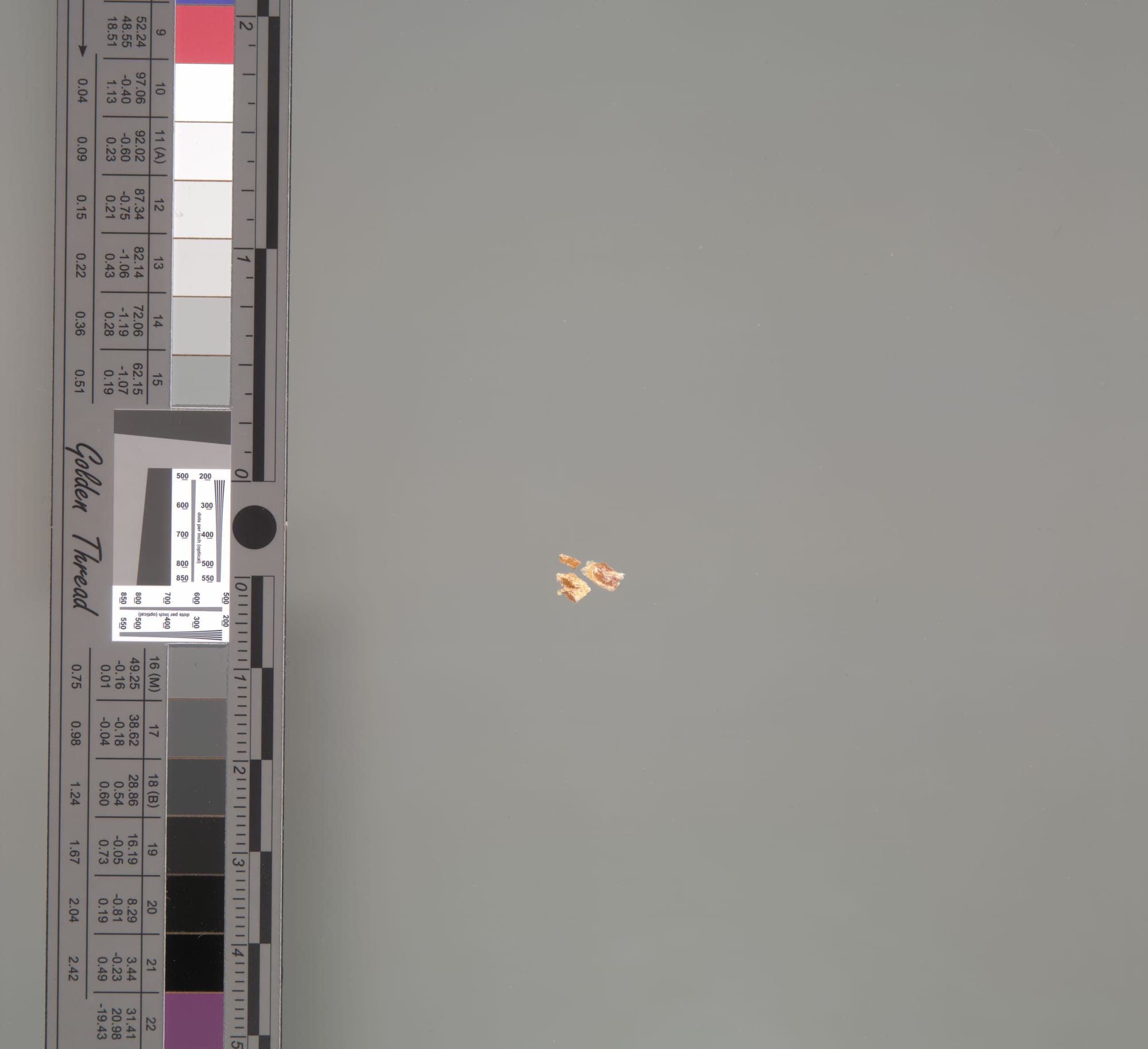
- A smallpox scab, exchanged by members of the Massie family of Virginia in 1876, when it was common to use such scabs in efforts to produce immunity through inoculation. Infectious disease experts have determined that this 150-year-old miniscule poses no risk to staff or visitors. The scab came into the museum over time starting in the 1880s as part of the Henry Massie Jr. papers.
The museum sometimes puts such items on display, for example in a 2010-11 special exhibit “Bizarre Bits: Oddities from the Collection.” The Virginia Barbie dolls will be featured as part of, “Barbie: A Cultural Icon,” an exhibition tracing the doll’s 65-year history, opening October 17.
Special tours to see collection items, scheduled or by request, can be arranged. Information can be found at the museum’s website, virginiahistory.org.