After anti-Flock protest, Richmond police chief defends use of license plate readers: ‘It works’
After a Monday protest against the Richmond Police Department’s use of Flock automatic license plate readers and gunshot detectors, Police Chief Rick Edwards defended the technology, saying that it has repeatedly helped solve crimes and in some cases has reduced the need for traffic stops and witness subpoenas.
“I can tell you, as the police chief of this city, it works,” Edwards told the City Council’s Public Safety Committee Tuesday.
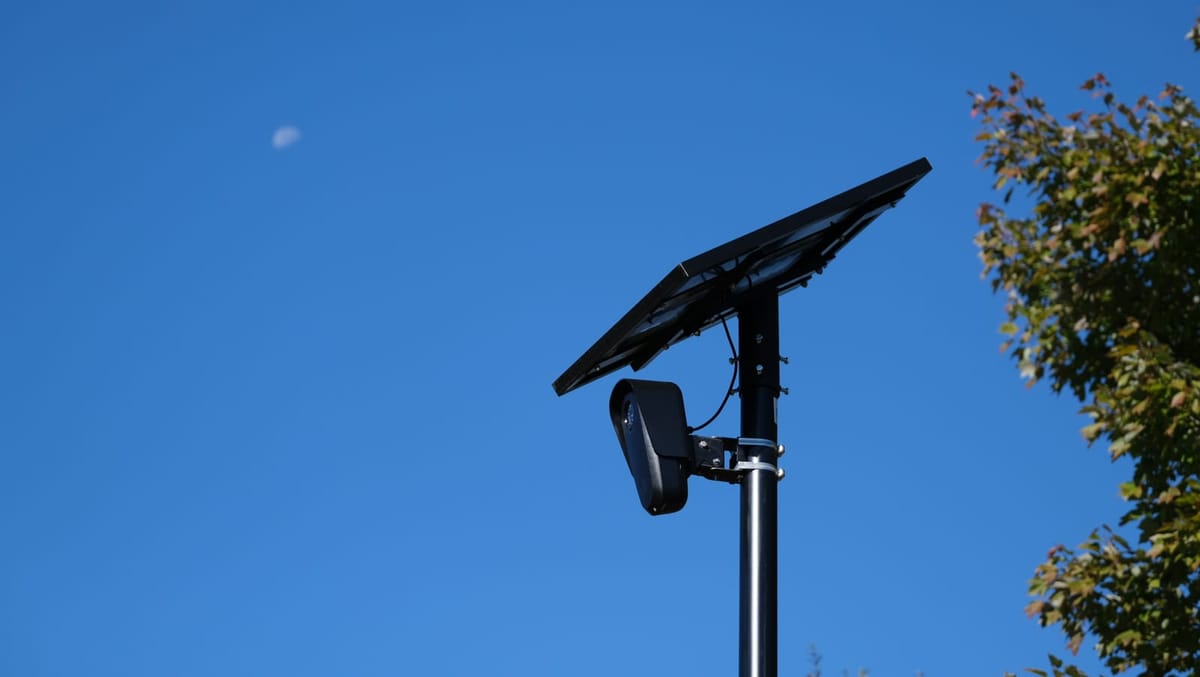
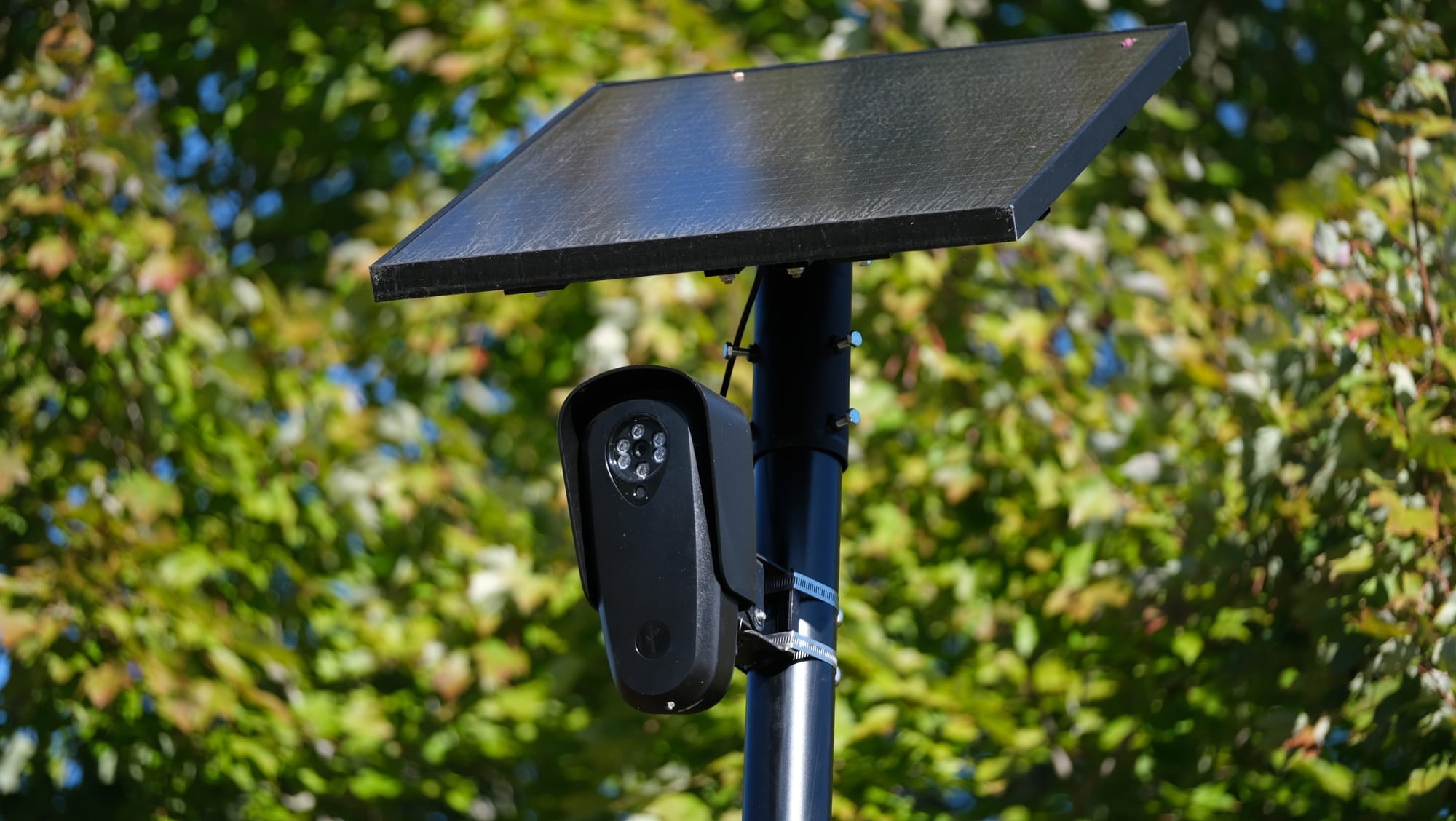
RPD has deployed 99 fixed and two mobile Flock cameras around the city to capture still photographs of vehicles that pass by. The cameras collect information on a vehicle’s license plate, make, body type, color, unique identifiers like bumper stickers and type of plate, as well as the location and time it passes by.
Unlike speed cameras or red-light cameras that only take photos of offending vehicles, however, Flock’s license plate readers take pictures of every vehicle that passes and upload them into a database.
Edwards has pointed to a string of crimes that RPD has used Flock to solve, including an arson in Hillside Court, the abduction of a 1-year-old, the February 2024 murder of Marvin Ramos-Hernandez at the Lindo Latino Market by two men engaged in a robbery spree, and the March 2025 murder of Darnell Christian near Mechanicsville Turnpike. They were also used to identify the vehicles in two recent hit-and-runs that killed Kristen Tolbert and Hope Cartwright.
In the Ramos-Hernandez case, RPD used Flock to identify the perpetrators’ car and apprehended them 33 minutes after Ramos-Hernandez was pronounced dead, said Edwards. In the Christian case, a Flock camera alerted police to the perpetrator’s car two minutes after the shooting.
But protesters, who turned out to City Hall for an anti-Flock demonstration and dominated the public comment period during a City Council meeting Monday, have urged Richmond to become the latest city to end its contract with Flock on the grounds that the technology violates privacy rights.
Many argued the cameras are a dangerous step toward mass surveillance at a time of heightened worries about federal government abuses and widespread arrests of immigrants.
“These cameras have already been used repeatedly to target protected political activity and marginalized communities,” said Victoria McCullough with the Richmond chapter of Democratic Socialists of America.
Steven Keener, a Richmond resident who serves as director of Christopher Newport University’s Center for Crime, Equity and Justice Research and Policy, told Council members his research has shown that the locations of Flock cameras inevitably lead to majority-Black or high-poverty neighborhoods being more heavily surveilled.
“The harms that are going to come from them are going to disproportionately impact the residents of color,” Keener said of the cameras. “We have a bedrock assumption in this country that the government leaves us alone unless we give them a reason to investigate us.”
Last year, the federal Bureau of Alcohol, Tobacco, Firearms and Explosives apologized after acknowledging it had accessed Richmond’s Flock camera data for immigration enforcement purposes. At the time, Edwards said that use was a violation of policy and cut off the ATF’s access to Richmond-specific data.
On Tuesday, Edwards acknowledged that activists worried about privacy “have a point.”
“There are privacy concerns that I share,” he said. However, he pointed to two recent federal court cases in which judges found that the use of automated license plate readers in Richmond and Norfolk were not extensive enough to constitute an invasion of privacy.
A 2025 Virginia law that went into effect July 1 also imposes limits on the use of automated license plate readers by local police departments, Edwards said. Departments can only use the cameras to investigate criminal violations of state and local laws or for investigations into missing, endangered or trafficked people. All data has to be purged after 21 days unless it is being used for an investigation.
Finally, law enforcement is only allowed to share its data with other Virginia agencies and criminal defendants, to comply with a court order or to alert the public to an emergency situation.
Edwards said in his view, those restrictions “fixed many of the concerns.”
Still, on Monday, some opponents appeared skeptical that safeguards touted by police would actually work in practice.
Cullen Murr said that because he can see four Flock cameras from the driveway of his Richmond home, he can’t leave without being tracked.
“How can Richmonders be expected to trust the data is truly only accessible to RPD even if we take Chief Edwards at his word?” Murr asked.
Besides emphasizing RPD’s use of Flock technology for investigations, Edwards on Tuesday contended that it brings other benefits that are frequently overlooked, such as cutting down on the number of traffic stops that police make when they are hunting for a suspect and allowing police to rely less on eyewitness testimony that may be unreliable or raise fears of retaliation.
“As a chief of police, I hear that often from our community — they don’t want to be targeted for matching the description,” said Edwards. “Just because a vehicle looked like this common vehicle, we could have stopped those cars and lost trust to members of our community.”
Similarly, he said that in the Christian murder, RPD was able to use the Flock footage in lieu of subpoenaing the more than half a dozen witnesses to the shooting.
Those impacts appeared to be particularly persuasive to the three councilors who sit on the Public Safety Committee, with Councilors Sarah Abubaker (4th District) and Stephanie Lynch (5th District) noting that witnesses may be frightened to come forward to testify about a crime because they believe they may face retaliation.
“We have people crying out for this technology,” said Lynch at one point.
Some of those turned out Tuesday, including Juan Braxton, the criminal justice chair for the Richmond NAACP.
“No system is perfect, including Flock,” he said. “But when it’s your family that’s looking for something, you’re going to want those Flock cameras.”
Braxton said he had stood with the mother of one of the victims of Saturday’s gun fight in Shockoe Bottom, which left two dead and seven others wounded.
“The only thing she wanted in that moment was to find out who killed her child,” he said. “The Flock cameras are utensils for the police department to be able to do that.”
Edwards said he had “never been to a community meeting where there is a neighborhood that is experiencing gun violence where they're not asking for this.”
“When people talk about this technology, particularly folks from outside of these neighborhoods, it’s frustrating, because they never smelled gunpowder that’s still in the air. They never placed a chest seal on someone who’s taking their last breath. It is an academic endeavor,” he said. “It is real to us.”
Contact Reporter Sarah Vogelsong at svogelsong@richmonder.org. Richmond Reporter Graham Moomaw contributed to this story.