A giant cardinal sculpture is headed for a dead-end street near Lamplighter
For many years, the last block of South Addison Street in the Fan before the Downtown Expressway cuts its course in two has been a magnet for trash — garbage cans for neighboring homes, recycling bins and a whole lot of litter left by careless passersby or people looking for a place to surreptitiously dump unwanted items.
Now that could change if Richmond officials adopt a simple solution: Put a bird on it.
Last week, the city Planning Commission unanimously voted to accept a giant cardinal sculpture by local artist Noah Scalin as a gift of public art from local development firm Markham Planning. If Mayor Danny Avula’s administration also signs off on the gift, it will officially become part of the city’s public art collection.
“It’s going to become a unique element that makes up the fabric of that neighborhood,” said Monica Kinsey, secretary of Richmond’s Public Art Commission.
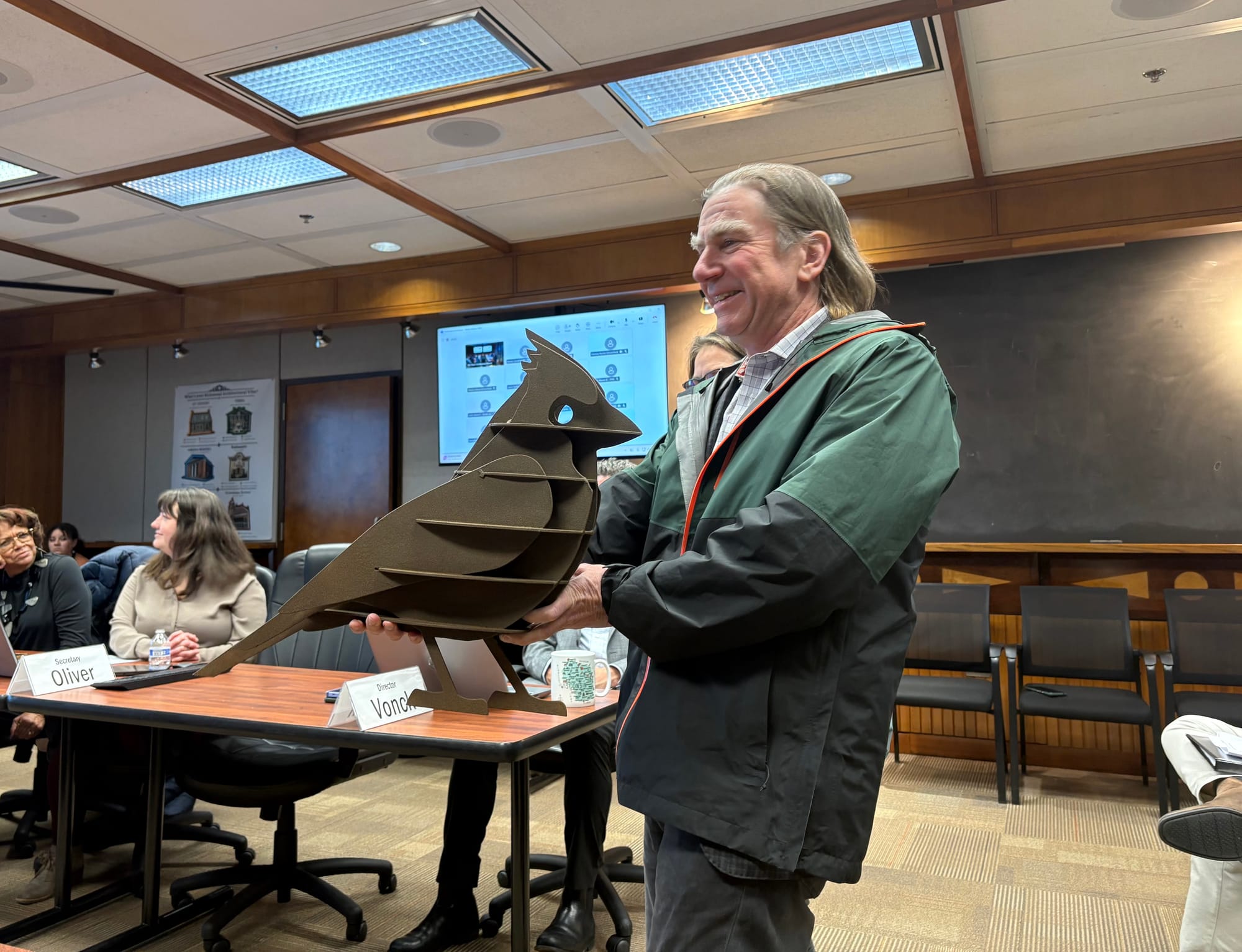
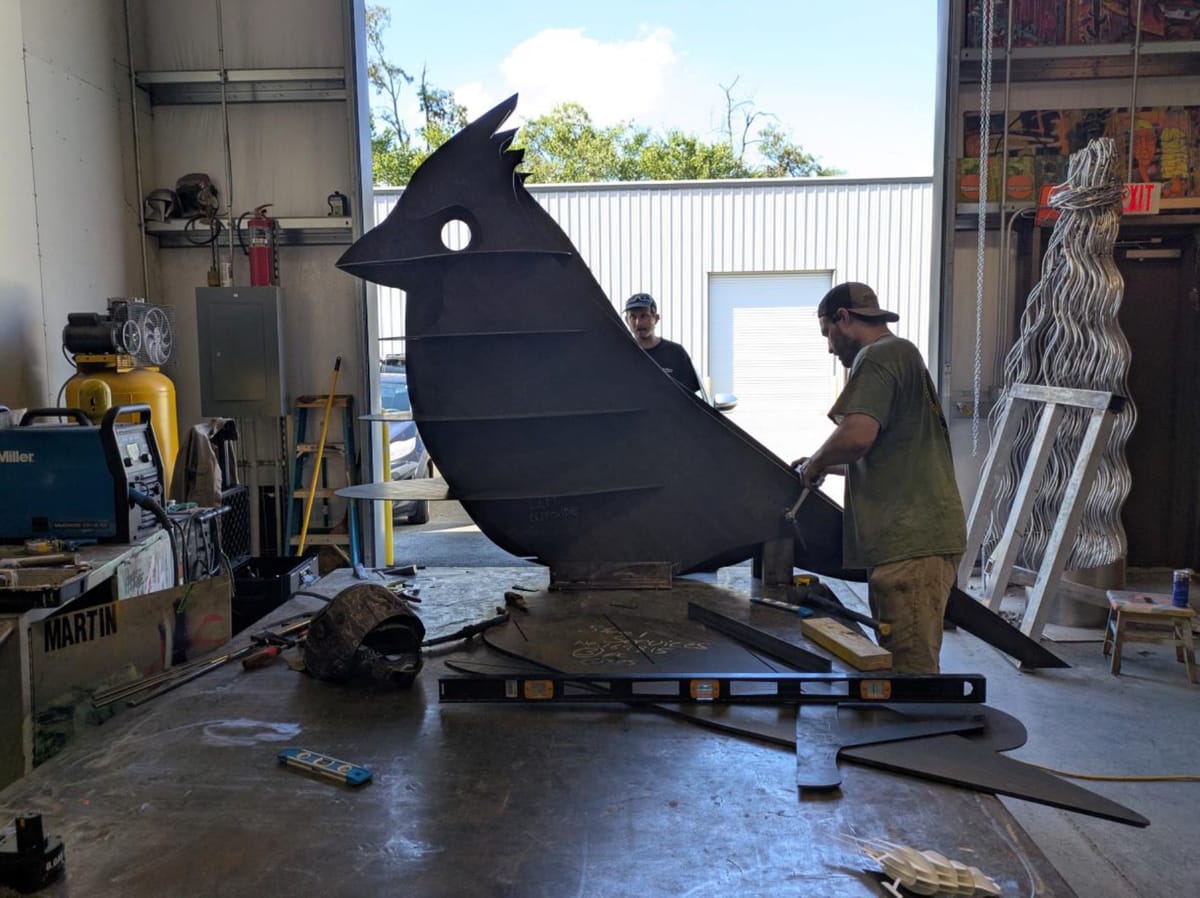
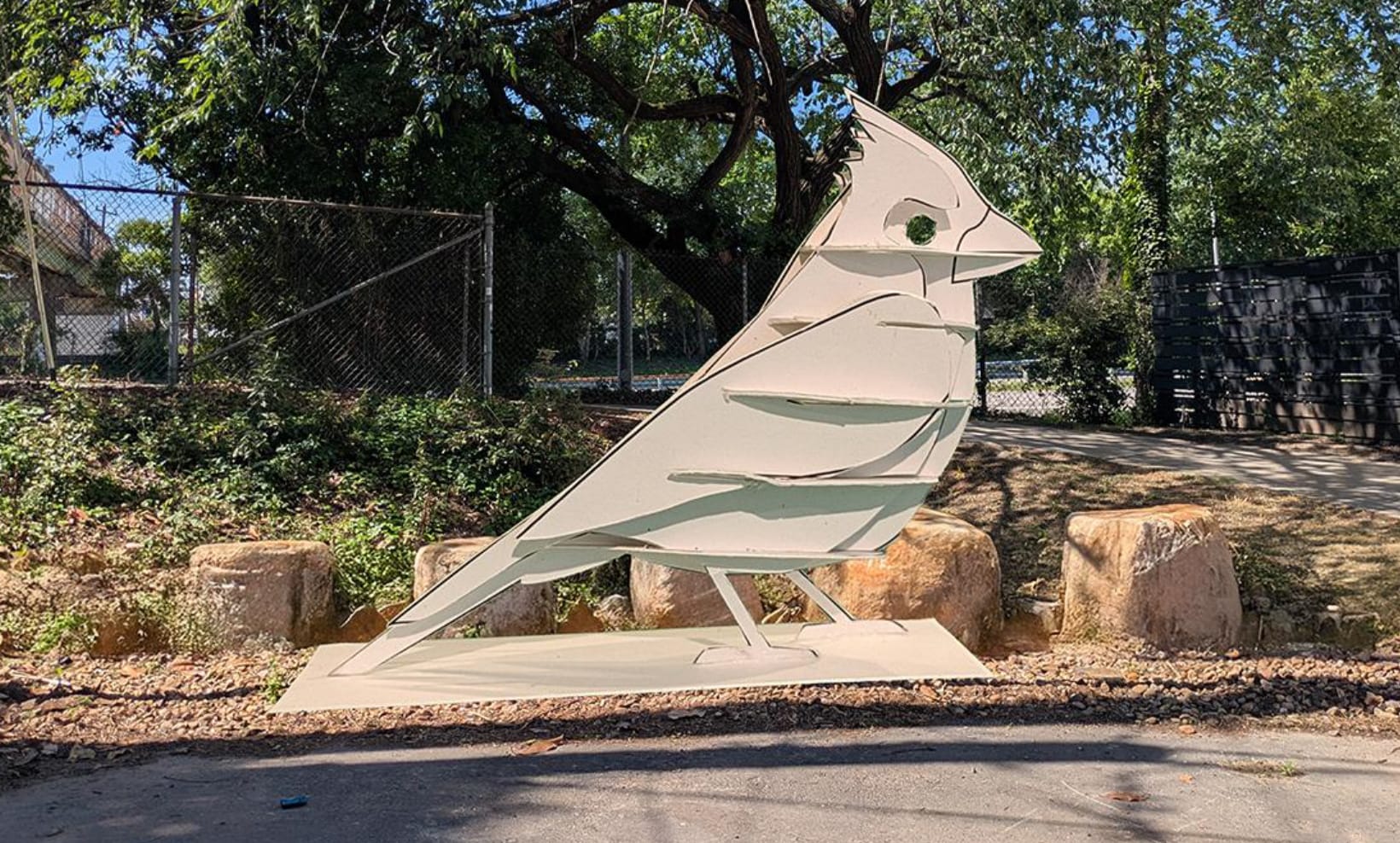
Scalin’s 7-foot-high steel work, dubbed “Cardinal Points,” is both a rendering of Virginia’s state bird and a reflection on how redlining and highway construction tore apart Richmond neighborhoods.
Seen from the side, the sculpture’s avian identity is clear. But due to the way in which it has been constructed, as you walk around it, “the bird vanishes into a grid” representing city streets, said Scalin.
The South Addison Street location is a prime example of the kind of neighborhood dislocation the cardinal nods to. Before the 1970s, the Fan flowed uninterrupted into Byrd Park, Randolph and Oregon Hill through more than a dozen streets including South Addison. Then the Downtown Expressway was constructed, severing the neighborhoods and forcing hundreds of families to relocate.
“Here’s this scar, this mark that’s come through, where you’ve displaced people and created a separation in the community,” said Scalin.
Still, Cardinal Points is meant to evoke hope as well as understanding of the past that has shaped the present. Birds are often used as symbols of freedom that can transcend the boundaries laid down by humans, Scalin pointed out. Ideally, he said, the sculpture will become “a space of curiosity, a space of connection and learning.”
That feeling could be fostered by another aspect of the work: the cubbyholes formed by its horizontal steel planes, where Scalin hopes people will leave mementoes — notes, painted rocks, a beautiful leaf or other artifacts of their presence.
“It’s interactive. It encourages people to leave things on it,” said Kinsey. “I think that will be part of the joy of experiencing this piece. It will be different every time you go by.”
Lory Markham of Markham Planning, which commissioned Scalin’s work, said the project grew out of the desire to make the end of Addison Street more attractive as she and other developers began work on the adjoining 26-townhome Parkline project.
“We wanted to engage a local artist to do a piece of public art that would help clean up the trash can situation,” she said. And Scalin — a friend whom she had met along with his wife at a birthing class 13 years ago — “was very creative in coming up with the idea for it.”
The Public Art Commission is hoping Cardinal Points may also become a model for other private developers looking to incorporate public art, especially from local artists, into their projects. While Richmond requires that 1% of expenditures on any city capital project that costs more than $250,000 be set aside for public art, private developers face no such obligation. Still, Kinsey said the commission is working on putting together some suggestions and best practices that could help those who are interested to add art to their plans.
“This can be an example we can show other private developers of what’s possible,” she said.
The sculpture will now go to the administration for its review and coordination with the Department of Public Works, which would need to remove an existing guardrail from South Addison Street near the pedestrian bridge. Markham Planning has pledged to cover the cost of installation and the addition of protective bollards, and the grounds maintenance team for Parkline has committed to maintaining the sculpture site in the future.
Contact Reporter Sarah Vogelsong at svogelsong@richmonder.org