'We the People' exhibit at VMHC is part of extensive programming for America's 250th birthday
The Virginia Museum of History and Culture will debut its newest exhibit on Saturday, telling the stories of people born in 68 different countries who sought freedom, opportunity, and refuge by immigrating to the United States.
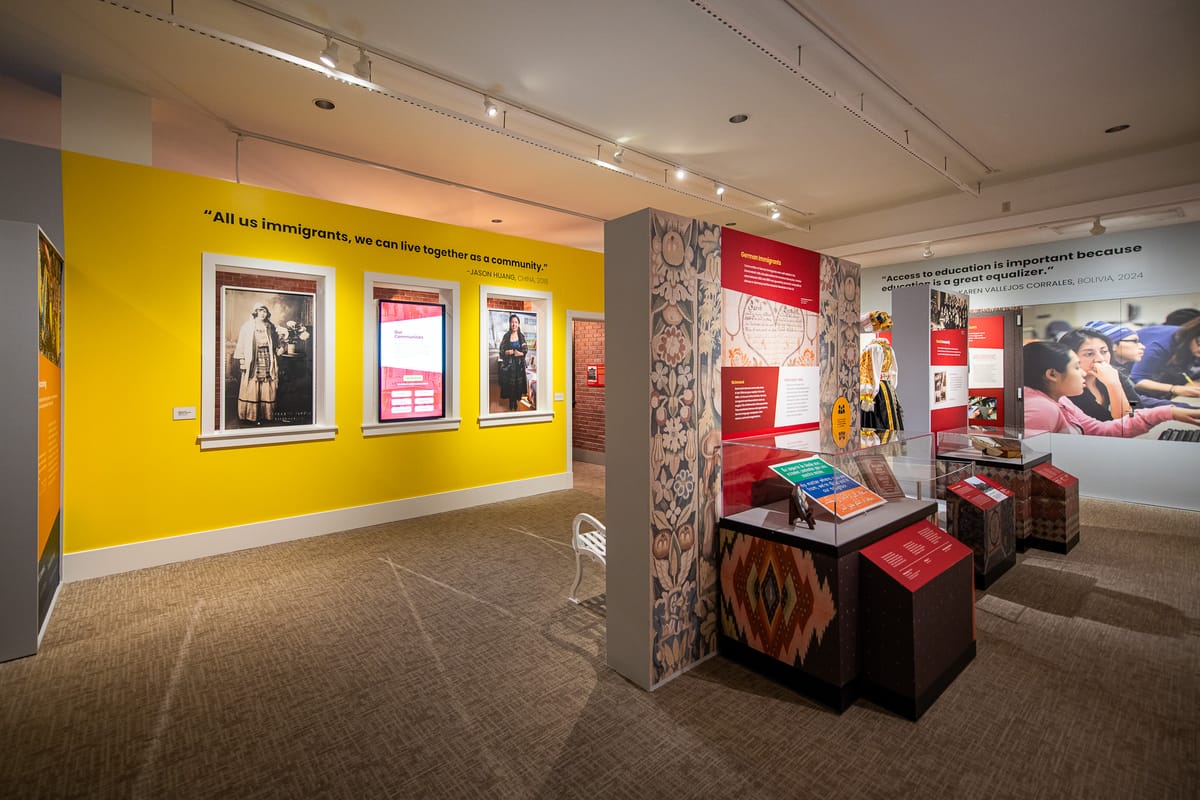
"We the People: The World in Our Commonwealth" is part of the museum's extensive efforts around the 250th anniversary of the founding of the United States, and will be on display until Sept. 7.
Julie Kemper, the lead curator of “We the People,” said the exhibit has been in the works for about five years. She and her colleagues collected an overwhelming number of stories, and from that, she said, “we built a cast of characters.”
The VMHC has been around for almost 200 years, and wants to reflect the diversity of Virginians across time.
“One of the goals of We The People was to include as many (origin) countries as possible and to tell as many compelling stories as possible” in the exhibition space, Kemper said.
The exhibit tells the stories of people uprooting their lives to start anew in Virginia.
“These stories are all about the decision to leave, the experience of finding yourself. 'An unfamiliar place' is the way we talk about it," she said. "Finding a job, finding a good school for your kids and building community, being a part of all that. It is something every immigrant goes through,” adding that the exhibit also acknowledges the very different experience of Native Americans and enslaved Africans.
Noah Tinsley is the exhibit's assistant curator, and said there "is not nearly enough room on the walls" for the number of stories the museum collected.
In addition to the traditional displays, there are videos which provide a history of immigration to the United States and Virginia, as well as two oral history kiosks, which will feature six people the curators interviewed, as well as touch screens that talk about various immigrant communities within the state.
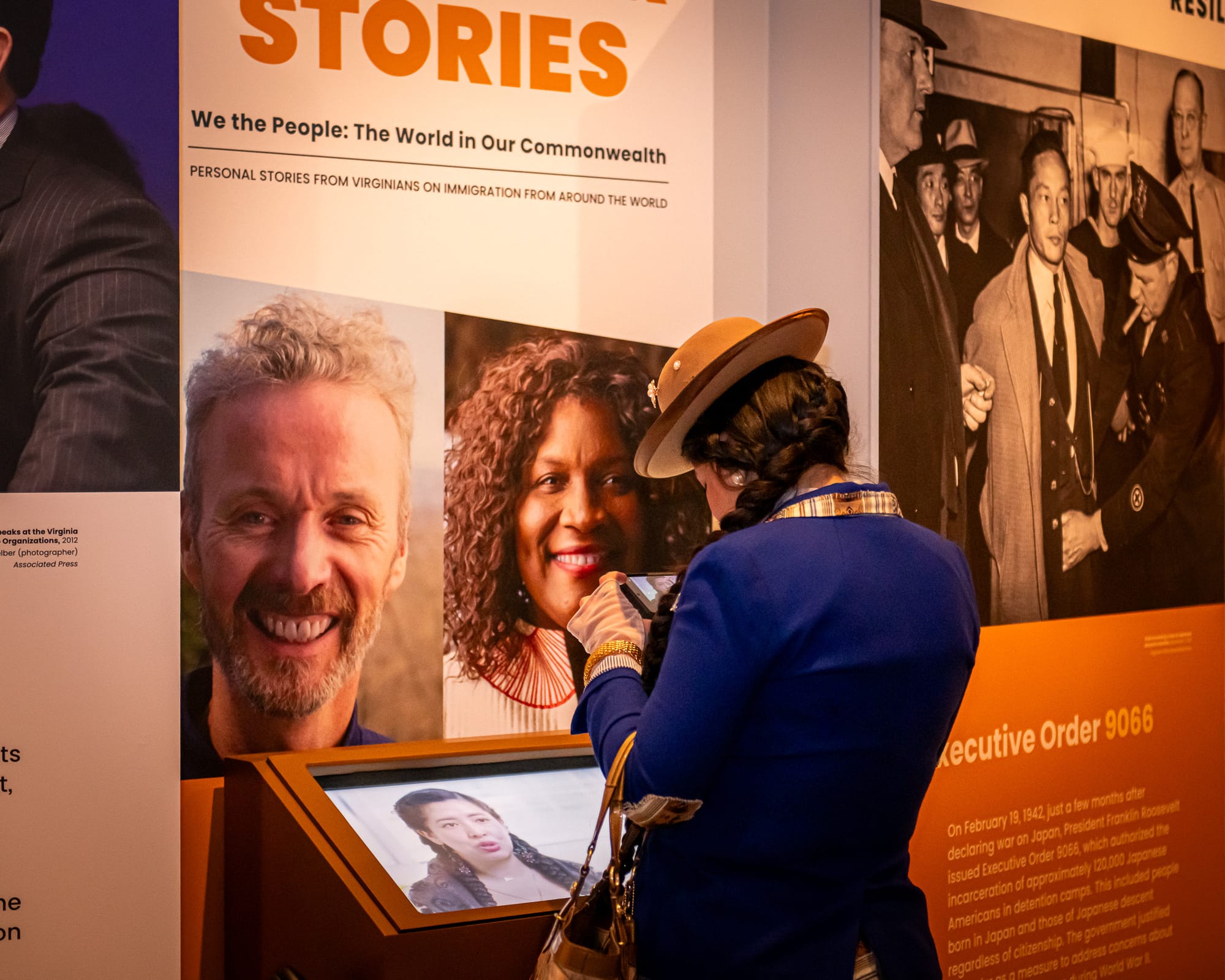
Kemper said she is particularly excited about the oral histories of these six immigrants. One of them is a woman whose art was displayed in the Smithsonian.
“Her notoriety gained the attention of the Taliban, and they threatened her and her family to the point that they could not go back home,” she said, adding that the immigrant requested asylum in the United States and ended up in Northern Virginia.
“It’s a beautiful story and she’s a beautiful artist,” Kemper added, noting that one of her art pieces “depicts the moment when she realizes she can’t go home.”
Another section of the exhibit represents food and restaurants, telling the story of the matriarch of the Stella's group of local restaurants in Richmond.
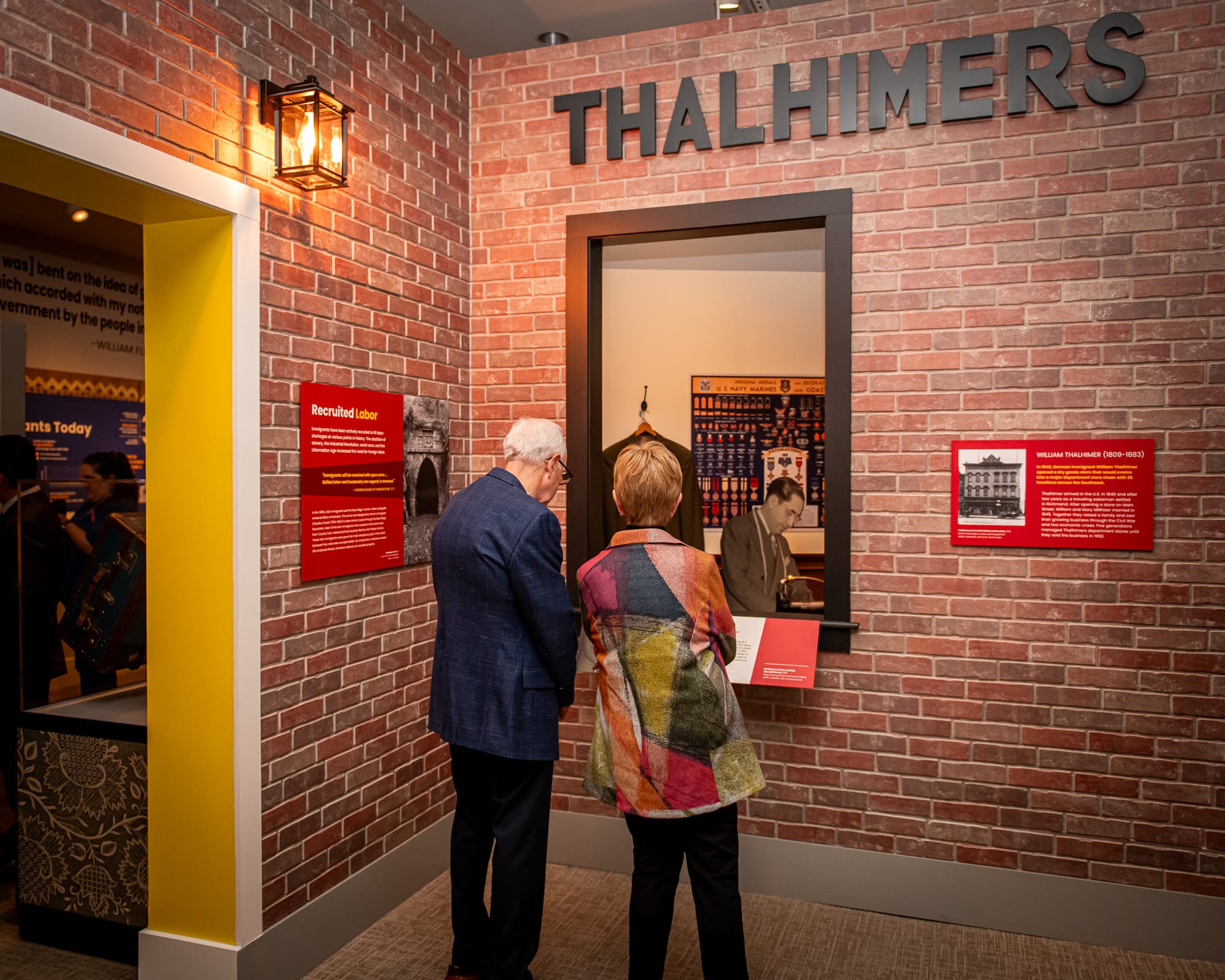
Tinsley said some immigrants arrive here in the United States and Virginia willingly, wanting to make better lives for themselves, and have the freedom and economic luxury to be able to do that.
But in other cases, there is the necessity to uproot from where they came.
“They have to leave, or they will die,” Tinsley said. He cited one 18th century story of an immigrant fleeing the French Revolution, which, he said, “really kick-started the international system for refugee settlement.”
“It’s really defining these terms of the types of immigrants," Kemper added. “Who is an asylum seeker? What does that mean? There are points in our history where these are specific legal terms.”
 Chris Suarez
The exhibit covers two and a half centuries of history, and the curators believe that all visitors will see their own story reflected at some point.
For immigrants, there is the challenge of navigating being a part of two worlds, and finding an identity.
“How do you represent that duality?” Kemper asked. “Over time, we see people navigating that dual identity in different ways.”