'We are managing so much change': Mayor, experts discuss the path ahead for Richmond
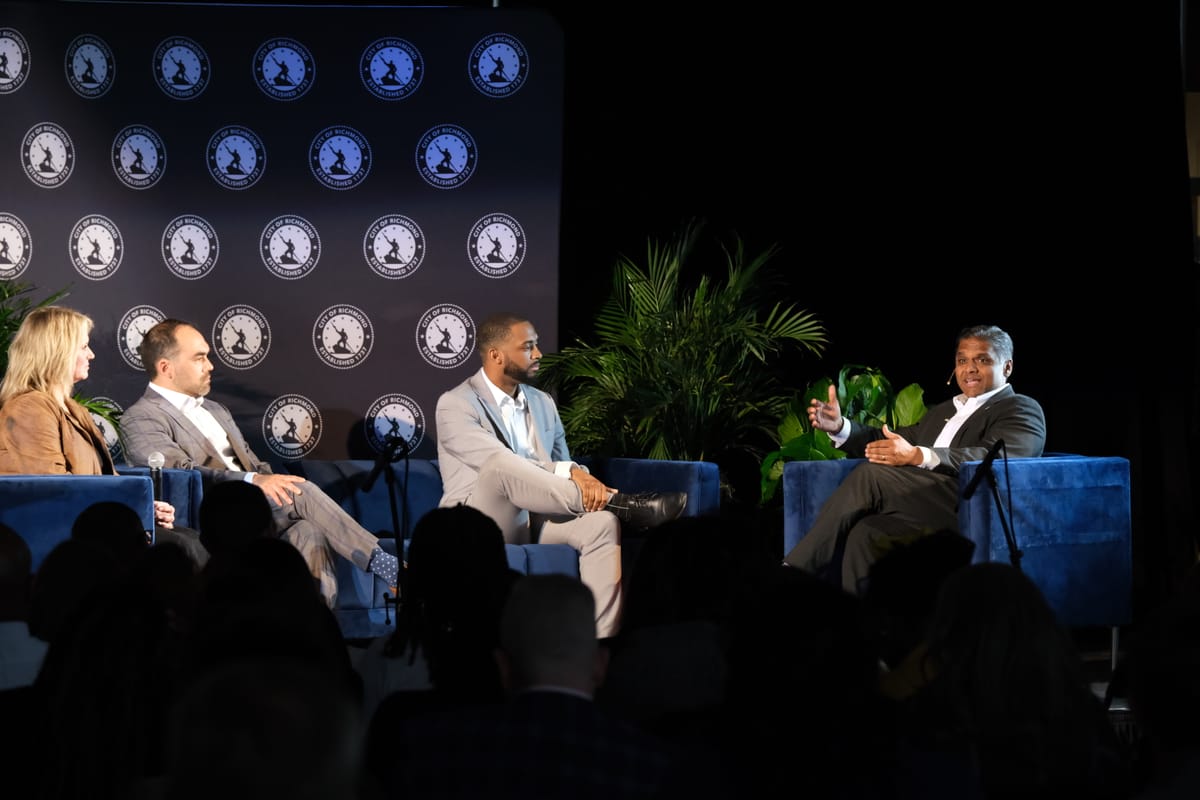
At Mayor Danny Avula’s first State of the City event, there was a gospel choir, a TV weatherman, a poetry reading and squirrel mascots.
But there was no formal speech.
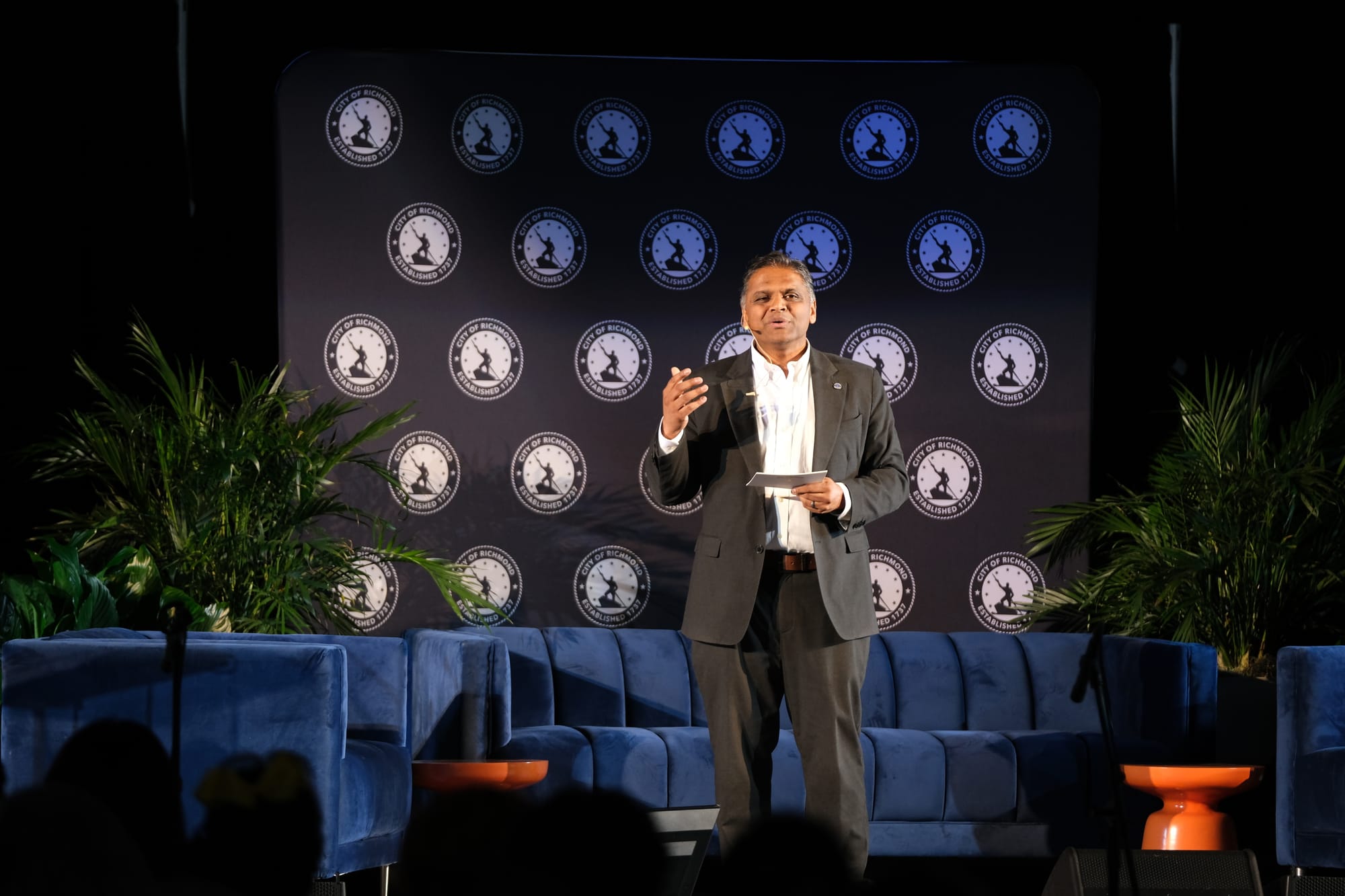
Avula broke from tradition for the event held Wednesday night in South Richmond, foregoing the usual public address about how the city is doing and how it could be better. Instead, the mayor participated in a series of onstage chats with other community figures that focused on some of Richmond’s big challenges and successes.
“I hope you all are feeling a profound sense of pride in what’s happening in Richmond,” Avula said as he wrapped up the event. “But I also hope that you feel the weight of the moment that we’re in. We are managing so much change.”
In addition to Richmond’s own changing demographics and the impact growth is having on long-term residents, Avula said, city officials are also wrestling with how to support the city’s immigrant population from the federal crackdown occurring under President Donald Trump.
With Virginia and the nation set to celebrate the 250th anniversary of America’s founding this year, Avula said 2026 will be “a big year for history and storytelling in Richmond.”
“My hope for us here in Richmond this year is that we use this commemoration as a vehicle for repair, for relationship building,” the mayor said. “That we model what it means to reckon with difficult history while imagining new possibilities for our city.”
Avula took office at the beginning of 2025, but weather has gotten in the way of the usual ceremonial events that give mayors a platform to speak to the city.
His inauguration ceremony was cancelled due to the water crisis that happened right after he was sworn in. This year’s State of the City was originally scheduled for late January, but had to be postponed due to the winter storm that left the city encased in ice.
“We would be very happy to not have another January in Richmond ever again,” Avula joked Wednesday. “We made buttons this year that said ‘I survived another January.’”
Though there were no major policy announcements, the format allowed Avula and other subject matter experts to discuss the scope of the city’s housing affordability problem, how to spotlight the history of the slave trade and how economic development efforts have brought new amenities like the Allianz Amphitheater and the soon-to-open CarMax Park baseball stadium.
In a brief presentation about public safety, the mayor spotlighted positive trends showing major crime dropping in Richmond and touted the city’s recent efforts to reduce gun violence and crack down on vape shops.
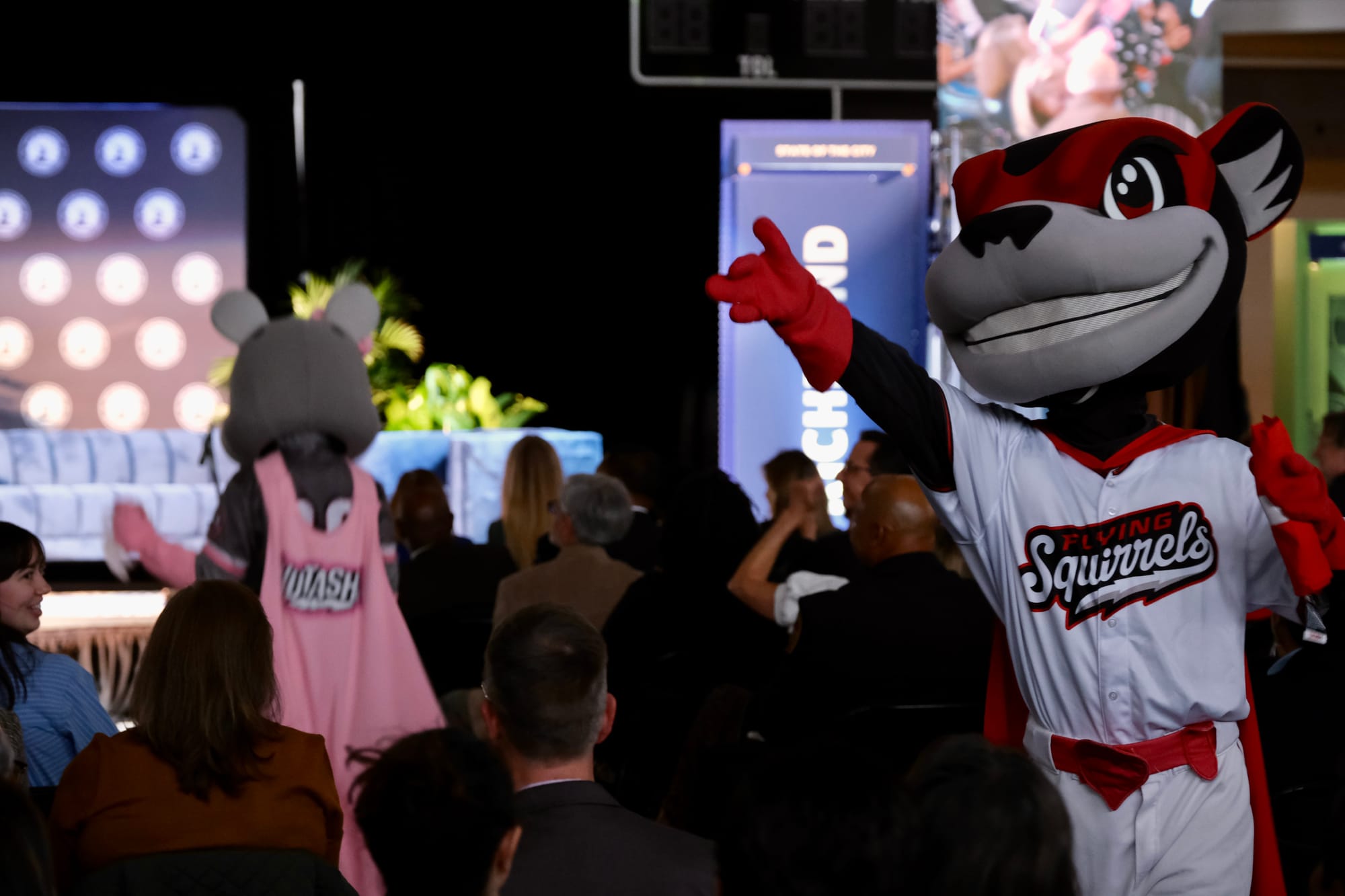
A gospel choir from Virginia Union University sang songs to start and end the event. Meteorologist Andrew Frieden of NBC12 welcomed the crowd and introduced Avula, saying it was the doctor turned mayor who checked his son out of the hospital after his birth. During an interlude between the so-called “fireside chats” with the mayor, Nutzy and Nutasha — the mascot duo for the Richmond Flying Squirrels baseball team — tossed t-shirts to the crowd.
Richmond Poet Laureate Joanna Lee read a poem that included a reference to Francine, the locally famous cat who lives in a Lowe’s hardware store and sparked a successful community search effort last year after she hopped on a delivery truck to North Carolina.
“We will always be happy to be found. To return home,” Lee said.
In the gym of the newly constructed Southside Community Center, City Councilor Nicole Jones (9th District) spoke about the resilience and diversity of an often overlooked part of the city that has suffered from “neglect by design.”
“I also see the beauty, and I see the inclusive future built by the people and led by the people,” Jones said. “The state of the city depends on what happens next in the Southside. How we build. How we invest. How we reconcile the past and the present. And how we show up for the future.”
While speaking to reporters afterward, Avula said the more varied format — in which he asked questions of invited guest speakers — was a way for Richmonders to hear more local voices.
“Part of what we were trying to create here was an opportunity for people to know about aspects of their city that they may just not ever touch, to know about people who are doing work on behalf of them and their city that they may never meet,” the mayor said.
Affordable housing
The participants in the affordable housing discussion were Jovan Burton of the Partnership for Housing Affordability, Thomas Okuda Fitzpatrick of Housing Opportunities Made Equal and Karen O’Brien of CARITAS, which offers services to people dealing with homelessness and addiction.
Burton listed stats on the extent of Richmond’s housing crunch. For every 100 renting households earning $50,000 or less, he said, there’s only 66 affordable rental units available. When it comes to homeownership, he said, just 5% of homes built in Richmond since 2020 are valued at $300,000 or less.
“So in a five-year period we went from having fairly sufficient supply for a lot of working-class households to that being out of reach for just about everyone,” Burton said. “That’s how quickly a market can change.”
Fitzpatrick said his group is “jazzed” about the city’s code refresh process, the contentious overhaul of city zoning with an eye toward making it easier to build more and denser housing.
“The zoning that we have right now is the zoning from the 1960s and ‘70s that was locked in place and created these single-family neighborhoods with very limited ability to build apartments or to build places where renters live,” Fitzpatrick said. “And yet we know now that more than 50% of the city are renters. So it's time to think differently about the way we use land.”
O’Brien said seniors are the “fastest growing population of unhoused people,” a trend that’s going to force local leaders to explore new types of housing arrangements like “micro housing and shared housing and multi-generational housing.”
“Not only do they not have the dollars, they have medical issues and mobility issues,” O’Brien said. “So we as a group are trying to really tackle that and look at how do we get creative.”
Economic development
Kicking off a discussion on economic issues, new Director of Economic Development Angie Rogers said she hasn’t lived anywhere “as cool as Richmond.”
She touted the ballpark-anchored Diamond District and new hotels coming to Scott’s Addition and transit-focused development as examples of the type of projects that will bring new revenue to the city.
“For a jurisdiction that is still looking to grow, and particularly looking to grow strategically, mass transit is a way to focus that growth,” Rogers said as the discussion turned to plans for a north-south bus rapid transit line and new GRTC bus hub near the site of the shuttered Richmond Coliseum.
Rebecca Street, general manager of the Allianz Amphitheater, weighed in on how the first season went for the city’s new outdoor music venue near the James River. She said around 200,000 concert-goers went through the gates.
“The first year was incredible,” Street said. “It was a lot of weather to deal with, which is always fun outdoors. We did about 33 shows, and 15 of those were sold out.”
Storytelling and history
The last of the three chats focused on history and Richmond being “a city that tells its stories,” which is one of the priorities in Avula’s strategic plan for the city.
Self-described history writer Josh Epperson talked about his involvement in the Shockoe Project, an initiative to elevate the history of the slave trade in Shockoe Bottom. That project includes a plan to create a replica version of a slave ship.
“You’ll be able to enter this ship construction,” Epperson said. “You’ll be able to see the interpretation that I will be writing and be able to read and understand the story.”
Meg Hughes, acting director of The Valentine, described the museum’s plans to spotlight revolutionary history to mark the 250th anniversary of American independence this year.
Avula mentioned the recent loss of former Valentine director Bill Martin, who was killed last year when a car struck him while crossing a downtown street.
“It wasn't until after his tragic passing that we realized how many people in Richmond he touched. It's been overwhelming,” Hughes said of Martin’s death. “It's really hard to imagine Richmond in 2026 given how big of a year it's going to be for history and storytelling to have that year go by without him being here.”
After the event, Avula said his top priority for his first term is to improve the quality of government services.
“I think why I was elected into this role is because I've had experience running government agencies,” Avula told reporters. “I was someone who was willing to get into the details of how to make the organization better. We've been super focused on it.”
Asked to summarize the State of the City takeaway for residents, Avula said he wants people to “be proud of the work their city is doing.”
“I want people to be excited about the movement and the growth and the energy of Richmond,” the mayor said. “There's so many good things happening here. And I want people to know that and to feel that, and to feel a part of that.”
Contact Reporter Graham Moomaw at gmoomaw@richmonder.org