‘The math is not mathing’: Frustrations persist around RPS budget
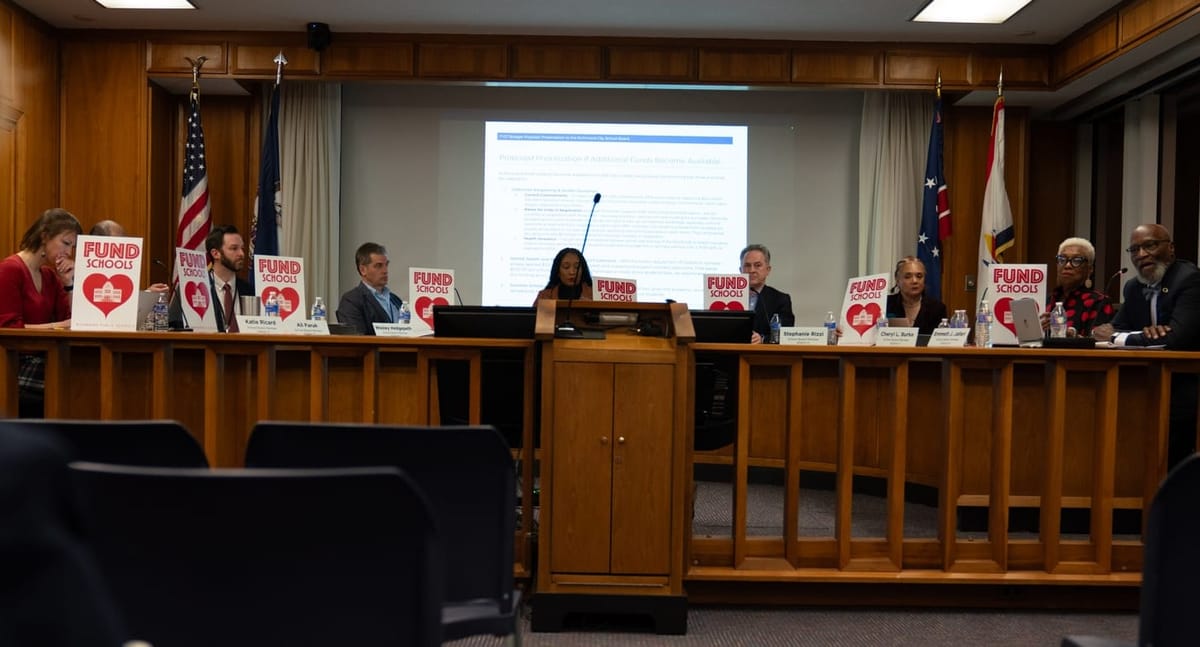
Almost two weeks after its initial release, Richmond Public Schools administrators continued their attempts to provide explanations around the details of this year's proposed budget.
This week's School Board meeting brought a third revision of the proposal. Administrators also uploaded another presentation giving an overview of the budget, which includes their answers to questions that have been asked since the initial release.
The new presentation showed the division would prioritize current collective bargaining agreements, mental health services and restoring summer school if RPS received more funding.
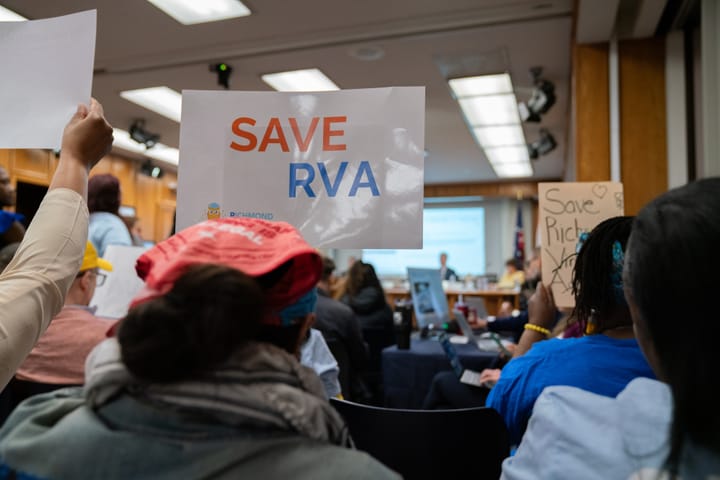
But the explanations weren’t enough, as the public comment period was filled with RPS employees and members saying they were unhappy with the proposal.
“We are mad about this budget because it makes no sense,” said Hannah Clayman, an exceptional education science teacher at Albert Hill Middle. “We have scoured over this budget and there are many errors.”
 Victoria A. Ifatusin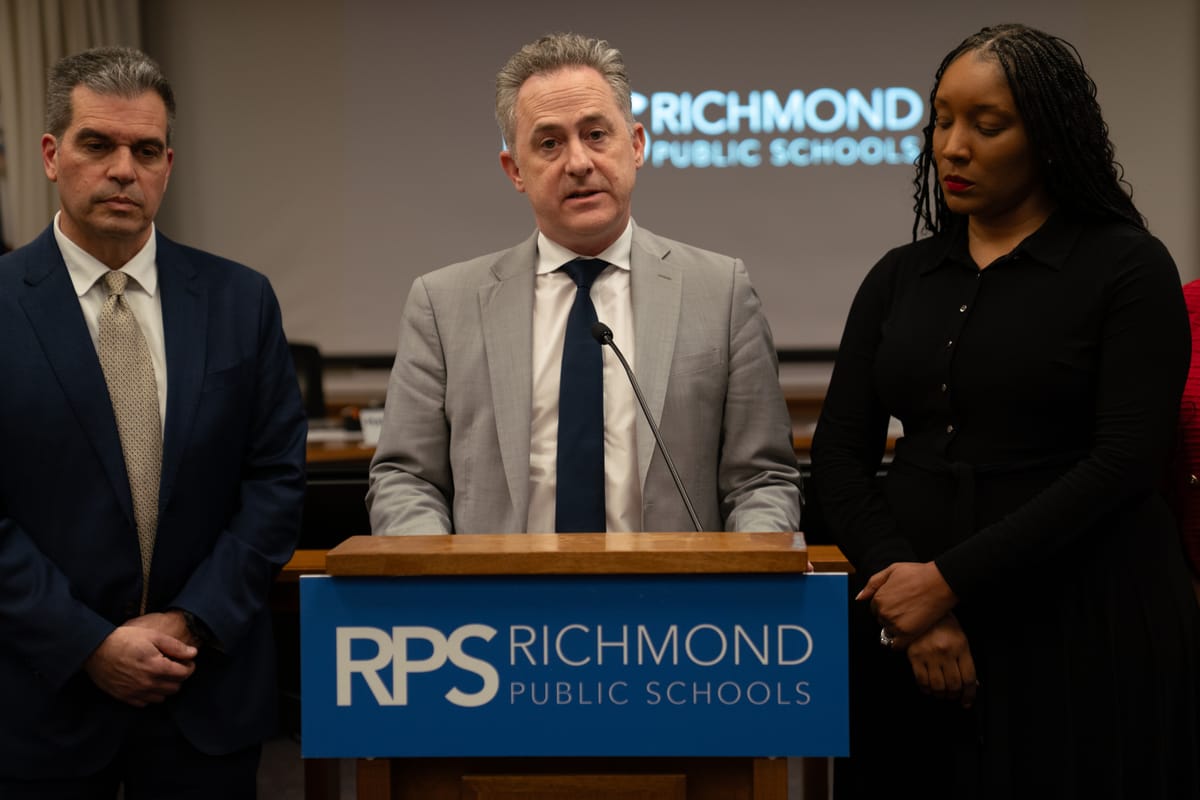
“In the wise words of the youth, ‘the math is not mathing’ with these three budget proposals so far. An external audit by the [Virginia Department of Education] may assist in resolving this issue,” said Huguenot High School English teacher Lisa “LJ” Delao.
Andrea Bryant, president of the Richmond Education Assocation, the teachers' union, told The Richmonder that while she appreciates the explanations, they were not enough for her either.
“I’m not saying I don’t trust our administration, but I’m saying for these kinds of changes to be asked, and for us to be asked to accept these changes – I think a better explanation of where these changes are coming from is extremely important,” adding that she feels like she’s had to play the role of auditor in reviewing the documents.
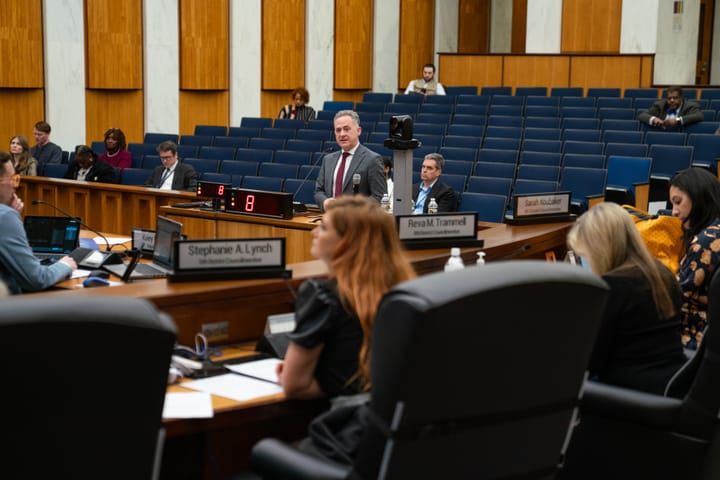
Richmond School Board members also expressed concerns with the budget. Wesley Hedgepeth (4th District) told Superintendent Jason Kamras he was concerned about the potential impacts staff would face if the proposed budget were to pass.
Referring to the 50/50 split of health insurance increases, he said, “if our teachers are missing out on a raise this year, it is essentially a pay cut, because if we are offering that 1.17% increase for the [salary] step, it’s cancelled out by not just the health care cost but by inflation."
He added that he would be more inclined to support a proposal that includes funding requests for the division’s priorities. Matthew Percival (1st District) backed this proposal.
New details, same questions
The Richmonder reported last week that the budget showed a 42 position reduction from last year’s budget, rather than the announced 46.
The division initially refrained from sharing the positions of employees who might be laid off, to “protect the privacy of individuals losing their positions,” Kamras said.
The employees were notified of the layoffs last week, but it is still unclear what their exact positions are.
 Victoria A. Ifatusin
The full time employee reductions "understandably received quite a lot of attention. There was some confusion about, ‘was it 42, was it 46?’” Kamras said at Monday’s meeting. “It’s actually both.”
He shared that the 42-position cut came from staff eliminations at Richmond Virtual Academy, as well as vacancies, which makes the total number of position reductions for this proposed budget 88. (Kamras said at his initial presentation that Virtual Academy teachers would be offered jobs at local schools.)
RPS also removed 33 vacancies from the budget last year.
Bryant pointed to other specificities within the budget that she felt were not explained.
For example, the budget document shows a funding decrease for multilingual learner success from $7.7 million last year to $2.6 million in the upcoming year (budget page 30), and an increase for psychologists from $1.3 million to $3.5 million.
It is difficult to provide feedback to the administration when “you don’t even know what you’re looking at,” she said, adding that Kamras’ presentation “doesn’t tell you everything you need to know about the budget.”
Bryant shared that it was her first time taking an in-depth look at the budget. She said she believes the administration would not have provided additional information if the response from the public was not as skeptical and scrutinizing.
“The budget has looked the same for years,” she said, emphasizing the need for an audit of the division’s finances.
She said that she has sent questions about the budget to administrators and is waiting to hear back.
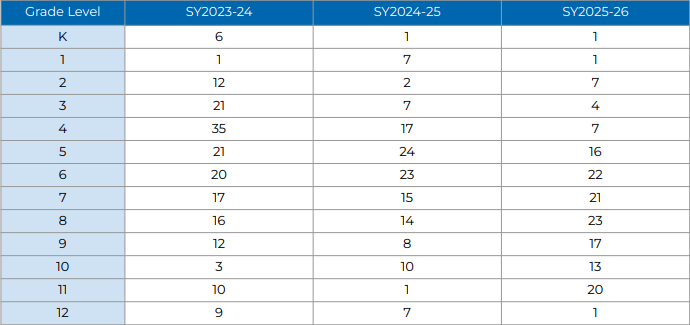
The administration stood firm on its proposal to cut Richmond Virtual Academy, emphasizing that the school was created in the wake of the COVID-19 pandemic and is no longer financially sustainable. Reinstating the school was not listed as a priority for the administration if more funds are made available.
Teachers from the academy disagreed in public comment.
“This school is not a temporary solution or pandemic-era experience,” said 4th grade teacher Alexa Janacone. “Other nearby districts are investing in virtual models because they understand what the future demands. Choosing to shut ours down places this district on the wrong side of progress.”
David Mistler, a history teacher at the school, said that students feel safe at the academy, adding that they “don’t deal with bullying or gang violence.”
“Many of our students have transferred from in-person schools where they unfortunately have failed, and then at Richmond Virtual Academy, they thrived.”
Kamras said the division is holding a fair next week for virtual school employees and students’ families to find alternative options.
The elimination of summer school for kindergarten to eighth grade students is also going to impact preschoolers as well, Kamras clarified, adding that its removal would be effective this summer. The true cost for summer school is $3 million, Kamras added, with $2 million coming from the federal government, $900,000 coming from the state and $100,000 from the division’s budget.
On raises, Bryant shared that it was “heartwarming” to hear Board members offer their support for ensuring that collective bargaining agreements are met if more funding is available.
“Beyond your students, your staff is the most important thing you have,” she said. “Without the custodians, without the bus drivers, without the teachers, without school nutrition services, there is no school. If you can’t take care of us, what do you expect?”
Board members emphasized the need to advocate for more funding from the state and city. Katie Ricard (2nd District) pointed to the city’s current budget process, which includes a request from the Department of Housing and Community Development for a $17.7 million funding increase.
“These are all things that are so important, but at the end of the day, the vitality of our city comes from the children that we educate and bring and put out into the future,” she said.
Contact Reporter Victoria A. Ifatusin at vifatusin@richmonder.org