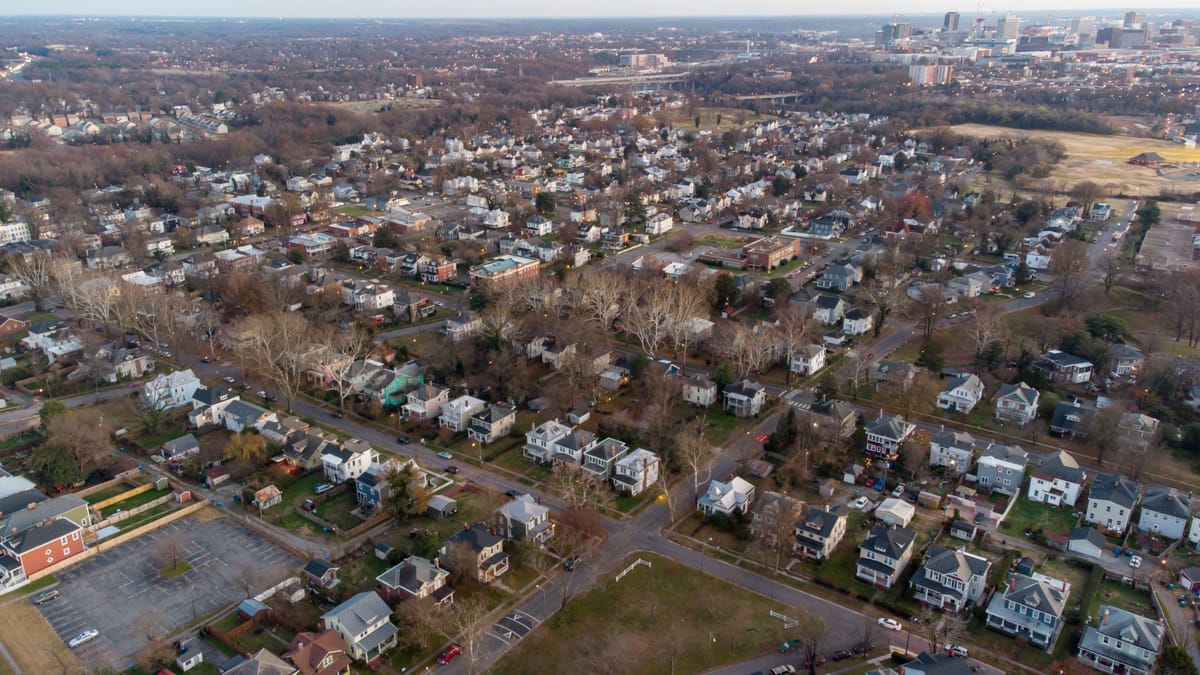
Study finds rezoning impacts will be limited in single family neighborhoods due to lot layouts, economics
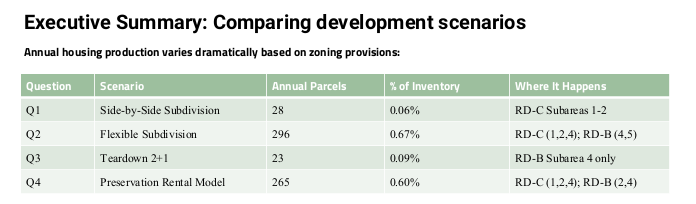
A study commissioned by the city found that even under the most intense development scenario, Richmond’s citywide rezoning would lead to the addition of new units on just under 300 lots in existing single family neighborhoods annually.
That number is still significant in terms of housing production, said Kevin Vonck, director of Richmond’s Department of Planning. But he said it demonstrates that increases in density as a result of the city’s proposed code refresh will almost certainly be more gradual in established neighborhoods than some residents have feared.
The least dense of those neighborhoods — those that would be designated as RD-A under the code refresh, with detached homes on lots no less than 90 feet wide — would likely see virtually no new development due to high property values, according to the study.
The city “is trying to understand, if we're going to flip these levers and change these things, what will happen? Where will it happen? And what might the rate of change be?” said Vonck. “And I think what we're seeing in this is yes, there seems to be some capacity for a desire for some of these housing units. But we also see it's not distributed equally across the city in terms of different geographical areas.”
The figures don’t reflect total housing production expected as a result of the rezoning. Planners anticipate that the greatest density will occur along transportation corridors and at designated neighborhood nodes, where higher buildings and more mixed uses would be allowed.
“From a sheer number perspective, that’s most likely where we’re going to get the most housing units during the next few years, few decades,” said Vonck.
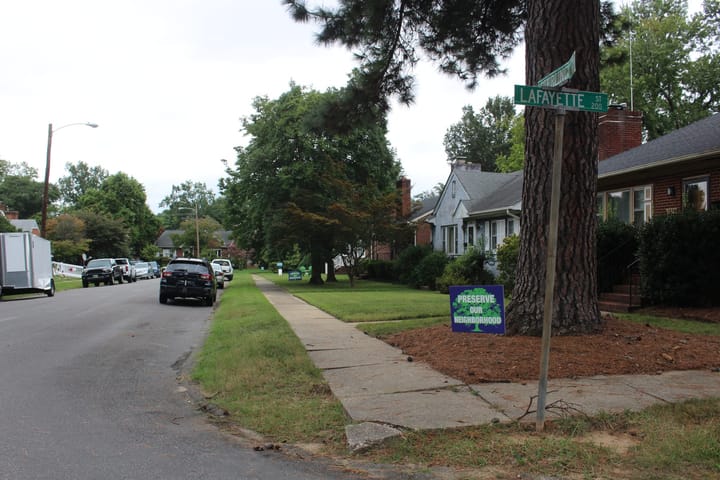
Despite that, the most heated debates surrounding the code refresh have focused on single family neighborhoods dominated by detached homes, where some residents are concerned that the changes will radically alter their community’s character by jacking up their density and encouraging demolitions.
 Sarah Vogelsong
The study, which was conducted by economic planning and real estate consultancy RKG for the city, is intended to assess how likely those outcomes are using Richmond-specific data about parcel width, the location of existing structures on those parcels, market values, rental prices and construction and demolition costs.
On Wednesday evening, Vonck told members of the city’s Zoning Advisory Council that Richmond was willing to extend the study to cover districts that would be designated as residential attached or residential multifamily under the refresh, such as the Fan. The decision to focus on impacts to detached neighborhoods was driven by both budgetary constraints and the large volume of feedback from residents of those areas, he said.
Four scenarios
The RKG analysis looked at four different scenarios that could affect the roughly 44,000 parcels in the city that would be zoned for residential detached homes under the code refresh.
In the “side-by-side subdivision” scenario, a lot could be cut in half and a new home constructed alongside the existing one. In the “flexible subdivision” scenario, the new unit could be built either next to the current one or behind it. Neither scenario allowed demolition of the existing home.
Citywide, RKG found that only 1,730 parcels with detached homes could be subdivided to create a new lot alongside the existing home due to lot width rules.
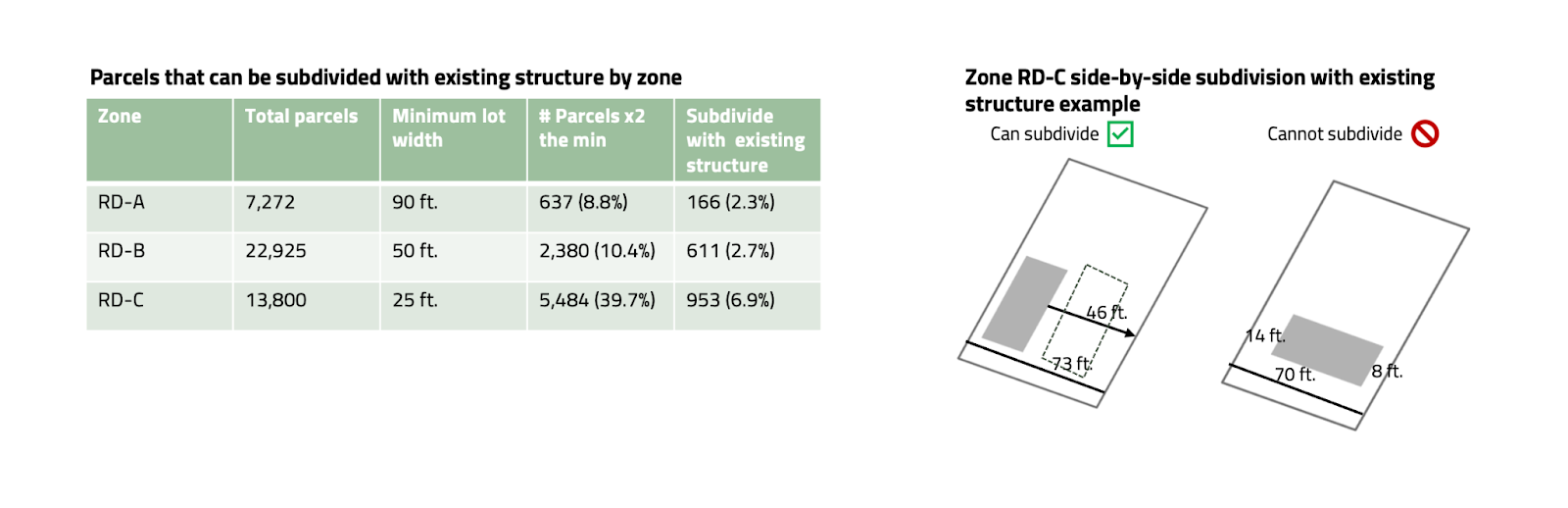
Far more — over 36,000 — would have the physical space to add another structure in the flexible subdivision scenario.
However, RKG found that in many of these cases, it didn’t make financial sense for developers to purchase eligible properties for subdivision.
For side-by-side subdivision, “the economics don’t work,” wrote RKG. “Large minimum lot widths drive up acquisition costs and reduce the number of new lots created, making it difficult for developers to outbid traditional homebuyers.”
Most of that would likely occur in the RD-C districts, the densest of the residential detached neighborhoods, where lots would have to be a minimum of 25 feet wide. There, the study found subdivisions were physically and economically possible on 702 parcels but only likely on 538. Overall, RKG predicted those districts would see 17 conversions annually.
“Not every house is going to be for sale, and not every owner would even be willing to sell,” Kyle Talente of RKG told the Zoning Advisory Council while presenting the results to them Wednesday.
Nor did RKG take account of neighborhoods that have covenants in place limiting development to only single family detached homes, he noted.
Flexible subdivision, where lots can be divided either side-by-side or front-to-back, would allow far more lot splits but would still face financial constraints, said RKG. The firm predicted that allowing that type of growth could lead to 296 lot divisions annually, concentrated in the moderate-density district known as RD-B and in RD-C.
Still, the study warned, “actual market uptake could be much lower — front-back configurations place full-sized dwelling units behind existing homes, a development pattern with limited precedent in Richmond. Whether homeowners will sell for this purpose, and whether developers will embrace this unfamiliar configuration, remains an open question.”
 Sarah Vogelsong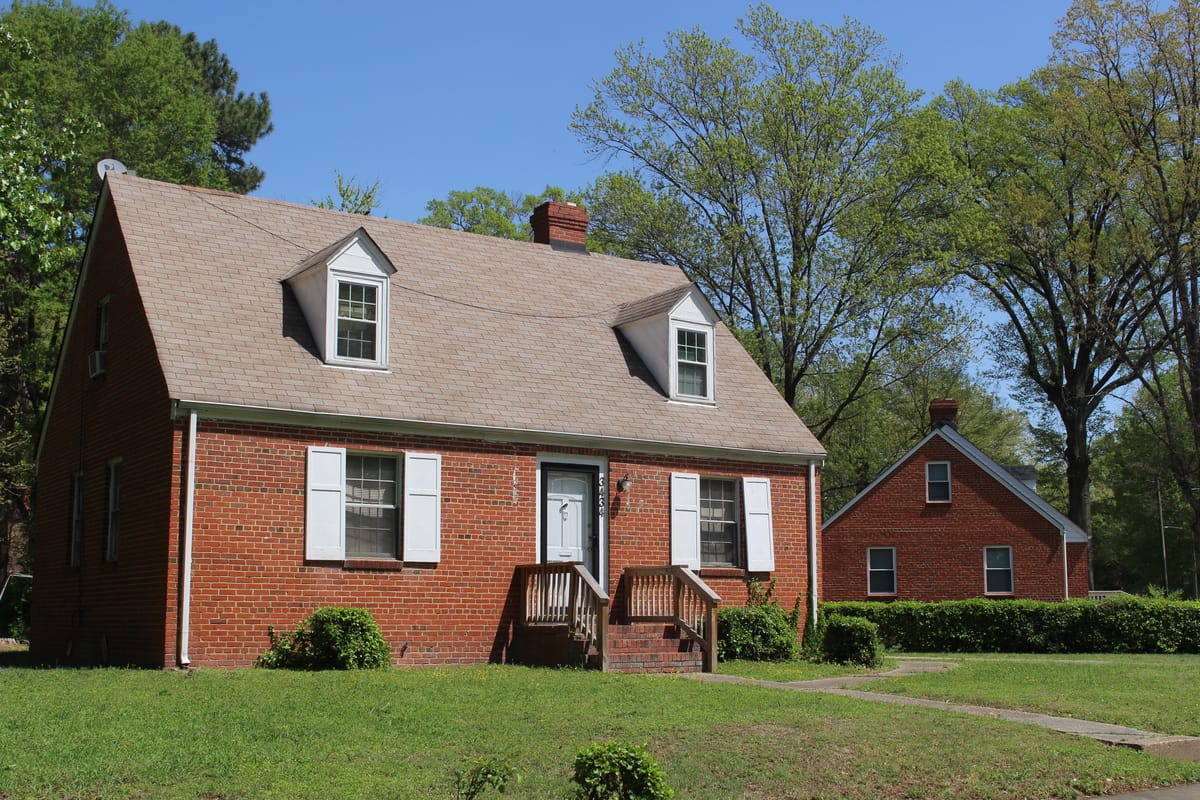
A third possibility analyzed was the “teardown scenario,” where a developer could demolish the existing structure and build two new dwellings on it along with an accessory dwelling unit. (Richmond City Council allowed ADUs on most residential parcels by right in 2023.)
Despite what RKG called the “maximum development flexibility” offered by teardowns, the study found that it would be attractive to few developers or property owners interested in converting their own lots.
“It is more financially advantageous in most cases — in almost all the cases, to be honest with you — to preserve the existing unit and build the two new units as an additional structure than acquire the property at full market value, what it is worth today, incur the demolition cost of removing that building and then building back a new structure,” said Talente.
Still, he acknowledged, “we’re not saying that it would never occur.” As with the other two scenarios, RKG found teardowns would be most likely in the denser RD-C district.
Finally, the firm looked at a scenario that most closely aligns with the city’s proposed “preservation bonus” — a provision that would let a second unit be developed on a single parcel by right along with an ADU as long as the owner preserved the existing home.
While the first draft of Richmond’s rezoning would have allowed a duplex and ADU by right on all residential parcels, the second draft replaced that approach with the preservation bonus in response to concerns.
“The last thing that we want to do is facilitate a ton of development that’s done with displacement,” said Vonck.
 Sarah Vogelsong
The fourth scenario considered how many owners would take advantage of the preservation bonus to add one or two rental units to their property.
“Building a new principal dwelling unit plus an ADU requires substantial capital — typically $300,000 to $500,000 depending on size and finish quality,” wrote RKG. “For this investment to make sense, rental income must generate acceptable returns. This math works very differently across Richmond’s neighborhoods.”
Like the other scenarios, the study found that such developments were less likely in the RD-A districts and more likely in RD-B and RD-C neighborhoods. Overall, it found that about 265 properties would see such development annually — the second-highest output behind the “flexible subdivision” scenario.
Development projections didn’t just differ based on the proposed density of areas. Vonck said he was particularly surprised to see that in RKG’s analysis, development was limited throughout the Southside.
That could be because many of the lots in Richmond’s Districts 8 and 9 were developed along suburban lines rather than as part of a gridded layout more typical of historic cities, Vonck hypothesized.
Denser street grids with alleyways tend to make additional development easier because of the more convenient connections they offer for both people to access the site and utility connections.
“The infrastructure pattern doesn't lend itself well to do that without significant cost,” said Vonck. “It just may not be practical in some cases.”
Contact Reporter Sarah Vogelsong at svogelsong@richmonder.org