Signs at two Richmond sites flagged as part of Trump order to ‘focus on the greatness’ in U.S. history
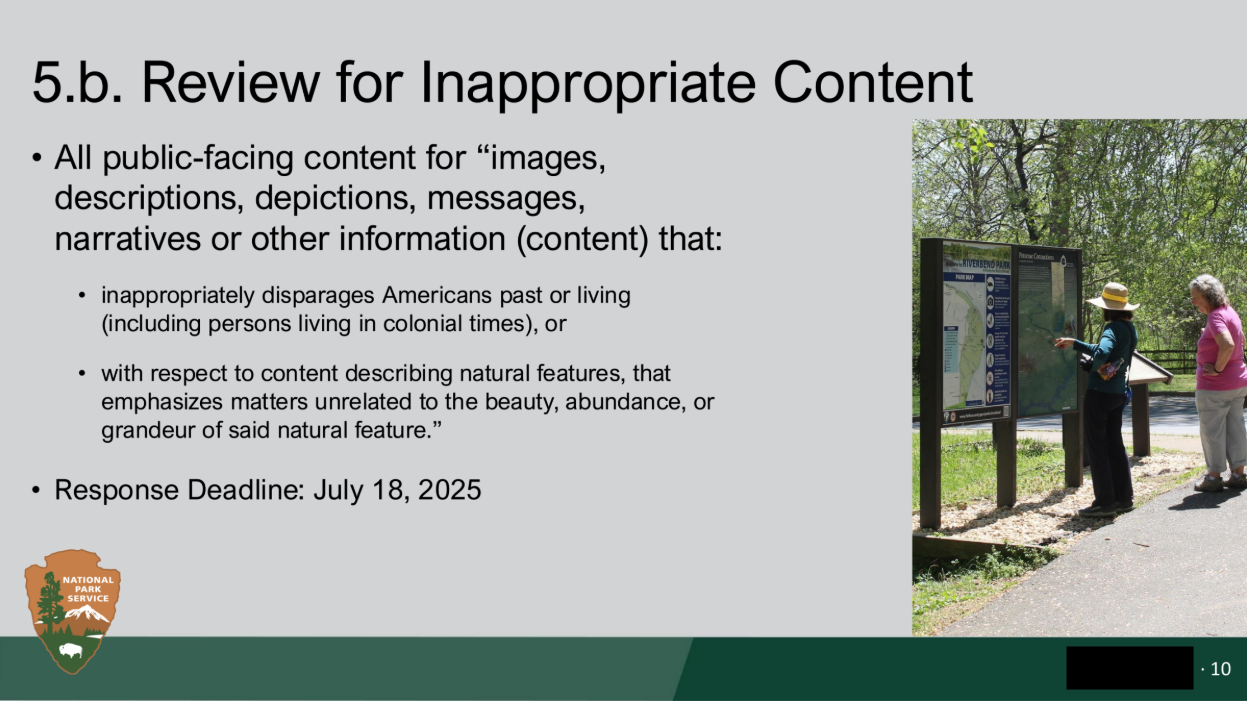
Last year, National Park Service employees all over the country were directed to report any public-facing content at parks that “inappropriately disparages Americans past or living (including persons living in colonial times).”
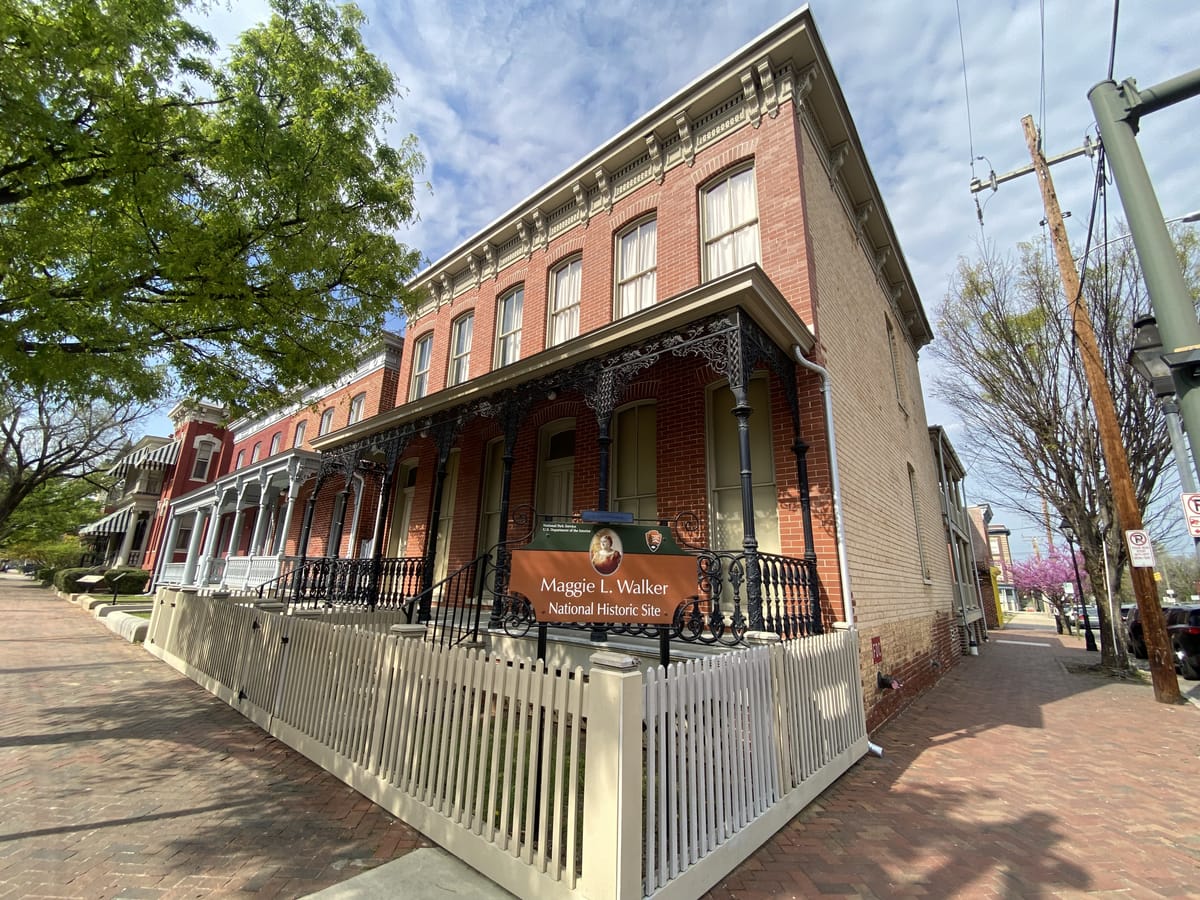
Leaked documents now show that signage at two sites in Richmond, the Maggie L. Walker National Historic Site and the Richmond National Battlefield Park, were flagged last July as part of the review.
The signs that came under scrutiny all contain information about America’s racial history.
Ana Edwards, an assistant professor at Virginia Commonwealth University teaching African American studies, said the move is concerning, as it attempts to conduct an “erasure of history.”
“It’s a call to all of us to understand that we are in a struggle over what the American identity is,” she said. “These are places that are supposed to represent the American narrative. From [the federal government’s] perspective, they are only interested in a celebratory narrative.”
The widespread reviews came in response to President Donald Trump’s executive order last year that required NPS “to ensure that all public monuments, memorials, statues, markers, or similar properties … focus on the greatness of the achievements and progress of the American people.”
In several places around the country, information at national parks has been removed or rewritten to showcase a more favorable interpretation of American history.
Most notably, in Philadelphia, Park Service workers had to take down an exhibit about slavery, including information about enslaved people held by President George Washington. A federal judge ordered the administration to restore the exhibit, and overall efforts to remove other similar content have since slowed down.
Whether any changes are planned for the Richmond signs remains unclear. Documents show that NPS leadership was supposed to review all submissions and notify employees of required actions by Aug. 18, 2025. Signage at both sites currently remains in place.
Nor were any of the Richmond signs marked as “needs review” in a National Park Service spreadsheet that was among the documents leaked last month, a designation that indicates content may be “in conflict with” Trump’s executive order.
Overall, 879 signs from over 400 national parks were flagged, with more than 150 listed as needing review. Only five reviews have been marked as completed.
When asked if the Richmond signage will be removed, a spokesperson for NPS did not directly reply to the question but said that staffers were asked to identify materials that might warrant clarification.
“Elevating an item for consideration does not mean it violates the Order, and it does not mean it will be changed. In the vast majority of cases across the system, flagged materials remain unchanged,” they wrote.
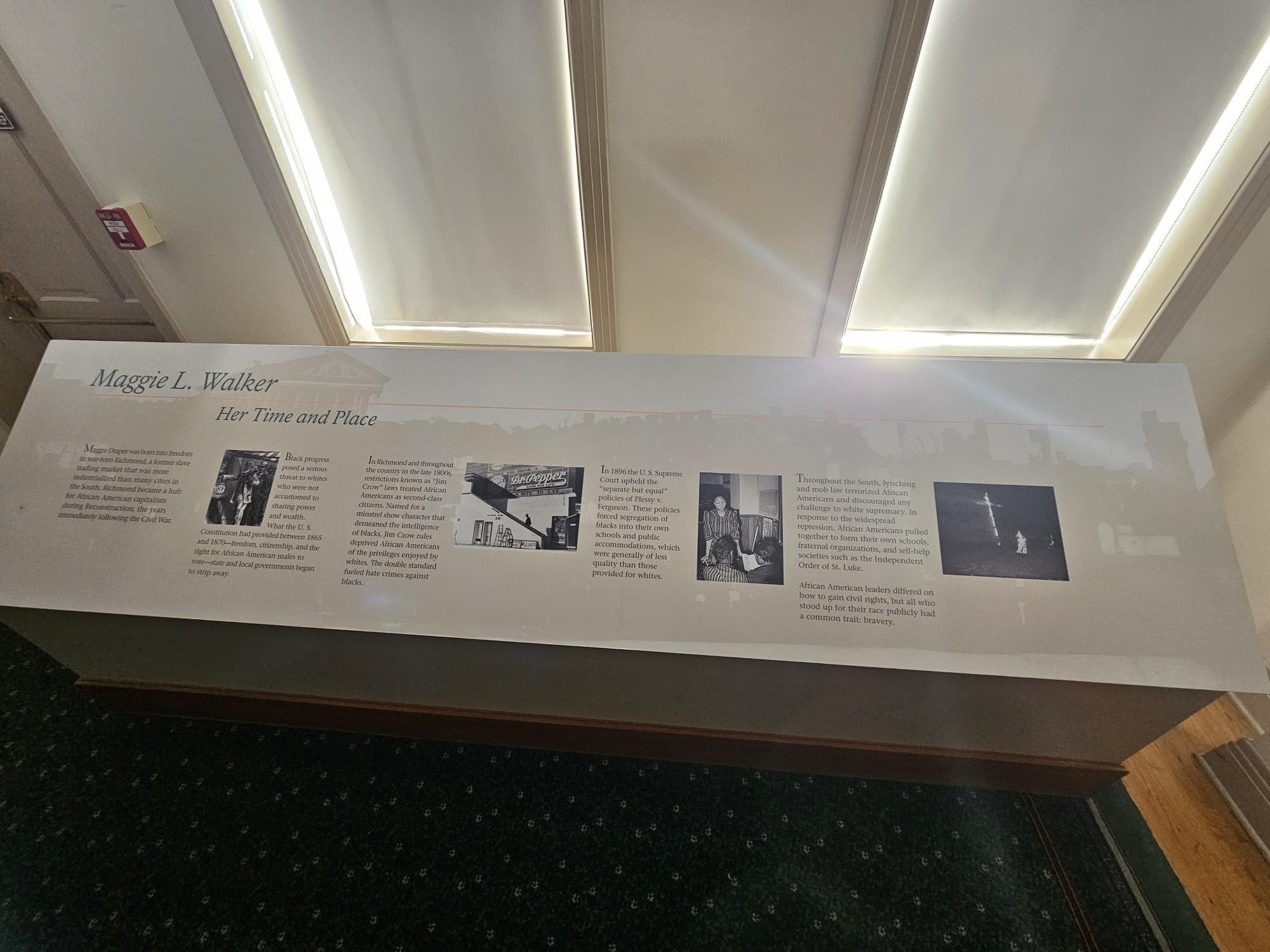
Signage flagged at the historic home of Richmond native Maggie Walker, the first Black woman in the United States to found a bank, contains information about government-enforced segregation during her time.
Walker, a child of former slaves, was born during the Jim Crow era, a time of laws that “treated African Americans as second-class citizens” and separated public facilities like schools and transportation for Black and white people, the signage states.
“Throughout the South, lynching and mob law terrorized African Americans and discouraged any challenge to white supremacy,” the signage reads.
The sign also touches upon Richmond’s own history of being a former major slave-trading market, juxtaposed with becoming an epicenter for Black entrepreneurship following the Civil War.
“Black progress posed a serious threat to whites who were not accustomed to sharing power and wealth,” it reads.
Over in Mechanicsville, a sign located at Totopotomoy Creek Battlefield Site — part of the Richmond National Battlefield Park — tells the story of 37 enslaved people who served the Shelton family who owned a farm on the site. Sarah Shelton, a daughter of the family, married founding father Patrick Henry.
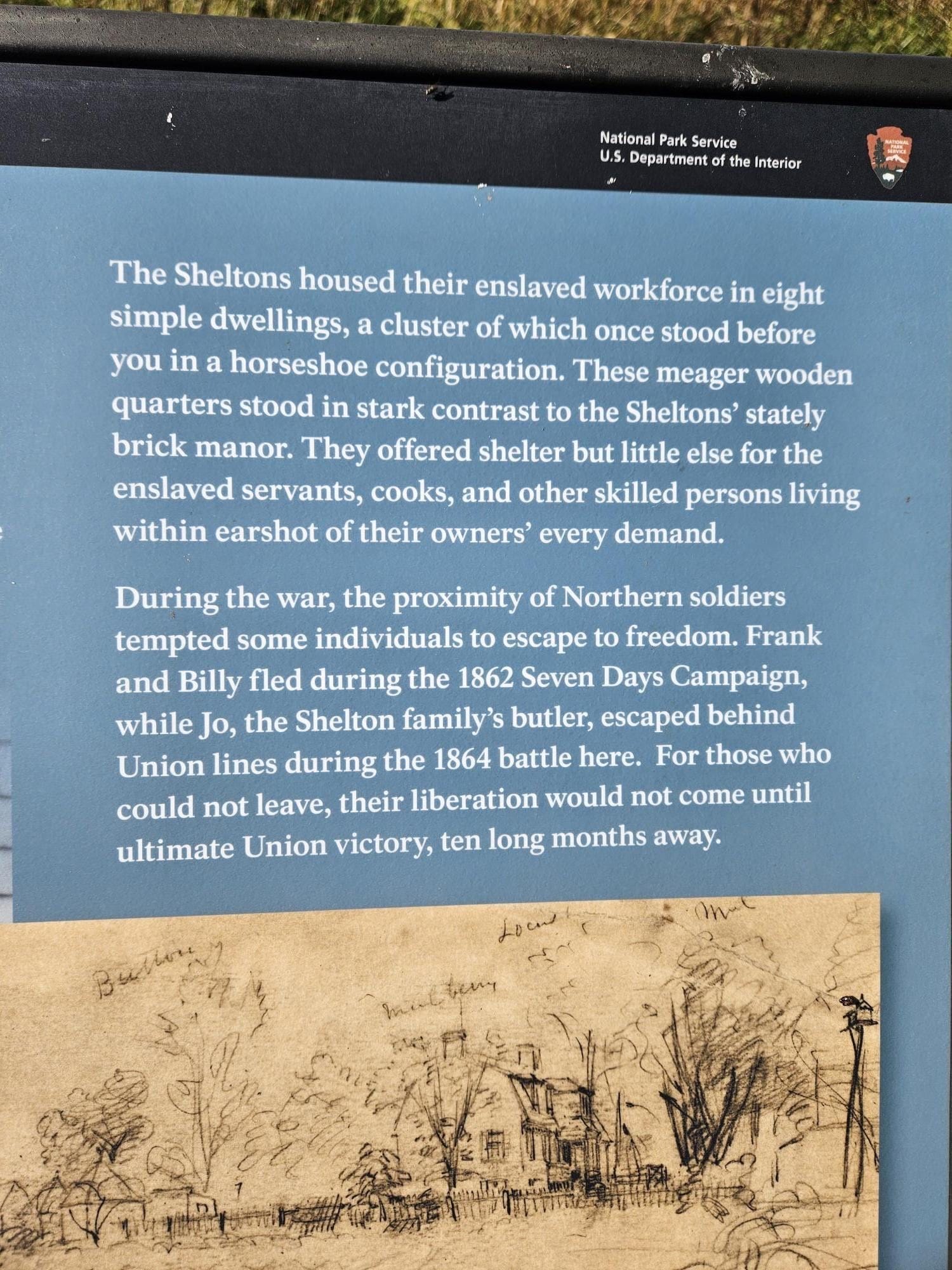
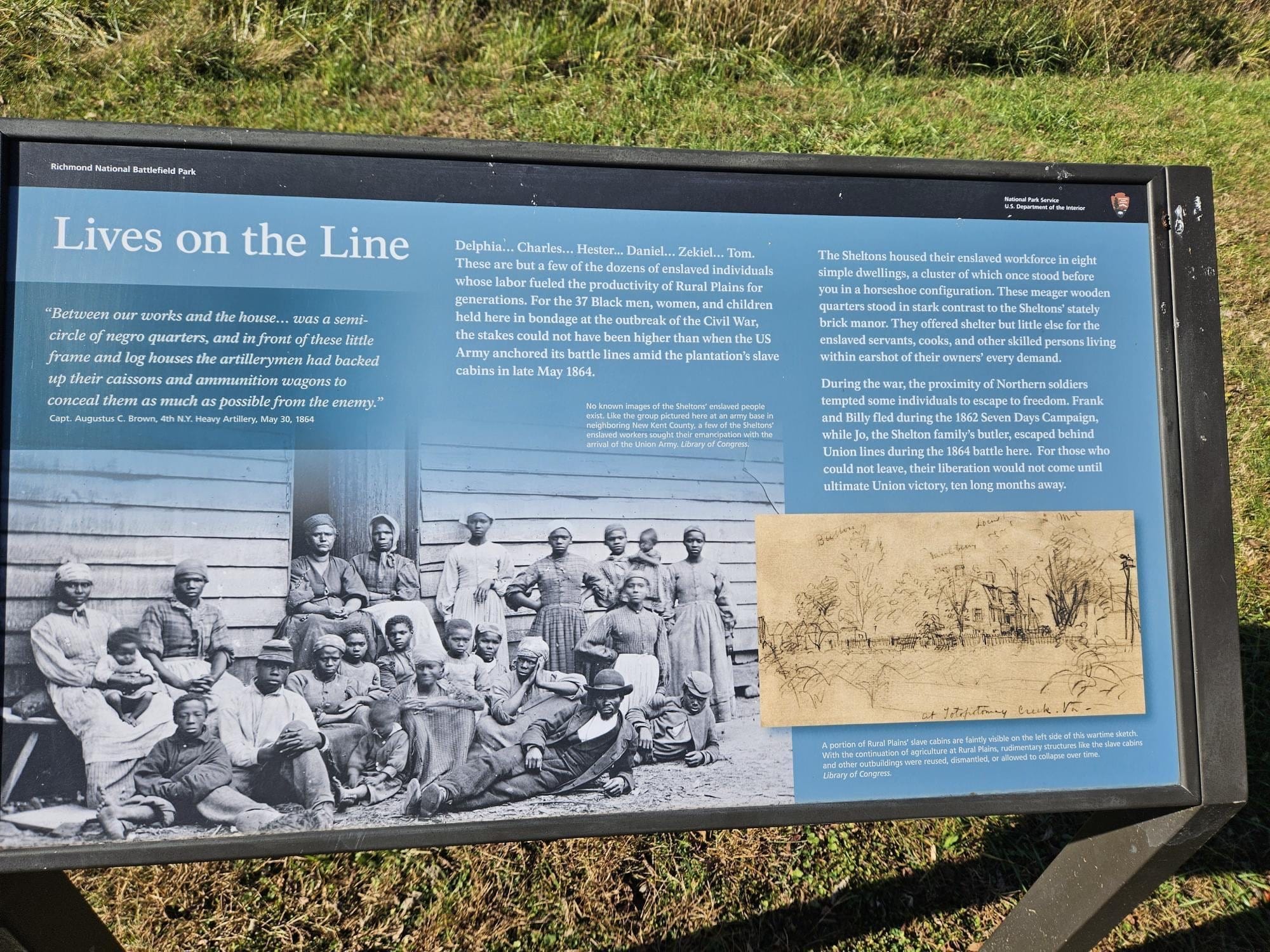
Images taken by Park Service employees at the Mechanicsville site, specifically pointing to descriptions of the enslaved's living conditions.
The slaves were “held in bondage at the outbreak of the Civil War,” and Union Army soldiers fought against Confederate soldiers amid their living quarters in late May 1864. Some slaves made attempts to escape to freedom while the Union soldiers were nearby, while the remaining waited until the Confederacy’s defeat a few months later.
NPS staffers specifically photographed a section of the sign that showed the discrepancy between the slaves’ lodgings and the Sheltons’ brick manor.
The family “offered shelter but little else for the enslaved servants, cooks and other skilled persons living within earshot of their owners’ every demand,” it read.
Edwards said that the information on the signs is not disparaging but rather is about telling the full American story.
The federal government “wants us to simply take them at face value and accept their decisions as the right decision and do that by saying that we are all aligned in the narrative of celebrating the accomplishments of America rather than understanding all that it took to get to any of those celebrations to begin with,” she said.
Contact Reporter Victoria A. Ifatusin at vifatusin@richmonder.org