School funding is often the biggest budget fight. Why hasn't Richmond found a better way?

When City Council and Mayor Danny Avula recommended that government administrators join forces with Richmond Public Schools to create a funding formula last year, they said at the time they “believe that it is in the best interests of the citizens” to provide “a predictable and objective methodology” for allocating funds to the schools’ budget.
At a joint meeting between City Council and RPS two months later in August, leaders from both sides convened for the first of three fall meetings on the issue.
The formula, as envisioned by city leaders, would be used to decide how much of the city’s yearly tax revenue is given to RPS for its use, instead of the current system where school officials make requests for City Council’s consideration, which has often led to tension between the two groups.
In Norfolk, for example, Norfolk Public Schools is allotted a 29.55% share of 15 different city revenue sources, giving both sides budget certainty each year.
In Richmond, a new system was supposed to be implemented for this current budget cycle, but members from both sides are now saying different things as to whether or not the formula exists.
“We actually did use the funding formula. The funding formula that we utilized is actually the one that they had in place,” said Chief Administrative Officer Odie Donald II in an interview. “As the city grows, so does RPS.”
But School Board Chair Shavonda Fernandez (9th District) and Vice Chair Matthew Percival (1st District) – both members in the workgroup – said they are not aware of any funding formula for this budget cycle and the work remains ongoing.
“No one indicated anything to me personally,” Percival said in an interview, referring to the formula.
When asked about Board members’ statements, Donald said it’s because “it is not a new formula.”
“It is literally matching the growth. We grow, they grow,” he said. “It’s probably confusing people to call that a funding formula, but that is what it is.”
He seemed to refer to a practice of former Mayor Levar Stoney, where the percentage increase in recurring revenues for the city would match a percentage increase in RPS’ operating budget. In 2023, Stoney asked City Council to match the city’s 10.6% increase in recurring revenues with a 10.6% increase in the school division’s operating budget for fiscal year 2024.
But that practice was never implemented as an official funding formula, and there is not any city legislation recognizing it.
In his first year with the city, Donald was put in charge of establishing the workgroup tasked with developing a formula. He told councilors at a recent Education and Human Services Committee meeting that the workgroup decided to use that funding formula model for this budget cycle.
Donald said that the division’s budget is proposed to go up by roughly 6% for fiscal year 2027 because the city witnessed a roughly 6% increase in its recurring revenue, as a result of this formula. That allowed Mayor Danny Avula to propose giving the schools a $8.2 million increase to its budget, less than the $12 million asked.
“We are still critically short of the amount needed to fully fund our recently approved budget, which already includes millions of dollars of cuts,” said Superintendent Jason Kamras and the School Board in a joint statement responding to Avula’s proposal.
Donald told councilors that the formula does not currently account for when the city experiences a decrease in revenue, a conversation he said the workgroup is going to have this summer. School Board members also said conversations are expected to pick up again this summer, aiming to have the formula ready for the fiscal year 2028 budget cycle.
In response to requests for an interview with Kamras, who is also on the workgroup, an RPS spokesperson declined, pointing to Donald’s comments made at the City Council committee meeting.
“[We are] looking forward to continuing the work as we look till fiscal year 2027-2028 and beyond,” the spokesperson wrote.
At a committee meeting, Councilor Andrew Breton inquired about the status of the formula.
“Are we imagining that the formula will primarily be based on some portion of our tax revenue growth or are we imagining that it will also be multiplied by some function of the number of children in the city?” he asked. “Are we trying to go that far or are we trying to keep it more simple and clear?”
“I would prefer and I’m going to advocate for simple and clear,” Donald responded, adding that the schools will also have to decide what the formula will look like.
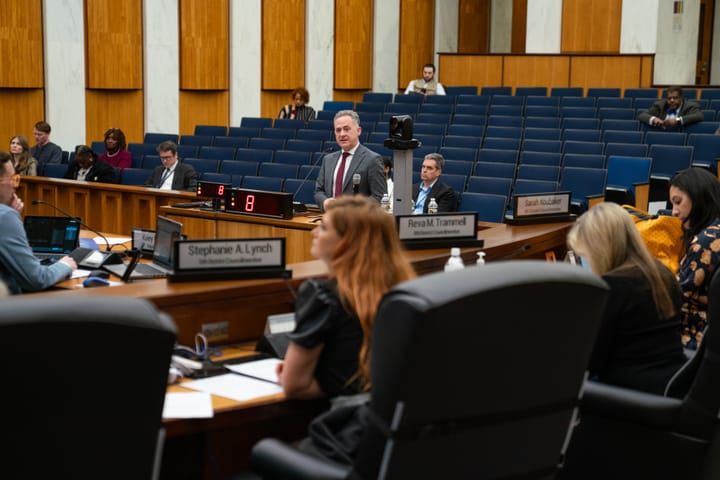
Stephanie Lynch (5th District), who is also on the workgroup, said she thought the consensus of the group at the last meeting was to use the percentage growth model as the funding formula, hence why it was used during this budget cycle. She further asked Donald to “memorialize” the funding formula by releasing a public memo explaining where the city is with it and what it currently looks like.
“I think there might be some misunderstanding about what the funding formula really is. The funding formula is as simple as the percentage of our growth in revenue. That’s it,” she said, which Donald affirmed. “It is not a lengthy equation.”
The workgroup also missed its deadline to present a proposed funding formula by Oct. 15, an intended product of the meetings to be used this budget cycle.
Lynch told The Richmonder that she was disappointed that “we passed the resolution and missed the mark” on presenting an official funding formula. She said she is still committed to solidifying it and reaching consensus about what the exact percentage of revenue will be.
Both School Board members and Donald said there was not enough time to make the proposal, with Board members saying that they did not envision that the formula would be ready for the fiscal year 2027 budget cycle.
“This really was never intended to be something that would be formalized by this year,” said Fernandez. “But the goal was to continue to really think about, analyze, ask questions, do research. What we’ve done is just that.”
About the meetings
The workgroup – consisting of 13 representatives from City Council, RPS and city administration – met on Sept. 26, Oct. 8 and 17 and discussed each governing body’s finances, constraints, along with school enrollment, demographics and staffing levels, similar to what was discussed at last year’s joint meeting. Meeting documents showed 32% of the city’s tax revenue went to RPS on average yearly.
Officials also agreed on the criteria that would dictate what the funding formula would look like, which are:
- The city’s annual revenues,
- cost of living and inflation,
- student enrollment,
- state and federal funding changes,
- policy priorities,
- events impacting the economy, like the COVID-19 pandemic,
- infrastructure investments, and
- student needs, like economically disadvantaged, immigrant and disabled students.
Fernandez and Percival relayed information from the meeting back to the other School Board members in October and November meetings.
“What they’re trying to accomplish is to really take some of the guesswork out of it so that we already walk into the next budget cycle knowing what type of funding would be allotted to us,” Fernandez said to Board members in a November meeting.
Percival told fellow members in an earlier October Finance and Audit committee meeting that city officials also presented funding formulas from other jurisdictions like Norfolk and Virginia Beach as a springboard to create Richmond’s formula.
He initially expressed hesitation with the idea, saying that it wouldn’t be an “apples to apples” comparison because jurisdictions in the Hampton Roads area "receive a lion’s share of federal funding,” due to more federal naval bases being located there.
Rather, he said at the time, he preferred a formula from a place like Newport News. However, Newport News does not have a formula. Percival later told The Richmonder that he is open to using Norfolk’s funding formula as a start.
“Going back and looking at the numbers, while it's not perfect, it's probably about as close as we're going to get,” he said. “The reality is we're not going to find a perfect one-to-one match for RPS.”
Fernandez told The Richmonder that she is “cautiously optimistic” about what will ultimately be in the funding formula, as there is “so much unpredictability that happens in a city from year to year.” She referred to events like the city’s water crisis that occurred at the beginning of last year.
She also emphasized that Richmond schools have been underfunded for years, meaning that the division has been working from a deficit. While the funding formula is great, she said, there are other issues that still need to be addressed.
“I don’t want it to be a situation where we fund ourselves at a deficit simply because we agreed to a certain percentage,” she said, adding that she wants the formula to contain a “realistic baseline of some sort, but then the flexibility for us to still share what our needs are.”
What could a finalized funding formula look like? Here’s Norfolk’s example
Under the current budget process, the School Board asks City Council for a certain amount of funding from the general budget. But regardless of the request, council determines the final amount allotted to school, which has been less than the ask in recent years. It has led to some previous consternations.
Having a funding formula may not fully eliminate this traditional process, but it can serve as a guide that can further allow negotiations to be minimal.
That’s the case with Norfolk city. In a November interview last year, Charles Meek, the city’s director of budget and strategic planning told The Richmonder that the Southeastern city implemented their funding formula in 2020 for similar reasons as Richmond’s – to avoid the back and forth and provide some type of predictability.
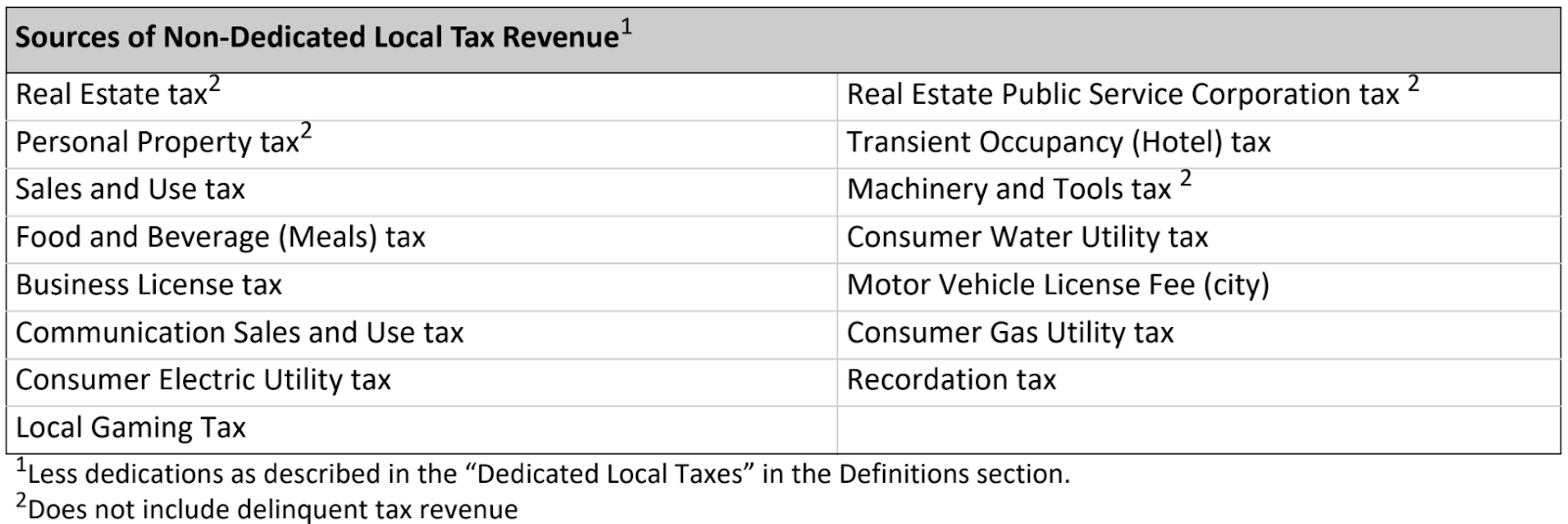
After deducting any dedications Norfolk’s city council has made, like 1 cent of the real estate tax to build a floodwall in parts of the city, the city’s funding formula allots a constant 29.55% share of 15 different non-dedicated tax revenue sources to Norfolk Public Schools.
The school division initially receives a preliminary estimate in the fall after Meek’s office runs the funding formula. That number is updated in the winter based on revenue history and what’s happening in the economy. A final estimate is then provided in March to the schools to signal to the division what the city will propose giving when the budget cycle begins.
“It really helps, I think, the schools plan for what they’re going to include in their proposed budget as they work through it with their School Board and then ultimately what they submit to the city,” he said.
As part of the policy for the funding formula, the city also allows for a “true-up” where the city goes back to see how revenues performed after the fiscal year ends, Meek said. If the city underestimated how much it was going to make for that fiscal year and money came in higher, then the schools have an opportunity to adopt a resolution in City Council and request to use that extra funding for specific one-time expenses.
In fact, at the time of the interview, Meek said that the city was anticipating additional funding would be available for the schools following the 2025 fiscal year budget cycle.
On the flip side, if the city overestimated how much it was going to make, officials could “end up clawing back money” from the schools in the next fiscal year. Meek said he is unaware of that ever occurring before or after joining city government nearly a year ago.
The policy allows for the schools to still request additional funding in case the division believes it’s not enough for them and to explain why by April 1. It also requires that the city budget director, manager, superintendent and school district finance director meet every year to review the funding formula policy.
When asked about any comments from Norfolk Public Schools on the funding formula, Meek said he had not heard any complaints or compliments about it, assuming that it works just fine. Norfolk Public School officials said they did not have any school official available for an interview at the time.
Meek said that Richmond officials did reach out to his office last summer to ask about Norfolk’s funding formula to receive background information.
“I think each locality and their respective school divisions need to work together to put together a plan and a policy that works for them. There may be differences – they just have to draft something that works for their circumstances.”
Contact Reporter Victoria A. Ifatusin at vifatusin@richmonder.org