Richmond’s new transportation director wants a city ‘built for people.’ His work is increasingly urgent.
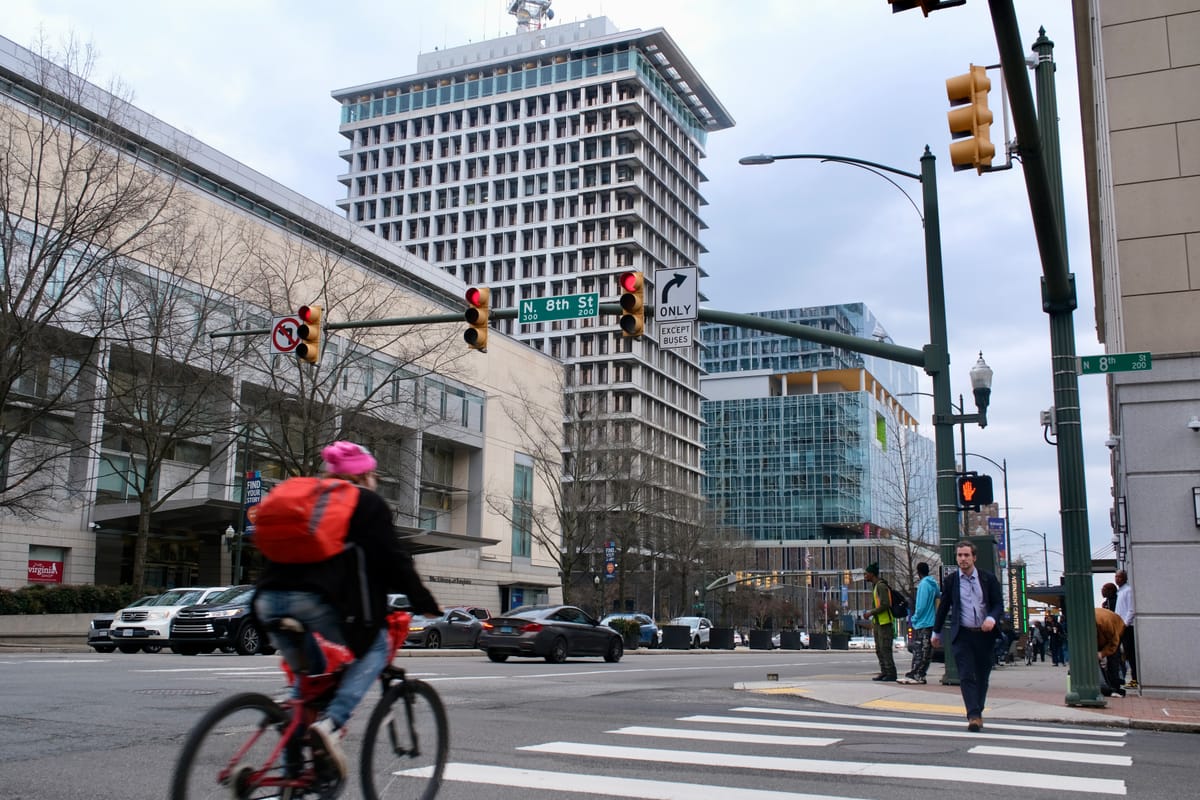
Andy Boenau says he understands why so many American cities were designed to get cars moving as quickly as possible.
Cars were “a pretty amazing invention,” he said in a recent interview, so there wasn’t a sinister intent behind the impulse to build cityscapes for them. But he’s bringing a far different mindset to his newly created role as Richmond’s director of transportation. What he wants, he said, is a city “built for people of all ages and abilities.”
“The human being is the most important design vehicle in engineering terms. It's not a certain-length bus or a certain type of truck,” Boenau said. “It's a small child. It's a frail senior citizen. If you can design for those extremes, then everybody in between is going to be generally okay.”
Starting in 2017, Richmond officials have embraced the ambitious goal of ending traffic-related deaths and serious injuries, a strategy known as Vision Zero. That goal is centered around the idea that traffic deaths are not accidents society has to accept as inevitable, but a design problem that can be fixed.
In 2018, the city logged zero pedestrian deaths. But as anyone paying attention to local headlines recently would know, pedestrians dying on Richmond’s streets has been more of a common occurrence than a rarity.
In December, Bill Martin, a local historian who led the Valentine Museum for more than three decades, was killed while crossing a street near City Hall.
In January, Kristin Tolbert, a 26-year-old scientist, was killed in a hit-and-run while walking her dog South Richmond.
In February, Hope Cartwright, a 23-year-old editor at Virginia Living magazine, was fatally struck in a downtown crosswalk after leaving work.
Boenau, a civil engineer and urban planner who has spent most of his career in the private sector, is a key part of City Hall’s efforts to prevent future deaths and make roads safer.
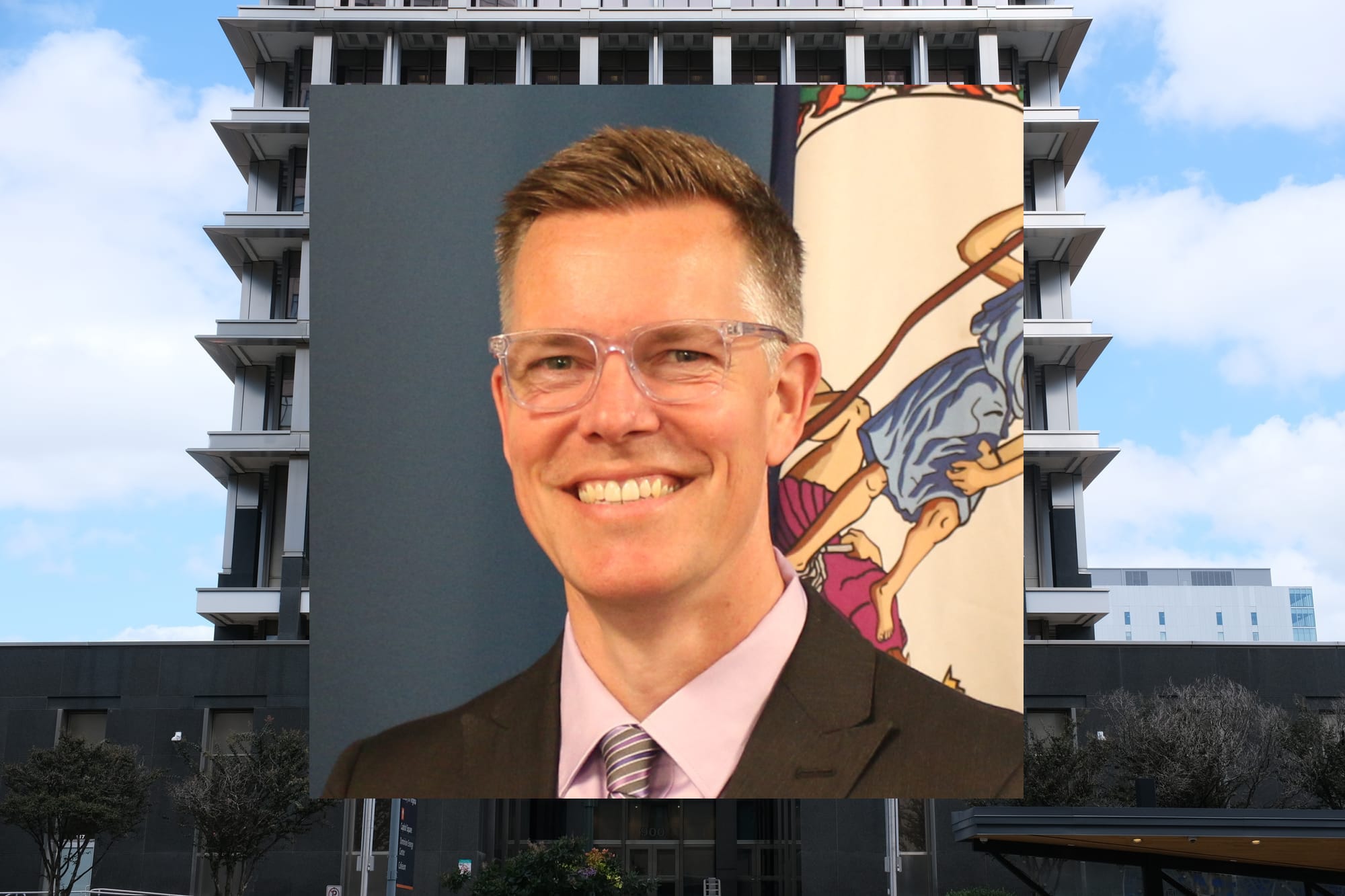
Mayor Danny Avula recently named Boenau — a Fan District resident who rides a bike to work — the director of a newly established transportation department that will exist within the Department of Public Works.
For now, it’s mostly an internal restructuring that officials say will streamline resources and coordination. Planning and engineering, Boenau said, have to “work hand in hand.”
“So that we’re not coming up with ideas and spending time and energy on them only to realize later, oh, we’re actually not going to be able to do that. Because if we implement that, it’s going to get ripped out in a year,” Boenau said.
A big part of the plan going forward, according to Boenau, is more proactive communication about projects being done on city streets.
“I'm not interested in telling somebody about the width of a bike lane or the height of a curb on a bump out for the sake of it,” Boenau said. “It’s helping people understand what we do and why we do it.”
The communication push will also include efforts to inform people about the rules of the road and the consequences for breaking them.
“Bike lanes are travel lanes. If you park cars & trucks in bike lanes, you’re putting people in harm’s way and you’re going to get a ticket,” read one of the first social media posts from the newly created @RVA_DOT account on X.
Boenau doesn’t think Richmond needs a radical change in direction from how the city has recently been handling transportation policy. City Hall has long recognized the need to put people higher in the pecking order than cars, he said, and has basically stopped doing projects that prioritize car traffic or car speed.
Even before Vision Zero, which was adopted under former Mayor Levar Stoney, Richmond officials adopted a Complete Streets policy in 2014 under former Mayor Dwight Jones. That earlier policy was meant to sharpen the city’s focus on pedestrian and bicycle infrastructure.
“We are directionally accurate,” Boenau said. “Vision Zero and Complete Streets are the north star.”
As part of the city’s renewed focus on road safety, Avula said he’d be accelerating city funding to pay for more of the type of infrastructure projects the city has been doing, such as dedicated travel lanes for bikes and buses, left-turn hardening, pedestrian crossing beacons, road diets that shrink the number of car lanes and speed tables designed to slow cars down.
‘Don’t do that bad thing’
Asked why he feels so many pedestrian deaths are still happening long after the city adopted Complete Streets and Vision Zero, Boenau pointed back to 2020, the year of both the COVID-19 pandemic and the widespread scrutiny of law enforcement tactics that followed the killing of George Floyd. That year, Boenau said, “traffic enforcement of all types just came to a standstill.”
“What happened in the cities that didn’t start back up with enforcement is the driving behavior got way worse,” Boenau said. “The anti-social behavior behind the wheel was so bad. It was speed, but it wasn’t just speed. It was distraction. It was [that] nobody’s sober. It was just aggression. All kinds of terrible things.”
The short-staffed Richmond Police Department is doing what it can on enforcement, Boenau said, and is engaged in the city’s Vision Zero efforts to both improve the built environment and ensure there’s a consequence for dangerous or inconsiderate behavior.
There have been several recent indicators of stepped-up traffic enforcement in the city. Police recently announced a “traffic enforcement blitz” focused on Hull Street. Law enforcement has told the City Council it’s planning a springtime crackdown on vehicles illegally parked in bike lanes.
Richmond is also moving further toward camera-based traffic enforcement, a move Boenau said could help encourage better driving behavior. Cameras are less resource-intensive than traditional traffic stops, he said, and could potentially ease concerns about fairness and safety when it’s a police officer pulling someone over.
“If you get automation involved with cameras, then it’s just simply, ‘This is footage of you doing a bad thing. Don’t do that bad thing. And here’s a ticket for doing the bad thing.’ That’s pretty straightforward,” Boenau said.
The city has already installed speed cameras in school zones. Last year, Richmond’s 26 cameras generated 102,350 tickets, according to a Virginia State Police report, the third-highest total of any locality in the state. A little more than half resulted in a “successful prosecution,” generating $2.9 million in total fines for the year.
Officials are in the process of adding 10 red-light cameras at key intersections that will ticket drivers for a different type of safety infraction. Ticketing from the first two cameras is set to begin this week.
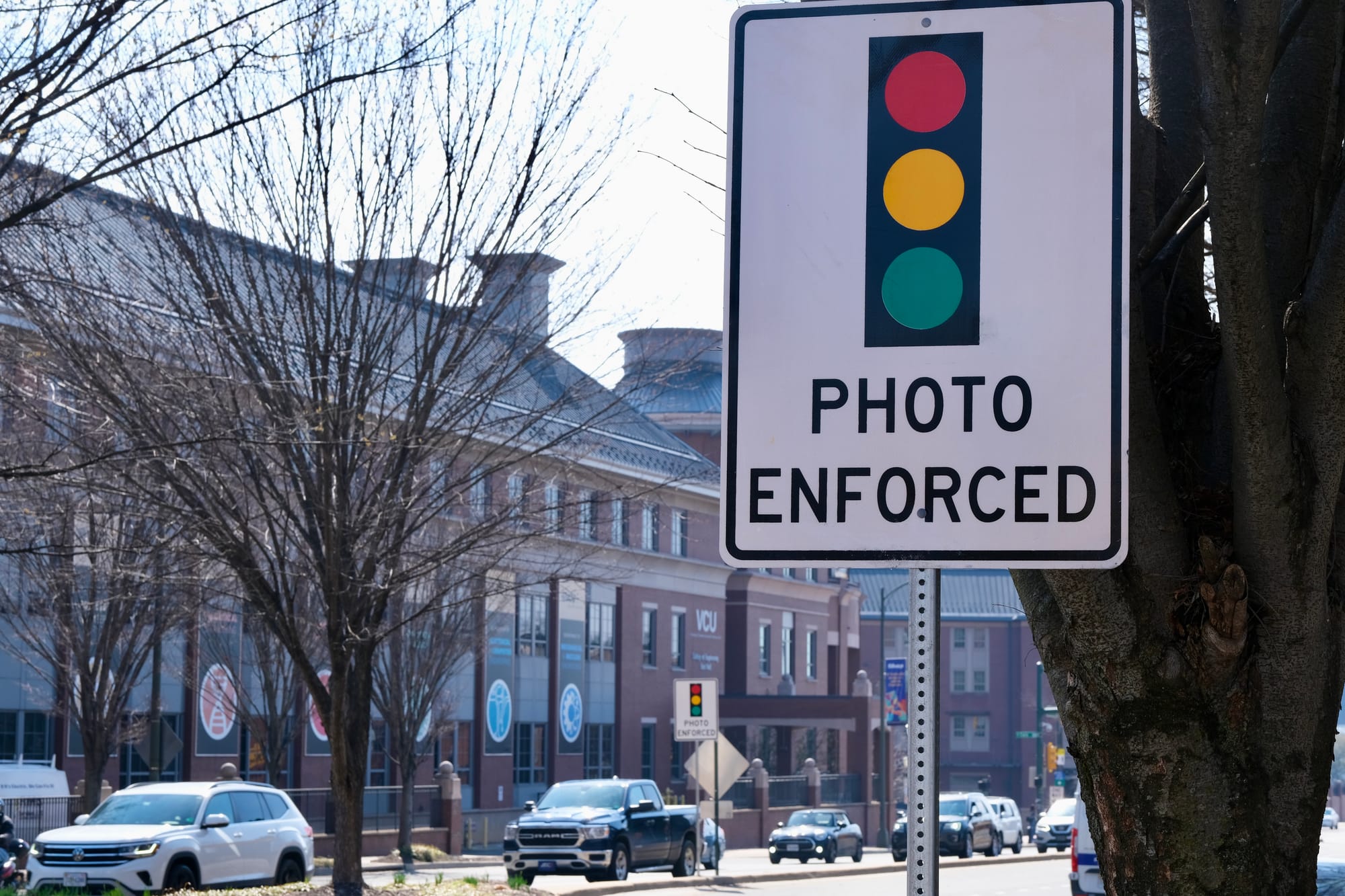
Once the red-light cameras are in place, Boenau said he expects the early stages of ticketing to look similar to what’s happening with speed cameras.
“You want to see a whole bunch of tickets early on, because you want to see people getting a consequence as quick as possible attached to the bad behavior, the anti-social behavior that’s putting others at risk,” he said. “And then you want it to taper off, because you want people to behave.”
A ‘department within a department’
The new department run by Boenau is more like a “department within a department.”
That’s according to Department of Public Works Director Bobby Vincent, who remains at the top of the organizational chart Boenau falls within.
The functions under Boenau, according to the organizational chart, include transportation planning, transportation engineering, community engagement and paving, signs, signals and markings.
Because there have been prior calls in Richmond for a fully standalone transportation department, the terminology has caused some confusion over what exactly the Avula administration created.
At a City Council committee meeting earlier this year, Councilor Ellen Robertson (6th District) reminded the administration that — under the city charter — only the Council has the power to “create, alter or abolish departments.” She asked the administration to change the description it’s using to avoid implying the city has “created a new department outside of Council approval.”
“It would be more acceptable to look at the reorganization as an office or a division or whatever instead of a department,” Robertson said. “Because Council is the only entity that has the authority to create departments. This is a big issue. It came up during the campaign for the city to create a new transportation department.”
When asked about Robertson’s comments, Avula spokesperson Mira Signer noted that the city’s current budget created a director of transportation job in DPW to “provide coordination among the various divisions of the department and with other city departments.”
“The plan for fully fleshing out the division is still in process, and the announcement was an initial step to move forward,” Signer said.
The idea of a transportation department dates back further than the city’s 2024 elections.
In 2022, the City Council voted 8-0 to pass a resolution asking Stoney to propose a budget with a “Department of Mobility and Multimodal Transportation” that would be fully independent of DPW. Because that was a non-binding resolution, no standalone department was created.
Former City Council member Andreas Addison, who championed the idea of overhauling Richmond’s approach transportation policy while he was in office, said he was told the Council actually didn’t have the power to create a new department via binding ordinance. The explanation he received, he said, was that it’s ultimately up to the administration to staff, fund and oversee city departments.
In an interview, Addison said he believes Boenau will do a good job in the role he’s been given. But he’s skeptical an internal reshuffling will be as effective at bringing change as a standalone department would.
“All I see is a reorganization of staff that was essentially the same structure they already had in Public Works that’s now called DOT,” said Addison, who called for a standalone transportation department during his 2024 run for mayor.
Boenau said standalone transportation departments can work well for some bigger cities. But in Richmond, which already has much of the expertise needed, he says it makes sense to keep resources integrated under DPW instead of standing up an entirely new department with new layers of finance and HR bureaucracy.
“The staff are all together,” Boenau said of Richmond’s approach. “Instead of fighting for resources on the outside at every level, from junior to senior staff, we don’t have to build up our own. Which would be an extremely expensive undertaking.”
Boenau said his near-term goal is for Richmonders to better understand the work he and his colleagues are doing to try to make roads safer, even if it feels like half the city is “under construction” because there are so many projects happening.
“We hope that people are patient with us,” Boenau said. “There's going to be some periods of inconvenience. But things get better in the end.”
Contact Reporter Graham Moomaw at gmoomaw@richmonder.org