Richmond studying fixes for dangerous Broad Rock rail crossing
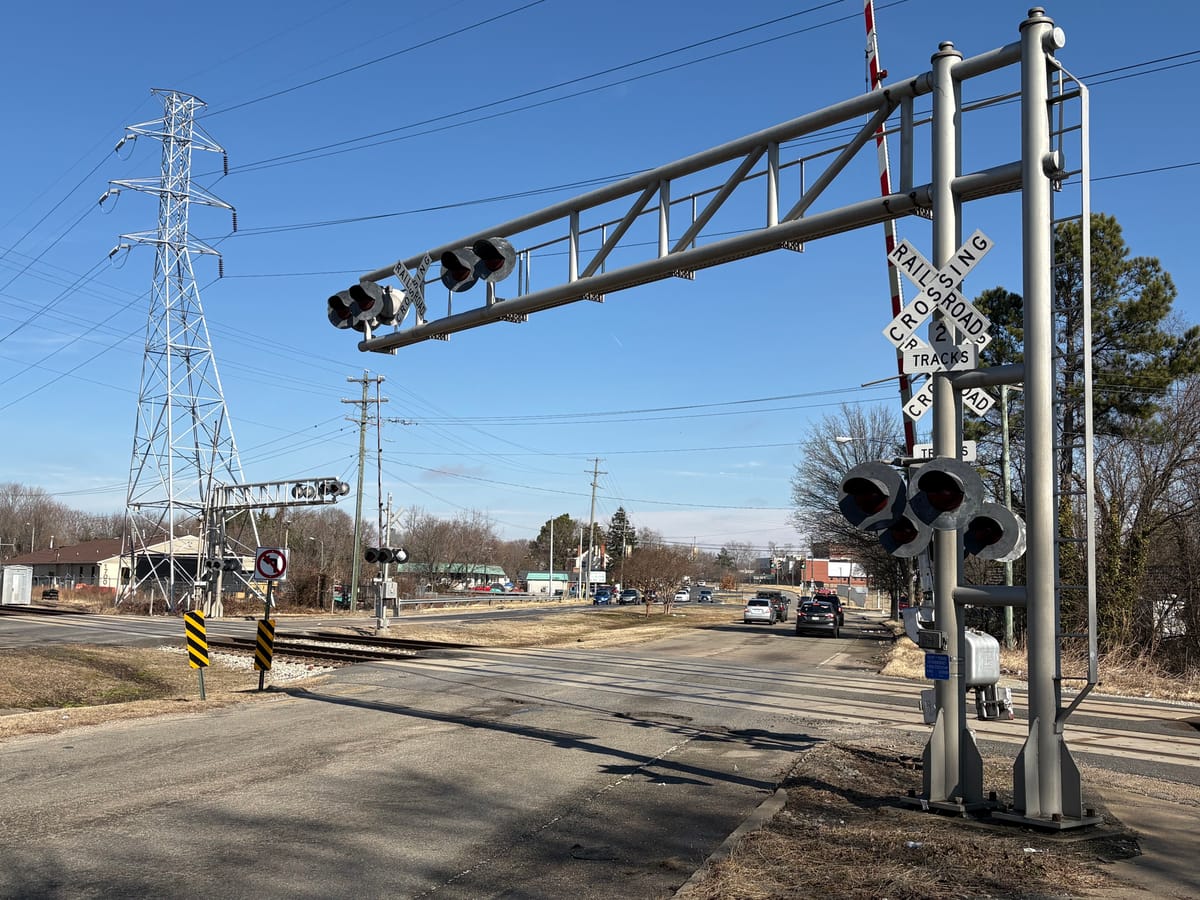
Richmond transportation officials are looking at possible ways to separate vehicle and train traffic at a dangerous rail crossing on Broad Rock Boulevard that has seen multiple collisions over the past decade.
The crossing, which lies between East Belt Boulevard and South Kinsley Avenue near the McGuire Veterans Hospital in South Richmond, is ranked the fifth most dangerous crossing in Virginia, say city officials. According to data from the Federal Railroad Administration, four people have died there since 2015.
Other non-fatal crashes have also occurred, including one last summer when a driver’s car got stuck on the tracks. Altogether, a state action plan estimates the crossing causes about $584,000 in yearly collision costs, more than any other rail crossing in the state.
Now, $3.2 million in federal and state funding will let the city carry out environmental and engineering reviews to see whether a bridge can be built that “will allow road traffic to cross over the rail lines without conflict,” transportation officials told The Richmonder.
“This will eliminate delays at the crossing due to train traffic and avoid road and rail user conflict,” members of the Department of Public Works wrote in an email.
Austin Staton, a spokesperson for CSX, which owns the crossing, said that “we look forward to cooperating with the city and other partners as they look into the study and see what the next steps are.”
The company has also voiced its support for the project to the Federal Railroad Administration, writing in a 2024 letter that based on incidents at rail crossings in the city, Richmond “has experienced a disproportionate impact to the safety of its residents, particularly within its underserved communities.”
Richmond is home to 40 railroad crossings that occur “at grade,” meaning that rail and other traffic intersect at the same level.
“Due to the accident history, high vehicular traffic and train volumes and the grade separation of similar roadways in the area, CSX believes Broad Rock Boulevard is a top candidate for grade separation in Virginia,” wrote CSX Vice President for Government Affairs Tom Livingston in the 2024 letter.
Besides the high number of crashes that have occurred there, the Broad Rock rail crossing has long been a chokepoint for traffic.
About 20 freight and passenger trains per day pass through the crossing. Freight trains cause particular disruptions: Not only are they less predictable than passenger lines, but their length has increased over time, leading to longer delays for vehicles that must stop to let them go by.
“Further exacerbating commuter frustration is that trains at these crossings frequently and unexpectedly stop midway through the crossing, delayed by train traffic in front of them, and the need to maintain a safe distance between trains in the corridor,” DPW staffers wrote. “Over time, these repeated delays and their resulting time pressure on commuters have led some to make poor decisions and try to go around the gates.”
All four of the deaths that have occurred since 2015 involved cars or pedestrians going around railroad gates that lower when trains are approaching.
More crucially, the crossing has slowed fire, ambulance and other responders from getting to emergencies. Officials estimate that about 7% of all emergency calls in Richmond Fire Station 22’s service area are affected by delays due to trains crossing the intersection. Delays can last more than 4 minutes.
“The absence of alternative routes deteriorates the response times significantly,” said DPW staff.
Richmond’s City Council approved acceptance of the study funding this February. The city is putting $135,200 toward the project, and the review is expected to be complete by summer 2027.
Contact Reporter Sarah Vogelsong at svogelsong@richmonder.org