Richmond School Board hears from five candidates competing for open seat
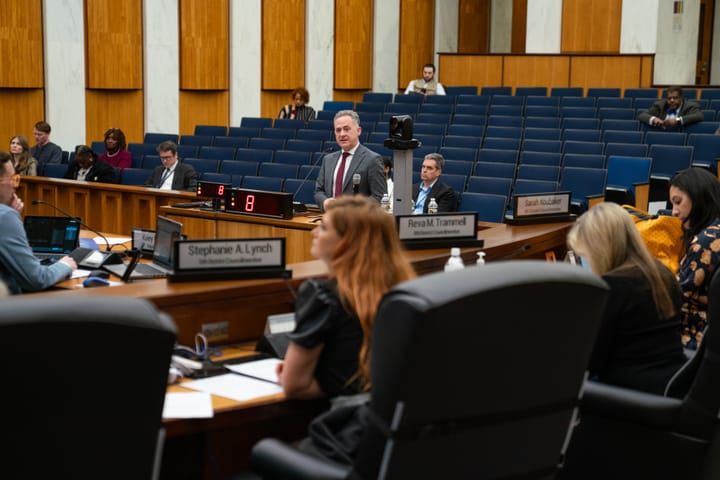
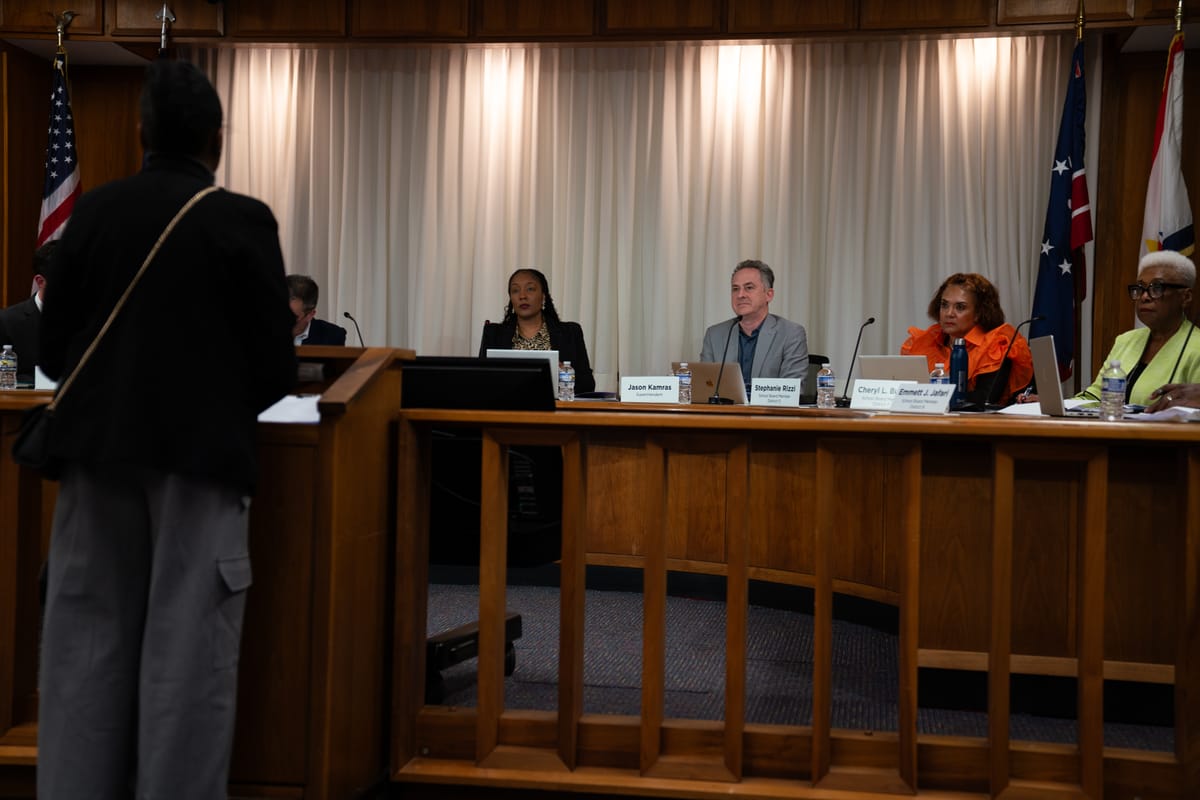
In the first of a two-part process to fill the vacant 6th District seat on the Richmond School Board, five candidates made their case to the governing body Tuesday night explaining why they would be the best fit.
Each candidate had 15 minutes to provide the Board answers to the following:
- What data, anecdotes or experiences have most shaped your understanding of this district’s needs?
- How do you balance fiscal responsibility with moral responsibility when resources are limited?
- Discuss your experience with a complex problem or conflict and how you addressed it.
- How have your life and work experiences prepared you to understand, represent and advocate for families with a wide range of needs?
- How would you balance fiscal responsibility, the Board as a body, yourself as an individual member and community expectations while centering student outcomes?
The candidates gleaned from their personal and work experiences in and outside of the 6th District, which varied from serving as a CEO of a nonprofit to engaging with neighborhood associations and garden clubs.
Their answers are presented in the order they spoke on Tuesday night. A video of the interviews can be seen here.
‘As an immigrant, I understand what those needs are’
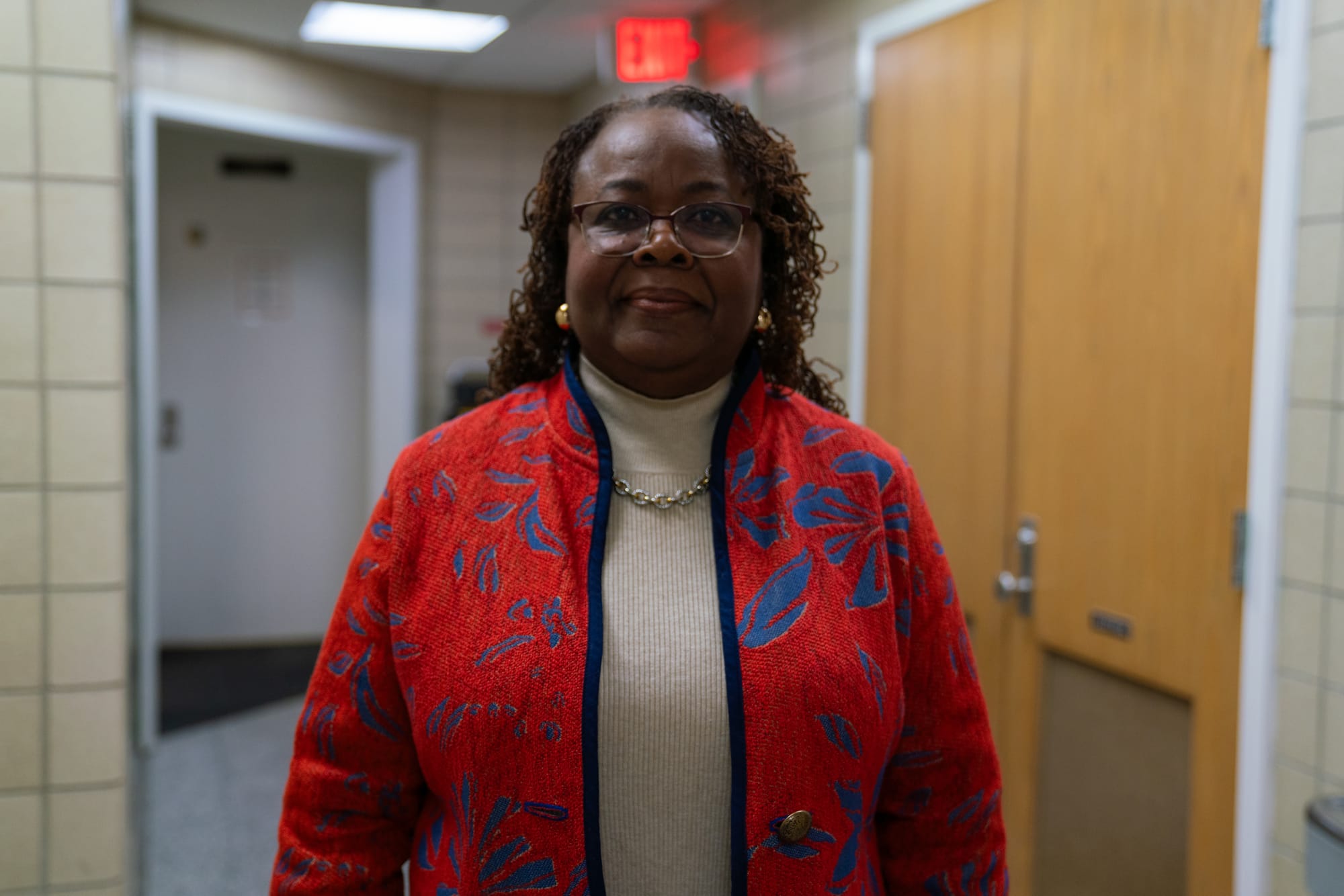
When Jacqueline McDonnough moved to the United States from Trinidad at nine years old, she said her parents told her to be the first in her class.
“But there was no road map,” she told the Board. “Teachers and counselors in the school were part of the road map for me.”
McDonnough, a 38-year resident of Highland Park, told the Board her children and grandchildren are graduates of Richmond schools, and she shared that she has been active in her neighborhood.
A now-retired professor, McDonnough has served on the boards of the Highland Park Restoration and Preservation Program and the Highland Park Quality of Life Civic Association. She also started a garden club when she retired, which she said was done to connect legacy residents with new ones.
That has resulted in existing relationships within the community and schools, she said, which she would rely on to help her understand the 6th District’s needs.
“Knowing what the community wants is paramount to me,” she said.
She shared experiences where she held some financial responsibility, like helping to allocate funds to small nonprofits in Richmond as a committee member of the Richmond Henrico Health District and securing $38 million in federal and state funds as a science education associate professor at VCU.
McDonnough also helped start the university’s Richmond Teacher Residency program, where many of RPS’ teachers come from. When teaching students from the program, she said she at times faced the difficulty of dealing with the size of the class, which led her to tap on experienced teachers to help teach the program – an example of her problem solving.
McDonnough told the Board that the division has already made strides in increasing student achievement without having enough resources. She said would look at ways in which spending can be reduced while still having the necessary resources for students for curriculum materials.
“We all can't have everything we want every time,” she said.
She said she would also push for better funding from the state, while looking into partnerships with nonprofits that work with students and teachers to supplement the division’s budget.
These experiences, along with the research she has conducted on student achievement, allows her to provide resources to the 6th District that will further student success in areas like math and science, she said.
'We had, really, a lot more similarities than differences'
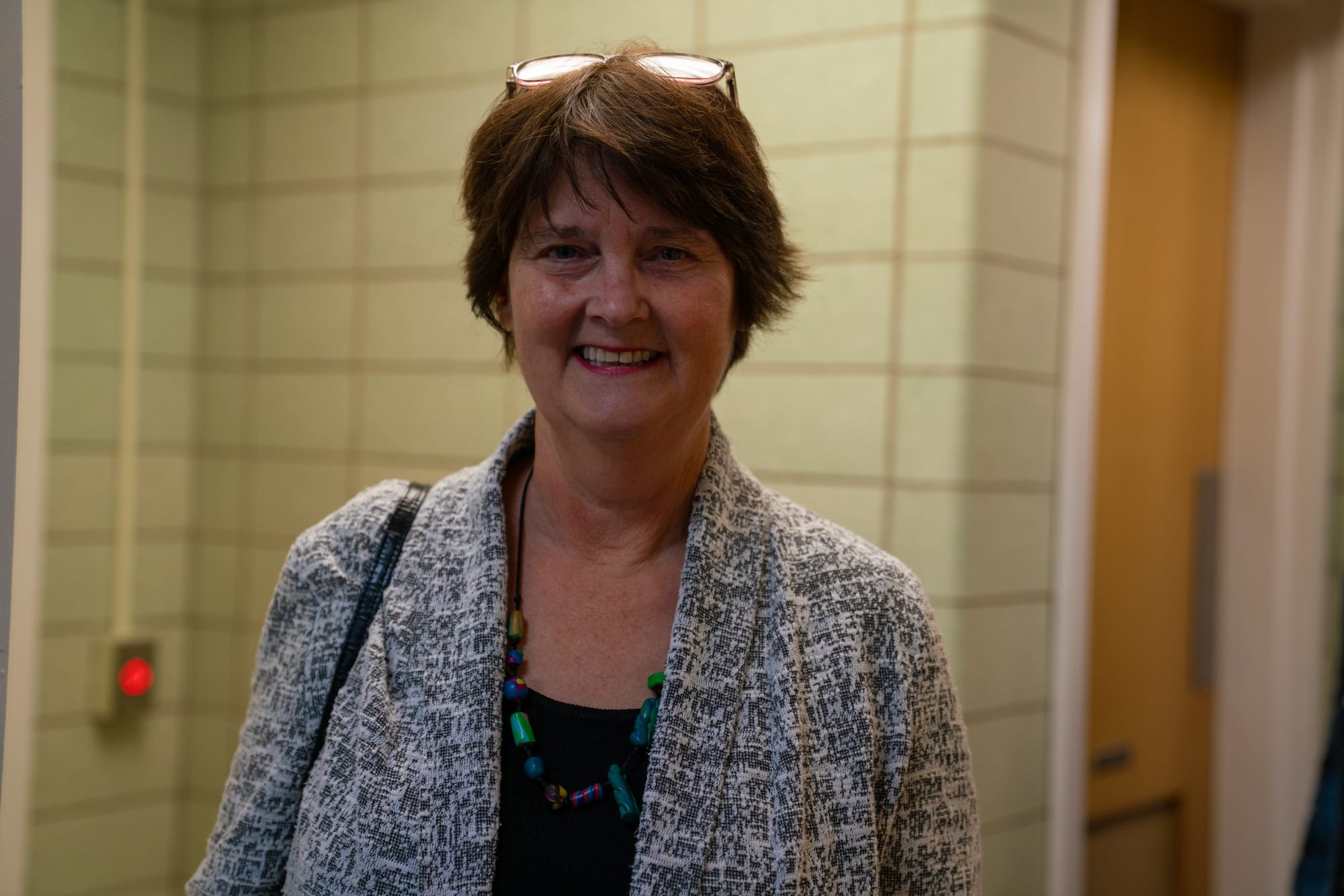
Anne Holton said that her experience of helping to desegregate Mosby Middle School, now Martin Luther King Jr. Middle, as a 12-year-old was “life-changing.”
Holton, whose father Linwood Holton was state governor at the time, said she came from an upper-middle-class background and was used to being around people of that class. She later became one of the few kids attending the school as there were “not a lot of white kids going to Mosby.”
She was now around students of different races and income backgrounds, whom she said she learned from.
“That was a life lesson for me, that we had a lot in common, but that a lot of the folks that I was going to school with did not have the same level of opportunity that I had,” she told the Board.
The former State Secretary of Education and wife of U.S. Sen. Tim Kaine acknowledged the difficulties facing RPS and the 6th District, like having students who come from impoverished backgrounds and families “juggling many, many needs,” and retaining high quality teachers “for our students who are farthest from opportunity.”
RPS has put “children at the center” of its goals, she told the Board, which requires the division to advocate for funds to meet those needs. Richmond school leaders have done that by partnering with the city, which has stepped up to help fill the funding gap, she said. The state, on the other hand, has not.
“One of the reasons I applied for this position is that I would love to be able to help you all make that case to the state,” she said.
She pointed to experiences she had as a judge working in the juvenile domestic relations court in Richmond. She was in charge of creating a group that worked to reduce the number of children in the foster care system, which had around 1,000 Richmond children.
“It’s never the ideal situation for a child to have the state or the city as their parent,” she said. Every child needs a permanent family, and we weren’t doing that well by our kids in the city of Richmond.”
Ensuring that every child had a permanent family became the goal, Holton said, and the group's work led to the number of children in foster care being cut in half.
She expressed her hope for being “a junior partner” with the Board and aims to actively engage with all schools across the district, to ensure they are represented through her as a Board member.
"You have a lot of great candidates," she said. "I wish you luck."
'Fiscal responsibility is needed with good governance'
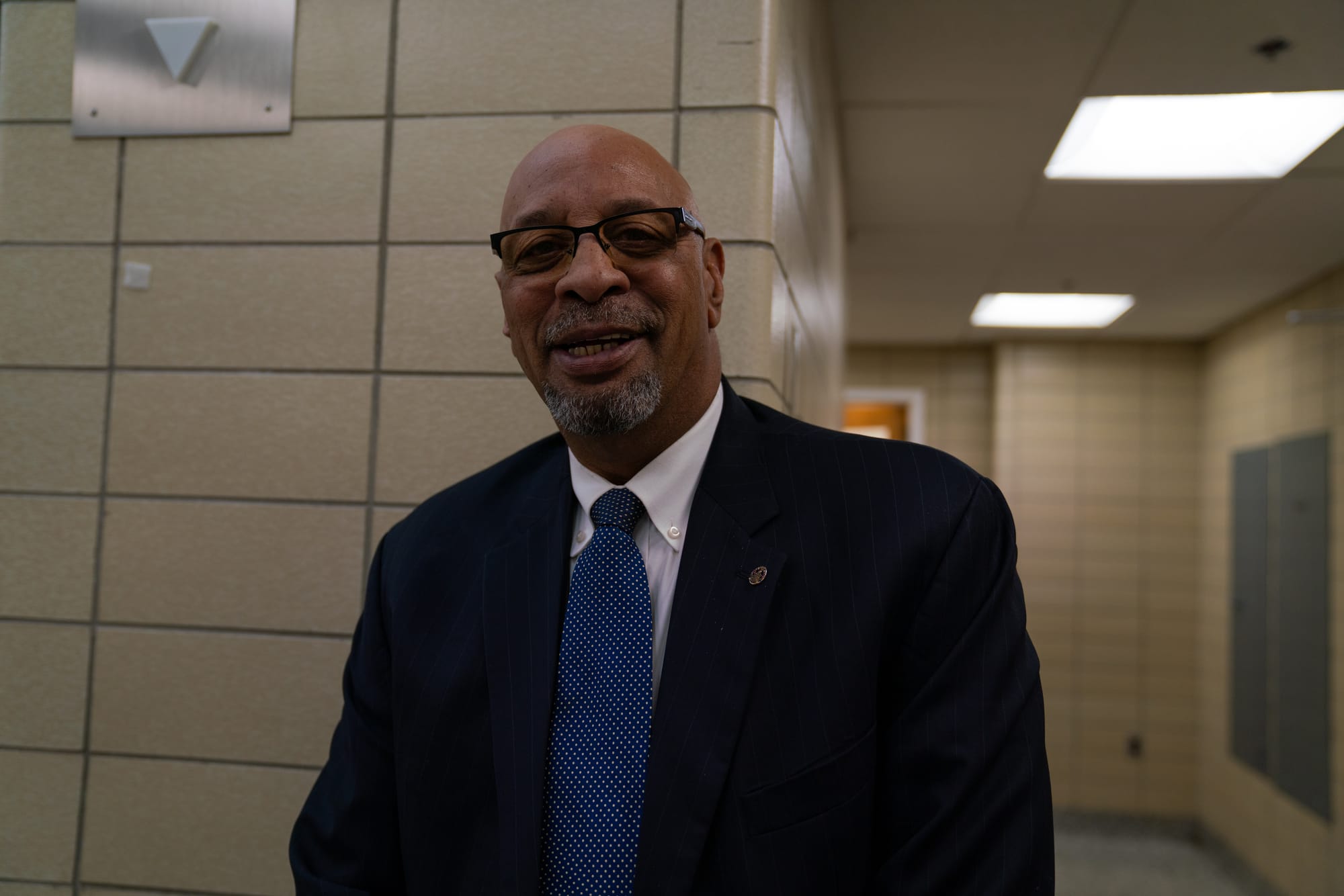
As a child growing up in a single-family home, Richard Walker said he knew “the history of my father,” which propelled him in his career. He believes that students can do better in the classroom when they have parents “excelling and taking care of them.”
“I’m very big on addressing family needs, starting from the head to the child,” he told the Board.
Walker said he sees opportunities for growth as there are not a lot of schools within the 6th District. More housing is being developed in the district, which will lead to more students attending RPS, and he said that schools like Overby-Sheppard Elementary could use an expansion.
Walker honed in on finances and funding sources during his interview. The founder of the nonprofit Bridging the Gap in Virginia, Walker said he has had to make sacrifices while seeking additional funding to accomplish the goals of his company. He would apply a similar balance if appointed to the Board.
The Board “would have to smartly utilize the financial or limited resources … spread them over a wide array of areas,” and prioritize items that directly contribute to children’s education.
He gave an example from his time teaching in Petersburg, raising over $100,000 for a trip to Disney for students who passed the Standard of Learning exams. He added that the incentive was part of good governance.
Part of utilizing the financial resources, he said, is also seeking funding opportunities outside the division.
Referring to the nonprofit he’s had for 16 years, “I continuously seek funding in order to keep it going. I continuously work with my team in order for us to be successful. We have not had to reach out or fold or fail because it’s continuous work, and that’s what’s essential in Richmond Public Schools.”
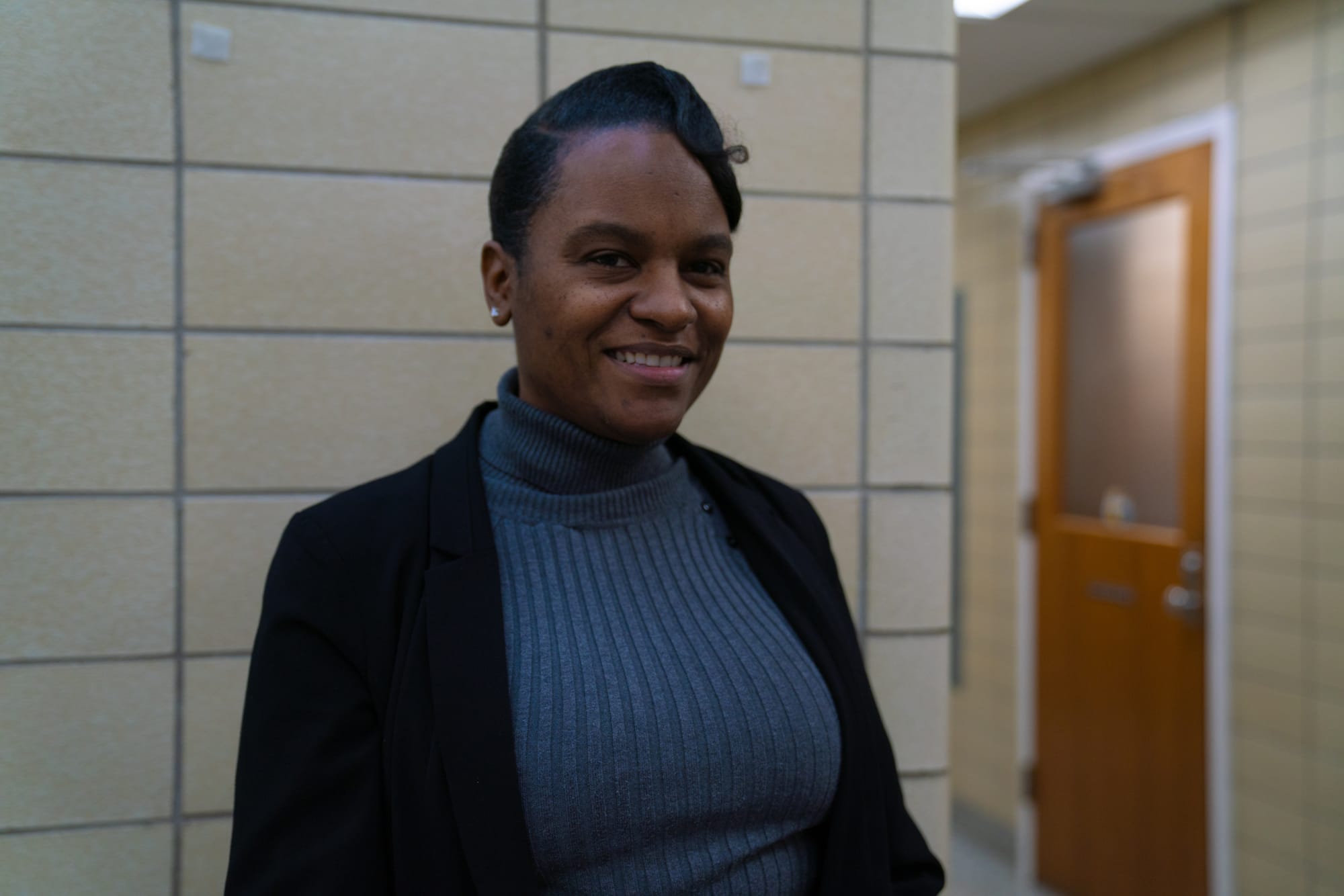
'Work together to do what’s best for the district'
During her interview, Katina Harris focused on what decisions would be best for the whole 6th District.
Harris is a Richmond native whose experiences were shaped by her classmates and families who came from different backgrounds and classes, she said. She previously taught at Thomas C. Boushall Middle School, and served as Richmond Education Association president – the union representing RPS teachers. She currently teaches in Petersburg City Public Schools.
She said the needs of the 6th District vary based on students in each building. Having regular meetings that provide data from each school, she said, will allow for better goal setting and for administrators and teachers to see “the vision we have set up for our students.”
The 6th District representative should focus on those needs, and make decisions based on that to ensure they are “doing what’s best for our students and staff,” she said.
Having been a leader in Richmond, Harris said that she has had to make tough decisions that not only impact the district, but also her own family members who still attend Richmond schools.
“We have to think about the district while collaborating as a group of individuals to work together to do what’s best for the district, to put things in place that would benefit our students, and continue to grow.”
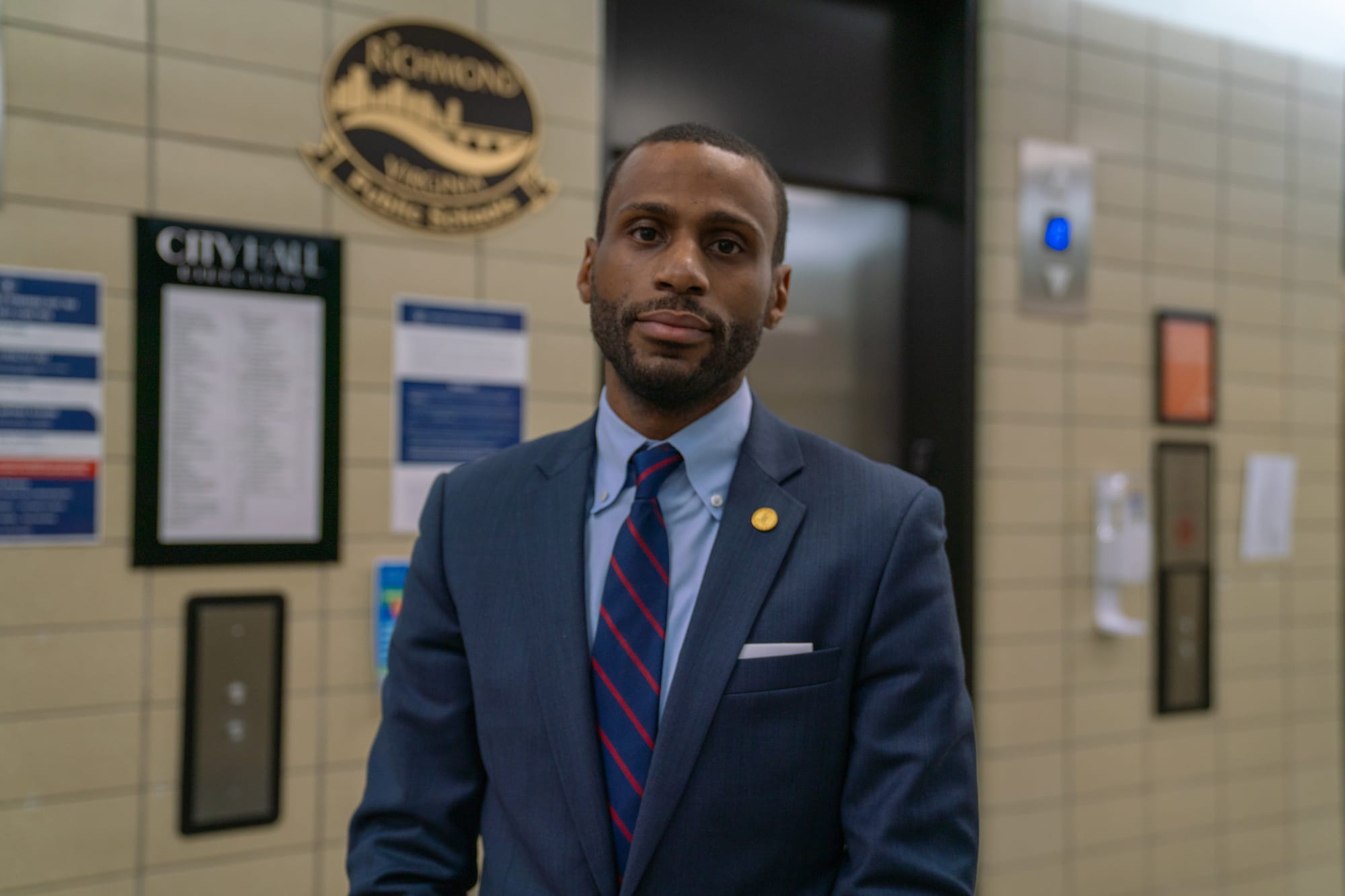
'My entire life has prepared me for this.'
Originally from public housing in New York City, Victor McKenzie Jr. said that strong mentors and out-of-school programs like Boys and Girls Clubs played a role in dedicating his life to service. In Richmond, he told Board members that he worked with local nonprofit organizations – specifically those in the East End – and has frequently talked to residents in the area to learn more about their experiences.
McKenzie said that his understanding of the 6th District has been shaped by conversations with parents, educators and Board members on what they are seeing. Reviewing the state’s new accountability system and the division’s strategic plan has also helped, along with being an RPS parent.
As the CEO of Virginia Health Catalyst, a statewide health advocacy nonprofit, McKenzie said he has to balance the company’s mission, values and goals with budget constraints.
He also referenced his experience being on the Richmond Planning Commission, where he said the group is frequently met with complex problems while having limited resources, and his time on the board of Capital Area Partnership Uplifting People, a nonprofit providing food, housing, senior and youth services.
“So the framework I attempt to try to pride myself in doing is once again looking at the root cause, balancing that against our objectives,” he said.
McKenzie told Board members that investment toward what’s important to the division is key. That includes attendance, he said, which means “getting to the baseline of why kids are not showing up” and investing in “attendance officers.” He added that the RPS has to balance long-term investments like the new career and technical center, while guaranteeing that other communities in the city that haven’t had equitable resources get what they need.
“I believe I am to be a good advocate and conduit for the community to bring those concerns to the Board and to work collectively towards not what just advances that one district, but advances the entire public school system,” he said.
The Board will make its final decision at its scheduled Board meeting on Monday, Feb. 2.
Contact Reporter Victoria A. Ifatusin at vifatusin@richmonder.org