Richmond is paying tens of millions for overtime every year. That’s raising some eyebrows.
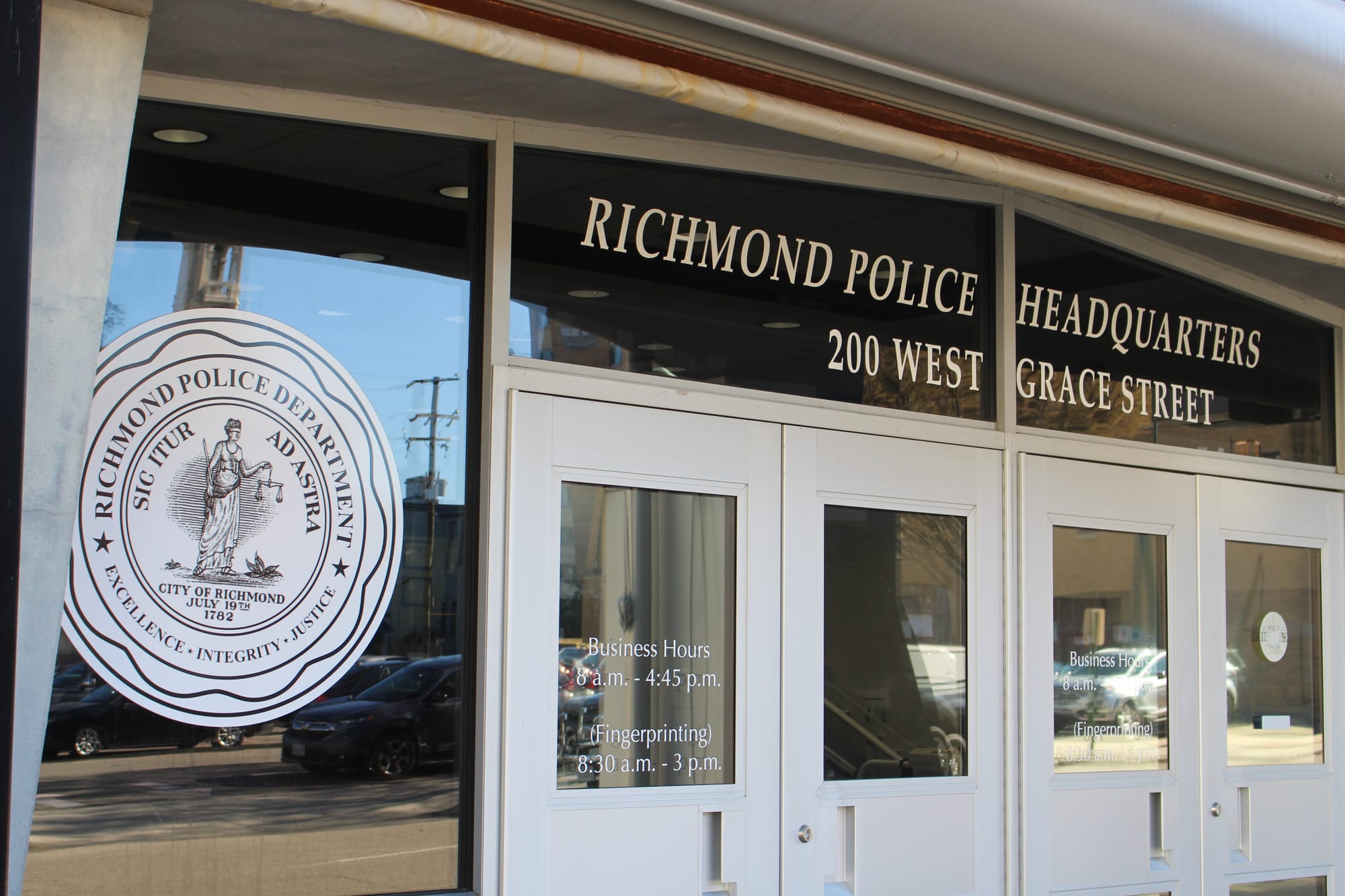
Payments made to city of Richmond employees who worked overtime dipped in 2024, but the city still paid more than $26 million to its staff, with numerous workers taking home five figures in overtime pay every month.
The majority of that spending went to the police and fire departments, which accounted for 41% and 26% of the city’s overtime pay in 2024, respectively.
For many employees, overtime can be unusually lucrative: At least 44 employees earned more than $10,000 in overtime pay in a single month last year.
Among the highest earners were a Police Department employee who took home $17,233 in March and a Fire and Emergency Services employee who racked up $20,083 for 255 hours of overtime in December, although a city spokesperson warned overtime for Fire Department workers is typically paid out on a six-week cycle rather than a monthly one. Even on a six-week cycle, that would be 42.5 hours per week of overtime.
The January 2025 report supplied to City Council reflected even higher hours, with 37 police and fire employees taking home more than $10,000 in overtime pay. The highest, a Fire and Emergency Services worker, got a staggering $25,195 for 338.5 hours of overtime.
While city spokespeople cautioned that the January report reflects three pay periods rather than two, a factor that would lead to higher numbers, the amounts caused some surprise at a February City Council meeting.
Newly seated Councilor Kenya Gibson (3rd District) described herself as “taken aback” by the January report, particularly because Department of Public Utilities employees — who city officials have said worked “around-the-clock” during the January water crisis — did not top the overtime list.
The highest amount of overtime recorded for a DPU worker in the January report was for 119.75 hours, with a total payout of $7,166.
“I have a lot of questions,” Gibson said.
After Gibson raised the issue, City Auditor Riad Ali said his office is planning to review overtime data to see if the policy meant to cut back is working as intended. Ali said he too was “taken aback” by the numbers he’s seen.
Because overtime wasn't on the agenda for the meeting where Gibson raised it, Councilor Katherine Jordan (2nd District) suggested putting it on the agenda for the next Governmental Operations Committee meeting, which is scheduled to discuss it March 26.
A long-standing issue
Concern about the city’s overtime payouts isn’t new.
Following a payroll review that found the city had paid about $16 million in overtime during 2017, the city auditor’s office recommended Richmond take a variety of steps to beef up its oversight of the practice. Those included requiring all departments to document and formally approve all overtime that was taken and to put a policy in place to limit the amount of overtime employees could take.
“According to staff, a large percentage of the overtime was due to minimum staffing requirements and emergencies,” wrote then-auditor Louis Lassiter’s office. “However, studies have shown that employees working extended overtime hours over long periods may result in reduced employee productivity and exposes the employees to safety and health risks.”
In response, City Council passed a resolution in 2019 asking then-Mayor Levar Stoney to issue a rule requiring supervisors to monitor employee overtime and ensure its use wasn’t leading to “safety and health risks.” Council also asked the administration for monthly reports on how much overtime was occurring and how much it cost.
But a report on 2022 from the auditor noted the city still didn’t have a policy to limit overtime and City Council still wasn’t being sent the monthly reports. By that time, annual overtime payments had ballooned to just shy of $26 million before peaking in 2023 at $29.4 million.
That high point triggered a crackdown from then-Chief Administrative Officer Lincoln Saunders. In January 2024, Saunders issued a memo ordering that overtime not exceed 50% of an employee’s standard working hours.
“Once an employee’s overtime hours approach 50% of their standard working hours, they will no longer be eligible to work overtime, unless an exemption is sought by the director and granted by the chief administrative officer or their designee,” he wrote.
In the year after Saunders’ memo, overtime fell 11% to $26.1 million, according to the monthly overtime reports that were submitted to City Council and obtained by The Richmonder.
Despite the large number of overtime hours those reports indicate employees are racking up, city spokespeople emphasized that very few are exceeding the limits the city has set.
Ross Catrow, the city’s director of communications, said 13 exemption requests were submitted by department heads in 2024. Of those, 12 came from the fire and police departments, and one came from the Department of Public Works. None have been approved or rejected.
Julian Walker, another spokesperson for Richmond, said that only four of more than 450 sworn fire personnel exceeded the city’s annual threshold of 1,378 overtime hours per firefighter last year.
How does Richmond stack up to the counties?
Information provided by Henrico and Chesterfield counties puts the city somewhere in the middle on its overtime spending, although differences in how the local governments track pay mean comparisons aren’t apples to apples. Both local governments report overtime on a fiscal year basis — covering the time between July 1 of one year and June 30 of the next — while Richmond reports it by calendar year. It also isn’t clear whether all three local governments include the same factors in their payroll totals.
Nevertheless, the county figures provide a general benchmark and indicate the city is devoting a greater portion of its payroll to overtime.
In 2024, Chesterfield spent almost $10.3 million on overtime, about 3% of its $340 million payroll.
Teresa Bonifas, a spokesperson for the county, pointed to a county policy that limits employees to 850 hours of overtime in a calendar year, with fire and EMS personnel limited to 1,300 hours of overtime. Exceptions are granted “when additional overtime is needed to ensure critical operations are maintained when there are staff shortages or during emergency events.”
Sheila Minor, Henrico’s director of finance, reported that the county spent $32.9 million on overtime in 2024, just over 4% of its $816 million payroll.
Richmond was unable to provide a total payroll number for 2024, making it impossible to compute what percentage of its spending went toward overtime last year. Data from the auditor’s report for 2023, however, indicates the city spent about 7.8% of its payroll on overtime — a significant jump from 2017, when overtime was roughly 4.5% of payroll.

Staffing levels remain an issue
Richmond, of course, also faces pressures the counties do not. Its greater concentrations of poverty — census figures indicate that at 18.8%, the city’s poverty rate outstrips both Henrico (9.4%) and Chesterfield (6.9%) — result in greater demand for services, even as its geographic size hampers its ability to grow its revenues.
Police and fire/EMS both face heavy workloads in the city, and spokespeople pointed to minimum staffing requirements as a driver of overtime.
“The RPD has a responsibility for 24-hour patrols and runs a full suite of operations to advance public safety,” said Mercante, the police spokesman. “Patrols for the four precincts have minimum staffing requirements of officers needed for each different shift.”
Staff shortages can complicate that task. At the end of 2024, according to data from a January presentation by Richmond Police Chief Rick Edwards, Richmond police had 164 of its 755 sworn staffing positions vacant.
“Overtime opportunities can range from a few short hours of continuing patrol to performing a full shift on what would otherwise be a regular day off,” Mercante wrote in an email.
For fire and EMS workers, overtime is more complex. Walker noted that firefighters work 24-hour shifts in 21-day cycles but receive paychecks every two weeks — and not every check includes overtime pay.
Overtime “is included in the first two paychecks of a given pay cycle but not the third, even if OT is accrued during the third payment period,” Walker wrote in an email. “In such cases, that compensation would be applied to the next pay period.”
Furthermore, he added, “because firefighters work in different shift schedule groupings, different firefighters are simultaneously at different stages of the cycle as it relates to the inclusion of OT in paychecks even though all firefighters are paid on the same bi-weekly schedule.”
Provisions of the firefighters’ collective bargaining agreement also dictate who is assigned to work extra shifts. In particular, one requirement directs that overtime should be allotted “in order from the least recent to most recent overtime shift worked,” a system that attempts to make sure the same people aren’t repeatedly called for back-to-back shifts.
Reporter Graham Moomaw contributed to this story.