Richmond begins refilling west tank of Byrd Park Reservoir after two years of repairs
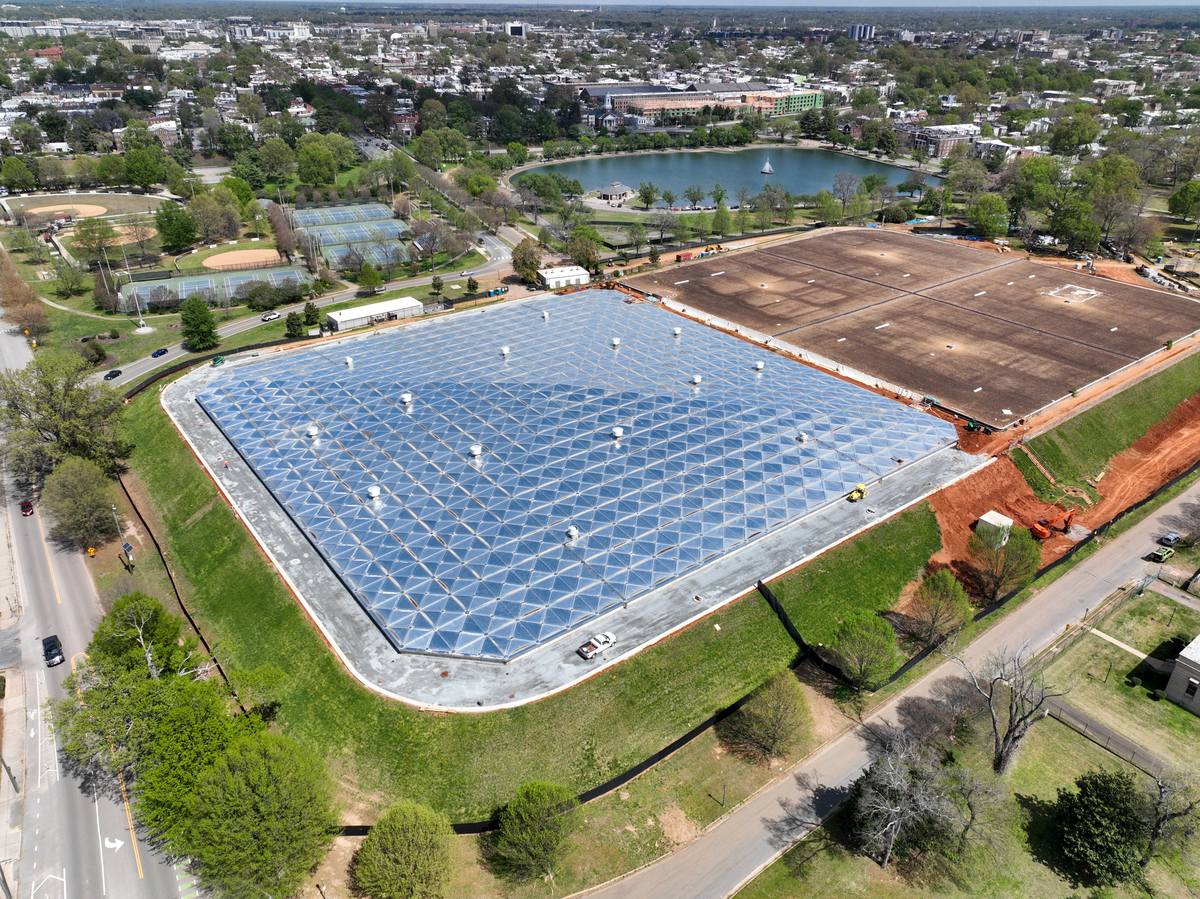
After a more than two-year closure for a roof replacement, water is again running into the Byrd Park Reservoir’s west tank.
The refilling of the basin, which began Monday, marks the midway point in Richmond’s rehabilitation of the reservoir, which holds treated water in two tanks that is then pumped out to customers.
The west tank had been closed since August 2023 for repairs and replacement of the concrete roof. Once it is fully refilled and the water tested, the Department of Public Utilities will close the east tank to undergo the same work.
Rhonda Johnson, a spokeswoman for DPU, said that work on the east tank is expected to begin in the next few weeks and is anticipated to take two years.
“Planning and executing projects of this scale takes years of design and construction,” said DPU Director Scott Morris in a release announcing the milestone. “We know how critical this reservoir is to the region, and this is one of many investments we will continue making to ensure a reliable and resilient water system for years to come.”

The Byrd Park Reservoir was initially constructed between 1874 and 1876, and can hold 55 million gallons, making it the city’s single largest source of drinkable water. While the original reservoir was open to the elements, in the 1970s concrete roofs were added to protect the supply.
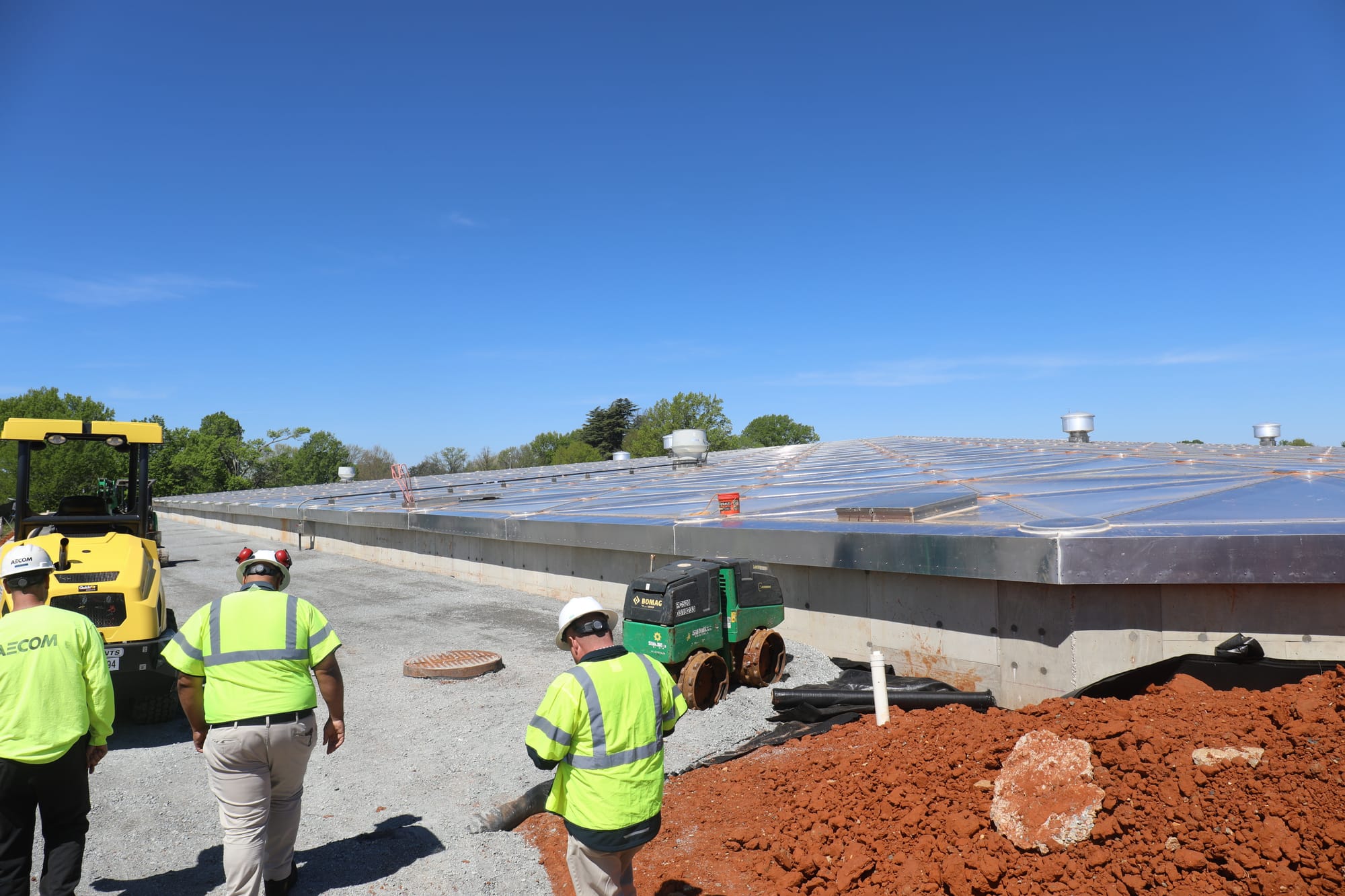
Richmond is now replacing those roofs, which officials say had reached the end of their life and had “structural deficiencies,” with aluminum, as well as conducting other repairs to the tanks as needed.
Overall, Johnson said the project has an $88.7 million budget, including engineering, permitting, construction, contingency and other costs. The city has spent $46.5 million to date.
The closure of the west tank was one of the complicating factors of Richmond’s 2024 water crisis, when an electrical outage led to catastrophic flooding of the nearby water treatment plant that ultimately left hundreds of thousands of people in the region without drinking water for nearly a week.
With only one tank operational, Richmond’s supply of potable water was already lower than normal when the plant flooded, meaning the system dipped below the minimum pressure required by law to ensure safety more quickly than it would have otherwise.
Had both tanks been operational and full, the Virginia Department of Health estimated they could have supplied customers with water for an additional 13 to 14 hours.
However, VDH concluded, “this additional volume would have reduced the outage duration but would not have eliminated it entirely.”
Contact Reporter Sarah Vogelsong at svogelsong@richmonder.org