Residential density dominates ongoing code refresh discussions
Preston Lloyd was ready to move on.
“Distilled to its essence,” the real estate attorney told his colleagues on Richmond’s Zoning Advisory Council on Wednesday evening, the city’s Richmond 300 master plan calls for the creation of new housing in three parts of the city: growth “nodes,” transportation corridors and existing residential neighborhoods.
But, he continued, “I think if you ask Joe Q. Citizen of Richmond who’s been paying maybe some tangential attention to what we’re talking about with the code refresh, they only know about that last category — what is code refresh going to do for existing neighborhoods — and not so much the other two categories, which were essential parts of the recommendation.”
With the exception of several corridors like Chamberlayne Avenue and 25th Street in Church Hill that have drawn broader public attention, much of the conversation surrounding Richmond’s ongoing overhaul of its 1970s-era zoning code has focused on residential neighborhoods, and especially the single-family residential neighborhoods that make up about 59% of the city.
As the city solicits feedback on its second draft of the overhaul, that focus is persisting. Whether for or against, most Richmond residents’ views remain squarely centered on their backyards.
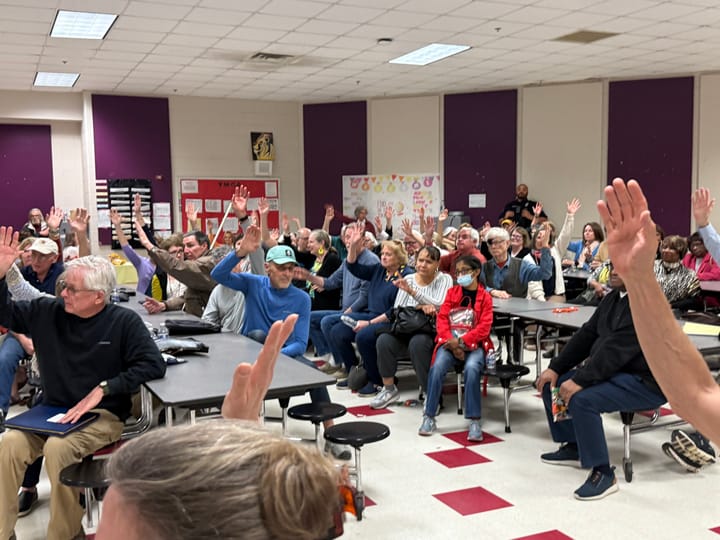
Much of that is likely due to the high level of engagement of property owners and neighborhood associations, most of whom represent predominantly residential communities. To date, Planning Department officials have held 42 meetings with civic associations on the refresh.
Last week, 17 neighborhood associations sent a letter to Mayor Danny Avula’s administration asking for the city “to immediately implement a new process for Code Refresh.” While the groups did not specify exactly what that overhaul should look like, they called for “neighborhood-specific workshops” and additional information on issues like infrastructure needs while arguing that “there is a current imbalance of influence favoring the development community.”
Mira Signer, press secretary for the mayor, said in an email that “while we are not implementing a brand-new process for code refresh at this time, we remain deeply committed to robust public engagement and look forward to continuing to have conversations with groups like those who signed the letter.”
“This is really important to us because code refresh is the city’s process to create more homes for more people,” she continued.
Other pockets of resistance are emerging. Former City Council member Marty Jewell’s Richmond Civic League this week ran a half-page ad in the Richmond Free Press showing a photo of a Fairfax County home addition that has caused consternation from neighbors and warning that the code refresh will “force low income residents from their homes,” “cause gentrification” and “allow a new duplex house in most every backyard,” along with other negative outcomes.
Councilor Reva Trammell also seemed skeptical in an 8th District meeting she hosted Thursday to discuss the code refresh that drew Avula as well as a range of Southside notables like Del. Mike Jones and former City Councilor Michelle Mosby.
Constituents, Trammell told The Richmonder, were against the code refresh. Exactly what parts was not discussed; while Jewell had billed the meeting in a press release as a chance to debate the plan’s “merits or failings,” he mostly limited his comments to calling the plan “wacko,” and much of the code-related agenda consisted of remarks by Avula and Planning Director Kevin Vonck about what the refresh is intended to do and how the latest draft aims to accomplish it.
‘Preservation bonus’ continues to spur debate
Homes, both existing and future, were top of mind Wednesday for much of the Zoning Advisory Council, a subcommittee of Richmond’s Planning Commission that has no voting power but is helping guide the overall refresh. Again and again throughout the evening, residents and council members returned to the question of what should and should not be allowed by right in residential districts.
Some worried about the impact taller buildings could have on solar panels installed on homes. Others worried about displacement of existing residents due to new development and overcrowding, or about allowing commercial uses in residential neighborhoods with a conditional use permit. Others, noting rents continue to skyrocket, urged the city to look beyond incremental growth for a solution.
But the most discussion continued to be about the thorny question of how many units should be allowed on a residential lot.
While the first draft of the code refresh would have allowed the construction of two units on all residential parcels by right — the so-called “duplex proposal” — the second introduced an alternative approach called the “preservation bonus.”
Intended to discourage teardowns of existing structures, the bonus allows a property owner to construct a second unit by right only if they preserve the primary structure, and it limits the new unit’s placement to behind or within the current home. (In both cases, following a City Council decision, accessory dwellings are also allowed on nearly all residential parcels.)
“The kind of overall theme here was that people were worried about displacement in certain neighborhoods, people being pushed out, and also the architectural character of neighborhoods substantially changing with the removal of existing houses,” said René Biberstein of Code Studio, the consultancy the city has hired to help with the refresh. “So new standards were essentially established to incentivize preservation of existing houses while also allowing for some intensification.”
That solution has elicited a range of feelings.
Some neighborhood associations have previously expressed cautious optimism about the idea. On Wednesday, ZAC member Philip Hart, a real estate attorney who is past president of the Westhampton Civic Association, said in his view a better approach would be one that allows duplexes along major streets and “preserves the single family character of the interior” but nevertheless characterized the bonus as “a thoughtful, well-thought-out compromise.”
“It didn’t make everybody happy, but there’s a way to get more density into residential areas without completely changing the nature of the neighborhood,” he said.
For affordable developers, duplexes are key
In a reversal of much of the earlier opposition to the city’s plans, most of the criticism of the preservation bonus Wednesday came from groups in favor of greater density who said the city had unnecessarily watered down its plans to appease property owners worried about change.
More than half a dozen members of a coalition of affordable housing and other nonprofits urged the Planning Department to not back away from the duplex plan, saying that allowing them by right is one of the most effective ways the city can encourage affordable development and ensure it isn’t concentrated in only low-income areas.
“Zoning alone cannot fix our housing crisis, but it has an important role to play to help reduce housing costs and increase equity,” said Annika Schunn of fair housing group Housing Opportunities Made Equal. “We must lift restrictions on more affordable housing types such as duplexes and triplexes.”
Nicole Storm of project:HOMES, a nonprofit that has built nearly 300 affordable homes in the Richmond area, said “a more flexible, equitable zoning code” would make it easier to build units without having to so frequently seek out special use permits that require extra review and City Council approval.
“The costs and delays of the current process directly reduce our ability to serve more households,” she said. “They slow our projects down, and we believe that is limiting the number of Richmonders that have access to safe, high-quality affordable housing.”
Maria Düster, a policy manager with the Community Climate Collaborative, worried that the preservation bonus would not do enough to increase the number of new units across all neighborhoods of the city and would effectively shield wealthier areas from greater density.
On a personal level, Düster told the ZAC that the only way she had been able to live in the Museum District — a neighborhood that has seen the median home price rise to over $600,000 — was because of the multifamily buildings that exist there.
“I’ve been disappointed to see so much opposition towards the refresh from my neighbors,” she said. “Conversations are dominated by fear and what will be lost or sacrificed. … I’m not saying that we shouldn’t be critical or have concerns, but I also would like us to remember how much we stand to gain from this process.”
The sharpest disagreement of the evening appeared in a series of comments by two ZAC members, retired real estate lawyer and Westhampton Civic Association Vice President Charlie Menges and Virginia Organizing member and 9th District resident Bennie Gates.
Menges, who has been one of the ZAC’s strongest voices against the duplex proposal in recent months, said he remained “pretty disappointed” in the preservation bonus because while discouraging teardowns, it would still allow the construction of a second unit on formerly single family lots.
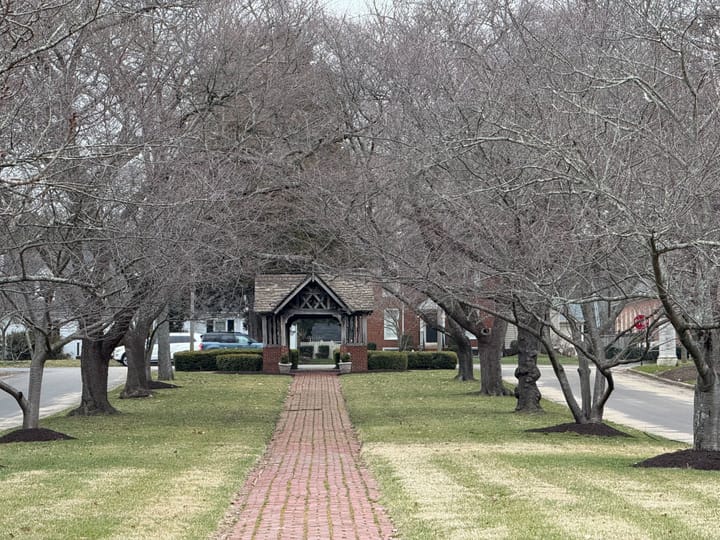
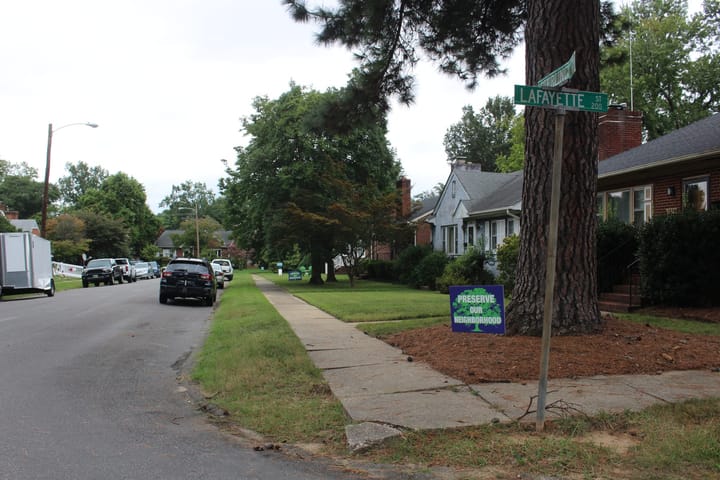
Current residents “paid for the house because it was a single family neighborhood and they wanted the tree-lined streets, they wanted the yard, they wanted all this sort of thing,” he said. “Now the zoning is going to be changed out from under them to allow either a duplex or another residential unit on that lot.”
While Menges acknowledged Richmond is in need of affordable units, he said that “an existing, established residential neighborhood” is “not necessarily where to do it.”
Gates pushed back, arguing that the city, like much of the country, is facing a housing crisis that will require all neighborhoods to accept some change.
“Nobody gets a pass because you live in an established neighborhood,” he said. “I’m all for the green, I’m all for you getting all this space in your front and backyard, but we’re in a crisis. So when are we going to make a change? It’s been 50 years since we’ve had any changes, and it’s time to make a change.”
Contact Reporter Sarah Vogelsong at svogelsong@richmonder.org