Rent stabilization bills backed by Richmond fail in Virginia General Assembly
State lawmakers have blocked legislation that could have given Richmond officials more power to block landlords from imposing big rent increases.
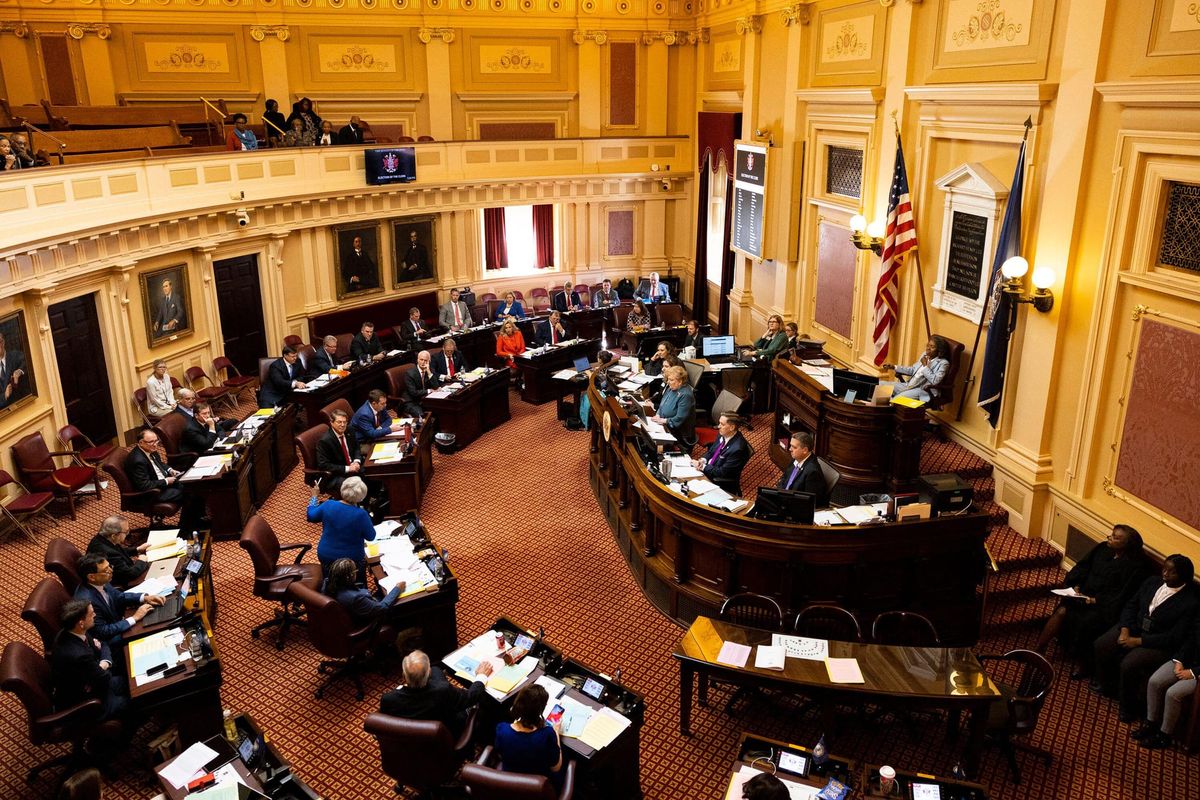
The proposals failed to advance out of committees in both the House of Delegates and the state Senate, showing one of the city’s top legislative priorities remains a tough sell in the General Assembly.
“Virginians are cash strapped and struggling to make ends meet,” Sen. Jennifer Boysko, D-Fairfax, said at a committee hearing Monday morning on the bill she sponsored. “It is no wonder that affordability was a top issue for the Virginia voters last year, and it's our job to deliver. How can we talk about affordability without talking about rent stability?”
 Sarah Vogelsong
The legislation — pitched as a way to combat “rent gouging” — would have allowed local governments to prohibit some landlords from imposing yearly rent increases greater than 3%.
Anti-rent gouging bills have failed in past sessions. The recent committee votes show that outcome is unlikely to change in 2026, despite Democrats winning full control over the policymaking process in last year’s elections.
Democratic lawmakers said they intend to send a letter to the Virginia Housing Commission asking for further study of the issue heading into 2027.
The Richmond City Council listed anti-rent gouging legislation as one of the city’s top issues for the 2026 legislative session. Following through on that, Councilor Ellen Robertson (6th District) testified for Boysko’s bill at Monday’s hearing in the Senate Local Government Committee.
“Our eviction rate is very high,” Robertson said. “The increase in costs is going through the roof. This legislation will provide the local government an opportunity to work with landlords and tenants to look at a way that we can control the costs.”
Several Richmond residents also testified for the proposal during two General Assembly hearings.
“I used to live right around the corner,” said Chad Wells. “And I got priced out of my apartment. Several times.”
Speaking in opposition, Sen. Tara Durant, R-Fredericksburg, argued it could distort the housing market and discourage developers from building in Virginia localities that adopt rent stabilization measures.
“It's hard to even start to unpack why I think there's so many problems with bills like this,” Durant said.
In a bipartisan vote, the Senate committee voted 11-4 to continue the matter to the 2027 session, effectively killing the proposal for the year.
Two Richmond-area lawmakers — Sens. Schuyler VanValkenburg, D-Henrico and Lashrecse Aird, D-Petersburg — were among the four Democrats who voted unsuccessfully to keep the bill alive.
The plan called for the creation of local boards that could grant landlords exemptions to the caps on rent increases and allowed a process for landlords to argue higher rent increases are necessary to ensure a “fair return on investment.” The proposed rent caps also would not apply to rental units within their first 10 years of existence, giving property owners a grace period on the financial viability of newly built housing.
Those exemptions weren’t enough to sway a variety of business and landlord groups that testified against the bill, such as the Virginia Apartment Management Association, Virginia Realtors and the Northern Virginia Chamber of Commerce.
D.J. Spiker, a lobbyist for Virginia Realtors, told a House subcommittee that rent control measures may sound good, but are “ultimately harmful” to the housing market.
“In the long run, it encourages providers to get out of the housing business altogether, which further restricts housing supply as a whole,” Spiker said.
A variety of affordable housing advocacy groups supported the anti-rent gouging bills, including New Virginia Majority, the Legal Aid Justice Center and the Virginia Coalition for Immigrant Rights and the Virginia Poverty Law center.
Presenting the bill on the House side, Del. Nadarius Clark, D-Suffolk, questioned the notion that supply and demand will eventually balance things out between landlords and renters.
“The opposition will claim that the market will correct itself,” Clark said. “How’s that going so far?”
On the House side, the proposal failed in a Counties, Cities and Towns subcommittee last month without a recorded vote.
Del. Alex Askew, D-Virginia Beach, who chairs the House subcommittee where the rent gouging bill failed, said it needs more discussion “to just kind of make it a little bit better so we can bring all sides together.”
Richmond officials are also seeking the authority to enact inclusionary zoning policies that could require developers to include affordable housing units in market-rate projects. That legislation appears to be moving forward, but has not yet won General Assembly approval.
Contact Reporter Graham Moomaw at gmoomaw@richmonder.org