Q&A: Richmond's first master parks plan since the 1970s is nearing its final stage
Richmond’s first parks and recreation vision plan since the 1970s has hit one of its final milestones.
The document, dubbed Richmond INSPIRE, identifies potential improvements to city greenspaces and recreational facilities over the next 10 years that will require funding from City Council to become a reality. Among the proposals are new park acquisitions, updated amenities, policy changes, strategies to ensure staff advancement and retention, and other ideas that have been shaped by feedback from residents and other local stakeholders.
A “90% Draft” of the plan went online in December and can be critiqued by members of the public until March 6, when it will be finalized for its presentation to City Council, the final step in a journey that began after the Richmond 300 master plan was adopted in 2020.
The Richmonder recently spoke with Ryan Rinn, capital projects planner of the Department of Parks, Recreation and Community Services, about how the planning document is coming together, its major pillars, and how residents can still get involved.
The Richmonder: What is Richmond INSPIRE?
Ryan Rinn: Richmond INSPIRE is the first citywide vision plan we've had for parks and recreation in a generation, and it is a systemwide look at all of our facilities, amenities, land, staffing, programming — pretty much everything that falls under our umbrella — and a vision plan to make improvements and continue to be a better system over the next decade.
The Richmonder: What milestone does the 90% Draft represent?
Rinn: It's the culmination of about three years of work. But before we get all the way to the final version of this document and work with our consulting partners to finalize this version and go in front of Council, until March 6 there is an opportunity for the public to review this draft in full, to make comments literally anywhere in it with the Konveio platform, and to provide us feedback, either that way or via a very brief three-question survey to make sure that we haven't hit any blind spots since we've had our heads down in this for so long.
The Richmonder: What happens after that March 6 deadline?
Rinn: We will update the document and get it back to Council and see which way they'd like us to take this to be adopted. We see this as being adopted as an amendment of Richmond 300 as the official parks and recreation master plan for the next decade. That process could either go through the Land Use, Housing and Transportation Standing Committee or the Planning Commission, but there will be an internal process based on where the Council thinks it best fits to be heard in more public venues before it's adopted.
 Sarah Vogelsong
The Richmonder: This process started under former Mayor Levar Stoney. Have you seen a shift in how it's been received by Mayor Danny Avula and his team?
Rinn: I haven't. Personally, there still seems to be genuine excitement for having something to point to and a guide. I think that we felt support, both in the last administration and then this one, to complete this process and have something to show for it.
The Richmonder: Where does the funding for all of these proposals, the new parks and the upgraded facilities, come from?
Rinn: We have our city processes, both on the operational and capital improvement side, those budget processes that we go through on an annual basis, where we will advocate for the inclusion of different things that are outlined in this plan.
We also have been pretty successful over the past few years in going after a lot of state, federal, and private funding for different specific initiatives, and we have a lot of friends groups and nonprofit partners. So part of what this document tasks us to do is outline what those partnerships are and how we can leverage each dollar that the city puts in with other outside dollars to make the big goals in this plan a reality.
The Richmonder: How would private organizations or other groups like the Capital Region Land Conservancy fit into the approach?
Rinn: I think CRLC is a good example. The first meaty chapter in this plan is about improving access to our parks, and it outlines that we should develop a full land acquisition strategy in partnership with organizations who do this work and adopt an official policy to build on the new parks that were brought into the system back in 2020 through a policy put forward by Council. It will give us some guidelines on how we do that work going forward while still encouraging us to work with partners that we've worked with in the past who have successfully been able to navigate the transfer of donations or private lands into the public realm.
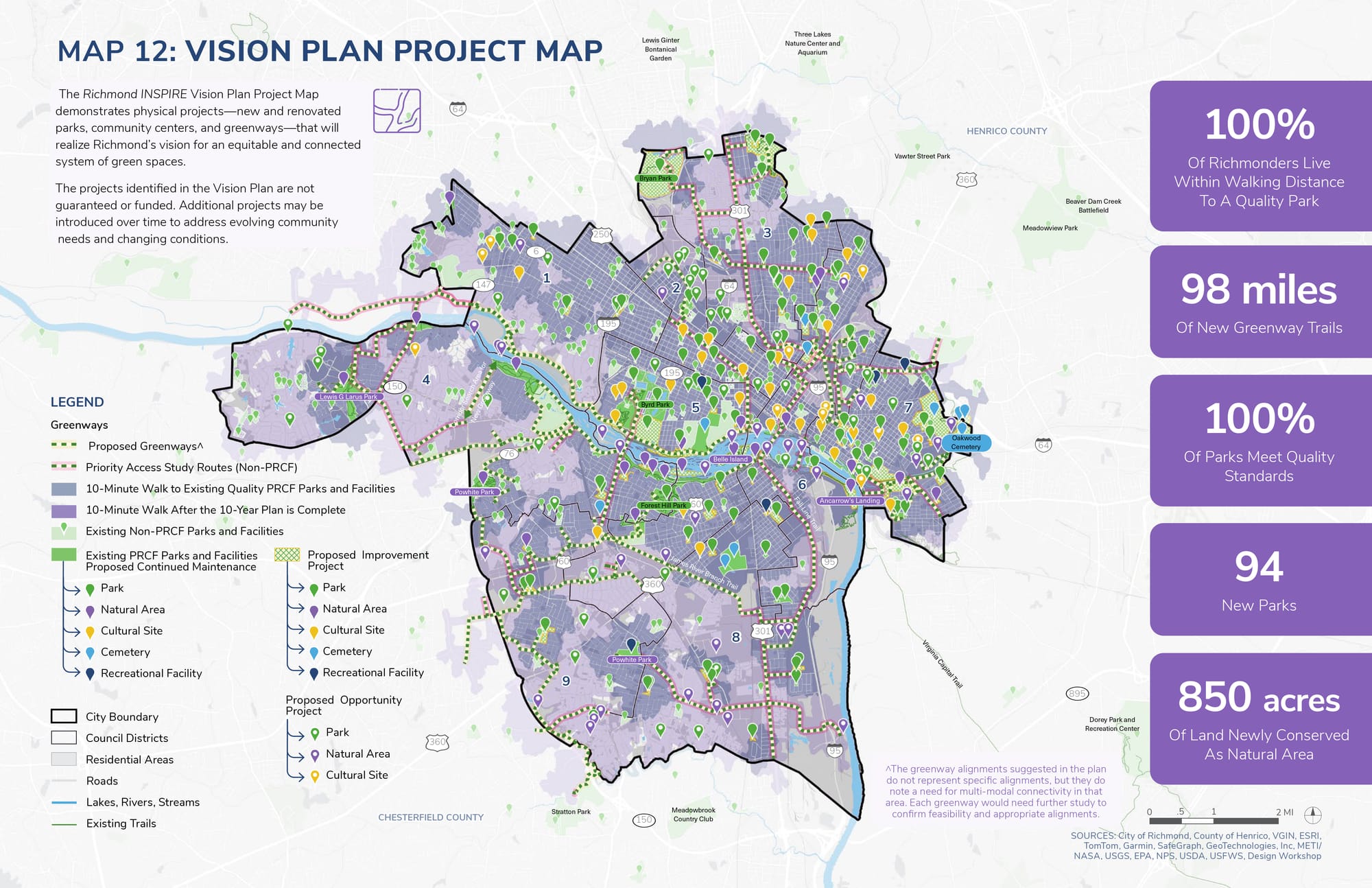
The Richmonder: When the plan proposes creating new parks, does that come from land the city already owns, or is the city looking to acquire new spaces?
Rinn: So there's both. There are city-owned lands that are not in the parks and recreation portfolio currently that are either adjacent to existing parks that we would consider pulling into those parks when and where it makes sense or when we can get agreement from other departments.
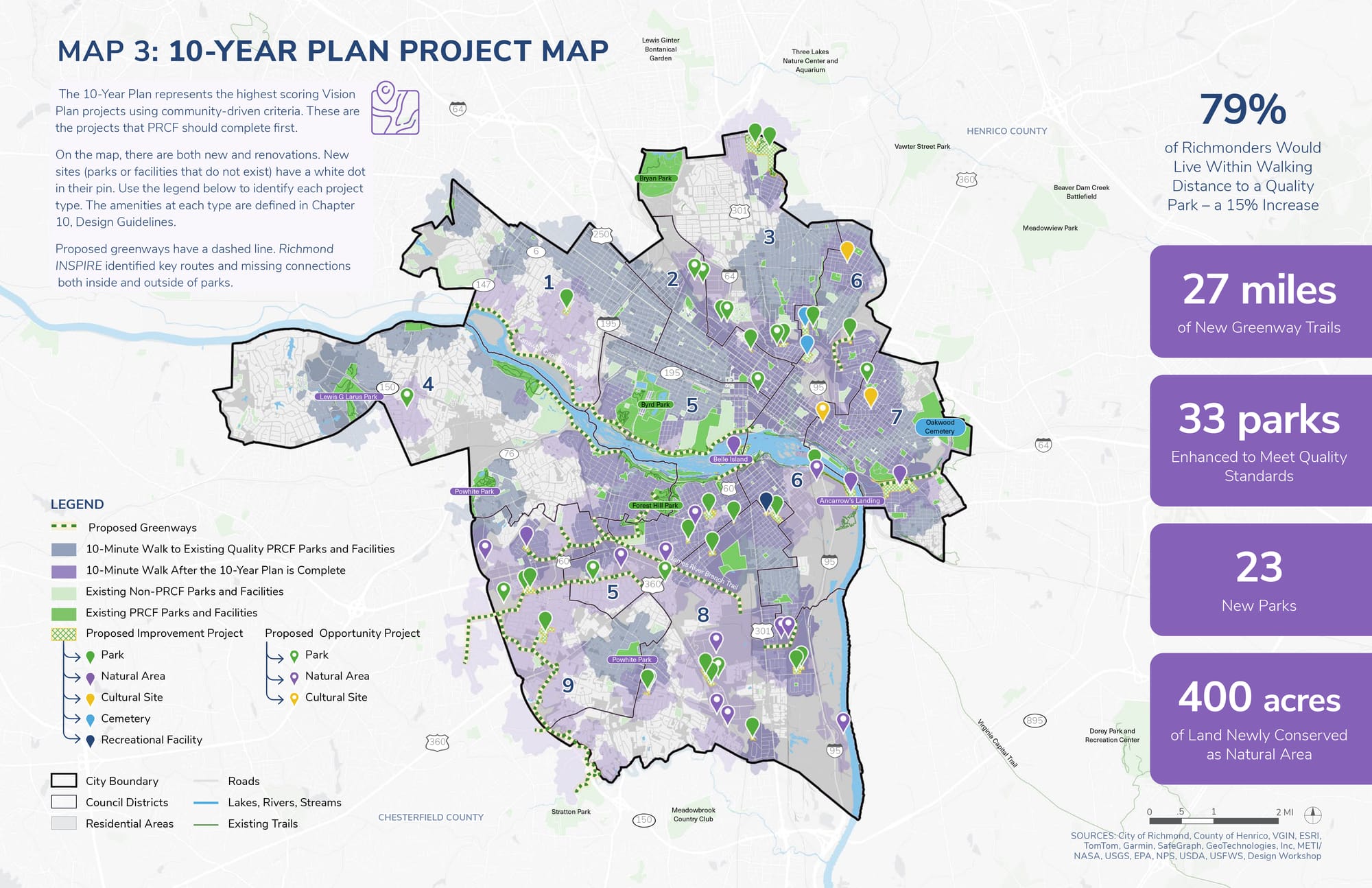
What you're seeing on some of those maps in the plan, those are pins to say that, somewhere in this area, these residents don't have access to a green space. We will look at all of our available mechanisms to see if we can have a green space in those areas. Likely, that means working through the process I described with CRLC as an example, or some other process that we've yet to figure out. This plan really forces us to put all of that out in writing.
The Richmonder: What role has public feedback played in the process so far?
Rinn: We started within a request for proposals that asked for the firms that were applying to be our partner in this effort to focus on environmental sustainability, racial equity, and connectivity. We took those out to the community in the first round of engagement, we got an affirmation on those, but we also received five other things that they thought were equally important. So that shifted us into driving principles that looked at things like quality, community, legacy, history, and looking at how our parks are both accessible and welcoming. So we were able to break those out a little bit wider, be more specific on ways that people utilize and access our parks, and how we can make policy changes and physical changes to get to where people would like to see us be.
The Richmonder: How can someone get involved now?
Rinn: RichmondINSPIRE.com is where we're posting everything about this plan. We want people to, while we're in this process, make sure that we have everything included they want. If you have 10 to 15 minutes, please read the executive summary and leave some comments.
If you have more time, or you have an area of expertise that is really beneficial for us to understand, let us know what we're missing so that we can get this right when it goes before council. And then one exciting thing that we have coming, if this does get adopted, and we're hopeful, is that we're going to implement a full dashboard on that Richmond INSPIRE site that tracks implementation that we will be updating on a weekly basis that will show what progress we're making towards each one of these strategies and actions.
The Richmonder: What has really stuck out to you about the whole planning process?
Rinn: It maybe wasn't shocking but was good to hear that, with all the folks that we talked to, people love parks. They love community centers. They love parks in general. And the biggest sentiment that I felt from a lot of folks is to fix what we have: ‘We love this stuff, make it better.’ In planning processes, we felt encouraged by the community and by how much they know about their neighborhoods, their parks, and the things that they really utilize them for, and they've helped us make this a better plan, and hopefully they will help us keep making this a better plan as we go through this 90% process.
This interview has been edited for length and clarity.