On Faith and Values: Seeking the light
When I was an elementary school kid, our family lived for a couple years outside of Nashville, Tennessee. Mom and Dad were always intrepid parents, thinking nothing of packing up the car with our then-five kids (they added another later) and taking us out on the road. So, one Saturday they decided a field trip to Mammoth Cave National Park in Kentucky was a good idea.
I immediately objected, not thrilled with the less-than-good idea of going into any cave, mammoth or not. It was, well, underground, and this is not a draw for me. To this day, I firmly believe that spelunkers are legitimately insane and that humans are meant to live on the earth, not in it. Given my standing in the hierarchy in question, I was, however, quickly overruled.
I remember the cave as eventually not being too horrific, but I also recall that it took me some time to feel that way. Then, after we’d been underground for a while, we entered a very large, open area where a guide gave us a short presentation of the cave’s history and geology. I don’t remember a word of it because, as he finished, he did something monstrously cruel: He turned out the lights.
I still remember the resulting absolute darkness: it was deep, pervasive, impenetrable and, to me, more than a little ominous. Not a glimmer anywhere; I remember feeling it as an almost physical thing, surrounding me and immediately wiping out all perspective of space, distance, and orientation. I don’t think I’ve experienced anything quite like it since.
I wonder if the reason we humans are suspicious of the dark and tend to avoid it is that there’s something in us that’s wired to seek the light. Light means vision, clarity, and direction—and maybe home.
Throughout our history, we’ve learned to associate darkness with evil, with fear. (No one, with one possible exception, has ever considered being called the “Prince of Darkness” a compliment.) Light, on the other hand, is seen as purifying, illuminating, helpful and, often, an exposer of evil.
In the story of creation given in the Biblical book of Genesis, God says, “Let there be light!” and when it shined, he “saw that the light was good and separated the light from the darkness.”
Later, the prophet Isaiah warns the straying people of Israel, “Let us walk in the light of the Lord.” Later still, Paul urges the members of the young church he founded in Ephesus to “live as people of light.”
In between those last two, most significantly (and also to the horror of the religious authorities of the time), Jesus told a crowd, “I am the light of the world. Whoever follows me will never walk in darkness, but will have the light of life.”
Like all of us, I have experienced enough darkness in this life that I know I want to walk and live in the light. It feels inviting, true. It quickens my pulse.
A couple of things about darkness: One, the only thing about it that is really appealing, at least to me, is that it can lead to finding light. Light found in darkness is often especially beautiful, like stargazing the night sky or sitting around a firepit in the dark. One of the great things about being human, though, is that we can often find light in the midst of circumstances that seem very dark and painful, offering those circumstances an entirely new meaning. It’s one of life’s great paradoxes: It seems that we often need darkness to better learn of and more fully appreciate the light.
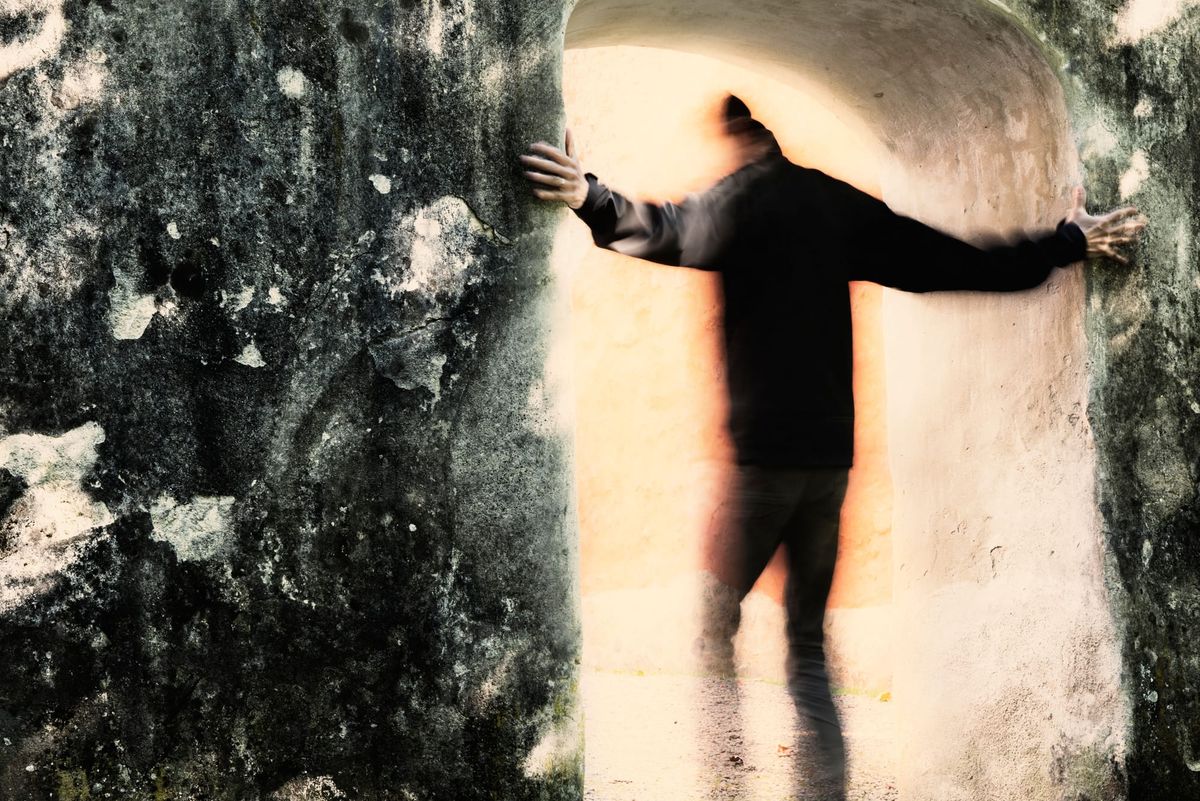
Also, light is stronger than darkness. When you open the door of a dark room and enter a lighted hallway, the darkness doesn’t rush out and blot out the light; the light penetrates into the dark room. Light wins.
I find that hugely comforting. Kind of like the rush one gets when busting out of a cave.