Jury still out on near West End outdoor event space
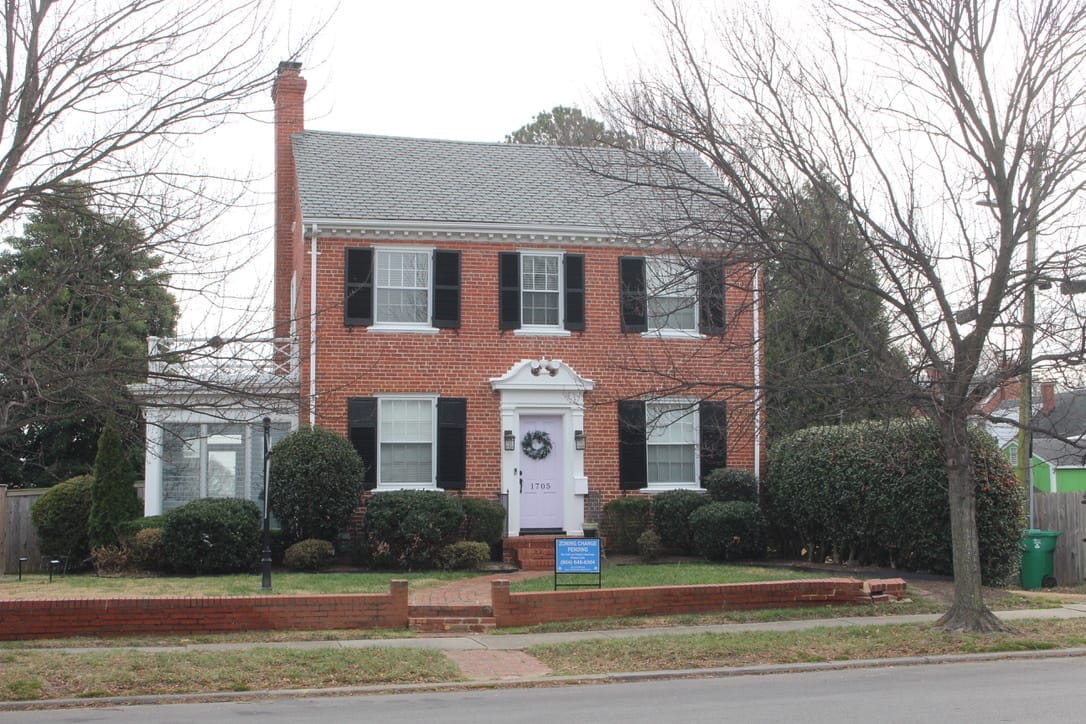
Controversy continues to rage over whether a near West End event space that adjoins a residential area should be allowed to hold outdoor events.
Last Monday, the Richmond City Council delayed a vote on whether to issue a special use permit to Lavender Hill, a business operated by event planner Nadia Anderson on the edge of the Sauer’s Gardens neighborhood, with several members expressing dismay that a compromise between Anderson and the neighbors hadn’t been reached.
“It sounds like people are not coming together to come to the table, and as a result we’re stuck,” said Councilor Kenya Gibson (3rd District).
City Council’s vote to continue the paper — a move that will defer the decision until Feb. 9 at the earliest — came despite a plea from the business’ owner to the contrary, the failure of talks between the owner and neighbors to reach an agreement and the turnout of over 40 people to City Hall to lodge support of and objections to the proposal.
“I would not like to request a continuation,” said Nadia Anderson, the applicant and owner of Lavender Hill, at one point in response to a question from the Council. “I would like for the Council to vote.”
Some Council members said later they had been confused about whether or not a set of conditions drafted by the Planning Department and attached to the permit had been considered or whether they represented a new proposal.
Those conditions would limit Anderson to holding 52 outdoor events annually, with no more than five occurring in a single month, set operating hours of 9 a.m. to 10 p.m., require amplified music to conclude by 9 p.m. and cap the number of attendees at 120.
The Planning Commission considered those conditions alongside Anderson’s application earlier this month and on an 8-1 vote recommended that the City Council deny her the permit.
 Sarah Vogelsong
Anderson told The Richmonder she was perplexed by the Council’s confusion and believed she had already exhausted efforts to come to a compromise with neighbors.
“I was expecting it to go to a vote,” she said. “But I think it’s also demonstrative of how this process has been. I have an understanding or am told something by one person in the city and that’s not what it really is.”
Besides the high level of public interest the case has drawn, it has also given rise to accusations of racism. Anderson is Black and nearly all of the adjoining neighbors are white — identities that drew comment from several speakers at City Hall even as opposing residents have insisted their concern is noise and not race.
“When I originally sat down here tonight, I wasn’t on either side,” said Caleb Stewart, who went on to talk about the city’s extensive history of segregation. “And then the opposition stood up, and then the pros stood up, and just visually looking at the crowd, there was a difference between them. I think anyone with eyeballs could see that.”
Noise or bias?
Located at 1705 Commonwealth Ave., Lavender Hill sits squarely between the residential neighborhood of Sauer’s Gardens and the commercial West Broad Street. To the south across an alleyway lie seven homes; to the north are a wine shop, a convenience store and a gas station.
Anderson purchased the building in 2021 for use as both an office and a space to hold events. The year after the sale, her lot — which had previously been zoned for residential office use — was part of a broader rezoning of the West Broad Street corridor that aimed to encourage denser, more walkable development surrounding the east-west Pulse bus line.
While Anderson said she had been under the impression that an event space was a permitted use of her property, it was not, and in 2024 the Planning Commission issued her a notice of violation following two neighbor complaints. She was able to obtain a certificate of occupancy to keep holding indoor events on the site, but planners informed her she would need a special use permit for outdoor events because of a provision in city code that prohibits outdoor “recreation and entertainment uses” on lots zoned for transit-oriented development that lie within 100 feet of any residential property.
Neighbors, including all seven of the households located on the other side of the alley, successfully argued before the Planning Commission earlier this month that outdoor events had been too disruptive to the neighborhood and reiterated those concerns to the City Council last week.
Events, they said, have disturbed sleeping children, overwhelmed the neighborhood with cars, produced trash and led to alleyways blocked by vendors.
“This issue is about noise. It is fundamentally about noise,” said neighbor Sidney Bragg. “It’s about enforcement, and it’s about long-term consequences.”
Josh LeHuray, another neighbor who said one 2024 event was loud enough to shake pictures on his walls, asked the Council to “imagine what it would be like to sit in your home and try to read or watch TV or relax with 120 people in your backyard.” Others have pointed out the City Council amended the relevant zoning rules in 2024 to restrict outdoor events near residential areas.
But while opponents and their concerns took center stage at the Planning Commission, the loudest voices at the City Council’s meeting came from the more than 30 people who turned out in support of Anderson and her proposal.
Many of them told the councilors they had attended events at Lavender Hill, including film screenings, a wedding and a book launch, that were neither loud nor disruptive. They praised Anderson for what they described as thoughtful planning and for the space she offered communities to come together.
“This is not someone hosting slapstick get togethers or messy last-minute events,” said Laura McKnight. “These are highly, highly curated events.”
Others suggested that disturbances had been exaggerated by neighbors and that race has influenced the situation.
“Decisions based primarily on generalizations, fear can unintentionally result in unequal application of rules,” said Anderson’s father, McDaniel X. Anderson, before quoting attorney Johnnie Cochran’s famous line in the O.J. Simpson case that “if the glove don’t fit, you must acquit.”
Will Rollins, a white resident of Sauer’s Gardens who has DJed events in the neighborhood, said he wondered “if the challenge to Lavender Hill is the music, the style of music or who may be playing the music that is truly the issue at hand here.”
Anderson herself told city councilors that since she purchased the Commonwealth Avenue property, she believed she had “been surveilled and scrutinized in ways that feel targeted and persistent.”
In a statement to the Council that she shared with The Richmonder, she pointed to other event spaces in residential areas like the Branch Museum and the Tuckahoe Woman’s Club and argued that “land-use processes have a long history of racial exclusion through neutral language.”
“It is well documented that Black women carry a greater burden to prove they are not a threat, and that Black ownership is often accepted conditionally but resisted when it introduces visibility, activity or success,” she wrote. “Council has an obligation to guard against that outcome.”
Neighbors reacted to the accusations with dismay.
“It is important for the public to understand what this opposition is — and is not — about,” said Kristine Smetana in a text. “Neighbors are not concerned about Lavender Hill’s indoor events; those activities would not generate complaints. Nor is this about Nadia Anderson as an individual. She is widely respected as an educated, successful businesswoman who owns and operates multiple businesses, and neighbors do not object to her personally. The concern is solely about the scale and intensity of the proposed outdoor event venue.”
Councilor Andrew Breton, whose 1st District is home to Lavender Hill and who is opposing it on neighborhood impact grounds, similarly urged his colleagues to focus on the substance of the permit Anderson is speaking.
“It can really feel like we’re voting on the applicant’s character, right? Which we do not want to do,” he said. “We’re voting on the application itself. … I do believe the terms in the application are not something that we can support as written now.”
In an interview with The Richmonder, Breton acknowledged the complexity of the case and the racial tensions running through it.
“I try to be sensitive to the possibility that institutional bias can make its way into legal processes. I also try to be conscious that unconscious bias can make its way into people’s personal concerns,” he said. “But I will also say that the types of concerns I’ve seen with this application are the same concerns that I see with other applications across the neighborhood.”
He held out hope that a compromise was still possible.
“There is the opportunity for the applicant to come up with another amendment that might be less ambitious, have more support from the neighbors and therefore have a greater chance of getting the support of council members,” he said, adding, “We would love to support an application that has the support of the neighborhood.”
This story has been updated to correct the number of events permitted in a month and to reflect Rollins' background.
Contact Reporter Sarah Vogelsong at svogelsong@richmonder.org