In the 1930s, this Ashland gardener turned daffodils into a national craze
Mary McDermott Beirne. Outside of some garden clubs, it’s a name most people likely wouldn’t recognize; but this local horticulturist transformed gardening norms decades ago thanks to her fascination with a certain flower.
Beirne, who lived in Ashland, sparked a daffodil revolution beginning around the 1930s. From her home Rhodeen, she introduced rare and unusual varieties virtually unknown in the United States.
“At this time [period], daffodil culture in this country was restricted to just descendants of old daffodils that came over with early settlers,” said Miriam Green, an Ashland Garden Club member and Beirne researcher. “There weren’t a lot of hybridizations here, but of course in England, Ireland and the Netherlands all kinds of hybridizations were being done.”
Beirne was in correspondence with numerous European daffodil growers and collectors, including the legendary Peter Barr. She prided herself on offering unique options in her catalogs, like the rare Jasmine tazetta, Glory of Sassenheim and Snowbird.
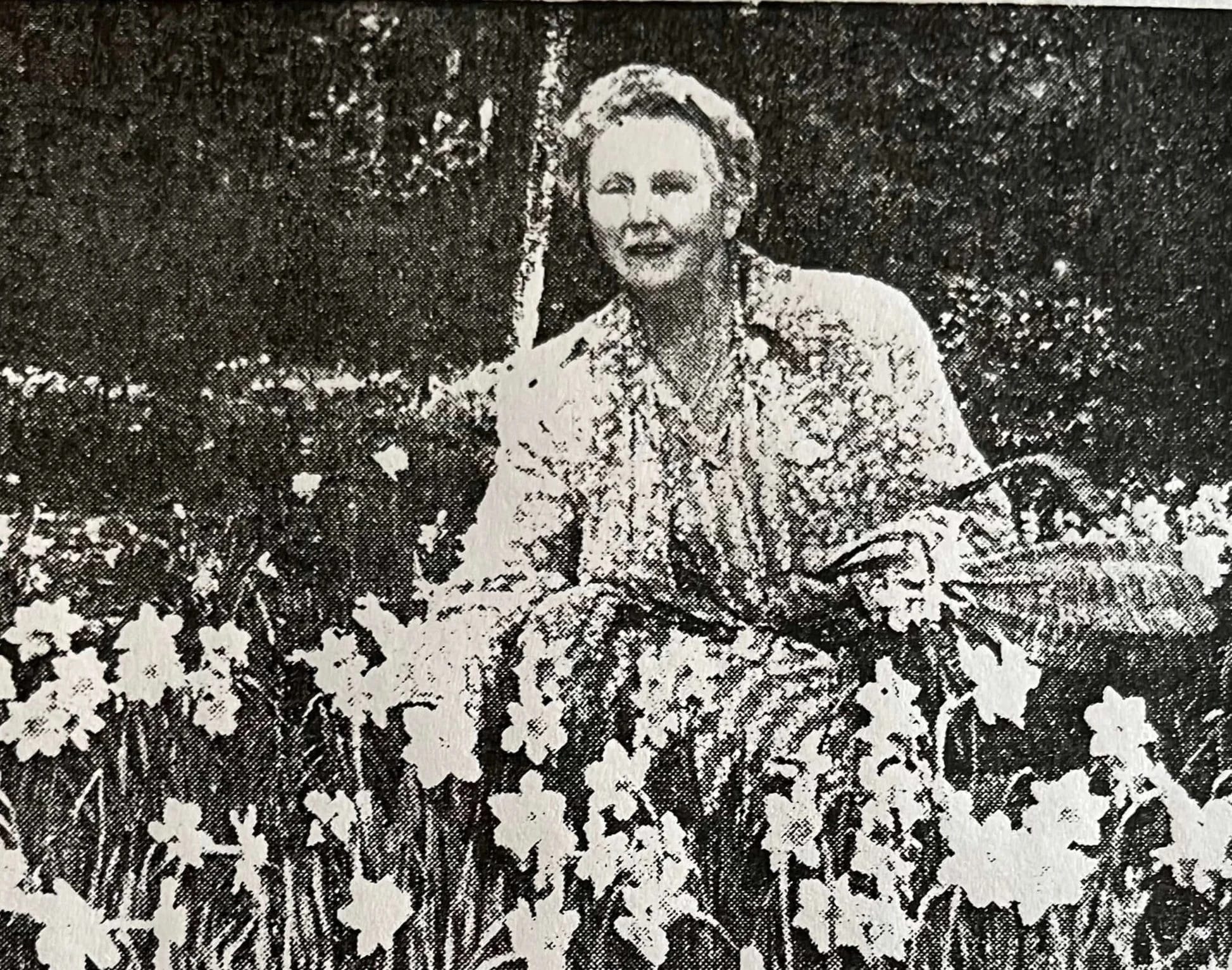
But this horticulturist also bred her own daffodils at Rhodeen. She especially favored white ones, describing them as refined – a reason why many of her hybridizations often featured such shades, like Cream Glory, Snow Star and White Flight. A perfectionist, she never named her flowers unless she was completely satisfied with them.
While most of Beirne’s personal daffodil creations are believed to have been lost, some from her overall collection live on at Green’s Ashland home. In 2008, Green received permission from Randolph-Macon College, which now owned Rhodeen, to dig up bulbs before they redeveloped the land.
Green, alongside several other Ashland Garden Club members, trekked over one Saturday morning to do so. “We went back in the woods [which] was all grown into heavy woodland,” she said. “We dug up lots and lots and brought them home and planted them in our yard [and] gave to other members to grow.”
Most that ended up blooming after the transplant were typical old-fashioned varieties, like small-cupped daffodils; but one year a peculiar flower debuted in Green’s yard.
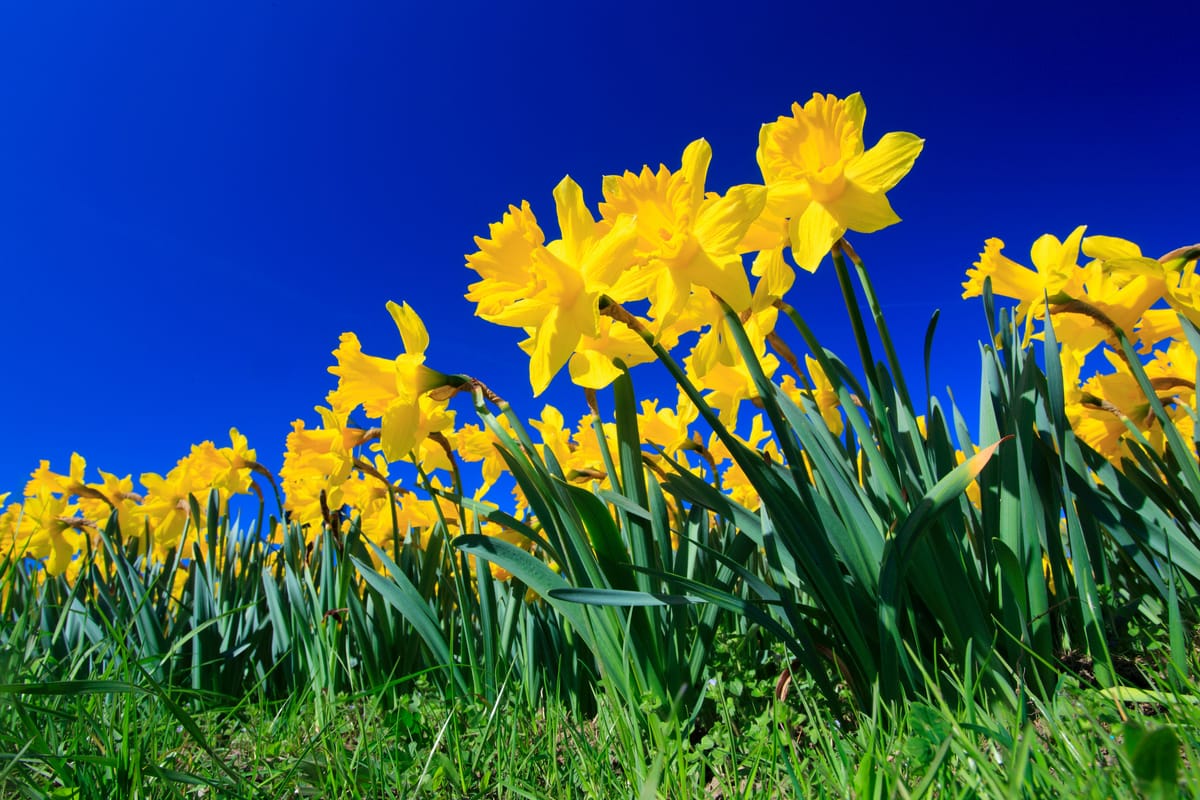
“It was all white and met the description of the Mary Beirne daffodil,” said Green. The flower, featuring six crisp white petals and pale yellow trumpet, was introduced in 1937 by Dutch grower C.G. van Tubergen who named it after Beirne.
The supposed Mary Beirne daffodil though was a bit finicky, not blooming and increasing as well as others. But in 2024, after a hiatus, it surprisingly bloomed again. “I can’t swear it’s [the Mary Beirne] but it’s the closest thing we’ve got,” said Green. “I can see why it wasn’t successful commercially. It’s not easy to grow.”
Beirne's annual catalog
Born in 1884, Beirne had a deep love for horticulture and was a member of the James River Garden Club. She eventually helped found the Ashland Garden Club in 1922 which she was elected the first president of.
Her passion for daffodils is believed to have kindled after World War I. Why she was drawn to Narcissus is a mystery. Perhaps she was engrossed by the rareness of them at the time, had some private connection or just enjoyed their aesthetics. But one thing’s for sure, she wanted to leave a mark. In a 1932 article she wrote:
“If King Alfred, Cleopatra, Mrs. Krelage, Lord Roberts, White Emperor, etc., had produced in the past some of the finest garden flowers we now enjoy, why should there not be a chance for me to produce something of interest in passing? At least I could accomplish what was my objective in the start, to appreciate the great beauties of quality and proportion which are passed unnoticed by so many.”
By 1920, Beirne had an impressive daffodil collection, and a few years later, permanently moved to Rhodeen from Richmond with her mother (the family’s former summer home) where she began cultivating and experimenting with daffodils on its around 14 acres. Her work here at 304 North Center Street likely made her one of the first U.S. women hybridists.
But to formalize these hybrids in the daffodil world, Beirne had to register them through an extensive process with the Royal Horticultural Society - something she decided not to do.
“She never quite felt hers were good enough,” said Green. “She was intimidated maybe.”
For about a decade, she released her daffodil catalogs proudly proclaiming that “only the finest grades of bulbs are sent out” and that “Rhodeen stocks have established a reputation for quality and hardihood and are free from disease.” Bulbs cost anywhere from $0.25 to $5.
“She was definitely the first [person] to really start growing European varieties,” said Green. “She had things not available in this country except through her.” Rhodeen’s location near the town’s railroad tracks especially catered to Beirne’s shipping and receiving needs.
Beirne’s passion led her to become a respected daffodil authority. She was given the Garden Club of America’s silver medal for her work and traveled along the East Coast judging flower shows and giving lectures. “She was well respected for her knowledge and talents,” says Green. In the late ‘60s, the Garden Club of Virginia began awarding the Mary McDermott Beirne Challenge Bowl for the best white daffodil display at its annual Daffodil Day.
Beirne passed away in 1974 but her legacy lives on – at Daffodil Day, in Green’s yard and perhaps in secret spots only nature knows.
“She did something that no one had done before,” said Green. “A lot of old gardens in Ashland…[probably have] the same varieties she had and grew, and some of them are probably her hybrids. We may be growing [Beirne’s] hybrids without being aware of it.”
This story has been updated to correct information about how Green would have pollinated her daffodils.