Groundbreaking for Shockoe Institute highlights stories of Richmond’s history
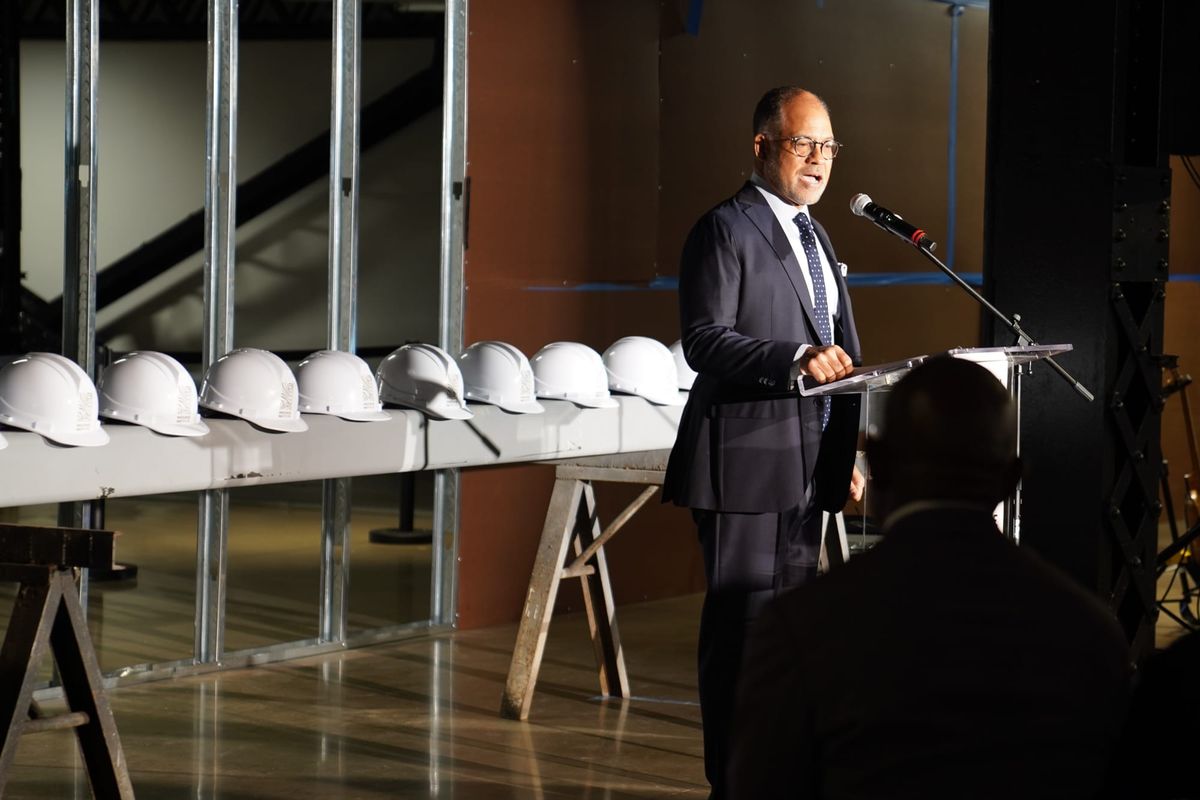
On April 3, 160 years ago, African American people celebrated freedom from slavery in Richmond on Emancipation Day. On the same day in 2025, the city held another celebration – a groundbreaking of a building memorializing Richmond’s history and its role in the impact of slavery in America.
City leaders and others involved in developing the Shockoe Institute gathered at Main Street Station, steps away from where the Institute is under construction, to emphasize the purpose of the Institute’s creation: to learn and reflect on Richmond’s story about slavery, and take action on its lasting effects.
“Richmond took its rightful place in the American story, which is the story of the struggle to expand human freedom,” said Marland Buckner, president and CEO of the Shockoe Institute.
“That simple idea, the story of the struggle to expand human freedom, is what animates us here at the Shockoe Institute.”
The $11 million project, paid for by the Mellon Foundation, is a combination of many things in one, Buckner said. The project is not a museum, but will contain a permanent museum-like exhibition, as well as holding events discussing contemporary issues, a lab for studying the city’s history in relation to enslaved people, and showcasing the work of artists under the direction of Leyla McCalla, the founding artistic director.
“The Shockoe Institute is all those things in one,” he said.
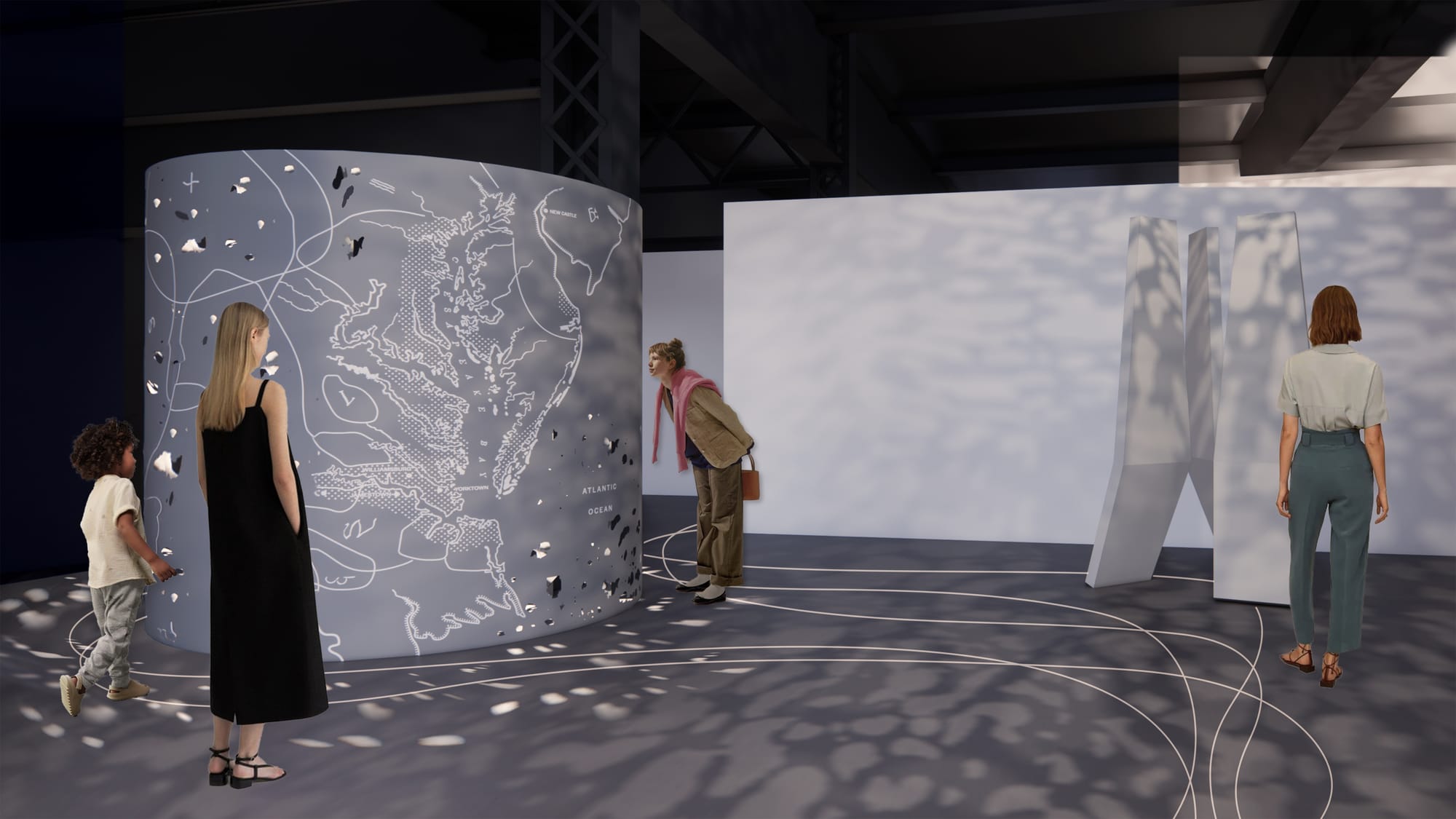
The institute will also contain an interactive 3-D augmented reality tour exploring Richmond’s role in the transatlantic slave trade in the form of wearable glasses. Attendees previewed the glasses and saw how Richmond served as one of the biggest markets in the country for the buying and selling of enslaved people and interacted with Lumpkin’s Jail, a slave trading complex located near where the facility will stand.
“A lot of people think maybe history is not relevant to them or it's not very interesting,” said Lexi Cleveland, executive vice president of ARtGlass, an augmented reality group that helped work on the glasses. “So giving them a new way to learn can kind of draw them into subjects that maybe otherwise they wouldn't really engage with.
Mayor Danny Avula said he remembered moving to Richmond for medical school and learning about the city’s history, which impacts Black people hundreds of years later. Seeing how people were working to restore justice in the city was a motivator for him to stay and be a part of that healing work.
“To see that come together in something like the Shockoe Institute … I couldn’t be prouder to have this in our city. This is not just the healing of Richmond’s story, but the healing of our country’s story,” he said.
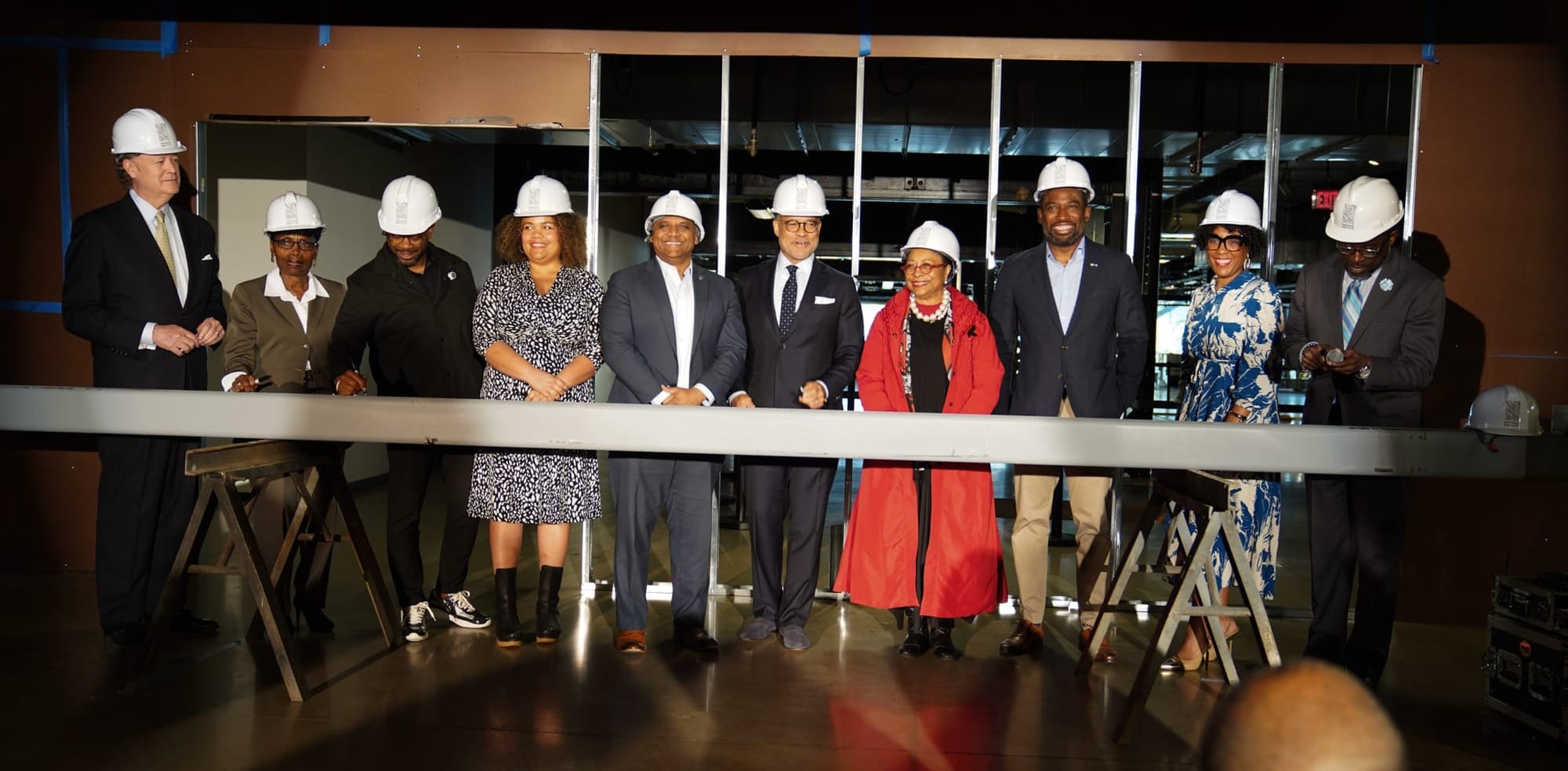
Former Mayor Levar Stoney, during whose administration the project was announced, was also in attendance.
“We have punted on this far too long. And in that vacuum, other stories have been told,” he said. “Now this gives us an opportunity with the Shockoe Institute to tell the complete story of Richmond's history, and that's the contributions of the enslaved.”
Avula, Stoney and Cynthia Newbille, City Council president and board member of the institute, were among the people who signed a ceremonial steel beam for the event.
The Shockoe Institute partnered with a variety of people and organizations, including Team Henry Enterprises, the contractor building the institute, Local Projects, which helped create the 9/11 Memorial in New York and the Greenwood Rising civil rights museum in Tulsa and will design the institute, and Snap Inc., a technology company that worked on the immersive spectacles with ARtGlass.
Buckner said that the organization is expanding and plans to make visits to Alexandria, Charlottesville and other places in the country.
The institute will be free to the public when it opens at April of next year.
This article was updated to note that the Shockoe Institute will open in April 2026.
Contact Reporter Victoria A. Ifatusin at vifatusin@richmonder.org