Ground-nesting bees are a spring phenomenon in Richmond
A couple of years ago, I noticed a swarm of insects in the front yard that appeared as winter transitioned to spring. After a neighbor shouted from across the street, “They’re pests!” I did a little digging (on the computer, not in the yard). What I found is that our yard, like others in Richmond, is home to a population of solitary, ground-nesting bees.
According to The Bee Conservancy, 70% of the more than 20,000 species of bees live solitary lives (as opposed to living in a colony like honey bees) and nest underground. As spring blossoms in Richmond, you might share the outdoors with a population of such ground-nesting bees as they emerge.
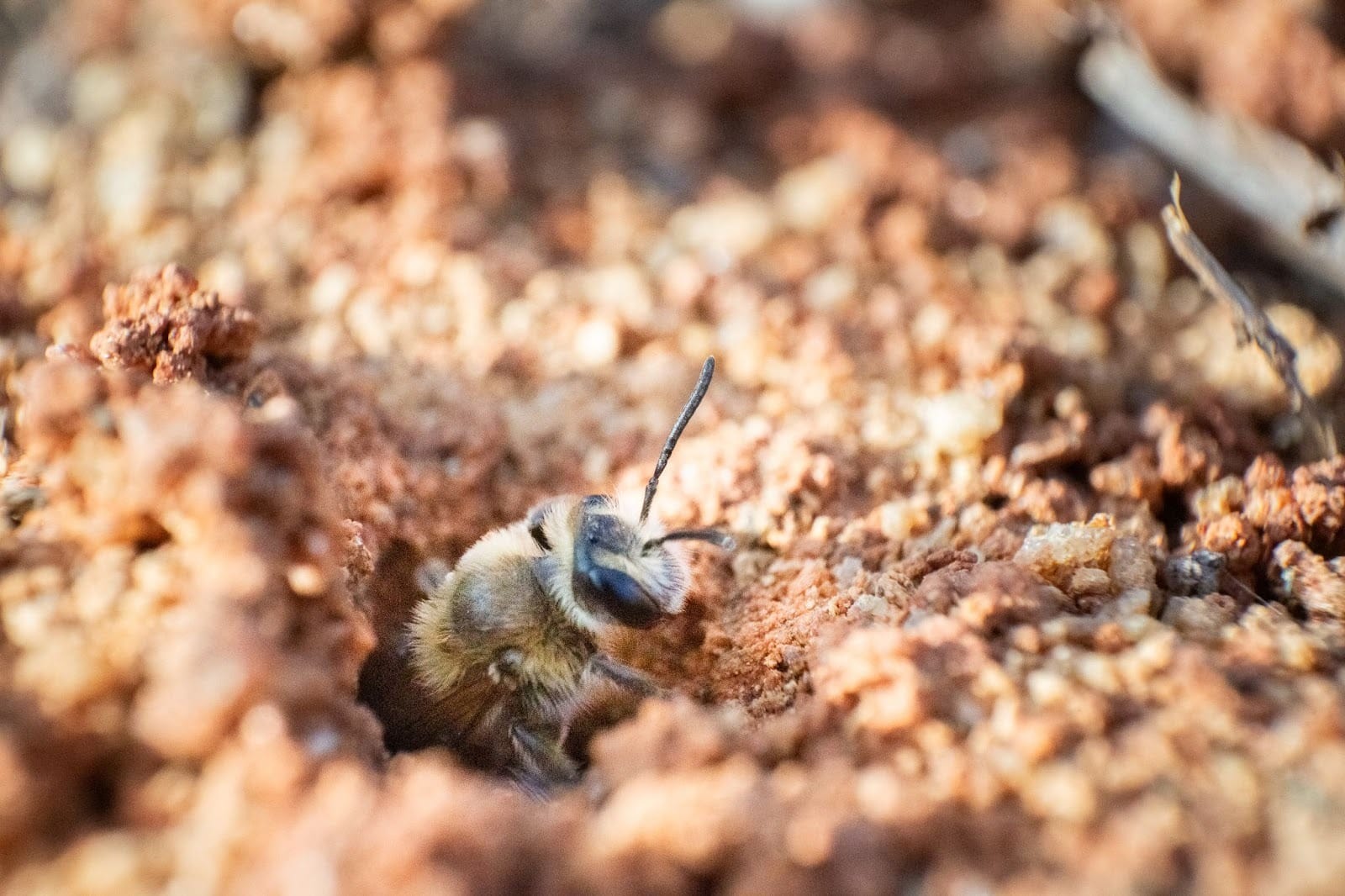
As the temperatures rise, species of ground-nesting bees (of which there are hundreds in Virginia) will appear for a number of weeks as a swarm hovering just above areas of bare ground that receive consistent sun.
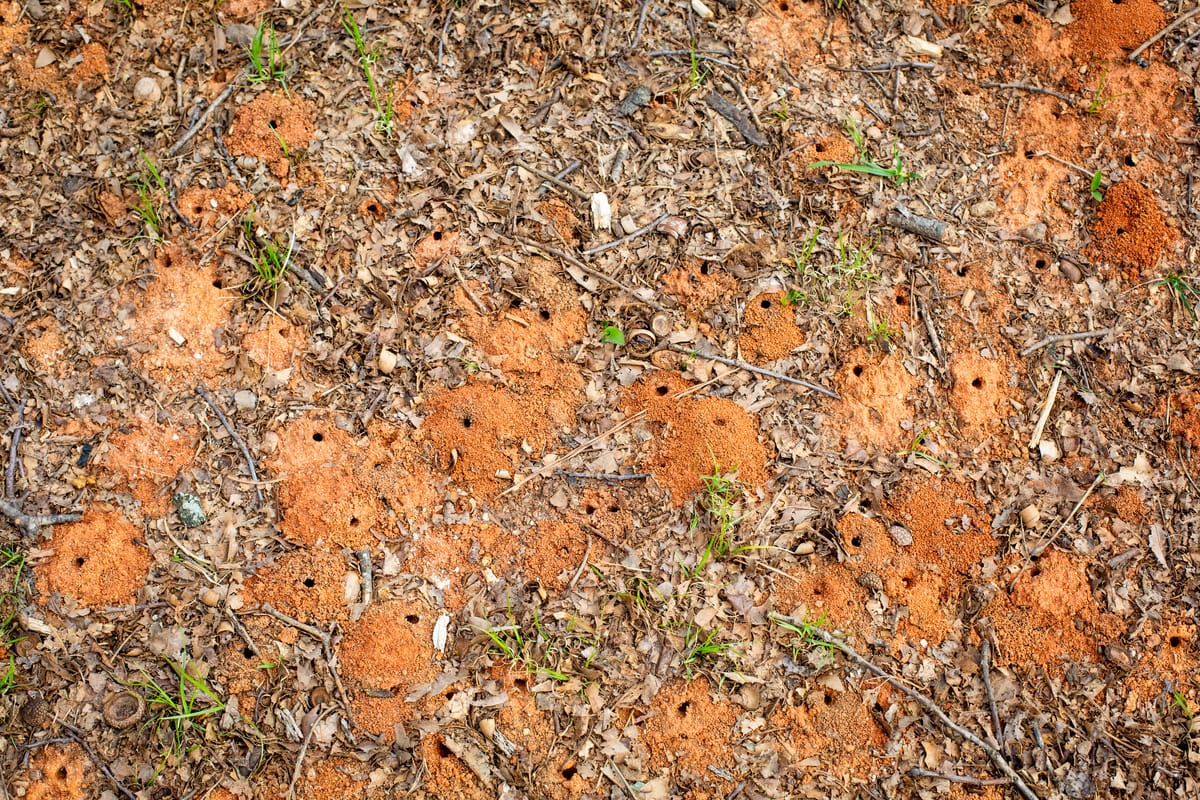
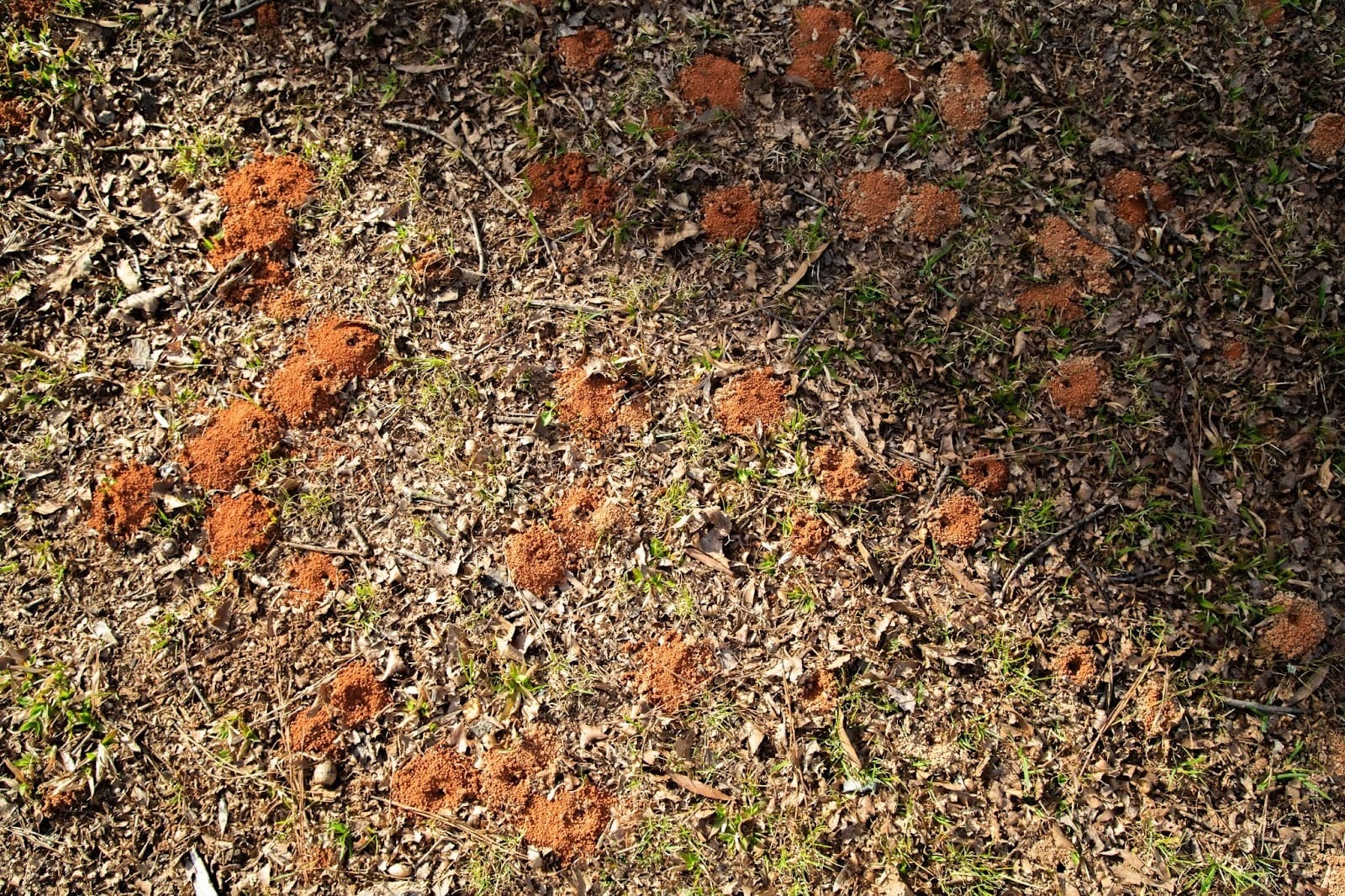
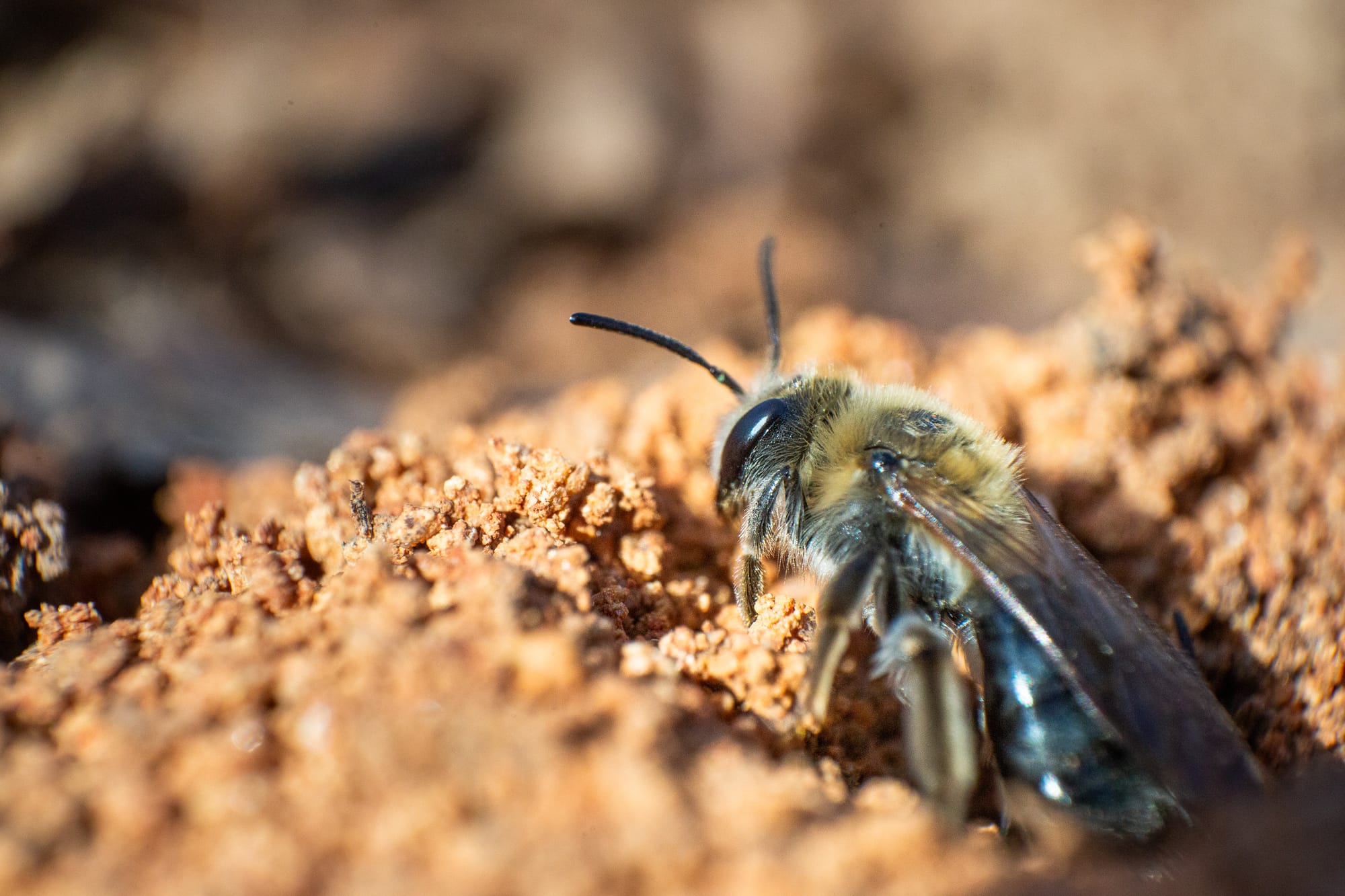
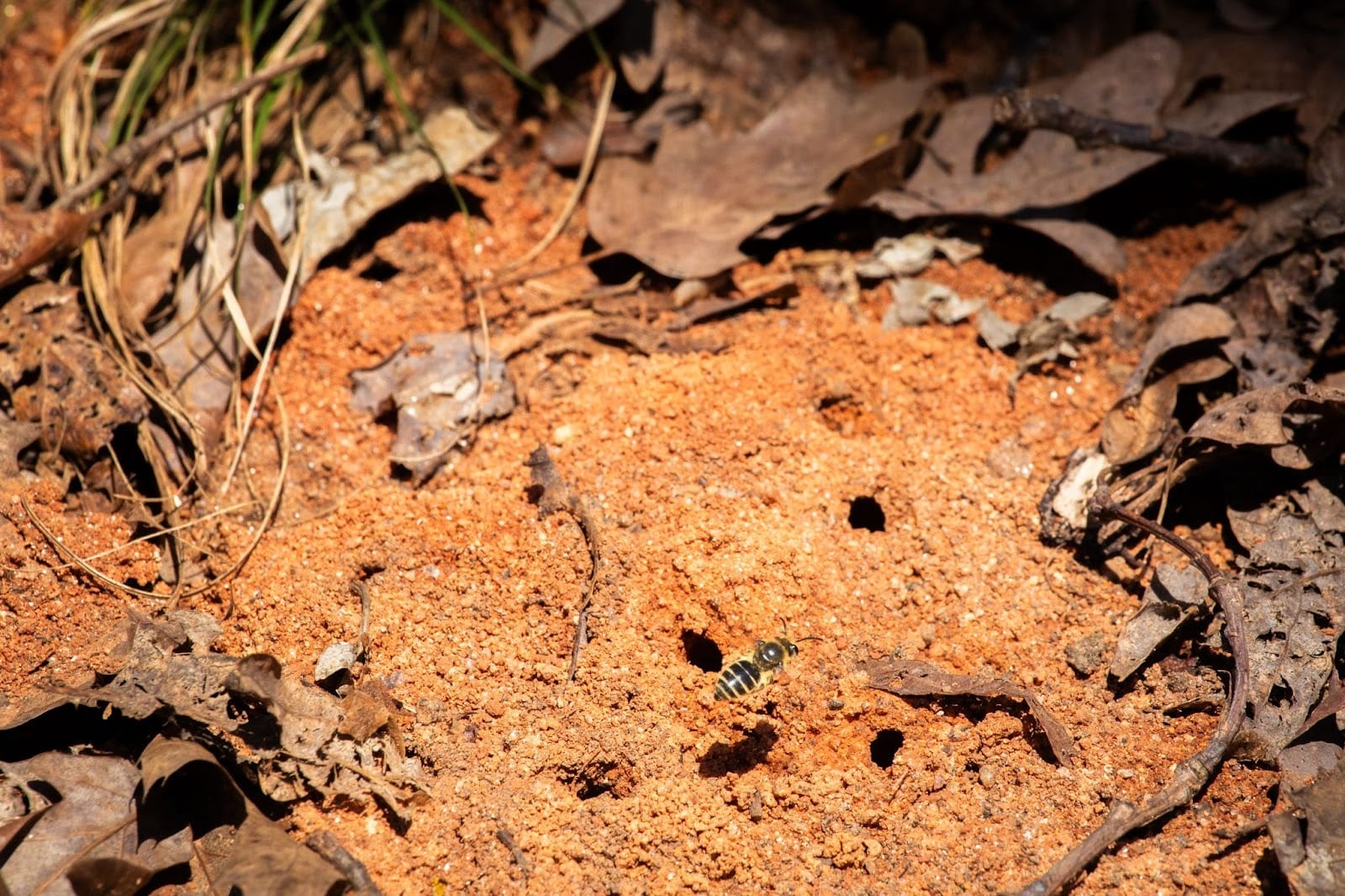
You may see many individual mounds of soil that look like ant hills. These ‘nesting aggregations’ are a bunch of single-family homes, where unrelated female bees build a nest, lay eggs, and return over and over again with pollen and nectar as provisions.
Some people mistake ground-nesting bees for stinging insects like yellow jackets (yellow jackets aren’t bees, they are wasps). Ground bee swarms may appear intimidating, but males don’t have stingers, and females (who do) hardly ever sting.
For the short period of time that ground nesters are around, these benevolent bees are helping buffer ecosystems as they pollinate flowers, fruiting shrubs, trees, and crops in the garden.
To learn more about ground-nesting bees, I spoke with Kelly Gill, Senior Pollinator Conservation Specialist with the Xerces Society for Invertebrate Conservation, a science-based nonprofit. Kelly is also a Partner Biologist with the USDA’s Natural Resources Conservation Service. In her roles, Kelly provides technical assistance on pollinator conservation and habitat management in the Mid-Atlantic and Northeast regions.
Kelly elaborated on ground-nesting bees, their benefits to local ecosystems, and how to help protect them. The interview has been edited for length and clarity.
What would you say to someone who was walking on the street and walked past a piece of land where there was a swarm of ground bees?
People do have a reaction when there's a lot of any type of insect in one place. And this is the time of year where we start seeing them [ground-nesting bees]. There's ground-nesting bees, and within that big category, hundreds of species, at least in Virginia.
Most of our solitary bees are ground nesters. It’s not a colony, like a social insect, like a honey bee. They’re unrelated female bees excavating the soil to build a nest, lay eggs, and they go back and forth and get pollen and provision their nest. People do get upset, they think that they’re going to be dangerous, that they’re going to sting. And most of our solitary bees, they're not defending a colony or a nest. They're very docile, they're essentially harmless, they don't sting, they're not aggressive. Ground-nesting wasps, like yellow jackets, can be defensive, especially if you're coming towards their nest. But in the case of those wasps, they build their colonies up over the summer. So you don't see a huge colony of wasps in the spring.
[Some people] they're like, ‘Oh, they're gonna ruin my lawn. I have to get them out of here.’ But they really don't. They excavate tiny holes. The ones that nest in those larger aggregations are active early in the spring, and then they go dormant for the rest of the season.
People want to do all kinds of crazy things – call an exterminator, pour gasoline into the ground. And so I just try to talk them down and explain what they're looking at. They like, not just totally bare ground, but sparsely vegetated areas. So things like soccer fields and playgrounds they often like, because of the wear and tear on the vegetation gives them little openings to access the soil.
How can you tell the difference between ground-nesting bees’ nests and wasp nests?
So if you see an aggregation of bees nesting in the ground, they often look like little ant hills, multiple little ant hills. Maybe they're living close together [beacuse] the soil conditions are good for nesting. So they kind of create a little neighborhood. But you'll only see one of these females, in most cases, moving back and forth from a nest opening. In the case of wasps, you see multiple wasps coming in and out, in and out, they're very active. And you usually see that towards the end of the summer, when their colonies are larger.
What is the ground bee's life cycle?
Their life cycles are different than honey bees that build up a colony and overwinter together. We call that a perennial colony. Solitary bees are different in that there's just that one single female, they don't have workers, they don't have a hive, they don't have drones. So it's usually that female bee that's making the nest. And most of the species only have one generation per year.
So when we talk about conservation…a honey bee colony kind of has that strength in numbers. You know, if a couple bees die off, leave the colony, get sick, they have those overlapping generations, they could keep going. When we're talking about solitary bees, that life cycle, that annual life cycle in the single female, they're more susceptible to dangers. Because they can't rebuild their colony that quickly.
When people are trying to promote native bees populations and conserve a diversity of bees, we talk about [reducing] things like tillage, ground disturbance, timing that to wait until certain times of year [ideally after spring ends] when there's less risk. Because if you kill off that developing larva that's underground, you won't have that next generation.
Most people understand that bumble bees and honey bees are actively pollinating and they're good for the ecosystem. Can you comment on the ways that ground bees pollinate differently from other types of bees?
Depending on the bee’s species, they like to do things differently. Honey bees like really nice, warm, sunny temperatures. So if we have a cloudy, rainy spring when the fruit trees are blooming, honey bees are hunkered down. They're like, ‘I'm not going out there yet.’ Whereas bumble bees and some of our solitary ground-nesting bees just have a higher tolerance to cooler weather, and they're active during cold temperatures. So you know that variety and timing really helps, because those trees are still getting pollinated. And they actually kind of work the flower a little bit differently.
Honey bees send out their foragers, and a lot of times they're looking for nectar, and they will rob the flower- so they'll cut into the side of it and get into the nectary and take that, without ever coming in contact with the anthers, where the pollen is. And our ground-nesting bees, they really get in there. I mean that single mom is trying to raise a family. They're moving a lot more around in the flower. They're picking up more pollen, and they're consecutively visiting multiple flowers. And so in some cases, they can be better than honey bees, depending on the plant. But they do things a little differently; they spend more time on the flower. They can often move more pollen than honey bees.
There are certain species, bumble bees are a really good example…but some of our solitary native species do this too, and it's called buzz pollination. And that's really important for certain types of flowers that hold their pollen captive in this structure in the flower, it’s called a poricidal anther. Bumble bees, for example, will grab onto that flower and vibrate their thoracic muscles at a certain frequency, and it shakes the flower, and the pollen kind of comes out and rains down on them. Honey bees just physiologically cannot vibrate at the correct frequency needed. If another bee gets there first and kind of shakes it loose, a honey bee might be able to go after and get some pollen that's still left.
Having all these different behaviors…our flowers are all different shapes and sizes, and having different times of year when our diverse native bee populations are active, oftentimes their activity matches up with their preferred food. So some of our native bees are specialists on certain plants.
What do ground-nesting bees specialize in pollinating?
They're often specializing on spring ephemeral wildflowers. There's other bees that just specialize on a certain family or group of plants, like sunflower or goldenrod. And then a lot of them are generalists, and they could collect pollen and raise their young on a variety of different flowers.
Given the declines in bee species, do ground bees also face extinction risk?
Yes, absolutely…probably even at a higher risk than social species that have overlapping generations. So we know more about social bees because they're more well studied. You know, you could get 50,000 honey bees and take them to a lab, study them, or track them. For these solitary species, it's much harder to get enough test subjects. They're not as well studied. And so we do have information gaps on many, many species…where we're extrapolating from other species in a lot of situations. At least a quarter of our honey bees experience some level of high risk.
What can people do to steward ground-nesting bees and help protect their populations?
Conserving pollinators is something that's really accessible. I can't save a polar bear in my yard. But I can go out and do things like plant a variety of native plants, picking species that are native to the Ecoregion, and having a variety of species of plants so that they're blooming throughout the seasons – so you have plants blooming spring, summer, fall – to support bees that are active all season, but also those ones that do have different timing.
Protecting them from pesticides, reducing or eliminating pesticide sprays, finding other options to treat pests. If you see ground-nesting activity, leave them alone. Reducing tillage, reducing ground disturbance. People gravitate towards planting flowers, but it is really important to provide that nesting habitat as well. If you're looking at species conservation, you have to provide them what they need throughout their entire life cycle.
Not everybody has a yard that they have control over. [Another thing] you can do is get involved in your community. The Xerces Society has a lot of community science programs where we can help people plant in the garden at their library, or somewhere in town. Help us collect data on these bees. We have programs and different atlases for different types of insects across the country. So helping us gather that data now, so the future generations can know more about these species where we lack information.
People get intimidated because they think, ‘Wow, what a giant problem. How will we ever solve it? Is my small patch of wildflowers in the backyard really going to do anything?’ And I just remind people that really big problems are made up of a lot of little problems. So if everybody took out just even 1% of their lawn and planted wildflowers, or blooming trees and shrubs native to the area, they're helping. And if everyone in the neighborhood does that, then we're starting to build more connected habitat, the bees can fly back and forth when they're foraging. You know, they don't have to fly to the next state to go to the floral grocery store.
Can people build a ground nest?
That would be so nice if we could just all go and poke holes in the soil and say, Here you go. But they [ground-nesting bees] often don't adopt that. So the best way is just to protect those areas. The other 30% of our native solitary bees nest in things like stems and wood, so we can provide that material pretty easily. You might also see, if you go to a garden center or nature center, these native bee boxes, or bee houses, or bee hotels. But just like a bird box, those artificial nesting habitats build up disease, parasites, things like that, so they do need to be cleaned out.