For some neighborhoods, it’s covenants — not zoning — that decides what gets built
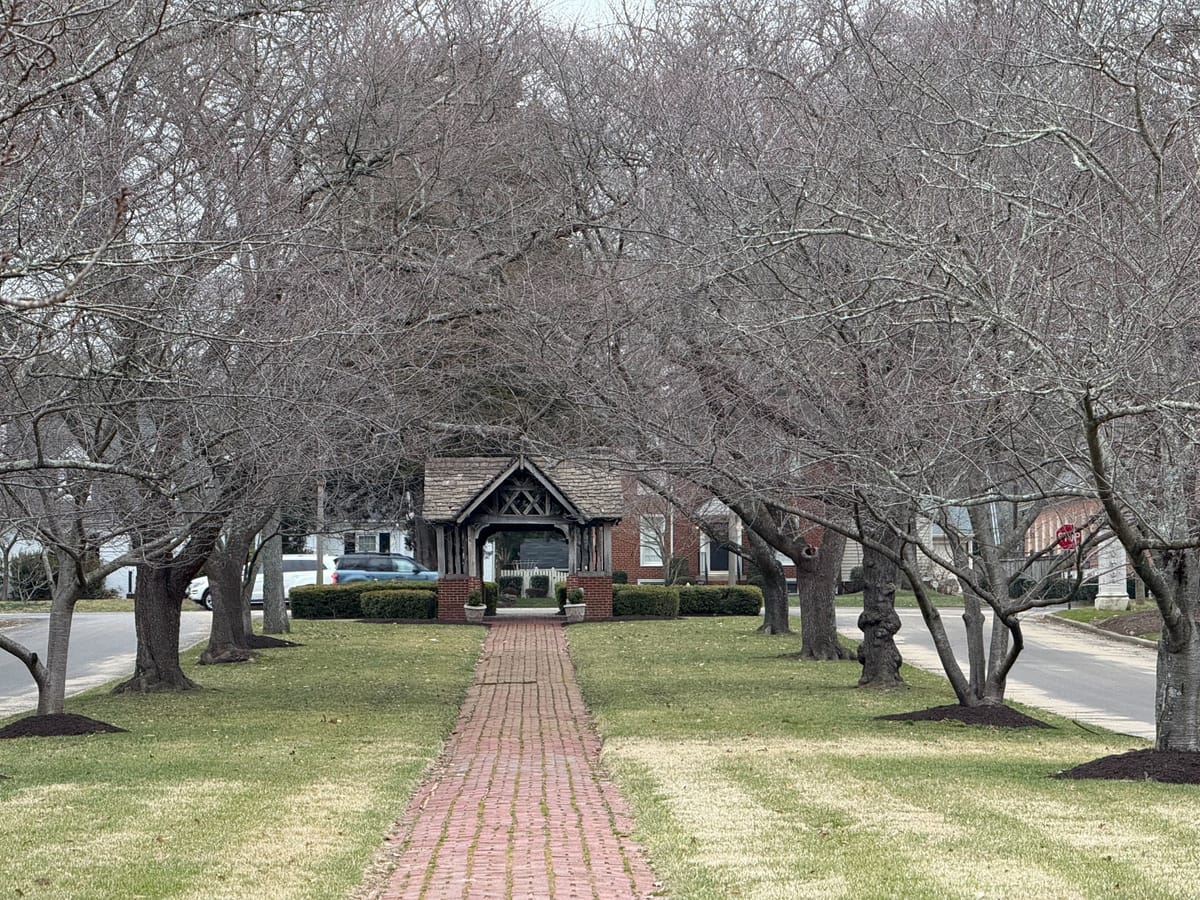
Zoning has come and gone, but some neighborhoods have stayed much the same.
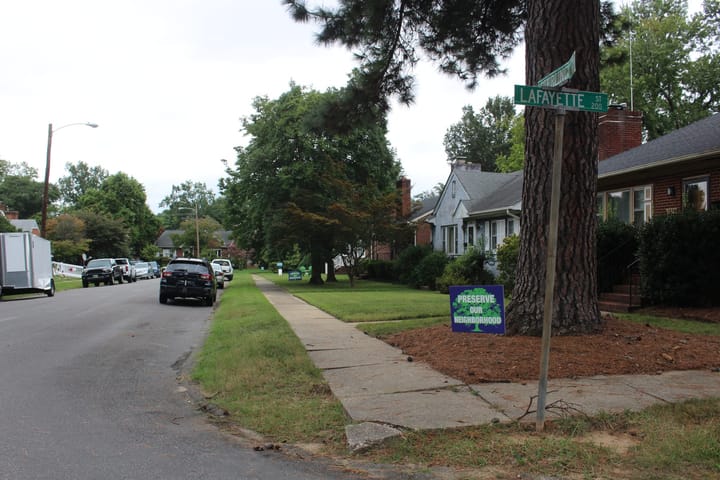
A century after it was built, the upscale Windsor Farms in Richmond’s West End doesn’t look too different from how it did when residents first started moving in. And despite a looming citywide rezoning that aims to encourage greater density, there isn’t much prospect of change on its horizon.
The reason? Windsor Farms, like a handful of other neighborhoods around the city, has provisions built into its deeds restricting how the properties that fall under its purview can be developed.
Those kinds of rules, known as restrictive covenants, are “the 500-pound gorilla that a lot of us have been thinking about,” said retired attorney Charles Menges during a discussion of the issue by the city’s Zoning Advisory Committee last week.
That’s because when covenants and zoning come into conflict, it’s usually covenants — which tend to be more restrictive than zoning — that win.
“Although zoning sets the minimum regulatory framework established by the city, private land-use restrictions can lawfully impose standards that are, in some cases, more stringent than zoning code, so long as they do not violate any state or federal law,” said Planning Department Deputy Director Marianne Pitts.
Covenants “apply irrespective of what the zoning regulations are,” said Preston Lloyd, a real estate attorney for Williams Mullen who also sits on the zoning committee. “They’re matters of private contract between original private property owners.”
That means that if covenants forbid a property from having a multifamily residence, no multifamily can be built there — even if the property owner wants to do so and the zoning would allow it.
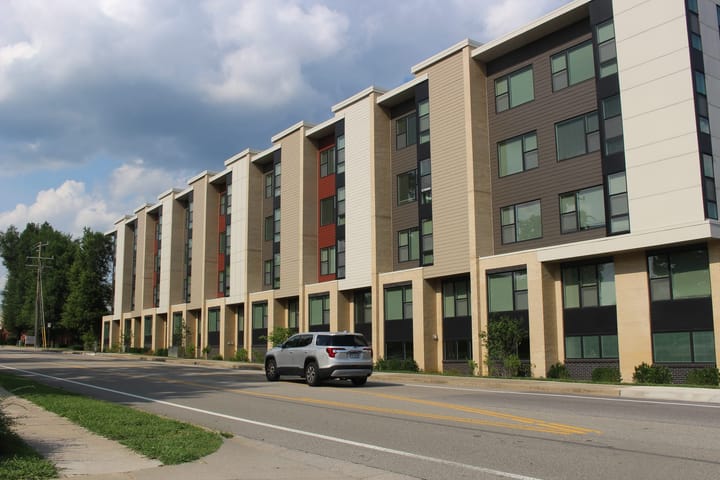
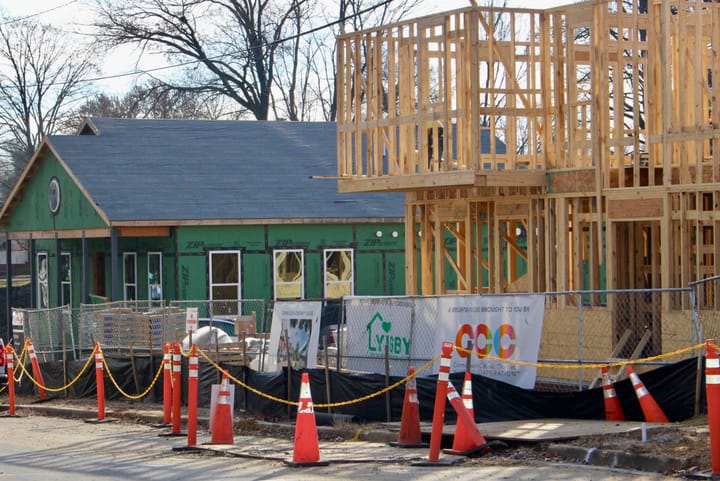
The issue is a particularly relevant one as the city continues its efforts to overhaul its 1970s-era zoning code. While planners have sought to allow more density throughout Richmond by loosening zoning restrictions in an effort to encourage the development of more affordable housing, those efforts will do little in neighborhoods where covenants limit parcels to single family detached homes.
How common that situation is in Richmond is unclear, although it appears to be limited.
“We do not have metrics on properties with covenants in place,” said Pitts. “You would need to do deed research to determine this. In addition to neighborhoods with covenants, individual properties can also have deed restrictions.”
In Virginia, counties tend to have more restrictive covenants than cities simply because they have a higher number of homeowners associations governing subdivisions — not to be confused with voluntary neighborhood associations that have no legal power. (More than 800,000 properties in the state are under the control of HOAs, according to Virginia Realtors.)
Most of the neighborhoods that The Richmonder has been able to identify as being subject to covenants are found in the city’s West End-based 1st District and the 4th District on the Southside.
Windsor Farms appears to be the biggest. While Windsor Farms, Inc., the group that governs the neighborhood, didn’t respond to two inquiries, covenants listed on its website specify that “each lot shall be used only for single-family residential purposes and there shall not be constructed on any lot more than one private dwelling house and the appurtenant buildings or structures necessary for residential purposes.”
No lot, the document continues, shall be smaller than an acre.
Covenants for Willow Oaks, a 95-household community near Forest Hill Avenue in South Richmond, also limit each lot to one single family detached home that isn’t more than two stories, said Katie Hoak, president of the Willow Oaks/Clevedon Civic Association. Private garages are allowed, but with no more than three cars.
 Sarah Vogelsong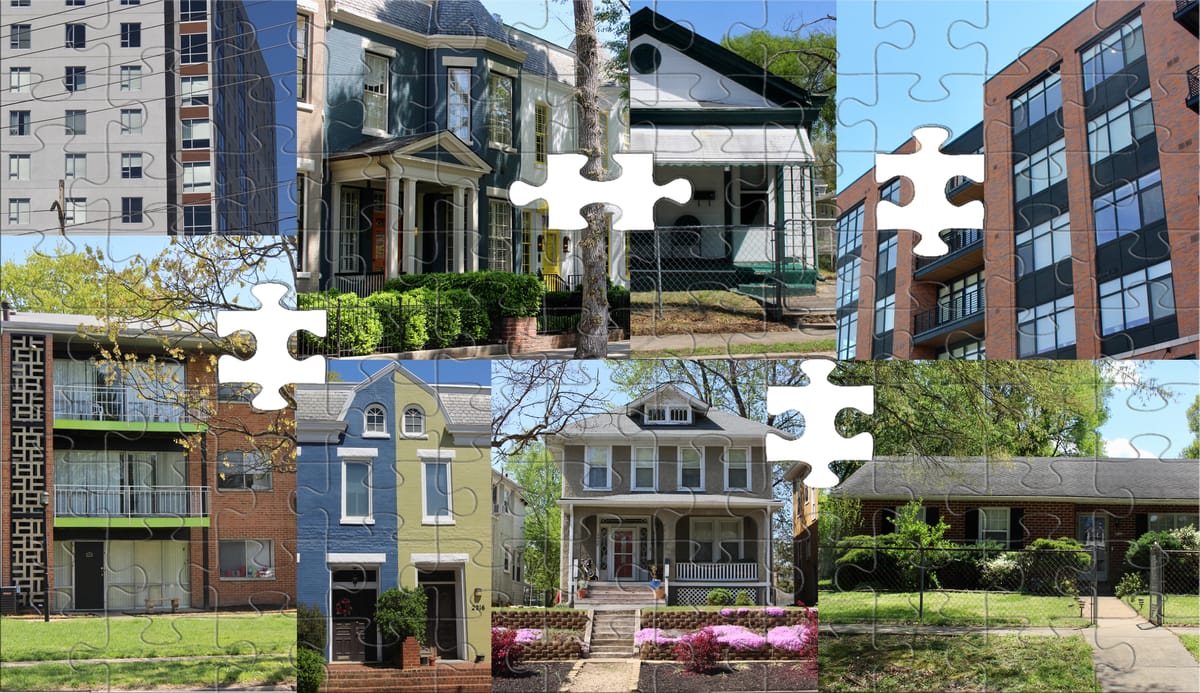
In Traylor Estates, a 155-household neighborhood near Cherokee Road, “only one residence shall be erected or placed on a single lot, and no lot shall, after its original conveyance, be subdivided into smaller lots or parcels,” according to covenants posted online.
There are almost certainly other neighborhoods with similar restrictions. When the gated 58-home Lockgreen subdivision adjacent to Windsor Farms was developed in the 1980s, city records and news coverage referred to restrictive covenants being filed with the court clerk, although no copy is available online.
For Hoak, the existence of covenants means that she tends to “think about zoning changes in terms of the bigger picture and how they will affect our district as a whole.”
“The Fourth District is known for its dense tree canopy and residential character, and zoning decisions shape how those qualities evolve over time and what the district becomes,” she said in an email. “They play an important role in preserving or changing what people value about living here.”
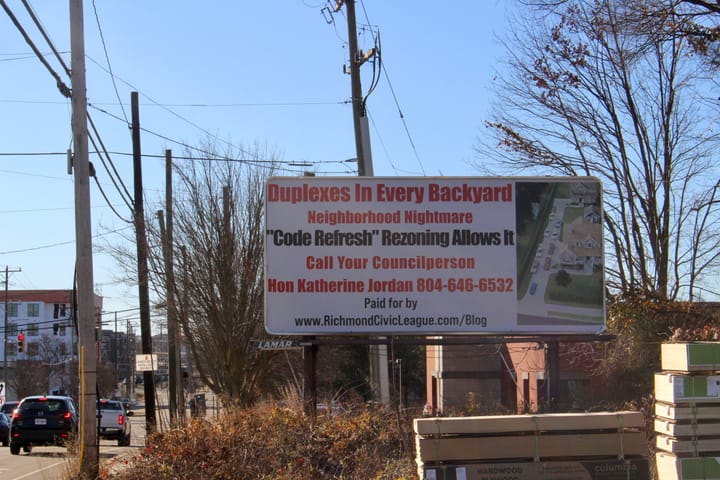
With some neighborhoods up in arms about the code refresh, Menges told the Zoning Advisory Committee earlier this month that it would not surprise him if some “decide to impose new restrictive covenants.”
“It’s very difficult to do, because you can’t bind anybody’s property unless they agree,” he acknowledged. “But it will be interesting to see if that is where we end up.”
Not everyone is pleased about the impact covenants have. The limitations they impose on some neighborhoods’ development may throw a wrench into the desires of those residents and groups who have urged the city to ensure that rezoning allows density increases in all neighborhoods and have worried that early drafts concentrate it in areas with larger numbers of Black and low-income residents.
 Sarah Vogelsong
Groups like the Homes for All Our Neighbors coalition have argued that provisions such as allowing duplexes by right in all neighborhoods and not just some are critical if the code refresh is to be equitable.
“Richmond’s legacy of segregation means some neighborhoods have absorbed development while others have been protected,” the coalition said in the November release announcing its formation. “If code refresh takes a truly citywide approach, we can ensure all neighborhoods contribute to solving our housing shortage, rather than asking a few to shoulder the entire effort.”
Thomas Okuda Fitzpatrick, executive director of coalition member Housing Opportunities Made Equal, pointed out that besides regulating land use, restrictive covenants historically were also used to enforce segregation.
Court rulings and legislation later ended the practice, but so-called racial covenants were long a common feature in the deeds of numerous Richmond properties.
“Today's restrictions on anything other than single-family homes accomplish something similar: they hoard wealth and opportunity in some of Richmond's whitest neighborhoods, within a city that is majority Black and Brown,” said Fitzpatrick. “These covenants don't just preserve a neighborhood's aesthetic. They preserve who gets to live there.”
Contact Reporter Sarah Vogelsong at svogelsong@richmonder.org