Council recap: Officials OK FOIA library that gives city discretion over what to publish
Note: This story has been updated. The city's press release announcing the FOIA library said it would include "records that are requested by multiple people and are of clear public interest." The ordinance passed by City Council calls for records to be included that fit either criteria.
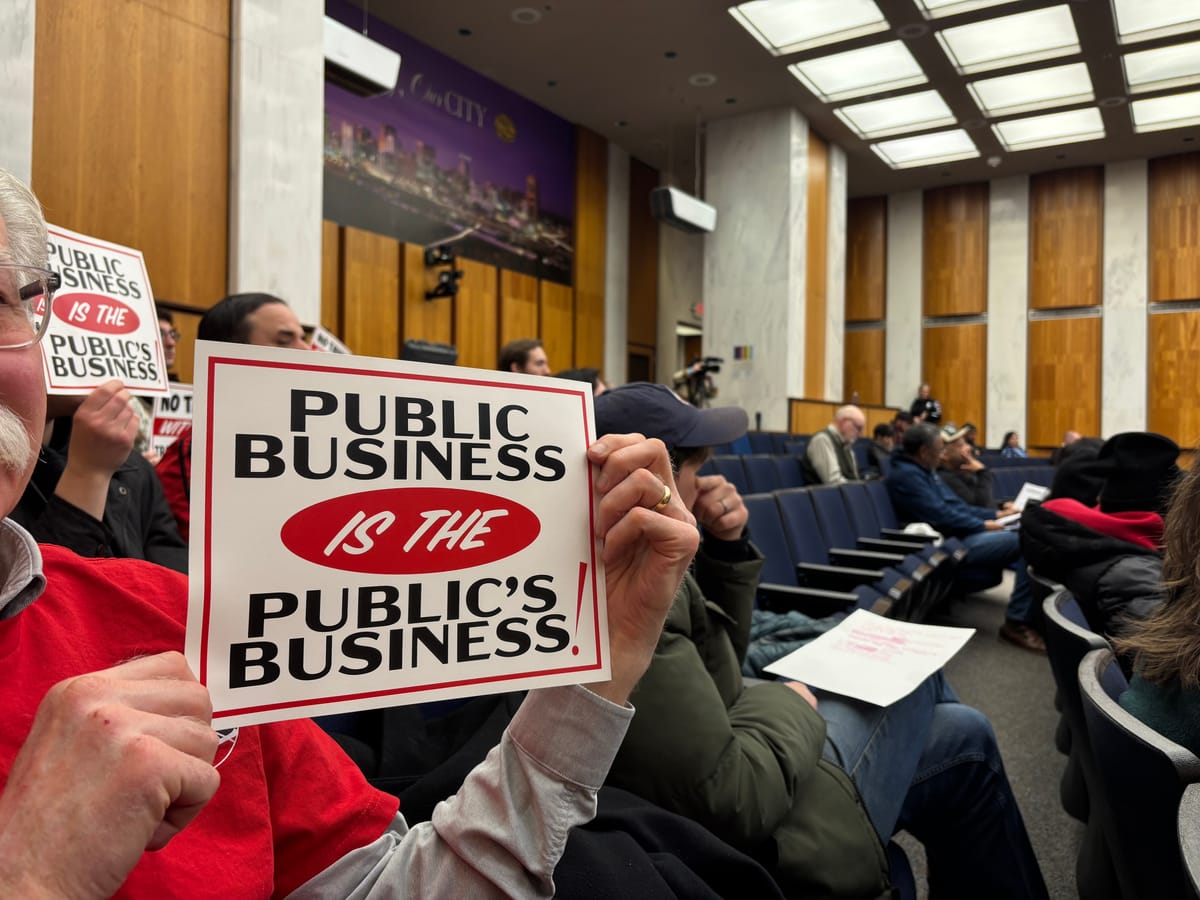
The Richmond City Council voted Monday to approve the creation of a city Freedom of Information Act library that will serve as an online repository of some government documents requested by citizens and the media.
For months, officials have been deliberating over the specifics of how a FOIA library should work, and how much power City Hall should have to decide what information is or isn’t suitable to publish.
After Mayor Danny Avula and many City Council members ran for office last year promising more government transparency, the FOIA library debate centered on how much transparency the city should impose on itself. The proposed FOIA library is believed to be the first in Virginia formally codified as official government policy.
Councilor Kenya Gibson (3rd District) had proposed a more sweeping FOIA library that would require the city to publish many documents by default.
Mayor Danny Avula’s administration proposed a more narrowly crafted library that would include documents requested by at least two people, or that are of clear public interest. There are stricter rules in place to avoid publishing documents with sensitive or private information.
The Council voted 7-1 to pass the library concept favored by the administration, with Gibson casting the lone dissenting vote.
"As a public health doctor and now as mayor, open communication and transparency have been a bedrock of my work,” Avula said in a news release after the vote. “The FOIA Library is an extension of those values. By making information easier to access, we strengthen accountability, build trust, and continue to show residents that City Hall is focused on getting the basics right.”
Councilor Sarah Abubaker (4th District) voted for Gibson’s proposal in an earlier vote that failed 2-6, but also supported the competing version that had the votes to pass. Councilor Stephanie Lynch (5th District) was absent from Monday’s meeting and did not vote.
The administration said FOIA is complex enough that officials should have some discretion over what documents should be released to one requester under FOIA and what documents should be broadcast to a wider audience via the city’s website.
Gibson resisted that approach, arguing that giving the government greater control over access to public information will inevitably lead to a less transparent FOIA library than what she had in mind.
“Where the administration and I disagree is what counts as being transparent,” Gibson said in a statement Monday night. “From where I stand, we can’t take credit for being transparent when we pick and choose what we share. As such, I think the FOIA Library as it was adopted isn’t the version our residents deserve.”
The FOIA library doesn’t change what documents the city is required to release. The plan only requires the city to post the documents it releases in response to FOIA requests.
The Avula administration has warned an overly broad library could lead to the inappropriate disclosure of sensitive information, such as 911 calls or records involving children. Gibson and her supporters have noted Virginia law already includes numerous exemptions allowing the city to not release those types of records, which presumably means they wouldn’t go into the FOIA library.
 Graham Moomaw
Megan Rhyne, a statewide transparency advocate who serves as executive director of the Virginia Coalition for Open Government, testified in support of Gibson’s proposal saying it “correctly treats transparency as a public obligation.”
“It assumes that residents do not need government to predetermine what is worthy of seeing,” Rhyne said. “It trusts that sunlight, systematically and lawfully applied, is what builds accountability and confidence in City Hall.”
The ordinance creating the FOIA library lays out the rules governing what documents will go into it and what will be kept out.
Some of those rules are open to interpretation, but they are generally designed to distinguish between information that serves the public interest versus information that could endanger an individual or embarrass someone who isn’t a city employee.
“Transparency without context can be very misleading,” Councilor Nicole Jones (9th District) said as she explained why she supported the more limited FOIA library. “Just because something is out there doesn’t necessarily mean that it’s understandable.”
To be included in the library, the documents sought must “contribute to public understanding” of city business, expose wrongdoing or misconduct, be relevant to how city programs or functions work or be deemed of “sufficient public interest to warrant proactive disclosure.”
The rules say the city will not release documents that could be seen as an invasion of privacy, records pertaining directly to the person who asked for them.
It’s unclear exactly how those rules will be applied in practice.
The requirement that documents have to be requested at least twice could limit the library only to issues that draw high media interest. For example, several news outlets requested a wide variety of records related to the January water crisis. With the library in place, those documents would also be posted online for the public to view regardless of whether media outlets have posted the source material.
 Graham Moomaw
However, the administration would have some ability to avoid publishing records even when there is broad public interest in the material. The rules for the FOIA library say documents will not be published if “redaction is insufficient to protect against misuse.”
The Council also approved two other transparency-related measures introduced by Gibson.
One would strengthen financial disclosure rules for appointed members of local boards and commissions. It will require members of influential bodies like the Richmond Redevelopment and Housing Authority Board of Commissioners and the Richmond Economic Development Authority to file financial forms that could make it easier to spot possible conflicts of interest.
The other approved ordinance clarifies that the city will not charge residents to produce information officials are already required to publish on City Hall’s open data portal.
Several local activists with progressive groups Richmond for All and Richmond DSA spoke at the meeting, urging the council to pass all of Gibson’s transparency proposals.
Northside resident John Gass also spoke in favor of the measures, saying they gave officials an opportunity to “set a baseline of healthy governance” that hasn’t been the norm at City Hall.
“Voters remember how responsibly a mayor or a council operated,” Gass said. “Because all secrets come to light eventually.”
Council could get tax relief option a year later than planned
A pending Council proposal to at least move closer to slowing annual property tax increases in city homeowners was amended to take effect a year later than originally planned.
The proposal to have the Avula administration prepare a budget based on a lower tax rate was changed to be effective for fiscal year 2028 instead of fiscal year 2027.
Councilor Stephanie Lynch (5th District) has championed the request to have the administration based on a tax rate of $1.16 per $100 of assessed value, four cents lower than Richmond’s longstanding $1.20 rate. Lynch’s non-binding resolution would ask the Avula administration to crunch numbers in advance to give Council the option of keeping tax bills steadier, without committing to passing a lower tax rate.
The Council didn’t take a final vote on the proposal, which has caused friction with Avula’s team over which branch of government has authority over budget and tax policy.
 Graham Moomaw
The city’s budget is expected to be tighter than normal in fiscal year 2027, when assessed home values will be frozen for a year to allow the city to better sync up its assessment and budgeting cycles. That means the city won’t be able to count on a large infusion of new revenue from property values rising, but the revenue growth will likely resume when new property assessments go out in early 2027.
Pushing the tax relief proposal off to fiscal 2028 would allow the city to avoid major policy shifts until after the assessment freeze.
Surplus money allocated
The Council approved a fast-tracked resolution to divvy up a small portion of the $22 million projected surplus the city had remaining from fiscal year 2025, which ended June 30.
The vast majority of the surplus went into the city’s reserve funds as required by policy.
With the 10% of the surplus dollars remaining, the Council chose to allocate:
- $1,417,850 for a Richmond Retirement System bonus
- $400,000 to the Affordable Housing Trust Fund
- $162,150 to support children and families during inclement weather
- $100,000 to the Family Crisis Fund
- $70,000 for the music and media lab at Southside Community Center and
- $50,000 to study traffic safety measures at several intersections
Before voting on how to use the surplus, several Council members aired frustrations with how financial matters are handled, accusing the Avula administration of not quite living up to its rhetoric on transparency and a collaborative approach to working with the Council.
In October, the administration told Council the city had little to no wiggle room to consider lowering the city’s property tax rate to shield residents from the tax impacts of fast-rising property values. At the time, the administration said it could not give an estimate of the city’s latest budget surplus. A month later, the administration revealed the projected surplus to be $22 million, but urged Council not put too much stock into the number because it’s an unaudited figure.
Abubaker said she was particularly frustrated with the way the administration responded to her after she faulted Chief Administrative Officer Odie Donald II for saying he would refuse to comply if the Council asked him to prepare a lower-tax budget for next year. Abubaker also posed several questions for City Hall’s top unelected official, asking when the administration became aware that the projected FY25 budget surplus was larger than the cost of the tax relief plan Donald portrayed as potentially devastating to city finances.
Avula shot back at Abubaker, saying it was “wholly inappropriate” for her to criticize Donald and downplaying the Council’s power to give policy directives via non-binding resolutions instead of binding ordinances.
On Monday, Abubaker said she found the response “belittling and dismissive.”
“As a woman in public office, it is painful when reasonable oversight is met with a tone that feels condescending or that I’m being lectured about the basics of government,” Abubaker said.
A few other Council members concurred with Abubaker.
“I just thought it was really, really wrong to treat her like that,” said Councilor Reva Trammell (8th District).
 Graham Moomaw
Gibson said she felt the administration “could have at least hinted” at the size of the surplus before the October vote in which the Council voted against lowering Richmonders’ tax bills.
She added that she hopes the city can get to a place where officials “welcome questions rather than shame them.”
“To be very candid, I hoped that the tone of the administration’s response would have been a little bit more apologetic,” Gibson said.
Contact Reporter Graham Moomaw at gmoomaw@richmonder.org