Council approves $14.7M loan to keep Diamond District project on track
Richmond will loan $14.7 million in reserve funds to the city’s Economic Development Authority to lock in the purchase of Sports Backers Stadium as part of the Diamond District redevelopment project.
The City Council voted 8-1 Monday to approve the loan, which will allow the EDA to purchase the stadium property from Virginia Commonwealth University.
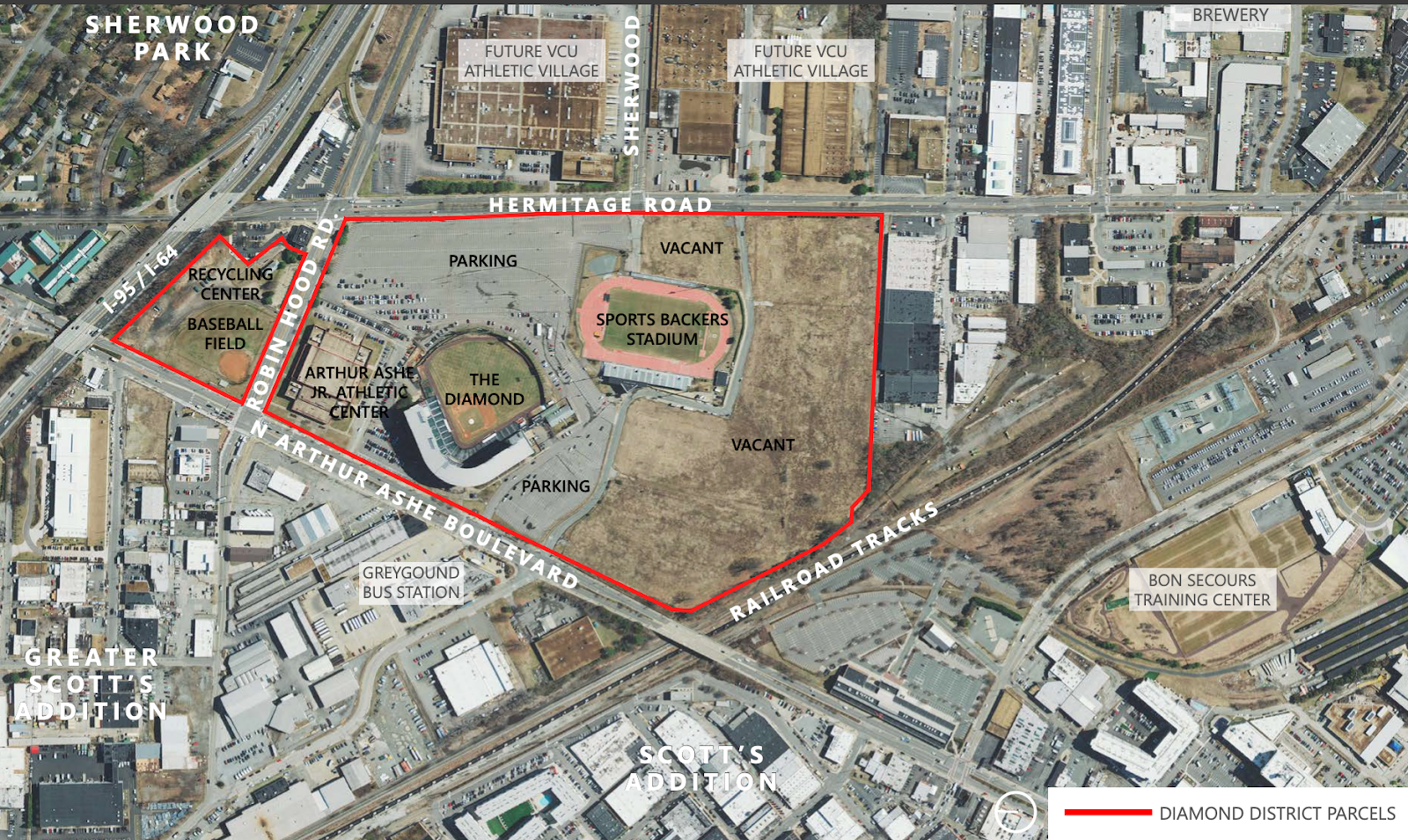
The EDA intends to purchase the 6.6-acre parcel for $25 million, using a combination of the city funding and proceeds from the sale of other land to the private development partners who are also part of the Diamond District deal.
The authority intends to repay the city after selling portions of the property to the developer in later phases of the project expected to occur in 2028 and 2031. The loan would have a 4% interest rate, with payment due at the end of a 10-year term.
The purchase of Sports Backers stadium is necessary, city officials said, to allow infrastructure and road work to occur as part of the construction of a new baseball stadium for the Richmond Flying Squirrels.
“The timing of this is critical at this point as the new Carmax Park stadium is about ready to open for the spring season,” Sharon Ebert, deputy chief administrative officer for planning and economic development, told Council members during a committee hearing last week.
Ebert explained to the Council that the paperwork for the project called for the city to make money available “as may be necessary” to allow the EDA to execute the project.
After questioning from Councilor Kenya Gibson (3rd District) over the course of two hearings, administrators acknowledged the city didn’t identify where that money would come from when the deal was struck.
To provide the money, the city is dipping into its Contingency Reserve fund. According to city code, that fund is only meant to be used when “catastrophic, unforeseen, or unavoidable events” occur.
At Monday’s meeting, Gibson and other first-term Council members questioned how a seemingly long-planned allocation of funds could qualify as the type of financial emergency required by their own rules.
“Why are we here if we have no intention of following the codes that have been written?” asked Gibson, who was the sole no vote against the transaction. Gibson said she supports the Diamond District project, but could not go along with something that, to her, seemed at odds with city policy.
Chief Administrative Officer Odie Donald II, who arrived at City Hall in the summer of 2025, said he couldn’t speak for what was decided in 2023 and 2024 when the Diamond District deal was being put together. He said he felt the loan was an appropriate use of the reserve fund.
“You are on the crux of having an agreement, a deal, or not being able to keep your commitments,” Donald said at last week’s hearing. “Not doing so would have certain negative impacts that would rise to the level of appropriately using this funding source.”
Ebert said some of the financial details surrounding the project were wrapped into negotiations over how the new Carmax Park would be leased. Those negotiations seemed to veer off course a few months ago when the Squirrels publicly announced the team was ending talks with VCU over how much the university would pay for its baseball team to play home games at the new ballpark.
Despite that tension spilling into public view, Mayor Danny Avula and VCU leaders expressed confidence the deal will still work out for all sides.
At Monday’s meeting, Jason Guillot, a Thalhimer Realty Partners developer leading the private aspect of the Diamond District project, said Sports Backers Stadium sits on top of land the developers “have to have at this point.”
“It’s incredibly important that we send a message that we’re all committed to this project,” Guillot said.
Grace Washington, whose workforce development company has helped match Richmonders with jobs related to the Diamond District, told the Council “everything is going well” with the project.
“We just ask that you not slow down the momentum. The momentum is going great,” Washington said.

Several officials said the city charter — which states the Council can appropriate money from contingency reserves — allows the use of emergency reserves approved Monday, despite the apparently stricter rules laid out in city code.
The current audited balance of the city’s contingency fund is about $29 million, officials said. Avula’s administration contends that the balance won’t go down by $14.7 million as a result of the Diamond District loan, because the transaction involves a promissory note that will remain on the city’s books and could be sold for cash.
Some Council members seemed skeptical of the explanation that the city was simply “investing” reserve funds in the project without reducing its own ability to quickly access the money should some other crisis arise.
“How concerned should I be that when we need the cash it will be hard to get?” asked Councilor Andrew Breton (1st District).
“If we were extraordinarily concerned I would be expressing that today,” Donald replied.
Councilor Sarah Abubaker (4th District) said better communication could have avoided a situation where she felt the Council was being asked to either approve something members were uncomfortable with or risk seeing the whole deal “fall through.”
“I just have to make it publicly known that I don’t love the idea of us using funds that are supposed to be for catastrophic and emergency purposes for something that we have known is coming for years now,” Abubaker said.
Councilor Katherine Jordan (2nd District) said she shared many of the same questions, but reiterated that the body was advised it has the authority to approve the transaction.
“Things have changed a lot since this project started. The economic climate has changed a lot, tariffs, prices of things,” Jordan said. “It has been shifting sands the entire time and we have had to be able to shift with it in order to keep this project alive.”
Gibson disagreed, saying the use of emergency reserve funds was creating more risk to the city. She said she didn’t buy the argument the city was investing money in the project without potentially taking it away from other needs.
“‘I don’t think we can both invest the money and have the money at the same time,” Gibson said. “That’s simply not how investments work.”
Donald said Council members were raising valid questions and offered to help them with “a little more education” on financing tools available to the city.
Contact Reporter Graham Moomaw at gmoomaw@richmonder.org. VCU is a sponsor of the Richmonder, but was not allowed to influence or review this story.