At St. Peter's, volunteers drive a program that is part of a downtown safety net
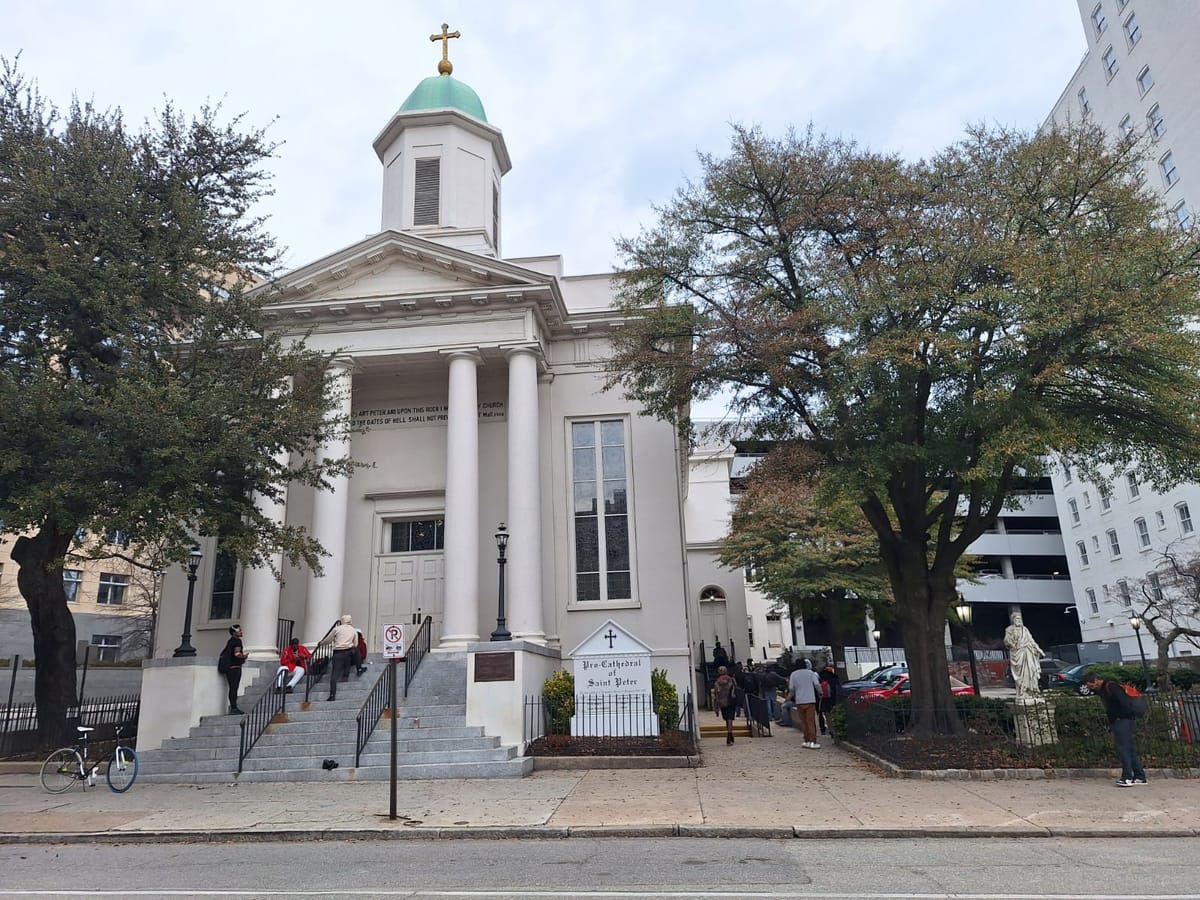
On a gray March day, a fine drizzle cloaks the downtown area, leaving the asphalt in front of 800 E. Grace Street glistening.
Puddles reflect the white front of St. Peter’s as a number of people, many of them homeless, arrive.
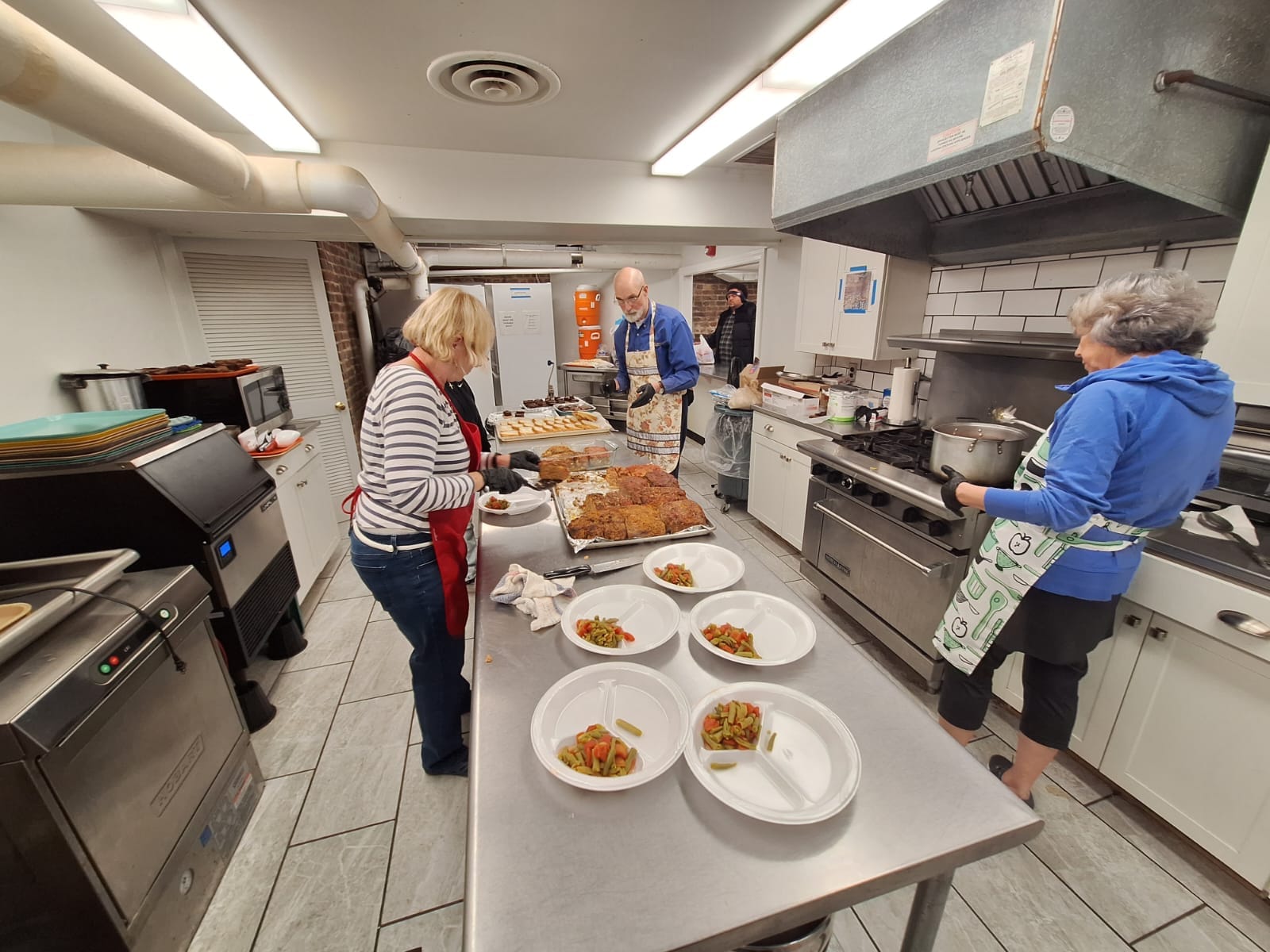
Inside the church, however, the atmosphere changes. The silence of the outside world gives way to the clatter of ladles, the clang of pots, and the aroma of hot food filling the air. Volunteers move with practiced ease, guided by routines honed over time.
The volunteers, about 25 of them each week, make the program at St. Peter's possible.
“These volunteers are essential to the church, not only because they provide direct assistance to people experiencing homelessness, but also because they embody the principle of helping others and promote a sense of community among parishioners,” said Rev. Nick Redmond.
The Catholic church was one of the founding members of the downtown community ministry, a group of churches that alternate providing meals to those in need each day.
At the back of the building, the kitchen used by volunteers is the operational heart of the program. Large pots simmer on the stove, trays come out of the oven, and bread is carefully arranged in baskets ready for distribution.
Adjacent to the kitchen, a space functions as a full-scale sorting center. Neatly organized shelves hold jars, cereal boxes, pasta packages, canned goods, and coffee. Cardboard boxes brimming with donations arrive weekly, while an orderly row of bottled water sits nearby, along with stacks of cookies to accompany the meals.
Other shelves hold clean placemats for the tables before guests arrive. By a window hangs a portrait of Pope Leo XIV, a quiet presence accompanying the daily work.
At 11:45 a.m., the doors open. Some enter in silence, others with a nod of acknowledgment. Plates are filled, bottled water distributed, bread handed from hand to hand. Conversations are brief but genuine.
The work at St. Peter’s extends far beyond serving food; it is a constant, detailed effort spanning kitchens, clothing depots, showers, and storage areas, and is part of a larger social-services net that aims to get people back on their feet.
 Ian Stewart
One volunteer, who gave his name as Mark, said he moved to Richmond from New York after retiring.
“I had already volunteered in New York, and I wanted to continue helping the homeless program," he said. "We provide meals during the day and showers once a week in the afternoon. It’s not just about giving food: it’s about offering something that truly makes a difference in someone’s day while connecting them to resources that can improve their life.”
Latest data on homelessness
Homeward released its January 2026 Point-in-Time Count data last week, giving a glimpse into homelessness in the Richmond region.
The count found 618 homeless individuals in the region, while 5,538 individuals are served by agencies with the Greater Richmond Continuum of Care.
The data also showed that the primary cause of homelessness at the moment is "economic factors," which consisted of 47% of all cases.
On Wednesdays at St. Peter's, activities resume in the afternoon, around 4:30 p.m. The kitchen springs to life again, tables are set with clean placemats, bread baskets are filled, and bottled water arranged neatly. Another hot meal is served, clothing distributed, and showers opened. This second weekly session provides continuity. For some, it is the only anchor in an uncertain week; for others, it is a chance to update volunteers on a job interview, a request for assistance, or a potential opportunity.
“The program fosters a strong sense of solidarity and connection, addressing immediate needs — from a warm meal to a comforting conversation — while strengthening ties between the church and the neighborhood," said Redmond. "It is also very important for the volunteers themselves: participating in the program helps them develop empathy, a sense of responsibility, and a stronger community spirit, allowing them to live the church’s values and feel actively involved in the life of the neighborhood.”