At budget retreat, Richmond officials talk lots of ideas but few numbers
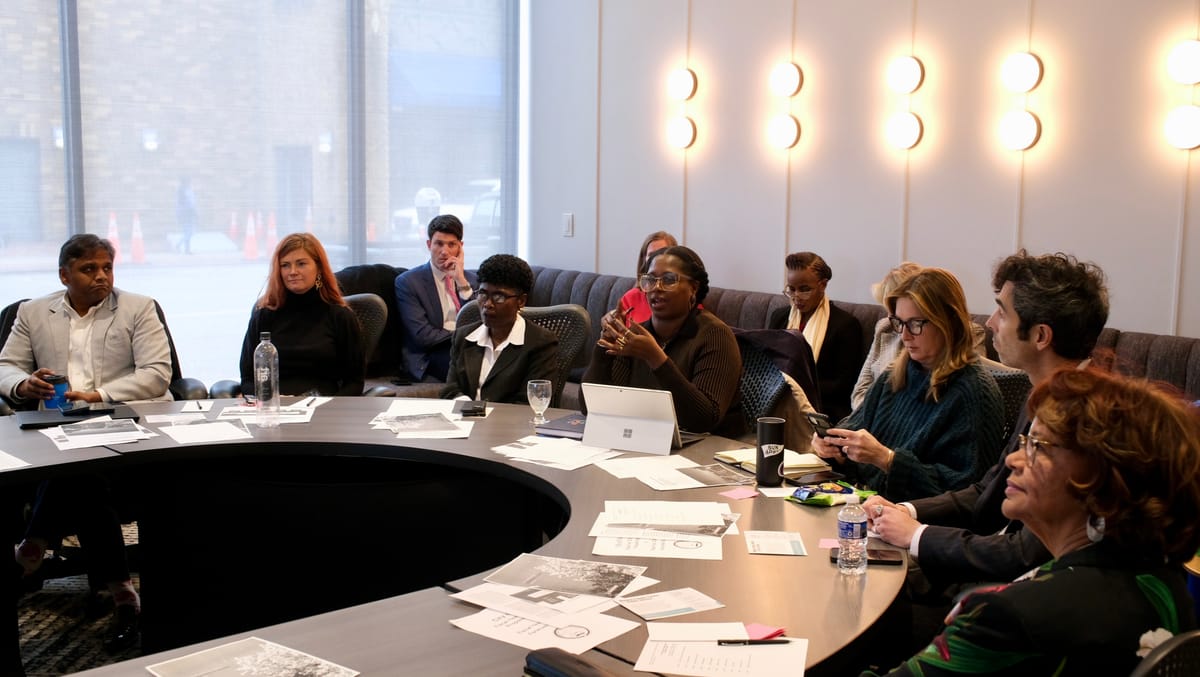
Richmond policymakers are trying to do government budgeting differently, but it wasn’t the smoothest start Thursday as Mayor Danny Avula’s administration convened a joint meeting with the City Council to discuss spending priorities for the coming year.
The three-hour session in a hotel meeting room downtown began with a lengthy back-and-forth about the meeting’s purpose, with differing views exchanged on what a budget retreat should be.
The meeting was meant to be an opportunity for the Council to give its input on what the city’s budget priorities should be, in a public setting with everyone in the same room (there was some angst over the room itself being so small there wasn’t much space for city staff and the media).
At the end of the session led by a team of neutral facilitators, the group had several poster-sized sheets of paper listing dozens and dozens of priorities such as the water treatment plant, sidewalks, the James River, gun violence, schools, affordability and helping small businesses.
How those sheets of paper will be translated to concrete budget action next spring wasn’t particularly clear.
“Are you going to come back with revenues and resources to pay for everything we put on your list?” Councilor Ellen Robertson (6th District) jokingly asked the facilitators.
Avula also said the meeting didn’t exactly clarify what the Council cares most about.
“What was intended to be a focusing exercise was actually an expanding exercise,” the mayor said.
Thursday’s meeting was part of an effort to overhaul how Richmond’s budget process works, with an eye toward earlier discussion and more substantive input from Council members and the public.
Early on, Councilor Kenya Gibson (3rd District) asked why city leaders were holding what, to her, felt like a “marketing” exercise focused on abstract budget concepts without actual numbers attached to anything.
“The reality is we’re not in a conceptual place,” Gibson said. “We are in a reality where we are continuing to increase costs for residents to live here.”
Gibson asked specifically why there was no discussion about why the city reported an estimated $22 million surplus for the budget year that ended June 30.
“The fact that we continually say we don’t have money and are ending up with this giant surplus, it’s frustrating for folks,” Gibson said.
The Avula administration has discounted the significance of the $22 million surplus number, stressing it’s an unaudited figure that won’t be finalized until early next year.
“It just takes a certain amount of time to make sure we’re giving you accurate numbers,” Avula said. “Because otherwise you guys are making assumptions and decisions on faulty data.”
In response to Gibson’s remarks, Chief Administrative Officer Odie Donald II said the meeting wasn’t meant to be an exhaustive review of the budget but was instead an opportunity for the Council to weigh in on what priorities are most important to them and their constituents.
“That’s just one part of the cake that’s being baked,” Donald said.
The group mostly zipped through the discussion of priorities, with Council members calling out general topics without stopping to talk about any particular issue in much depth.
The talks got most animated when the group was discussing how to improve government services.
Councilor Katherine Jordan (2nd District) said the Finance Department and Planning Department are most in need of new investment in the upcoming budget cycle.
“I think they touch on a lot of the issues that we deal with the most in terms of constituents,” Jordan said.
Councilor Andrew Breton (1st District) said he’d like to see more milestones and metrics laid out for what new spending on services is expected to deliver in terms of improvement.
“If the budget shows up and there’s some massive investment for new training in Finance or something, we need to explain what that is and why it’s worth it,” he said.
Avula said he sees fixing the Finance Department is “job number one,” but warned the Council that it won’t be an overnight fix.
“We’ve got to invest in those things,” the mayor said. “But just give us the runway to get there.”
In a brief discussion about what the city can do about the large proportion of tax-exempt property in Richmond owned by the state, Robertson urged Avula to do more to ensure the city is getting a fair shake from state entities.
“It’s a big hole in your budget before you even get started,” Robertson said.
Before the city has a compelling case to make the state, Avula said, it has to do more to redevelop land that could be generating tax revenue, such as the underutilized 10 blocks near the shuttered Richmond Coliseum.
“We can’t go crying to the state if we’re not doing everything we can to address the land that we do have,” Avula said.
As the meeting wrapped up, Donald gave the group a pep talk, saying that even if everything didn’t go exactly as planned, the huddle was still a step in the right direction.
“I just encourage you to give yourselves a little credit and grace,” Donald said.
Council members mostly expressed appreciation for the event.
“I am confident that the next time we talk about the budget, we will talk about numbers,” said Gibson.
Robertson called the meeting “a fabulous three hours of my time on a Thursday.”
“And I’m glad we’re at the end of it,” she said.
Contact Reporter Graham Moomaw at gmoomaw@richmonder.org