As Richmond tries to improve budget process, delays persist with yearly financial audit
When Mayor Danny Avula’s administration revealed Richmond was projecting a $22 million surplus for the budget year that ended last June, his team cautioned the City Council to not jump to conclusions until the city’s annual financial audit was done.
The fiscal year 2025 report was due Dec. 15, but officials now say they don’t expect it to be finished until late February, just before Avula is set to introduce his proposed budget for fiscal year 2027.
Late last year, the administration said the city’s Annual Comprehensive Financial Report, or ACFR, should be done by January.
At one point, Chief Administrative Officer Odie Donald II gave the Council a particular date of Jan. 27.
On Jan. 29, Donald emailed the Council saying delivery of the report — a detailed rundown of tax revenues and spending that’s audited by an outside accounting firm — would likely be pushed back to “the last week of February.”
City spokesman Michael Hinkle said the timeline changed “to ensure the completeness and accuracy of our audit.”
“The move was due in part to an internal delay in audited component unit financial statements necessary for completion of the ACFR,” Hinkle said, meaning the city had to wait to get numbers it needed from other governmental entities that rely on city funding.
In December, Donald said the city was still waiting to get FY25 financial data from Richmond Public Schools. An RPS spokesperson said the division filed its report in early January.
Delays with the financial report have been fairly common in Richmond, and many local governments struggle to meet the Dec. 15 deadline to file their reports with the state Auditor of Public Accounts.
According to the state — which uses the reports to do its own analysis on how local governments raise and spend money — Richmond was one of more than 65 counties, cities and towns that had not filed as of Jan. 30.
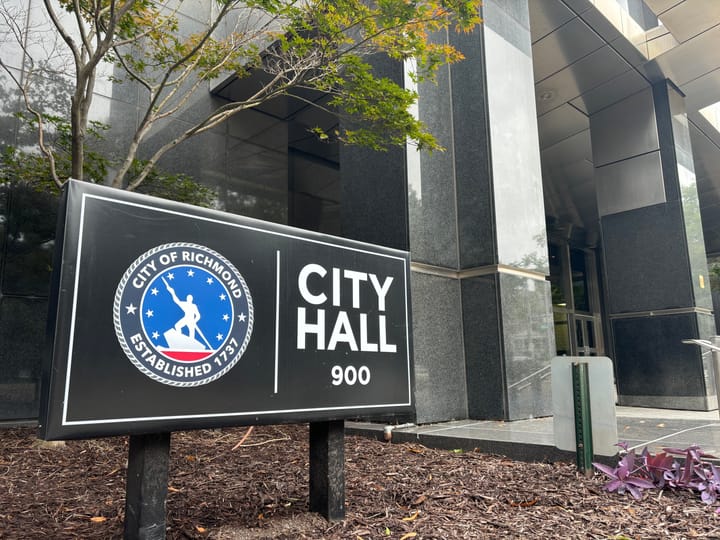
The delay with the FY25 report is an indication that Avula and his new team of administrators have not been able to quickly resolve longstanding financial reporting issues at City Hall.
State law requires localities to inform both the state and the public when a financial audit is delayed. The city is legally required to publish a notice on its website about the late report until it’s finished.
Because of the past issues in Richmond, the city code also requires mayoral administrations to not only notify the Council whenever the financial audit is going to be late but also offer a detailed explanation of what caused the delay and what’s being done to fix it.
Avula and Council leaders have worked jointly to overhaul the city’s budgeting process, with a goal of creating more opportunities for public engagement and in-depth review by the Council before the budget is finalized.
The Avula administration has already held a budget-focused meeting with the Council and a public town hall for residents. Those events have been light on numbers, focusing instead on broad discussions of city priorities. With the financial report still unfinished, the city has not yet released a full accounting of its most recently finished budget year even as plans for the next budget are shaping up.
Councilor Kenya Gibson (3rd District) recently inquired about the status of the ACFR and has told the administration the Council needs to have copies of key financial documents to prepare for budget deliberations set to begin in March.
“Repeated delays erode trust, so it’s important to understand what’s driving the extended timeline,” said Councilor Kenya Gibson (3rd District) “I’d like to know if another city agency is delayed in providing data or if the city is questioning the numbers in a draft they’ve seen. I’ve asked, but we haven’t been given specifics.”
The Council recently passed a new rule requiring the administration to publish the budget requests of each individual department. The Avula administration published that information on Jan. 15 as required by city code, but included a disclaimer saying revenue and expense should be considered preliminary until they had been finalized through the ACFR process.
Gibson asked if the report’s delay would impact the city’s development of its next budget. Donald said it would not.
“The process has not changed from previous years,” Donald wrote in an email to the Council. “The only difference is you received proactive communication on the status once it was projected to be late. It does not delay budget development.”
The Avula administration has said it’s planning to give the Council a more detailed summary of why the ACFR was delayed and a plan for ensuring it’s filed on time going forward.
That follow-up report, according to the administration, should be ready within 30 days after the financial audit is completed.
Contact Reporter Graham Moomaw at gmoomaw@richmonder.org