Amid affordable housing push, homes for the lowest incomes are a tough nut to crack
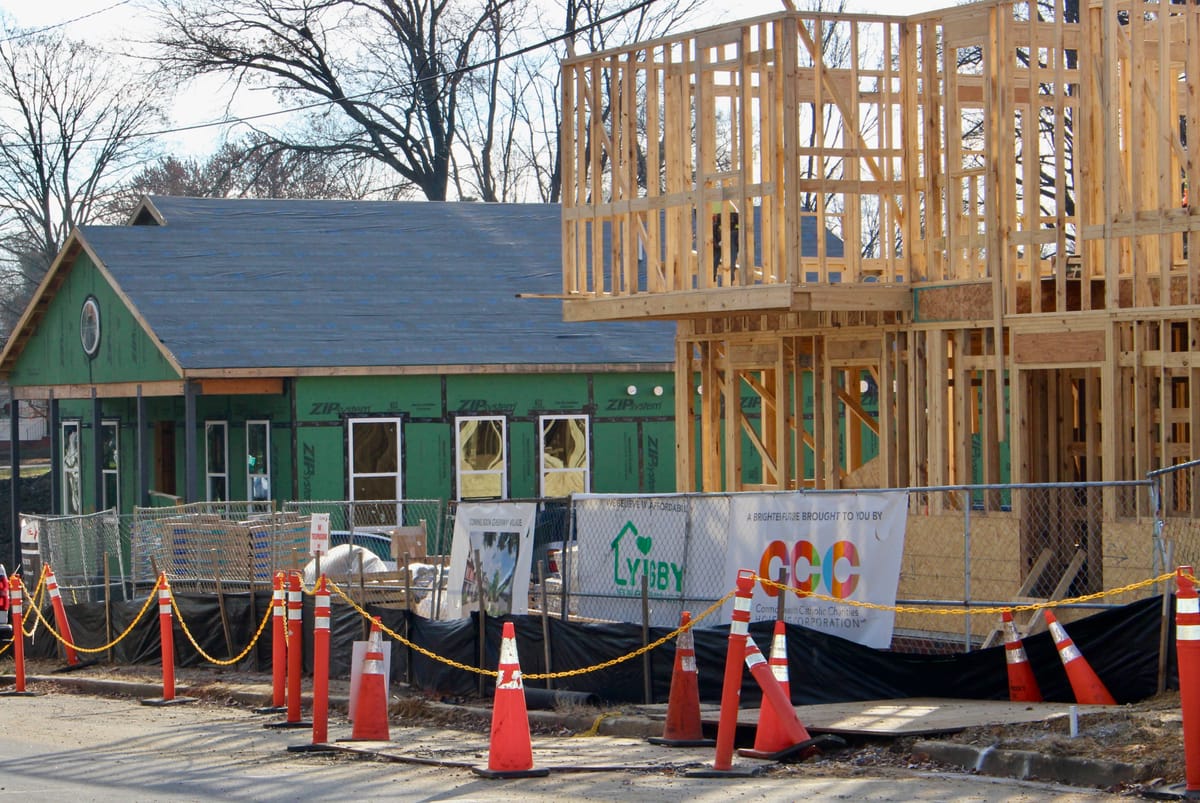
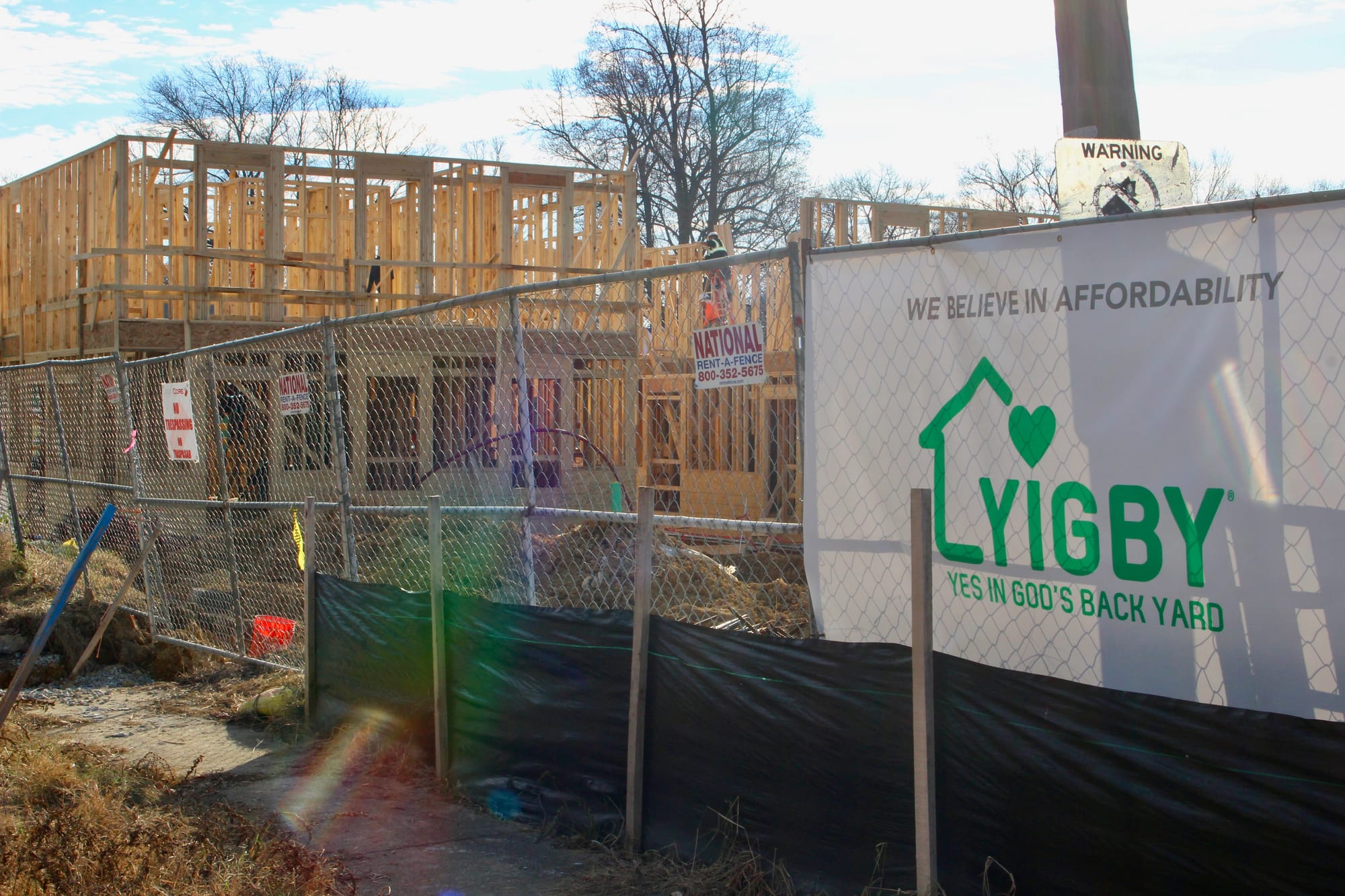
From the street, the construction going on behind St. Elizabeth’s Catholic Church in Highland Park may seem like just one of the dozens of developments that have sprung up around Richmond over the past few years.
But in fact, the newly dubbed Greenway Village project being developed by Commonwealth Catholic Charities is unique. Of the 56 housing units that will be built as part of the plans, half will be what’s known as “deeply affordable,” serving a part of the city’s population that is seeing its housing options dwindle every year — and in some cases disappear.
“The need in this space is getting greater and greater,” said Jay Brown, the group’s CEO. “Trying to find creative ways to drive affordability deeper without a subsidy is the biggest challenge I think that anybody in this space has. But we desperately need to find ways to do it.”
As soaring housing prices continue to outpace wages, more and more Richmonders are in need of a home that meets the government’s definition of affordable: housing that costs no more than 30% of their gross income.
Richmond officials have devised a range of incentives to encourage developers to build homes that meet that criteria. Some, like the Affordable Housing Performance Grant Program, have spurred the creation of thousands of rental units for people making between roughly $48,000 for a single person or $68,000 for a family of four annually.
What has proven more difficult is the creation of non-public housing that can serve people making even less than that.
“It’s a challenge to finance these things,” said Merrick Malone, Richmond’s director of housing and community development. “It’s not that the will is not there to do it. The will is there to do it.”
Commonwealth Catholic Charities is one of a handful of groups trying to make the math work in Richmond. The group, which has launched a housing development arm, has three projects underway in Richmond that will collectively produce dozens of units for what the federal government classifies as “very low-income” and “extremely low-income” households.
Still, the hurdles CCC and other such organizations face are daunting. Over the past decade, the cost of construction has risen exponentially. Materials are pricier. So is labor, and so is land — both to purchase and on which to pay Richmond’s comparatively steep $1.20 real estate tax.
Furthermore, many federal subsidy programs are geared toward housing for families higher on the affordability scale, and those that target the lower end generally require that projects include services aimed at keeping households stable, a requirement most groups say is a good one but narrows the pool of developers who can coordinate both.
All of those challenges together mean deeply affordable housing projects are some of the most difficult to get across the finish line and the quickest to collapse if market conditions shift significantly.
“I don’t think that people really understand how affordable housing is built or the complexity that’s involved,” said Charles Hall, vice president of housing for Commonwealth Catholic Charities — or, he continued, “how much the government’s involved in it and how much it takes to subsidize those units.”
‘We can’t produce housing fast enough’
When officials talk about deeply affordable housing, they’re talking about something very specific: housing for individuals and families making up to 30% of the area median income. In the Richmond area, that would apply to a single person making $23,850 annually, two people making $27,240 or four people making $34,050.
In government parlance, those households are “extremely low income.” One step up on the ladder are families that are “very low income,” earning up to 50% of the area median income — in Richmond, $39,750 for one person, $45,400 for two or $56,750 for four.
 Sarah Vogelsong
Securing housing for both groups is tricky, especially as their numbers grow.
Public housing was traditionally seen as the primary way to serve the poorest part of the population. But in Richmond today, waitlists for both housing authority-owned units and housing vouchers have thousands of people and can take years to get off.
“Housing costs in Richmond have outpaced income growth for low- and very low-income households,” the city master plan declared in 2020. Housing affordability data collected by the federal government for the period from 2017 to 2021 found more than a third of Richmond households had incomes that were 50% or less of the median family income. The government has not released more recent data, but officials and groups are clear that need has only risen.
After Commonwealth Catholic Charities launched a wide-ranging effort to identify the biggest unmet needs in the communities it was serving, “the thing that we learned kind of across the board,” said Brown, was that “there was always this need for housing.”
“Housing, housing, housing just came up over and over and over and over again,” he said.
Sarah Hale, executive director of the nonprofit Urban Hope, which focuses on affordable rentals for households earning less than 50% AMI in the city’s East End, said demand remains constant.
“We can’t produce housing fast enough to meet the needs of our neighbors,” she said.
That’s true despite — and perhaps because of — Richmond’s booming housing market. Over the past five years, the median sales price of a single family home in the metro area has risen from $292,000 to $428,000 as of November. At the same time, real estate market data shows the pool of homes in the $100,000 to $200,000 range has dried up: While they represented 10.4% of all sales in 2020, they were just 1.5% last year. And rents citywide have spiked, with one recent Zillow analysis finding that a Richmonder today needs a $68,000 salary — well above what either an extremely low-income or very low income household makes — to afford the typical monthly rent.
Some of the shortages in Richmond’s deeply affordable housing stock may also be due to people higher on the income scale living in units below what they can afford, said Hale. One Urban Hope analysis of the East End census tracts where the group operates found there were slightly more units in the affordability window it serves than households in need of them.
“The problem is people who don’t need that level of affordability are occupying those units,” she said. “They’re doing the responsible financial thing, which is to underspend. … It’s just difficult because the people who definitely need that level of affordability can’t find the units.”
Affordable sticks, affordable bricks
Filling the gaps isn’t as easy as it sounds.
“There’s no such thing as an affordable brick or a market-rate brick,” said Malone, Richmond’s housing director. “It’s just the cost of bricks.”
Marion Cake, vice president of affordable housing development at project:HOMES, a nonprofit that has built nearly 300 affordable homes for sale in the Richmond metro region, and Richmond Metropolitan Habitat for Humanity CEO Dave Neary say today it costs between $200,000 and $250,000 to construct an average affordable home of 1,200 to 1,500 square feet in Richmond.
That’s just the price of building it; add in land acquisition costs — typically between $50,000 and $75,000 in the current market, according to Cake — and permitting and utility connection fees, and you hit a baseline expense of anywhere from $300,000 to $350,000.
That number “is pretty much why these things cost what they do,” said Cake.
It’s figures like those that have persuaded many of the city’s housing nonprofits that zoning changes that would allow smaller lots and denser homes, particularly duplexes and triplexes that can reduce building costs by sharing walls, are critical if Richmond is to seriously address its housing shortages.
 Sarah Vogelsong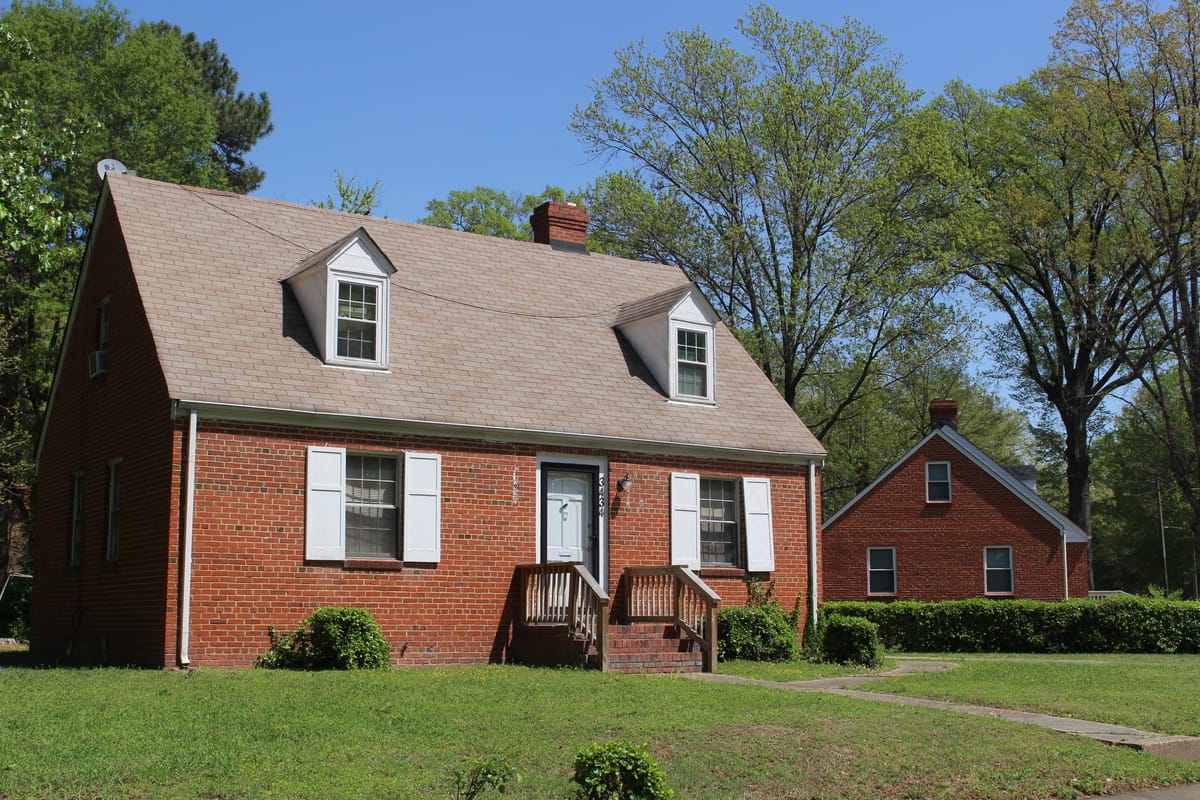
Right now, for-profit developers “can’t make any money building a smaller house, so they don’t do it,” said Cake. “Until we change zoning or change dynamics to the point where you can make money building a smaller house, it’s going to stay that way.”
With the costs of building a basic home so high, it’s nearly always subsidies that make it affordable. And the less a resident can pay for housing, the bigger the subsidy has to be.
“It’s very difficult right now in this environment to finance zero to 30%,” said Malone. “It requires a very, very deep subsidy to be able to do that. The lower the AMI, the deeper the subsidy that is required to house that person.”
Hale of Urban Hope said city property taxes are an additional strain when it comes to getting an affordable rental operating.
“That’s our biggest operating cost, and that’s a really heavy burden,” she said. “Our property taxes are no less just because we’re affordable.”
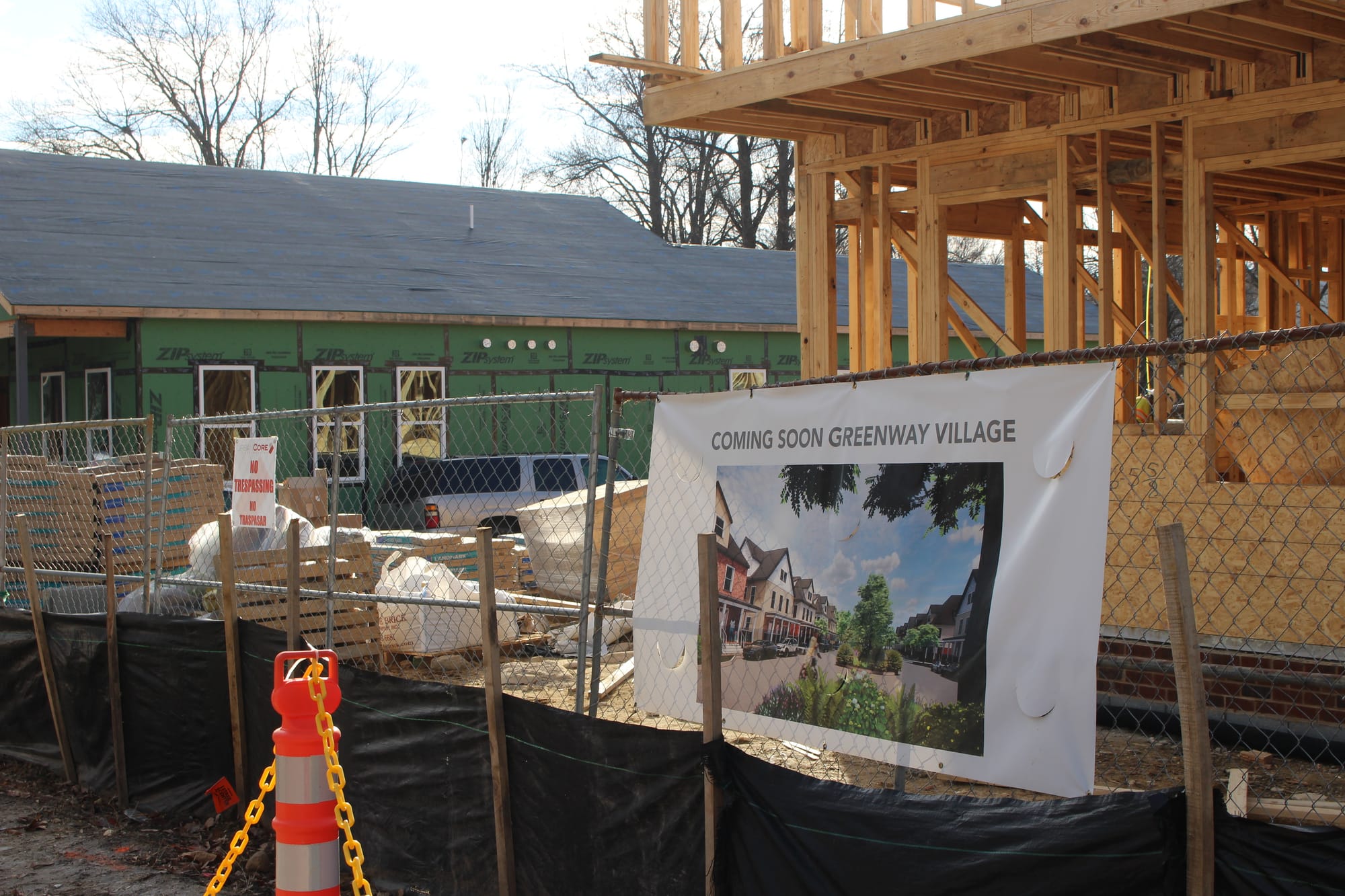
Multifamily projects, like those being built by Commonwealth Catholic Charities at Greenway Village and the group’s planned developments off Oliver Hill Way and Semmes Avenue, can take advantage of economies of scale. But even those face serious funding shortages that often mean developers have to cobble together multiple revenue streams, all of which come with different reporting and operating requirements.
“For conventional market rate deals, you’re maybe looking at two or three sources” of funding, said Hall. “In our projects, we’re looking at eight to 10.”
Local developers have found some ways to provide a cushion. Some partner with the city’s land bank, overseen by the Maggie Walker Community Land Trust, to minimize land costs. Others look to changes in federal rules for low-income housing tax credits that let multifamily rental projects serve people at 60% AMI “on average,” meaning they can build in some deeply affordable units and offset them with others at a higher AMI. Richmond’s performance grant program can provide funding to bridge gaps. And adding more units to a given project can provide a little extra breathing room, although that frequently comes with neighborhood pushback.
In developing Greenway Village, Brown said Commonwealth Catholic Charities “really, really sacrificed on density” in order to get the community support it needed to secure a special use permit. “We came way down from what we could have built on that site.”
But with changes in the market, “what we had approved … ultimately became really expensive to build,” he said. “There really are real challenges when costs start to increase to the point that you can’t spread them across enough doors.”
Homes-plus
There’s another cost to deeply affordable housing that’s often overlooked: the services that are needed to keep households that are often one paycheck away from disaster in a stable position.
“The lower you go on the scale, the more subsidy it’s going to take because the more comprehensive the services have to be,” said Cake of project:HOMES. “You can’t just house them. You also have to provide support services.”
Most of the programs that are geared toward the lower ends of the income spectrum come with requirements for those supports, which can range from social work-type case management to financial counseling, food pantries and youth services.
For many extremely low-income households, organizations see affordable rentals as the most responsible choice.
“The lowest-income homeowner we’ve been able to put in a homeownership program has been about 50% or between 50 and 60%,” said Cake. He pointed out that maintaining a home comes with additional costs when systems break or simply need to be replaced. Furthermore, helping someone buy a home that they may not ultimately be able to handle a mortgage on risks putting them in a more precarious situation in the long term.
“There’s an argument to be made [that] those folks are better off in an affordable rental,” he said. “Although,” he continued, “that doesn’t create generational wealth.”
It’s with that concern in mind that both project:HOMES and Richmond Habitat for Humanity, as well as the city itself, operate home repair programs specifically for very low-income and extremely low-income homeowners, many of them elderly, who might otherwise be forced out of their houses.
Those kind of situations have hidden costs, said Neary, who argues that Americans are spending far more money than they realize on emergency response and other programs that provide assistance to people without housing or with unstable housing.
“The general public is not aware as to how much money it costs us to not provide some level of subsidies that provides folks with an adequate place to live,” he said.
Contact Reporter Sarah Vogelsong at svogelsong@richmonder.org