After funding boost for paving, 75% of Richmond roads now rated in good condition
If Richmond’s roads seem like they’re in better shape than they used to be, it’s not your imagination.
City streets have improved dramatically since 2018, when just 35% got good or satisfactory ratings under a standard road-quality metric called the Pavement Condition Index.
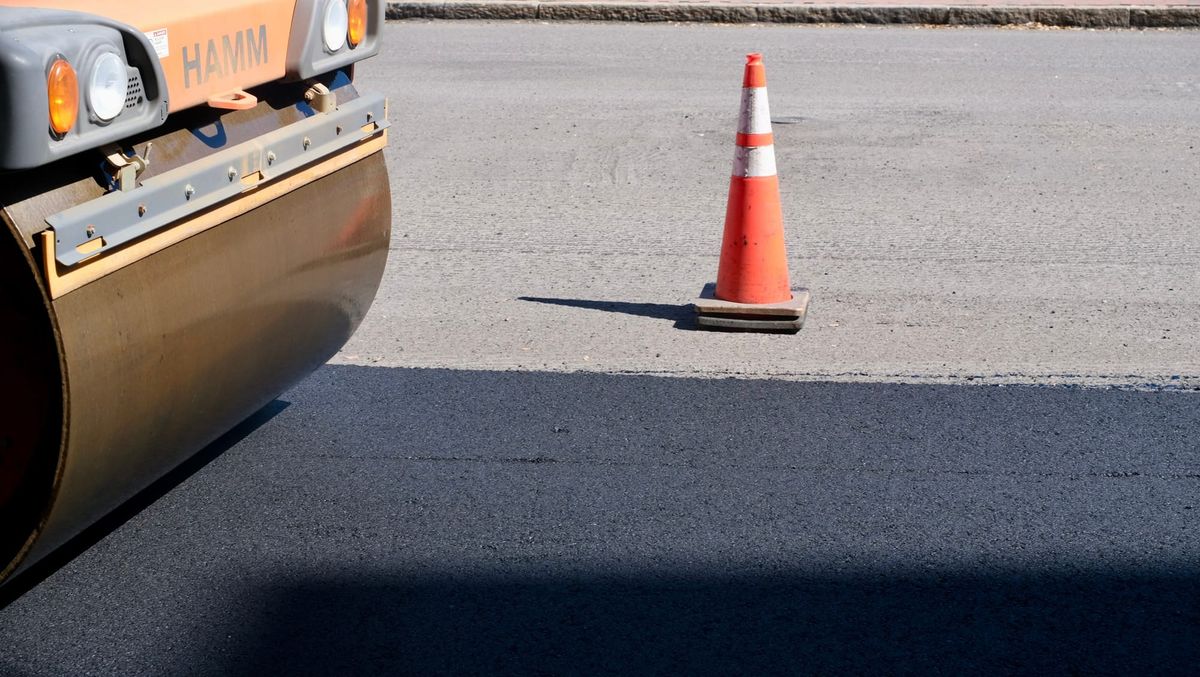
Today — after significant budget increases for paving — 75% of Richmond’s roads are rated in good or satisfactory condition, according to data from the city’s Department of Public Works.
View a map of road quality scores here.
“It’s the best shape that they’ve been in for quite some time,” said DPW Director Bobby Vincent, who’s been with the city for more than three decades.
Several factors contributed to the improvement, Vincent explained in an interview.
Money was a big one. City funding for paving was once a few million dollars a year. But in response to complaints about pothole-riddled streets, Vincent said, former Mayor Levar Stoney made a deliberate effort to increase that funding, bumping it to around $15 million annually.
“He kind of gave me the go-ahead,” Vincent said of the former mayor. “He said, ‘Hey look, you said you need $15 million a year. I'm going to give it to you. Can you spend it?’”
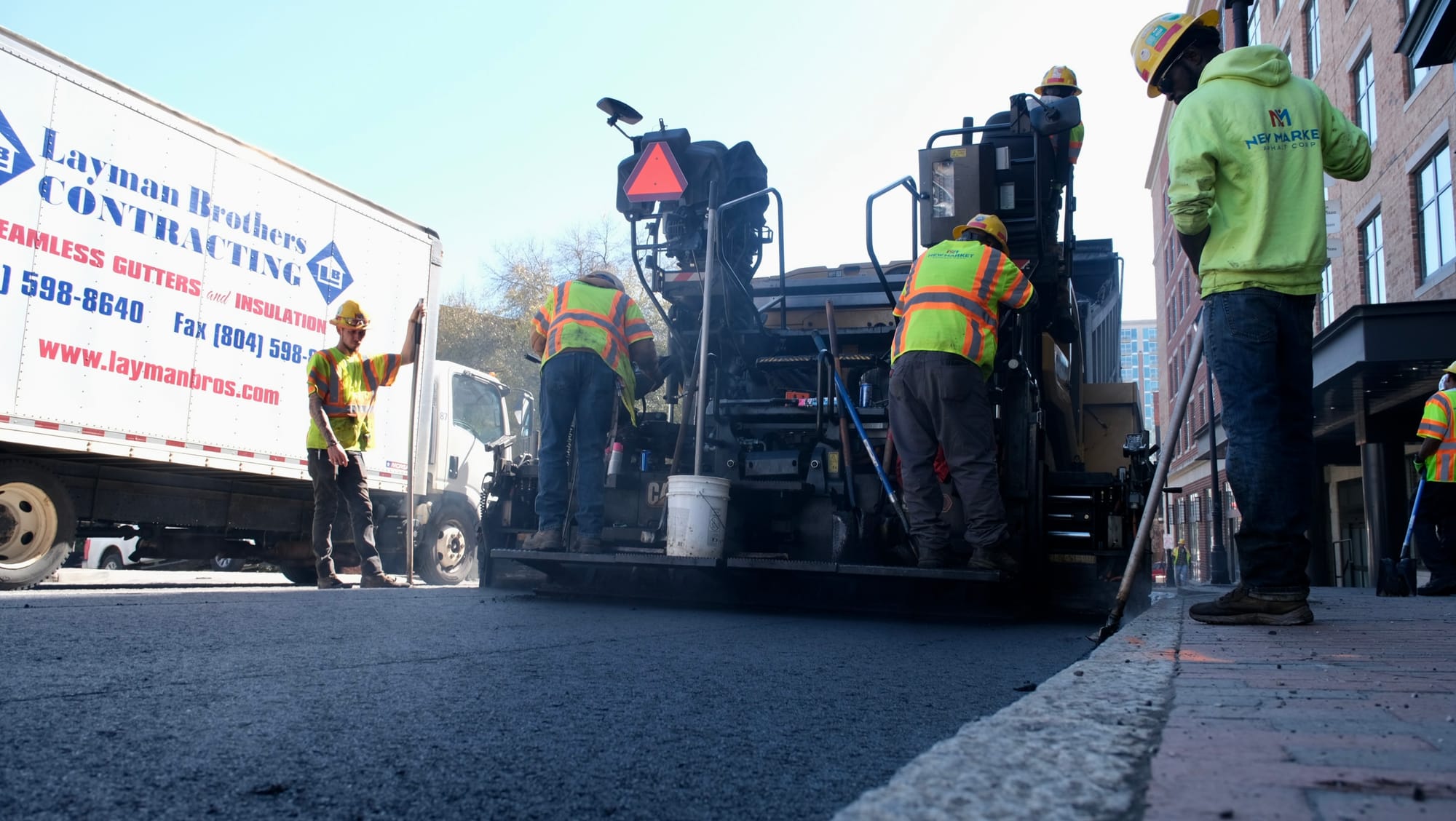
Road paving was important enough to Stoney he mentioned it several times during his farewell tour last year as he prepared to leave office after eight years as mayor. In his final speech at City Hall, Stoney mentioned improved road conditions as one of the “clear signs” some things got better under his watch.
“1,200 lane miles of roads paved,” Stoney said as he ticked off paving stats in his farewell address. “$112 million spent well in neighborhoods throughout the city.”
The city has also gotten more efficient in how it contracts out for paving work. Instead of putting paving bids out to resurface a few blocks at a time, Vincent said, contractors are often now hired to do entire neighborhoods, resulting in better prices for the city.
“Instead of us having them going all throughout the city, we had them focused on neighborhoods with plenty of work to do for each one of them within the neighborhoods,” Vincent said. “And that's how we were able to get the work done and spend the money.”
The public works department has also worked more closely with the Department of Public Utilities to better synchronize road paving with utility work on gas and water lines that run beneath the roads, Vincent said.
Some city neighborhoods have better roads than others.
The North Side-based 3rd District ranked highest in the pavement condition data DPW produced earlier this year, with 86% of its road lane miles in good condition.
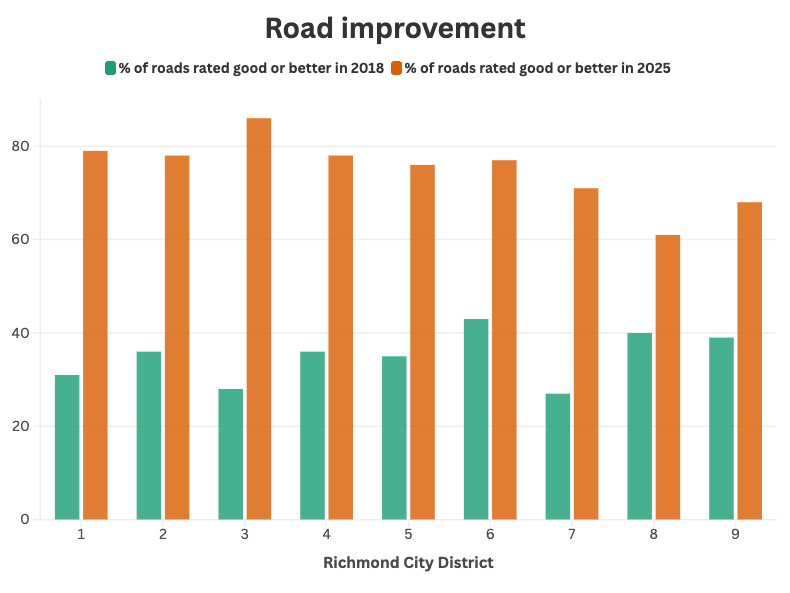
South Richmond’s 8th District had the lowest score at 61%, but it also has the highest number of lane miles in the city by a fairly wide margin.
In a presentation to City Council last month, Vincent said every part of the city is getting paving “love.” But he said his department can’t commit the same amount of money to every district every year while still spending money efficiently on the most time-sensitive projects.
“If I did that, I would not be doing my job,” Vincent said.
The PCI metric comes from a van capturing video of the roads and grading it based on the amount of cracking, chipping and ruts detected in the road surface.
“When water gets inside of those cracks and you have a freeze and thaw occur, that's when the asphalt tends to pop out,” Vincent said. “And therefore that's when you tend to have potholes.”
Vincent said the process Richmond uses to measure the condition of its roads is the same one used by the Virginia Department of Transportation, which provides funding for the city to maintain its roads but doesn’t perform the work directly as it does in most of Virginia’s counties and towns.
“Instead of Bobby Vincent saying that our roads are this, we're getting that information from a third party consultant that also does work for our parent agency,” Vincent said.
When he gave his recent paving presentation to the City Council, Vincent also mentioned some projects now combine resurfacing with traffic calming measures, such as an ongoing project to repave a section of Hull Street while also adding better pedestrian crossing infrastructure and reducing travel lanes from from four to two.
Though Richmond’s road conditions and design still need work, Vincent told the council, the city is making progress.
“I don’t think we’ll ever get to 100%,” he said. “But we are certainly putting our best foot forward to eliminate potholes as much as we can.”
Contact Reporter Graham Moomaw at gmoomaw@richmonder.org