‘A love-hate relationship:’ Managing Rosedale’s aging trees is a tricky balance for Northside residents
Tara Beaghan’s brother had just entered the garage in her backyard when the rain started. As the wind picked up, Beaghan decided to go outside to put down the cantilever umbrella on her back patio. Wrangling with the umbrella, she was unaware that the massive willow oak in front of her house was about to topple toward her.
“All of a sudden I see my patio table flying at me and I remember seeing green. That’s all I remember. The top of the tree actually hit my ankle,” said Beaghan. “The very tippy top, like the leaves and twigs.”
The thick foliage of the tree obscured Beaghan from her brother’s view in the garage, leading to a few heart-pounding moments of terror before she emerged unscathed.
“We got my chainsaw,” said Beaghan. “I had to cut my way back in to get my dog.”
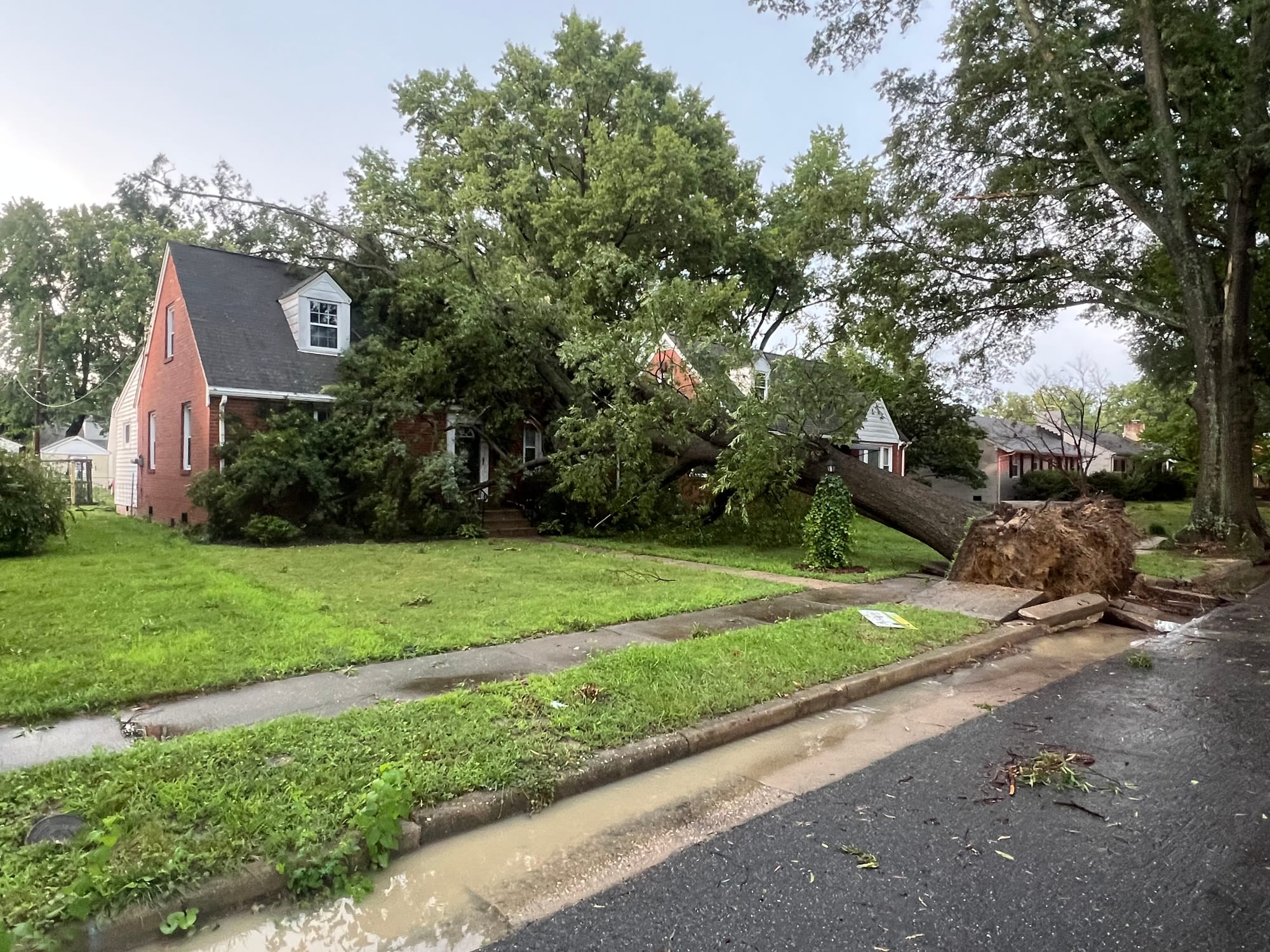
Within minutes, calls came in from neighbors and Beaghan, surveying her house, began to understand the extent of the damage.
“It went through the roof, through the attic, so I just got a free skylight out of all of it,” she joked.
Stories like Beaghan’s, from last July, illustrate the predicament faced by residents of the Rosedale neighborhood in Richmond's Northside.
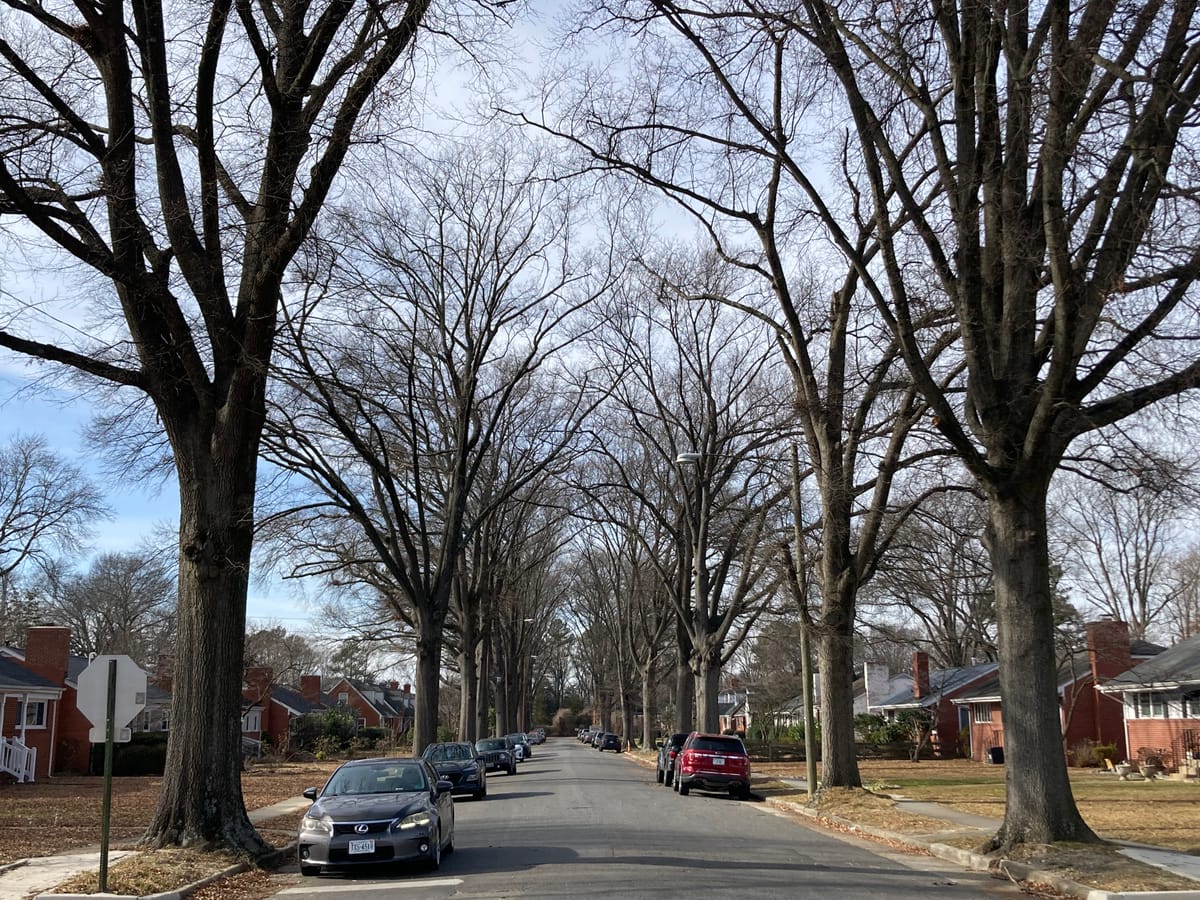
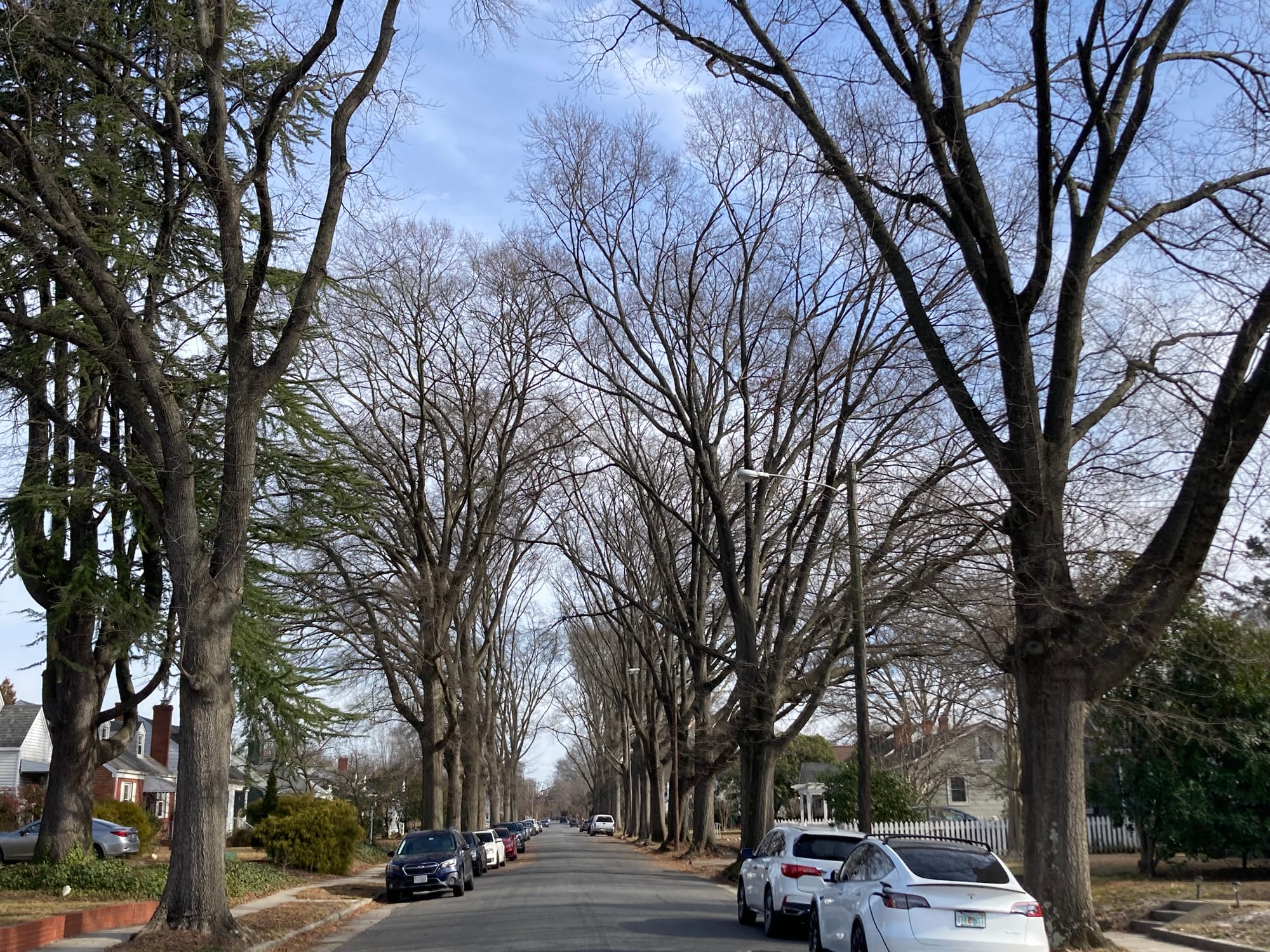
A behemoth willow oak stands in front of almost every house on the 1900 blocks of the southern part of Rosedale. Lining the streets like classical pillars, the trees add a distinct splash of personality and character to the neighborhood.
Each one is also a ticking time bomb.
“I would call it a love-hate relationship,” said Grady Hart, president of the Rosedale Civic Association.
Hart said the trees provide noise reduction from the nearby I-95/I-64 overlap and prevent the area from becoming a heat island. On the other hand, residents “don’t really feel safe in our own houses if we have one right in front of our house.”
“I came in really feeling the love and the hate right from the beginning,” he said. The trees were the first thing he noticed about the neighborhood during his move in 2019.
“I was like, ‘Oh my God, this is awesome!’ It was a positive. And then as I pulled up in front of what would become my house, I saw that there was a giant hole in the roof of the house next door: that a tree had fallen on the house next door.”
A mixture of factors contribute to the falls.
First, the trees are imbalanced. This is due in part to trimming on the street side to keep branches out of power lines, but also a natural consequence of the trees being planted in rows. The branches gravitate toward sunlight, which is more readily available on the property side of the trees, over and against the street side, where branches from trees on each row block each other’s access to sunlight.
Additionally, the narrow medians between the street and sidewalk in which the trees are planted don’t provide enough room for the roots to grow firmly.
Finally, the trees are simply very old, having been planted in the 1950s.
“They have been poorly taken care of over the years,” said Hart.
Longtime Rosedale resident and community staple Liz Turner recalled an example from over a decade ago. She was president of the Civic Association at the time and was working with an inspector from the Department of Public Works on a flooding issue. He said that the tree roots had grown into the sewer lines under the street, which required the use of a machine to grind out the roots.
“The problem is,” said Turner, “that it’s grinding out the roots, which is supposed to keep the tree from falling over.”
She said that, at the time, the community met the suggestion that the trees be replaced with an outcry. To many, the trees were an integral part of the neighborhood’s appeal.
“I was trying to tell people, you know, trees grow back,” she recalled. “We can plant something there that will be just as beautiful but not as destructive.”
This was to no avail.
“It was as if I was saying I was going to burn the flag,” she added. “Of course, now that trees are falling more often, I think some people are waking up and they know something has to be done.”
After the tree fell on Beaghan’s house – the third tree to fall in two years, in addition to numerous heavy branches – Hart demanded the city take action to protect residents. He credits city officials for a solid, immediate response.
“They came out almost immediately,” he said. They evaluated every tree in the area, ultimately deciding that 20 trees needed removal. “That happened pretty quickly too.”
Michael Webb, the city's urban forester, said the decision to remove the trees was based on a number of factors. The evaluating team surveyed each tree, searching for telltale signs like cracks in the trunk or branches that indicate an unhealthy tree.
Another item they looked for was any sign of movement from the trees’ central root systems, which can include unusual depressions or mounds in the soil, cracked and uneven sidewalk, or even cracks in the curb line.
The next step was to decide whether the trees would benefit from pruning.
“Depending on the health of a tree, you can’t prune it,” said Webb. “It can’t tolerate it because you’re removing live tissue.” The unhealthiest trees were then selected for removal.
Webb and his team plan to continue monitoring the Rosedale willow oaks.
“It’s going to be a staggered approach,” he said.
The city will remove a few trees every few years as they age out. Rather than removing them all at once, this will ensure the neighborhood retains the benefits the trees provide. In the meantime, they are actively maintaining the trees through pruning and trimming as needed. Replanting has not started yet, but Webb confirmed that a list of replacement trees has been developed and that they will be incorporated into the city’s yearly planting program.
The hope is that going forward, Rosedale will continue to benefit from a thriving network of trees. But this time, it will be composed of more suitable trees than willow oaks, with a more diverse age profile to ensure that they do not all begin to decline at once, as they have to this point.
For Beaghan, Rosedale is no longer home. She ultimately had to move out of her house – with the help of a neighborhood ‘moving party.’
“I had 15 neighbors I didn’t know show up to get my stuff. I mean, it was amazing,” she says. “It was awesome. Another reason why I’m very sad that I’m not still there.”
Forced to cancel a temporary job she was supposed to take in Asheville, North Carolina, and find employment nearby as she dealt with the aftermath, she ended up working for the cancer center at UVA.
“I love where I’m working, so some good things are coming out of it,” she said, adding the situation is still difficult.
Many of her possessions are still in storage, and she is currently staying with a friend.
“I was displaced for sure," she said. "And I still am. I’m still living in limbo.”
Meanwhile, the remaining willow oaks of Rosedale stand tall – for now.